
Bentley Flying Spur Speed
The dignity befitting a flagship is still there

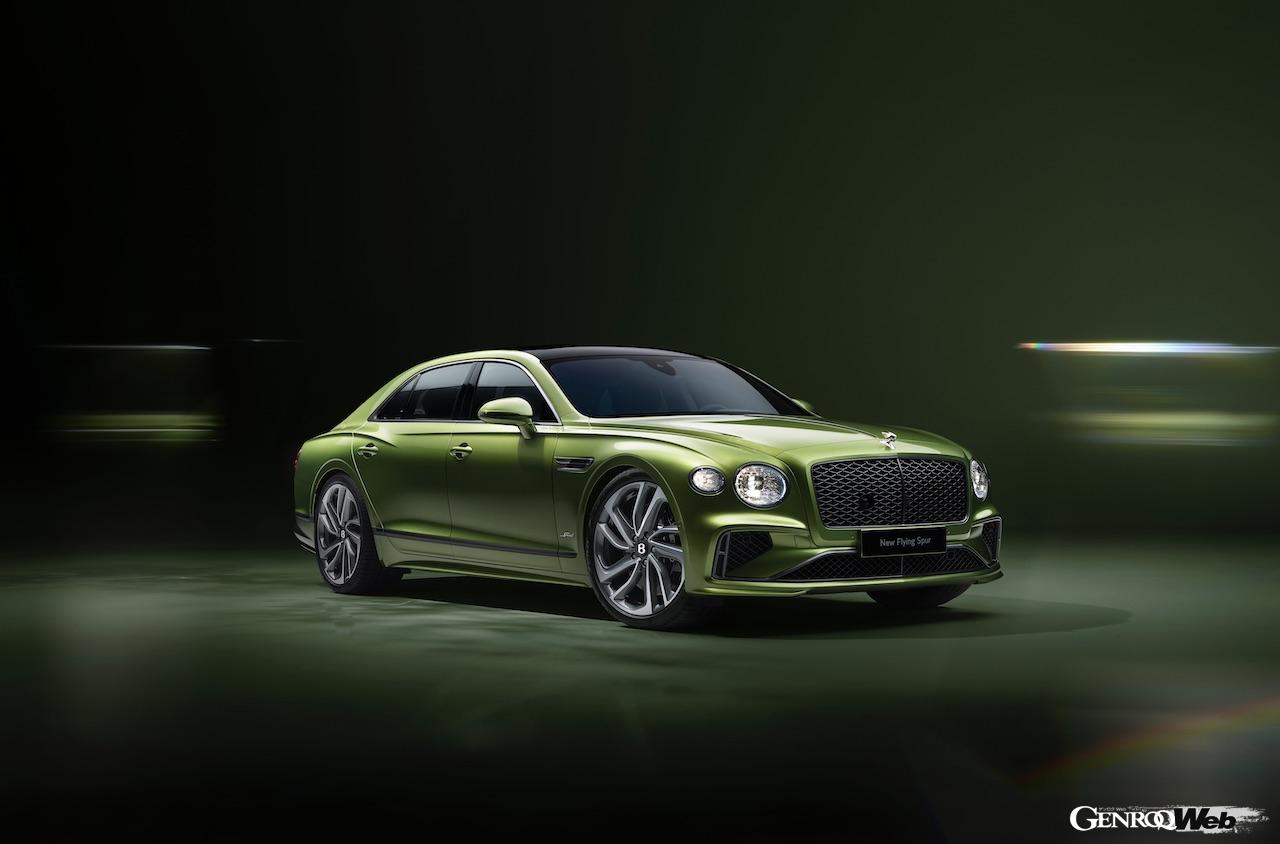
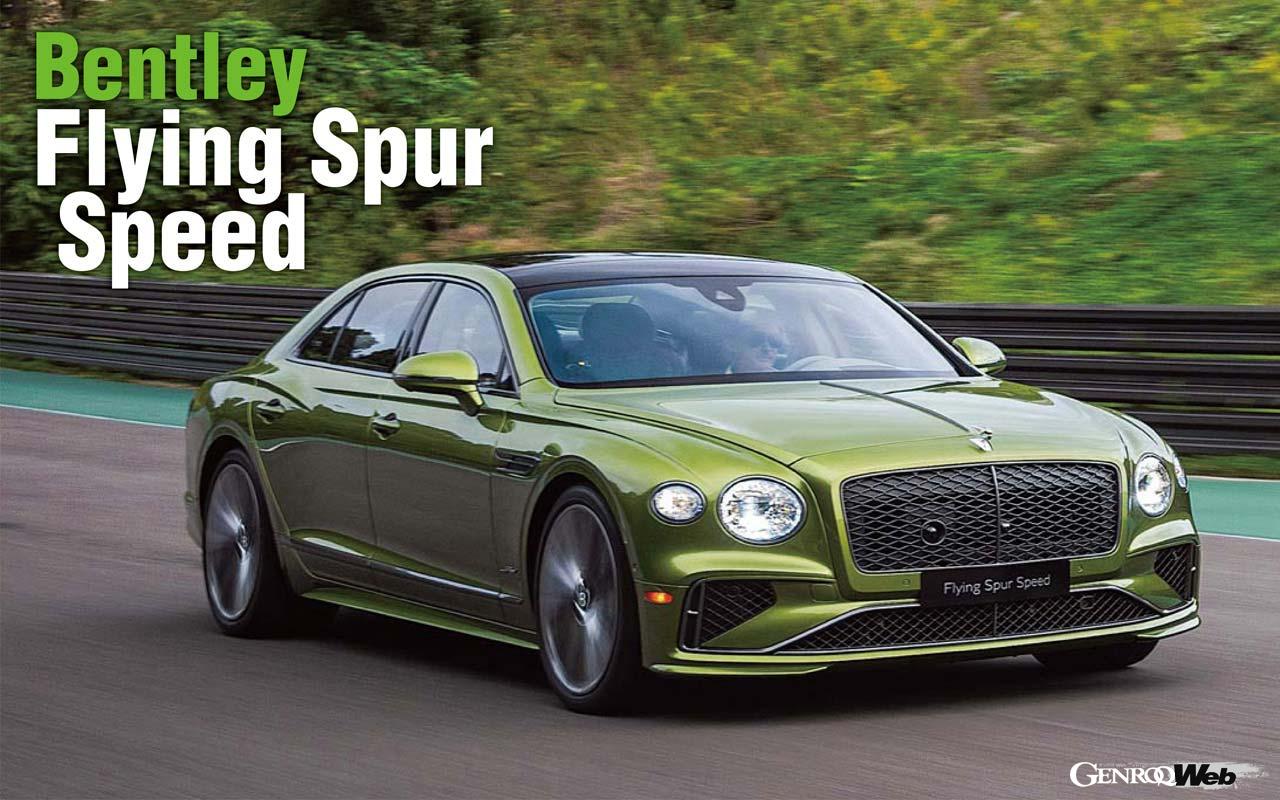
The exterior changes include the grille, bumper, and diffuser, as well as newly designed optional wheels and dark tinted moldings. The body color of the test car is the new “Tourmaline Green.”
I test drove the fourth-generation Flying Spur, counting from the first generation that revived the Continental name. The new model, which just had its world premiere in September, replaces the Mulsanne, which ceased production in 2020, and is now an important saloon that serves as Bentley’s flagship. Like the Continental GT that debuted in June, it inherits some components from the third-generation model, and uses the Volkswagen Group’s MSB (for premium RWD vehicles) platform, just like the Continental GT.
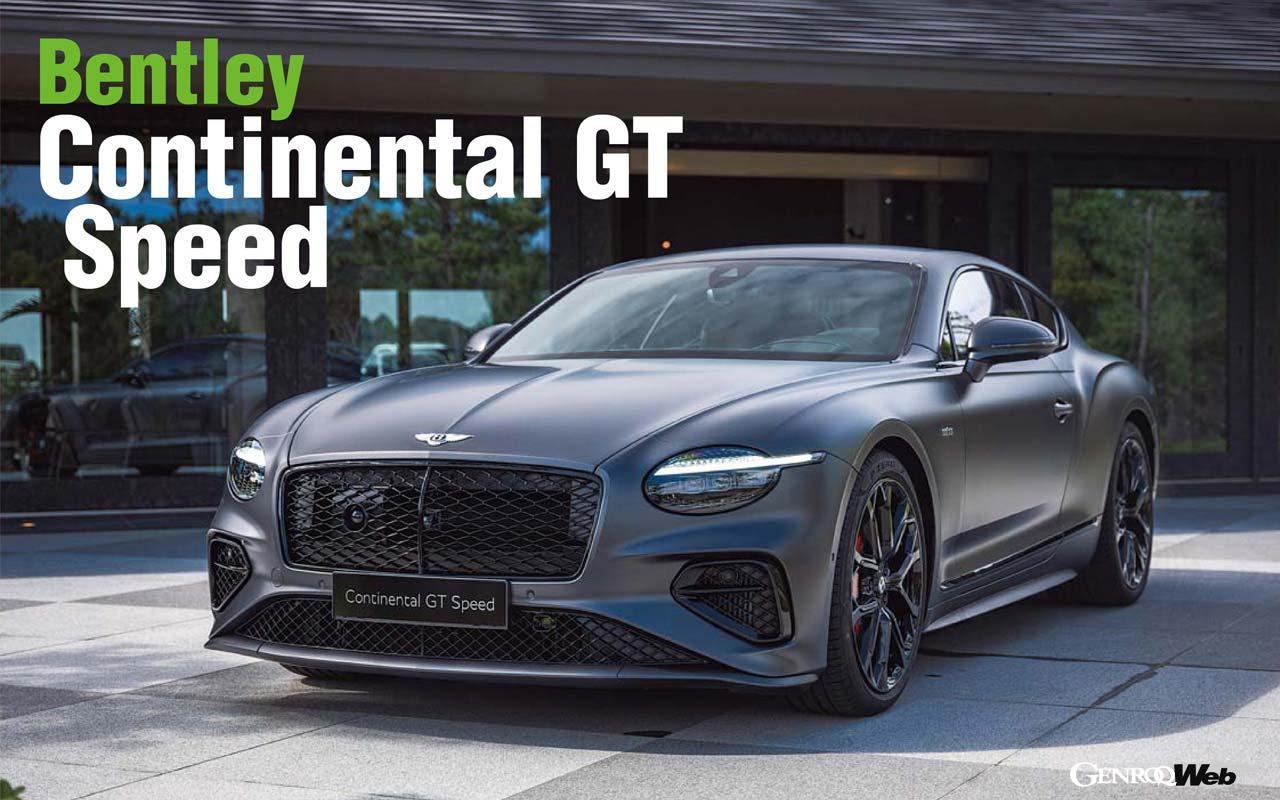
While the Continental GT next to it at the test drive venue has revamped headlights and other features compared to its predecessor, there are few changes to the Flying Spur’s exterior. The only changes are to the front grille and bumper, perhaps brushed up. Therefore, the same long hood, short front overhang, and rear-mounted cabin as the previous model still give it the dignity befitting a flagship. The overall length, width, and wheelbase are almost the same as the previous model, and the overall height is 9mm lower, but this is an inconsistency when you consider the elongated body that is over 5.3m long.
The test car was the “Flying Spur Speed,” a high-end model. Until the previous model, the “Speed” designation was reserved for high-performance models equipped with a 6.0-liter W12 twin-turbo engine, of which over 100,000 units had been produced. The new model, however, combines a crossplane 4.0-liter V8 twin-turbo engine with an 8-speed DCT with an integrated electric motor, resulting in a powertrain dubbed the “Ultra Performance Hybrid.” The car boasts the same incredible specs as the Continental GT, with a maximum system output of 782 PS and maximum torque of 1,000 Nm. As a plug-in hybrid (PHV) vehicle, with a 25.9 kWh battery mounted behind the rear axle, the car weighs 2,646 kg, more than 200 kg heavier than the previous model, but boasts a 0-100 km/h acceleration time of 3.5 seconds, 0.3 seconds faster than its predecessor.
One-pedal drive with precise speed adjustment

[1]

[2]
[2]

[3]
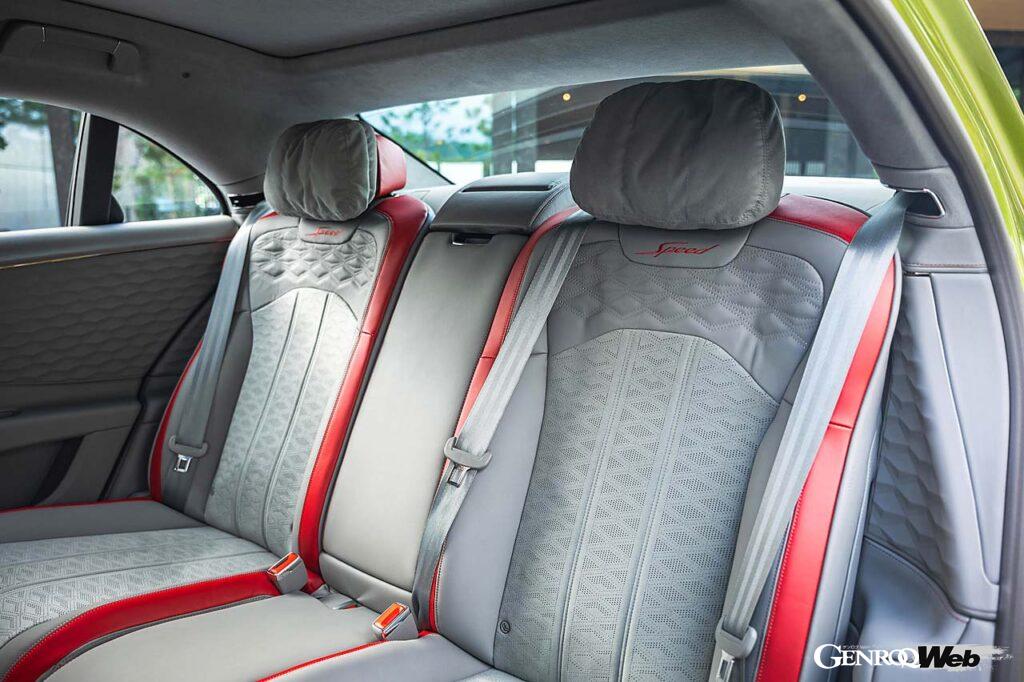
[1] The Flying Spur has few exterior changes, but this is because it was released in 2019 and is still young, allowing it to remain fresh in the market. [2] The optional “Wellness Seats” with automatic temperature control are now available for both front and rear seats. Each zone uses heaters and ventilation to maintain a comfortable seat temperature at all times. [3] The center monitor allows you to check the power flow between the engine, motor, and battery. There is a choice of 11 trim panel finishes, including eight wood types and three other types.
Opening the heavy door and getting in, one can see that there are no major changes to the interior. The instrument panel has a different feel, but if you’ve driven the third generation, you won’t be confused by how to operate it. Pressing the start/stop button doesn’t start the engine because it’s a plug-in hybrid, and even when you select D range with the familiar selector lever, it stays in EV mode and starts driving quietly. The test drive was a total of 10 minutes, with four laps in a duck-style driving pattern with a lead car. Let’s take a quick look at it.
There are four driving modes available: “Sport,” “B (Bentley),” “Comfort,” and “Custom,” and in the default “B” mode, the car will continue to run in EV mode up to 75% throttle opening. EV driving at low speeds is easy to control, and one-pedal drive with regenerative braking allows for precise speed adjustment. The motor’s torque of 450Nm allows it to drive the 2.6-ton vehicle smoothly. As with the previous model, the ride is extremely comfortable. The comfort provided by the new two-chamber air suspension is just one aspect of the versatility of this flagship saloon, but it is a major attraction.
Drives like a sports car

The new Continental GT will be released in June, followed by the new Flying Spur in September.
Switching to sport mode completely changes the car, giving it the sound and handling of a brave sports car. Standard equipment includes the Bentley Dynamic Ride electronic stabilizer and rear-wheel steering, and thanks to the aforementioned giant battery’s ideal front-to-rear weight distribution (48:52), it drives just like a sports car. Even without revving it up to the redline of 6,800 rpm, you can get a glimpse of the incredible performance of Bentley’s future powertrain.
On the fourth lap, I again selected “B” to cool down. Driving gently, it instantly transformed into a luxury saloon. It’s the ultimate powertrain, boasting performance on a par with that of a sports car, yet quickly transforming into an electric vehicle with the flick of a switch or depending on how you drive. I was convinced that this ultra-performance hybrid would carry the grand touring capabilities expected of a Bentley or Flying Spur into a new era.
REPORT/Takuro YOSHIOKA
PHOTO/Bentley Motors
MAGAZINE/ GENROQ December 2024 issue
SPECIFICATIONS
Bentley Flying Spur Speed
Body size: Length 5316, width 1988, height 1474mm
Wheelbase: 3194mm
Vehicle weight: 2646kg
Engine: V8 DOHC
Total displacement: 3996cc
Maximum output: 441kW (600PS) / 6000rpm
Maximum torque: 800Nm (81.6kgm) / 2000-4500rpm
Motor
maximum output: 140kW (190PS)
Maximum torque: 450Nm (45.9kgm)
Transmission: 8-speed DCT
Drive system: AWD
Suspension type: Front double wishbone, rear multi-link
Brakes: Front and rear ventilated disc
Tire size: Front 275/35ZR22, rear 315/30ZR22
Top speed: 285km/h
0-100km/h acceleration: 3.5 seconds
Vehicle price: 33,792,000 yen
[Inquiries]
Bentley Call
TEL 0120-97-7797
https://www.bentleymotors.jp/