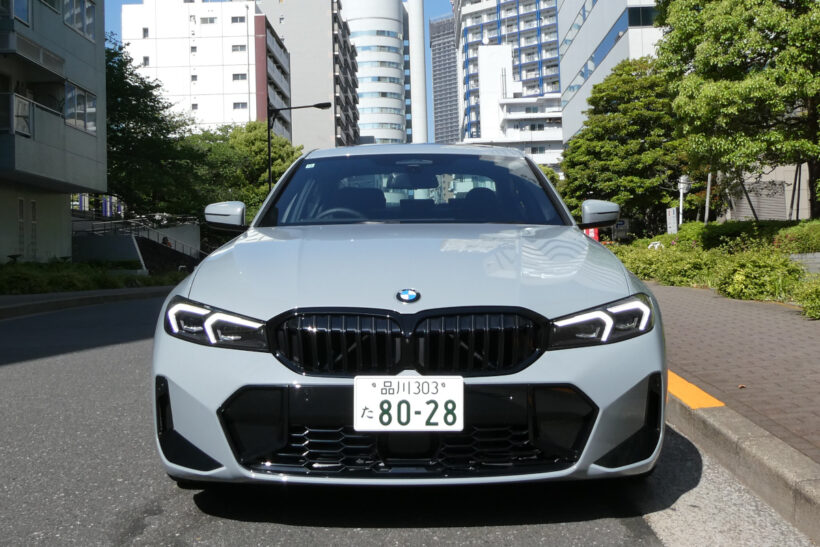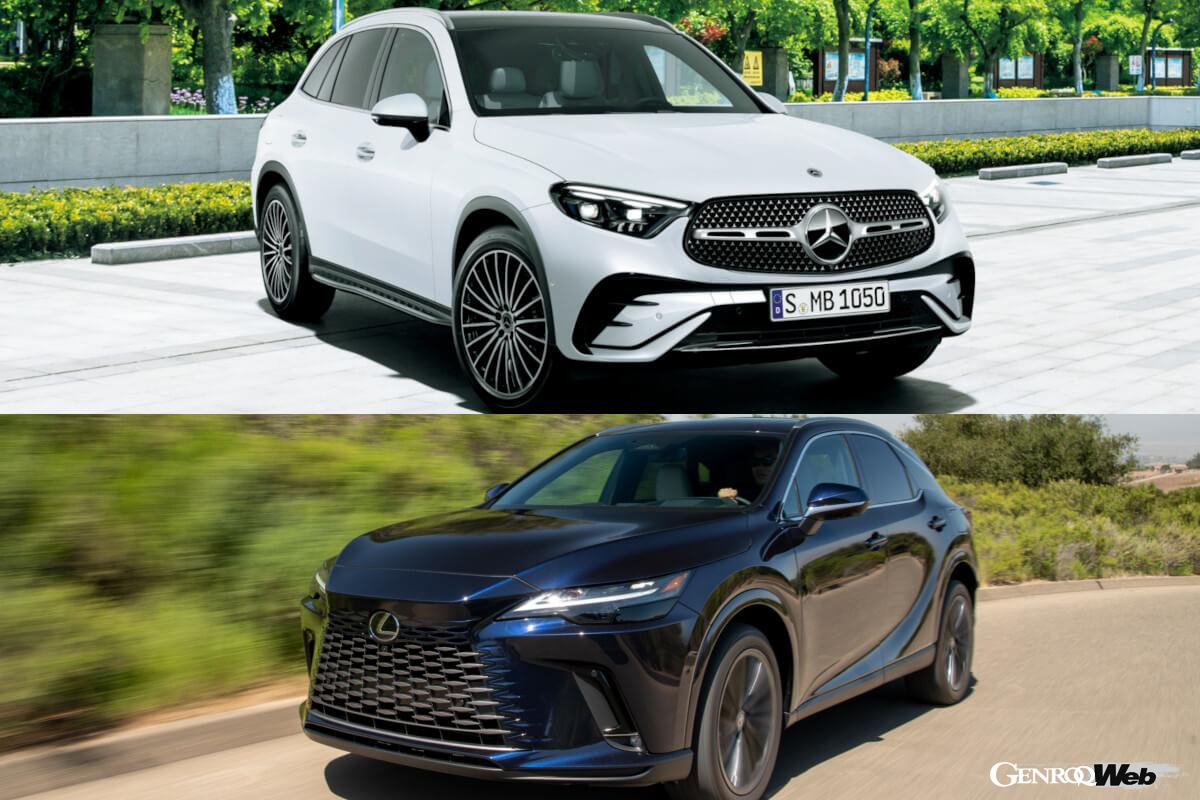


CarPlay has become a part of everyday life, with 600 million uses per day
PHOTO/Apple
Technology that blends seamlessly into everyday life transforms how we live, and CarPlay is no exception. According to Apple figures, CarPlay is launched more than 600 million times each day around the world.
Needless to say, this figure is only for iPhones, and if Android Auto is included, the figure would be roughly double that. It is comparable to the number of messages sent on major social media and messaging apps, and can be said to have become firmly established in society.
In the US market, 98% of new cars are equipped with CarPlay, and globally, over 80% are equipped with it as standard. In the “Mobility Consumer Pulse Survey” conducted by McKinsey in 15 countries around the world in December 2022, approximately half of new car buyers responded that they would not buy a car that did not have Apple CarPlay or Android Auto, and 45% said they use it on a daily basis. However, the Japanese market is in a unique position amid this global trend.
According to the J.D. Power Japan TXI 2023 survey, only 7% of users said they use CarPlay or Android Auto on a daily basis. Behind this figure lies a complex mix of Japan’s unique car culture and technological circumstances.
The current state of CarPlay in numbers
PHOTO/Apple
When we analyze the current state of CarPlay adoption in numerical terms, the unique characteristics of the Japanese market become even clearer. While the number of daily launches worldwide exceeds 600 million, and in the United States it is installed in an astounding 98% of new cars, the installation rate in Japan is estimated to be less than 20%.
Furthermore, while approximately 50% of consumers worldwide say that “equipped devices are a condition for purchase,” similar survey data does not even exist in Japan. There is also a large discrepancy in actual usage rates, with Japan at 7% compared to the global average of 45%.
The reasons for this difference can be summarized as three points: First, Japan has a long history of high-performance car navigation systems, and has built strong collaborative relationships with domestic suppliers.
Second, automakers have been cautious about introducing the technology because they do not want to become more dependent on other companies for vehicle functions. This has led to a late introduction, and the technology is still in the process of becoming widespread.
Thirdly, Japan has its own unique standards and functional requirements, such as the VICS traffic information system and the ETC payment system, which have become technical barriers that cannot be resolved by smartphones alone.
While this is a structural problem that hinders the widespread adoption of CarPlay, consumer awareness is certainly changing, especially among younger generations, and the importance of smartphone connectivity is growing every year. In addition, as will be discussed later, CarPlay Ultra may have the effect of alleviating these barriers.
iOS 26 brings a new CarPlay experience
PHOTO/Apple

PHOTO/Apple
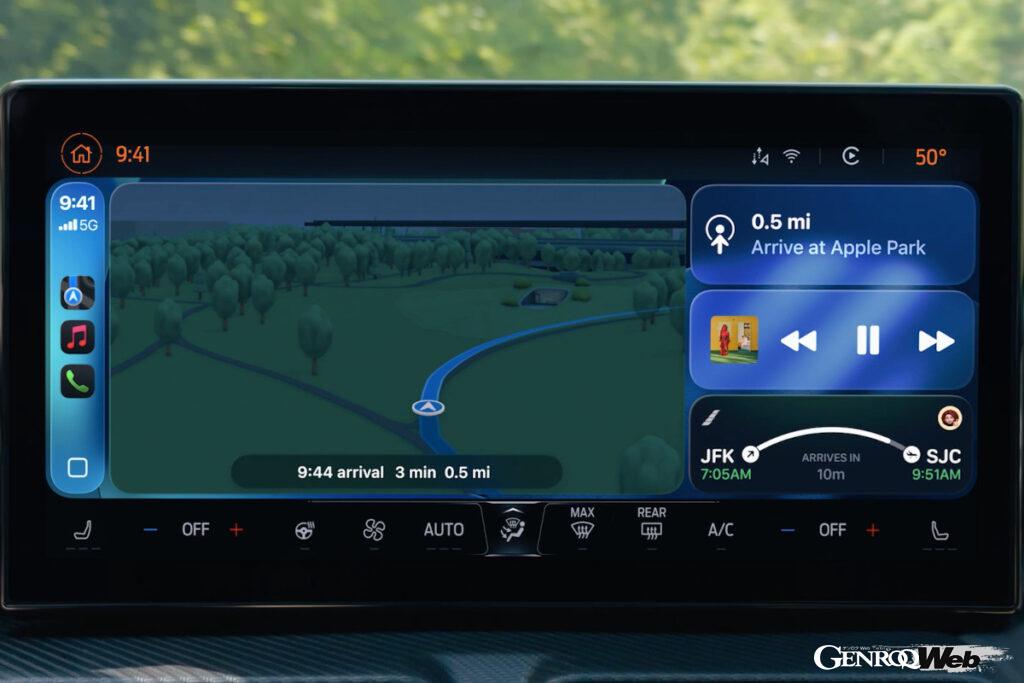
Recently, Apple announced a major update to CarPlay in iOS 26, the iPhone operating system that will be released by the end of this year.
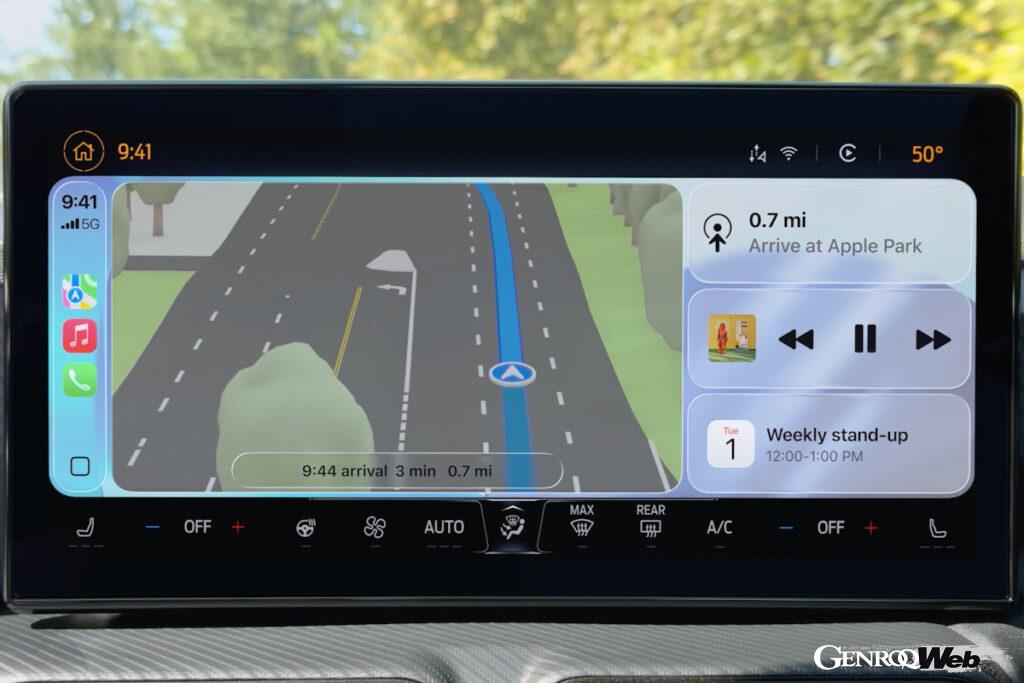
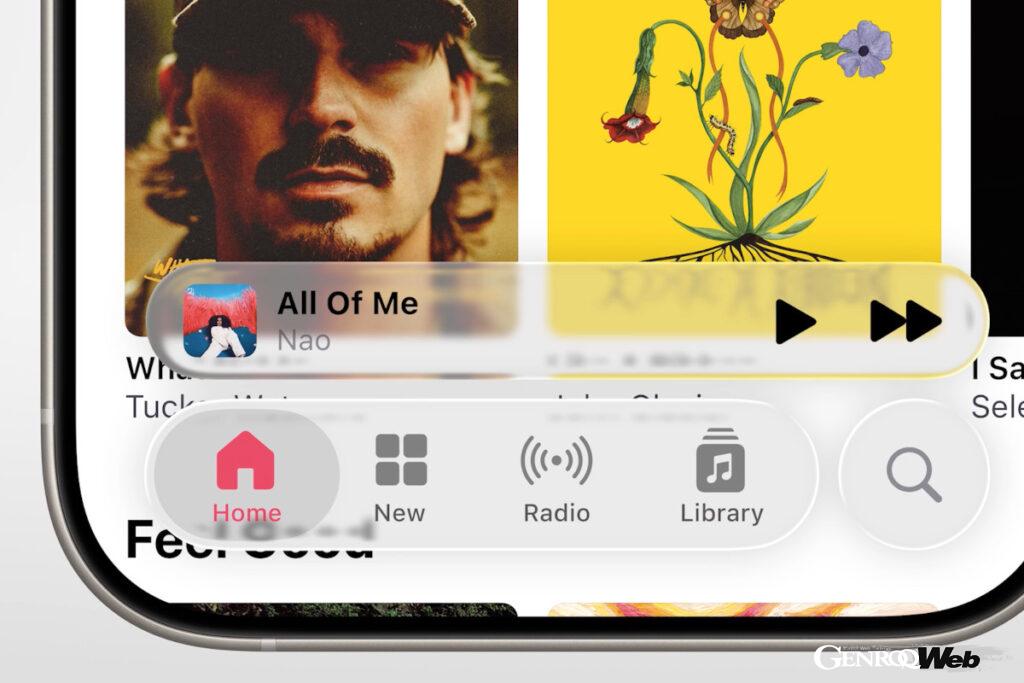
This year, Apple products are undergoing a major change in user interface design, transitioning to a design language called “Liquid Glass,” which also works with CarPlay. The transparent tab bar and semi-transparent icons blend naturally into the in-car display, making it feel as if the iPhone screen has been extended directly into the car.
On the functionality side, there are also significant practical improvements: incoming call notifications no longer take up the entire screen, but instead just pop up a small banner, meaning you won’t lose track of important directions while using navigation.
The Messages app brings two iPhone-available features to CarPlay: Tapback and Pinning. The former lets you reply with a quick message with a simple tap, while the latter lets you ping your most frequent contacts for quick access.
Additionally, the “Live Activity” that appears on iPhone’s standby screen will now also be displayed on CarPlay, allowing you to see the status of compatible apps, such as the current status of a specific flight. Widgets that display app information compactly can also be placed, just like on iPhone. Flight information, weather forecasts, calendar appointments, and more are provided as standard, and the types of information that can be displayed in compatible apps are increasing. Also newsworthy is the addition of car audio support for spatial audio, which Apple Music is actively promoting.
BMW announced that “Spatial Audio in Car” will support spatial audio playback through a software update to BMW’s in-car audio. The update will begin in the summer of 2025, realizing a 5.1.4-channel equivalent Dolby ATMOS system in the car.
What is Aston Martin’s “CarPlay Ultra”?
PHOTO/Apple

PHOTO/Apple
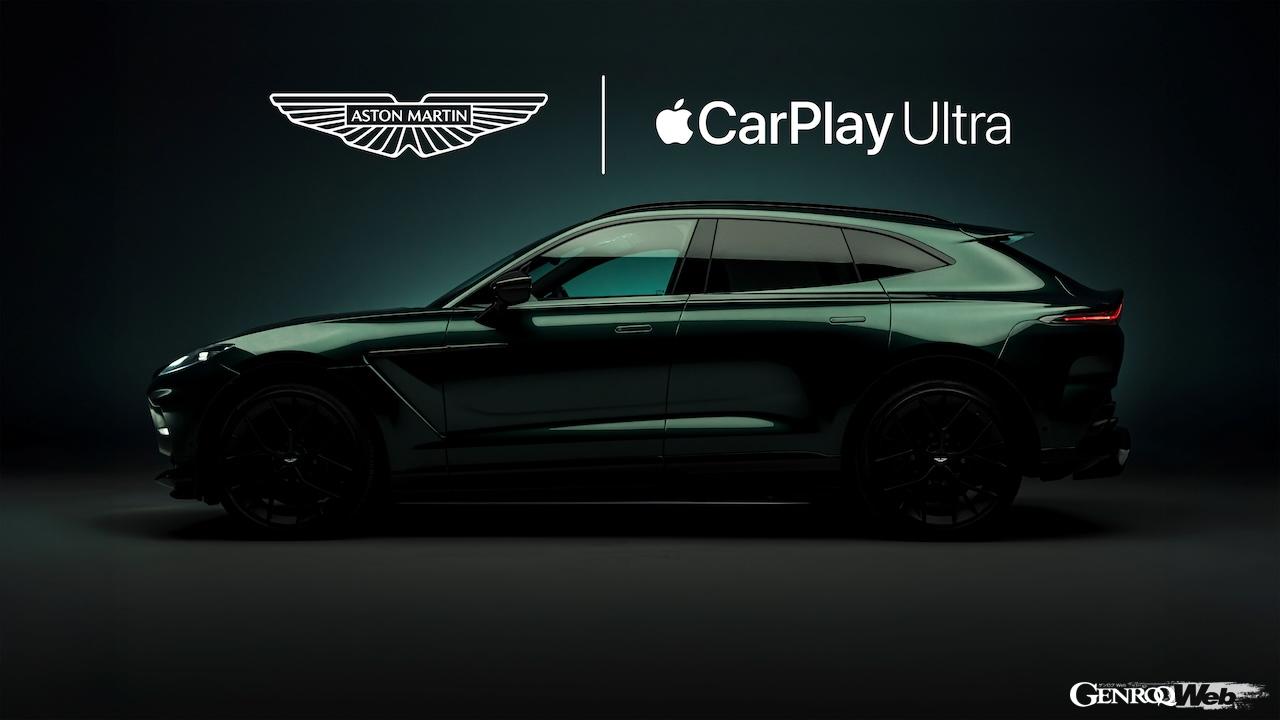
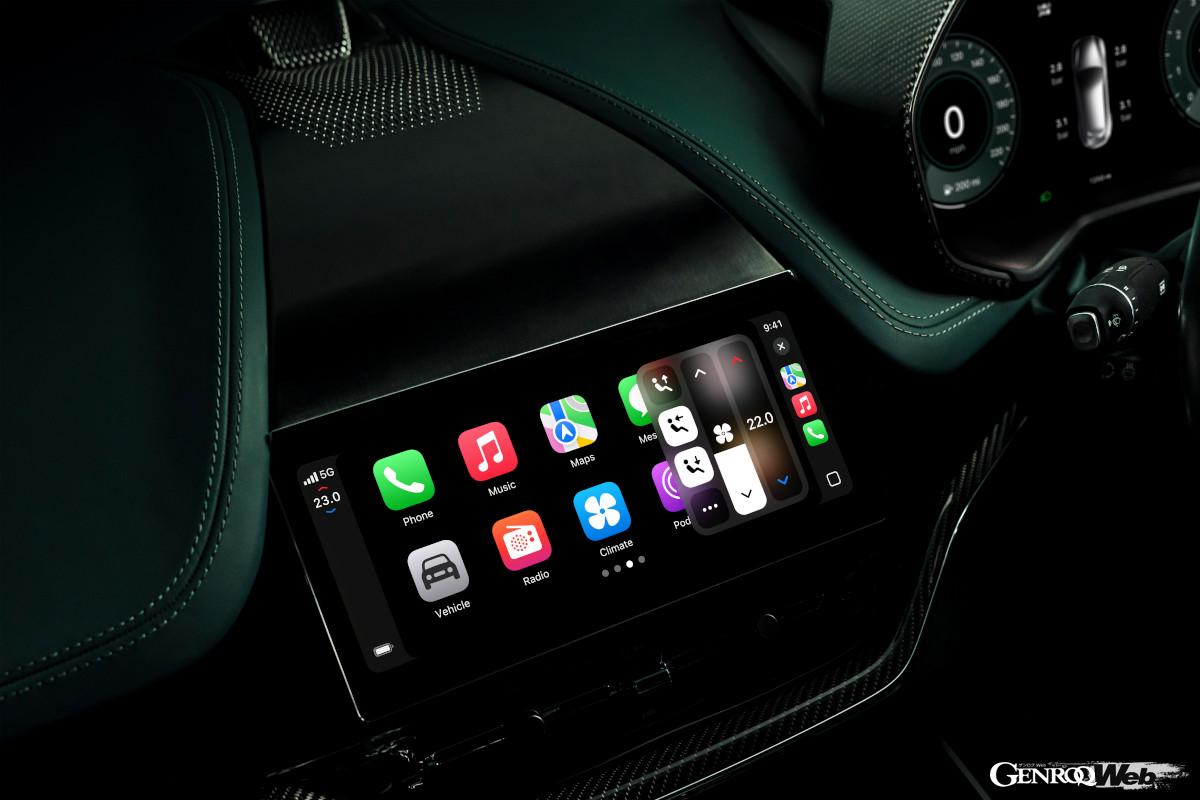
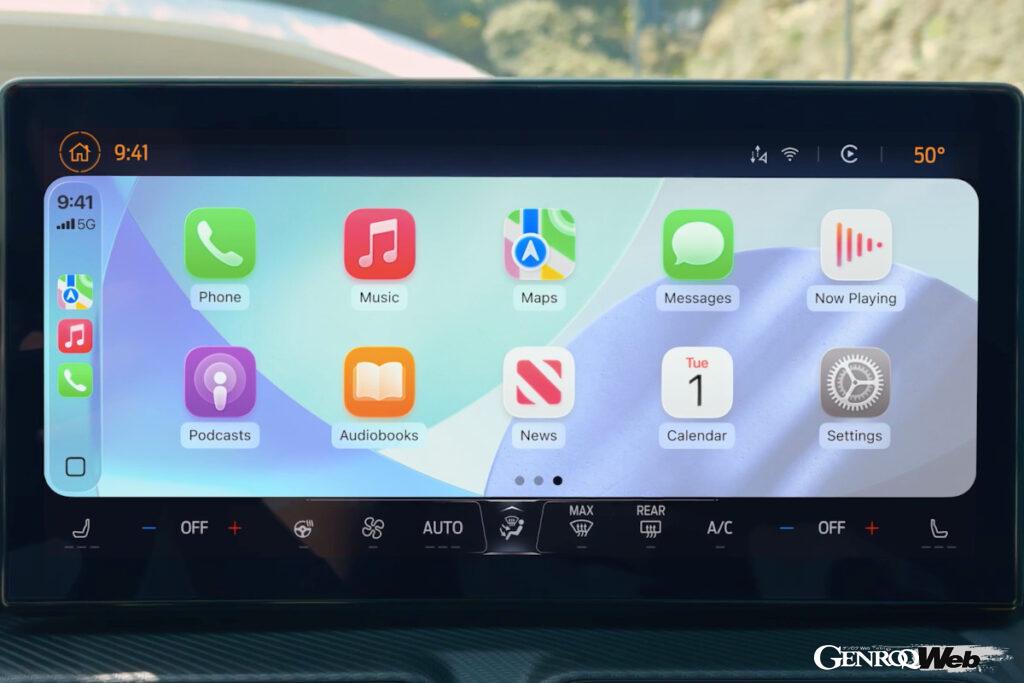
Readers of this website may know that Aston Martin launched the world’s first production car with CarPlay Ultra in May 2025. CarPlay Ultra, which allows for deeper integration with the car and handles real-time vehicle information, climate control, and even vehicle settings, is something Apple has been working hard on for the past few years.
Major Korean brands such as Hyundai, Genesis, and Kia have also officially announced their adoption of CarPlay Ultra, meaning that CarPlay Ultra is not just available to a select few luxury car brands, but is being considered for widespread adoption.
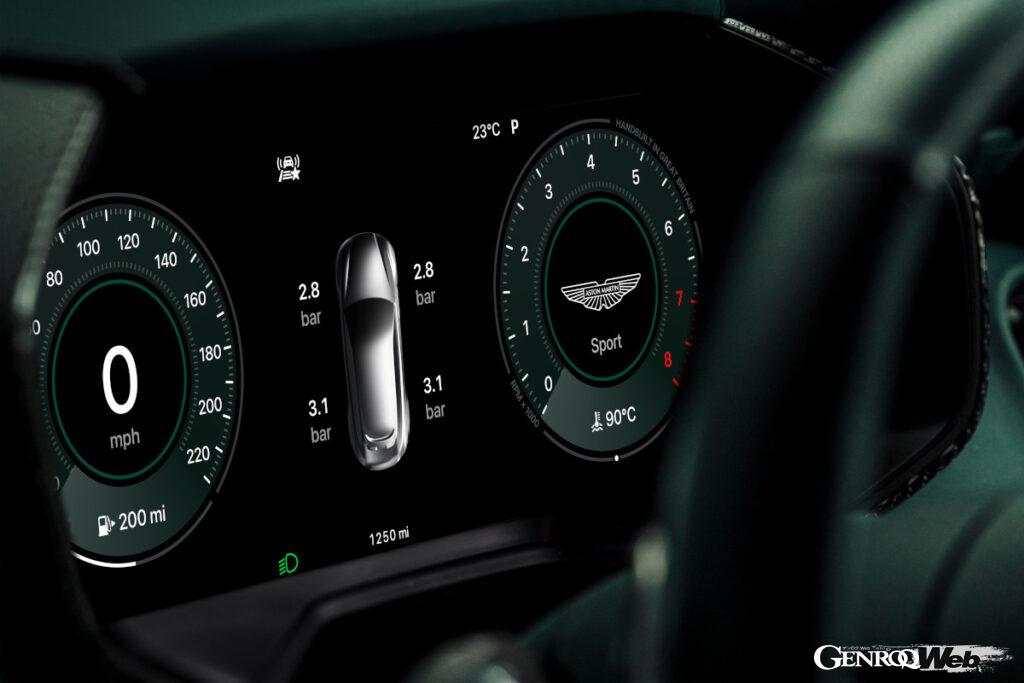
CarPlay Ultra allows you to configure the instrument cluster display on your iPhone, not just the center console, and display information from CarPlay-compatible apps. However, this does not mean that your iPhone will take over the instrument cluster, display speed, ICE RPM, battery status, and even control the air conditioning and audio system.
Technically, there is an ingenious division of responsibilities: the vehicle’s system manages and determines the display content of important instruments related to legal regulations, such as the speedometer and tachometer, as well as ADAS-related information. The iPhone only supplies the materials necessary for drawing, and the meter display continues even if the connection with the iPhone is lost.
It’s not a special system for ultra-luxury cars only.
PHOTO/Aston Martin Lagonda
From the driver’s perspective, both the meter cluster and the center console appear to be a unified interface, but the control entity changes depending on their role. In Aston Martin’s case, Apple’s design team collaborated with Aston Martin to design the display for CarPlay Ultra. They jointly created multiple switchable design themes, fonts, gauge shapes, and more, and added the “Hand-Built in Great Britain” lettering and the company’s signature green color.
This collaborative design is also being carried out with Korean manufacturers, so it is not a special system exclusive to ultra-luxury cars. It is a necessary element to balance the uniqueness required to express the brand identity with the standard requirements of CarPlay Ultra.
If there is no compatible device in the car, the meter cluster provided by the car manufacturer will be displayed, which is the same as the center console display in regular CarPlay.
An “upgraded” in-car experience
PHOTO/Aston Martin Lagonda
The relationship between smartphones and cars, as exemplified by CarPlay, is often discussed from the perspective of who has the sovereignty when it comes to user interaction. From that perspective, CarPlay Ultra means that Apple will take the lead in in-car displays.
Fears that abandoning user relationships, data, and their own creativity could result in the loss of know-how are enough to make automakers hesitate. However, as mentioned at the beginning, consumer expectations for CarPlay are high. If we assume that Japan will eventually approach global figures, in an era where smartphone user experience is the standard, borrowing from smartphones, in addition to developing and maintaining its own infotainment system, makes long-term sense. This is because smartphones have a faster replacement cycle and evolve faster. What’s more, new software generations are released almost every year.
Furthermore, considering that young people who place importance on smartphone connectivity will eventually become the core car purchasing demographic, CarPlay compatibility will become an important factor when choosing a car. Reflecting the situation in the Japanese market, if manufacturers fail to jump on this trend, it could damage their long-term brand competitiveness in the domestic market as well.
This difference will become even more pronounced as imported car brands actively collaborate with Apple. It can also be argued that using smartphones as a hub will give an advantage in terms of software revenue.
General Motors (GM) previously decided against including CarPlay in its EVs, with the aim of securing subscription revenue for in-car content and features. However, the dilemma with user needs is growing, and sticking to its own path is becoming a factor that reduces customer satisfaction.
How will Japanese automakers respond to this trend? Japanese automakers, which have led the world in advanced car navigation systems and telematics services, are currently developing concepts and systems for the next generation, but if CarPlay Ultra is to become a global standard, the right answer may be to “blend” it into their own unique approach.
PHOTO/Apple, Aston Martin Lagonda