

Mercedes-Benz C 280
The top grade when the first C-Class was released
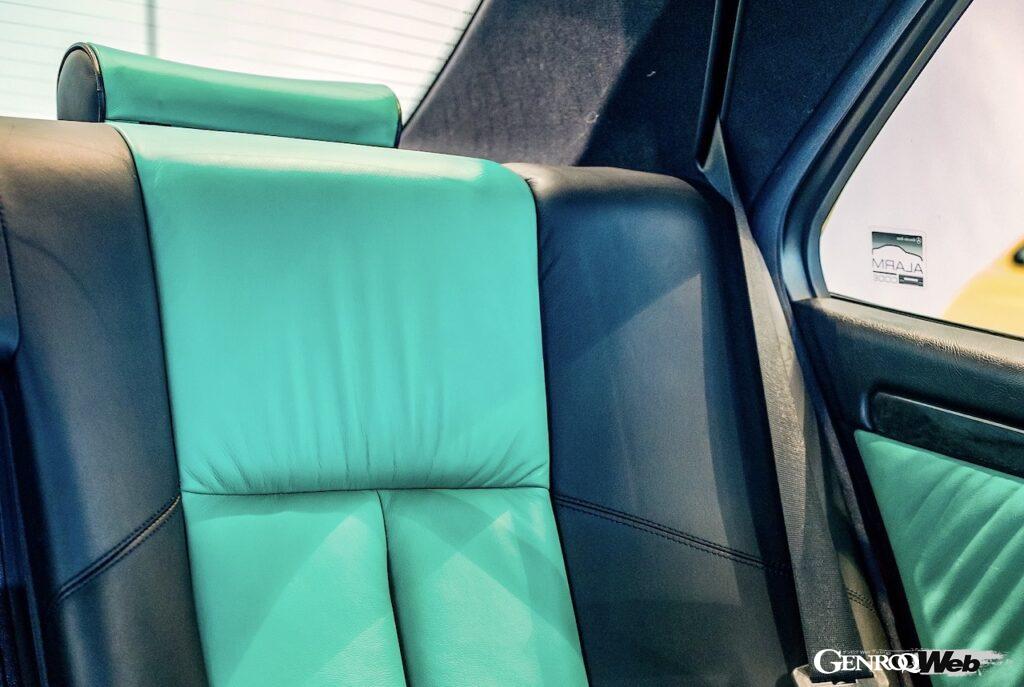
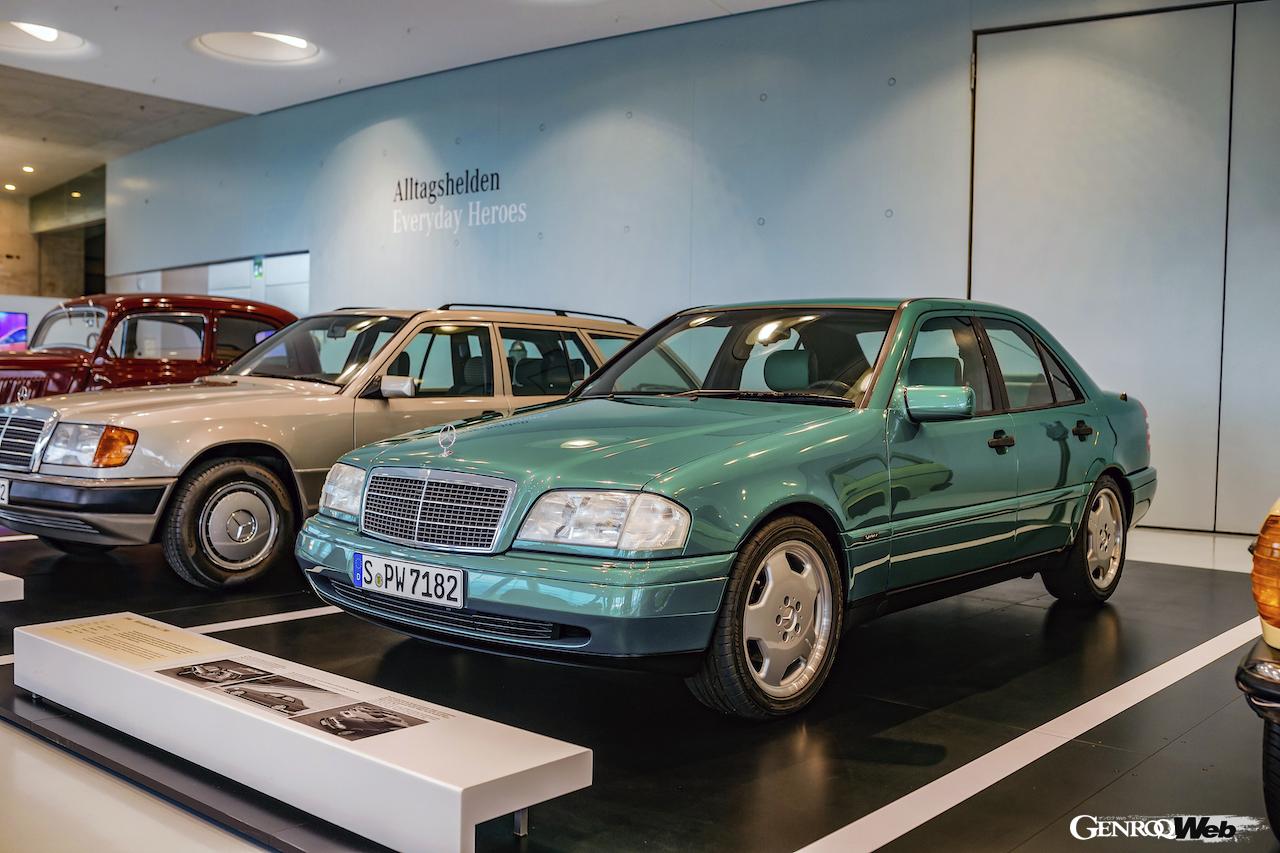
The Mercedes-Benz C280 is equipped with a 2.8-liter inline 6-cylinder engine that produces a maximum output of 193 PS. The interior and exterior are finished in a vibrant green.
The Mercedes-Benz Museum in Stuttgart is currently running a variety of exhibitions. This time, we will be looking at the 1996 Mercedes-Benz C280. Why is this car, which at first glance appears to be an ordinary saloon, on display at the museum as part of a collection?
The first generation C-Class, the W202, debuted in May 1993. At the time of its debut, the C280 was the top grade of the W202. Its 2.8-liter inline 6-cylinder engine produced a maximum output of 193 PS and was rear-driven via an automatic transmission. The “C 36 AMG” debuted in September 1993, marking the high-end of the C-Class.
The body, front and rear aprons, trim strips and exterior mirrors of this C280 are painted in the striking colour code “252” or “designo green metallic”, which is why the car is on display at the museum.
The theme color “green” is also incorporated into the interior. The seats and door panels feature a vibrant green center, adding a vivid contrast to the main color black. In particular, the rear seats feature various rectangular green parts on the seats, backrests, and headrests, forming a vertical pattern that resembles a dynamic brushstroke on the canvas of a modern art piece.
“designo” connects to “MANUFAKTUR”
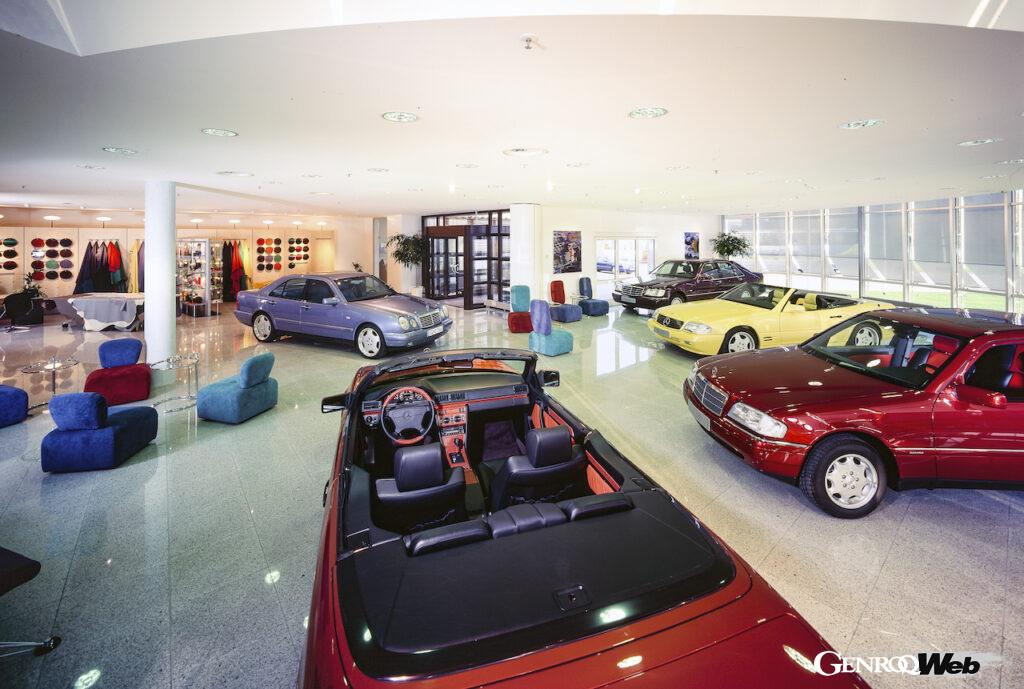
Mercedes-Benz’s customization program “MANUFAKTUR,” which allows customers to freely customize their own cars, originated from the “designo” consulting center introduced at the Sindelfingen plant in 1995.
The exterior color of the C280 on display at the Mercedes-Benz Museum can be said to be a valuable witness to the changing times.
A year earlier, in 1995, Mercedes-Benz’s first “designo” consulting centre had opened in the customer centre at the Sindelfingen plant, where Mercedes-Benz experts could talk to customers and plan their dream car.
Today, all model series are offered with “MANUFAKTUR” which offers exclusive exterior and interior equipment, including “MANUFAKTUR” paint finishes. In December 2024, Mercedes-Benz opened the new “MANUFAKTUR Studio” in the heart of the Sindelfingen plant.
Mercedes-Benz has continued to expand its color range
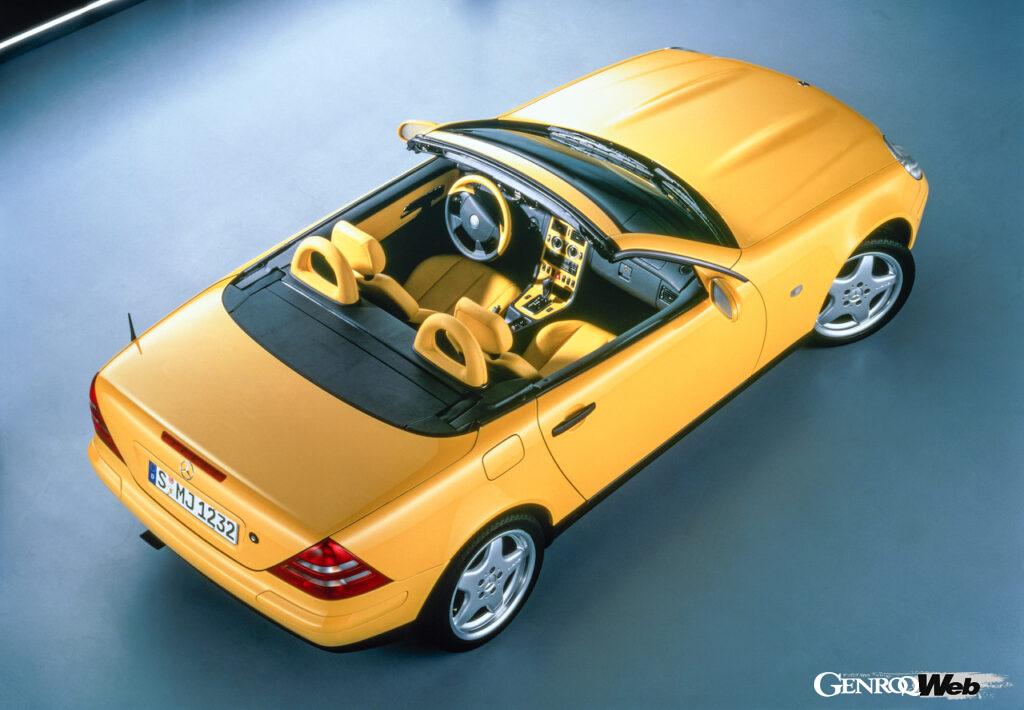
Mercedes-Benz began expanding its body color selection in the 1950s. Until then, the lineup consisted of just five colors, but by 1956, the options had expanded to 26 monotone colors and 23 two-tone colors. The photo shows the vivid yellow of the first-generation SLK, which was introduced in 1996.
Colorful paint finishes, which allow high-quality individualization of cars, have played an important role in the history of Mercedes-Benz. Mercedes-Benz significantly expanded its color range in the late 1950s. As of 1953, Mercedes-Benz passenger cars were available in only five standard paint colors, but by 1956, a luxurious range of 26 monotone and 23 two-tone colors was available.
In the 1990s, Mercedes-Benz focused on body colors that stood out on the streets to emphasize individuality during its new model offensive. Examples include the intense yellow of the SLK (R170 type) introduced in 1996 and the vivid blue metallic of the CLK Coupe (C208 type) in 1997.
To enable color-blind visitors to fully appreciate the beauty of colorful paintwork like the C280, the Mercedes-Benz Museum has introduced EnChroma goggles, which are available for free loan to those who request them. EnChroma goggles filter out a small portion of the color spectrum from visible light, allowing even those with color blindness to enjoy clear, vibrant colors.