
![Why does the Mercedes-AMG emblem feature an apple tree? [Automobile Emblem Secrets 04: AMG]](https://wheelfeed.com/wp-content/uploads/2025/02/2297-1761196629246.jpg)
AMG: The relentless quest to make the impossible possible
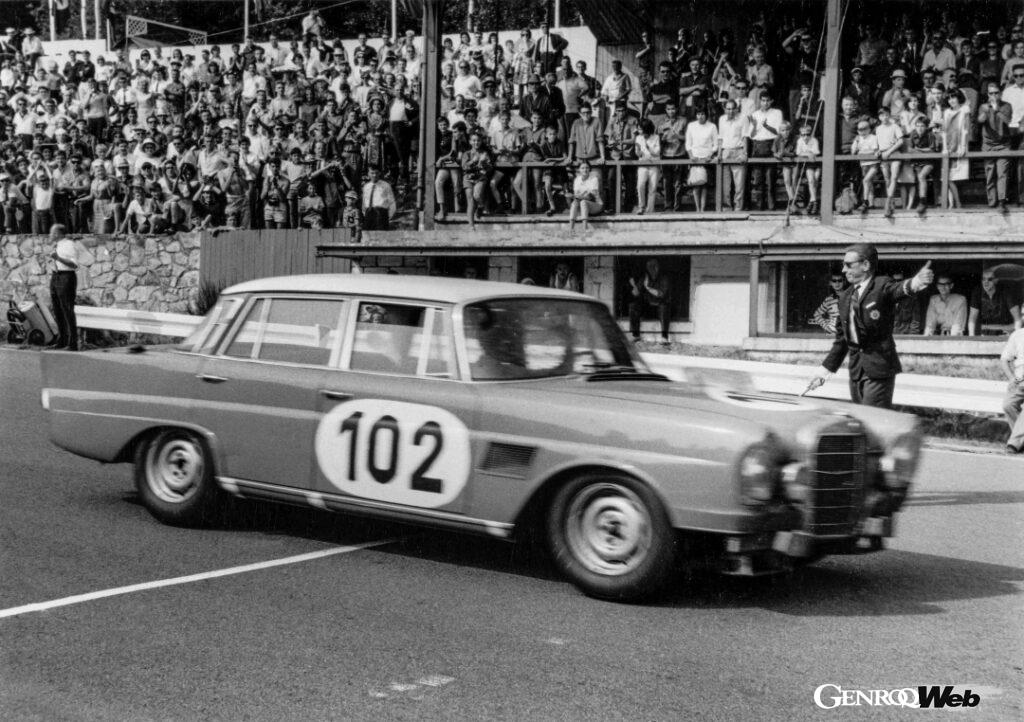
The Mercedes 300 SE (pictured is from 1963) was active in rallies and races.
“AMG” first appeared in the automotive world in 1967, when Hans Werner Aufrecht and Erhard Melcher founded the company. AMG is an acronym for the company’s name at the time, “Aufrecht Melcher Großaspach Engineering GmbH, Design and Testing for Racing Engine Development.”*1
Aufrecht and Melcher worked in the development department of Daimler-Benz on the development of a racing engine based on the M189 3.0-liter inline-six engine. In 1965, the 300 SE (W112) equipped with this engine won 10 races in the German Touring Car Championship. Even after Daimler-Benz ceased motorsport activities, they continued to develop the engine in their spare time at their home in Aufrecht’s hometown of Großaspach.
The visionary Aufrecht (A) and the talented engineer Melcher (M) came together in Großaspach (G), and AMG was born, driven by a passion for motorsport and engineering. Mercedes explains AMG’s brand values as “The tireless spirit of the two founders, who made the impossible possible, is still embodied in the AMG spirit today.”
Respect for the local community and pride in engineering
[1]

[2]
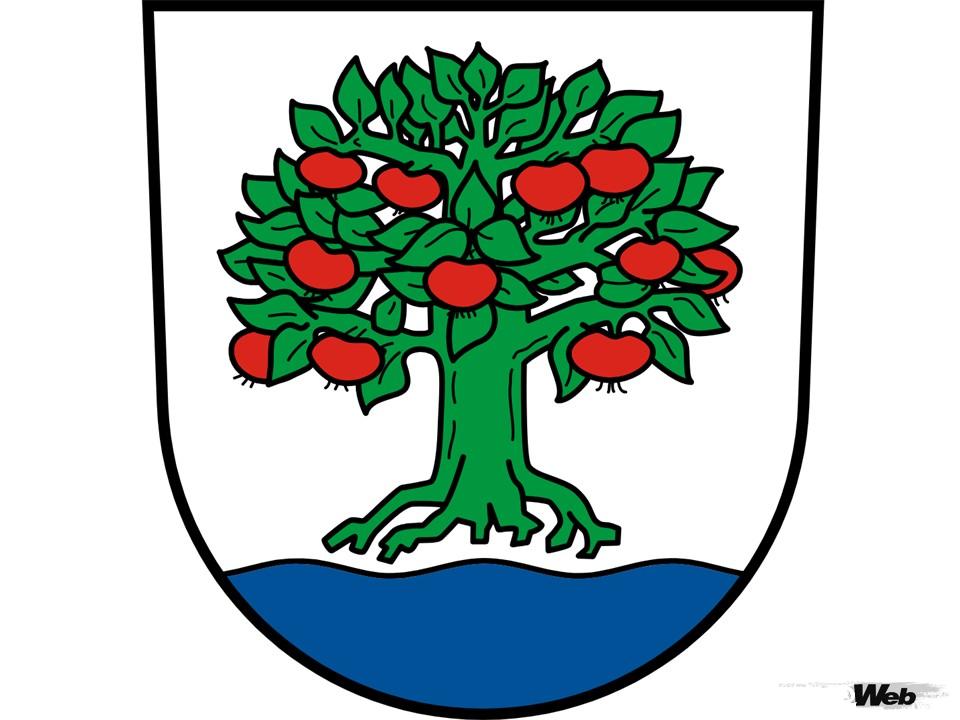
[1] The Affalterbach coat of arms, depicting an apple tree and a river. [2] The AMG emblem, which appears to be inspired by the city’s coat of arms (left) and consists of engine parts (right) and laurel leaves.
The circular emblem attached to the hood of Mercedes-AMG cars is divided into two halves in the center: the left side depicts a river and an apple tree, and the right side depicts a cam and valves.
The apple tree and stream of water represent Affalterbach, where AMG has had its headquarters since 1976. Located on the outskirts of Stuttgart on the Neckar River, the town’s name comes from the old German word “affalter,” meaning apple tree, and “bach,” the German word for “stream.” Just as Porsche uses the Stuttgart coat of arms in its emblem, AMG also pays homage to its hometown in its symbol.
The valves, valve springs, and cams on the right represent AMG’s outstanding engine development technology, and the passion for engineering that the two founders held is evident in this emblem.
The laurel leaves that surround the car have long been a symbol of victory, and are also used as a mark of glory in the world of motorsport. Along with the laurel leaves, the Affalterbach emblem, featuring the local name and the AMG logo, is given to high-performance Mercedes-AMG cars.
Establishing the brand through racing and developing alongside Mercedes
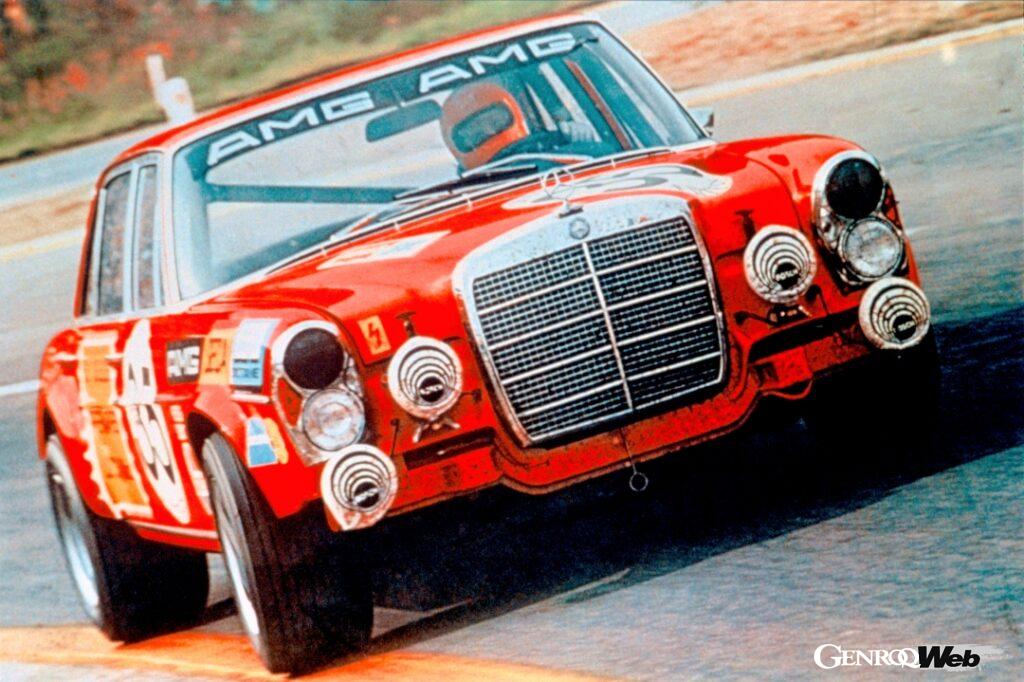
Although it was mocked as the “Red Pig,” the AMG 300 SEL 6.8 was one of the cars that made AMG’s name known around the world.
One of the key events in establishing the AMG brand’s global presence was the success of the Mercedes-Benz 300 SEL 6.8 AMG (W109). This car, which appeared in the 1971 24 Hours of Spa-Francorchamps, was based on a large, heavy luxury sedan equivalent to today’s S-Class. Its red paintwork earned it the nickname “Red Pig,” but it outpaced the Ford Capri, Alfa Romeo 2000 GTA, and BMW 2800 CS, achieving a class victory (second place overall).
In 1976, AMG moved to new workshops and offices in Affalterbach. In the 1980s, AMG became an official partner of Daimler-Benz, and from 1990 AMG models began to be sold in Mercedes-Benz stores around the world. In 1993, the first jointly developed model, the Mercedes-Benz C 36 AMG, was released, and in 1999 Aufrecht sold his shares to DaimlerChrysler AG*2 (then). In 2005, Mercedes-AMG GmbH*3 was established as a wholly owned subsidiary of the company.
Pride in quality
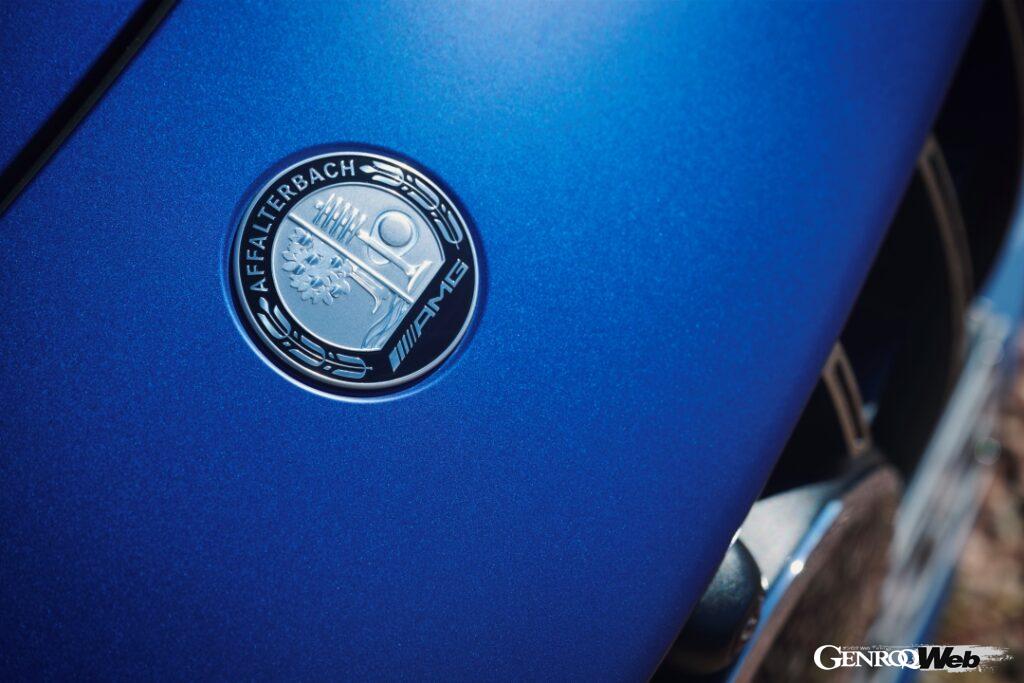
The AMG emblem is attached as a symbol of high performance and high quality.
Currently, all Mercedes-AMG models are developed in Affalterbach. Based on the company’s “One Man, One Engine” philosophy, the engines are assembled by hand and the engineers’ signatures are engraved on the badges, demonstrating AMG’s absolute confidence in the quality of its products.
AMG’s motorsport division was transferred to HWA, a new company established by Aufrecht, when the company’s shares were transferred in 1999. The company, which employs around 200 people, has a workshop near Mercedes-AMG and competes in DTM and other races together with Mercedes-Benz Motorsport.
*1 In German, it means “Aufrecht Melcher Großaspach Ingenieurbüro, Konstruktion und Versuchen zur Entwicklung von Rennmotoren”
*2 “AG” is an abbreviation for “Aktiengesellschaft” which means “joint stock company.
” *3 “GmbH” is an abbreviation for “Gesellschaft mit beschränkter Haftung” which literally means “limited liability company,” and is similar to joint stock companies and the limited liability companies that formerly existed in Japan.
PHOTO/Mercedes-Benz, Toru Ishikawa