
![What soul does ALPINA’s “red and blue” infuse into BMW? [Automobile Emblem Secrets 05: ALPINA]](https://wheelfeed.com/wp-content/uploads/2025/03/2203-1761195332732.jpg)
An emblem that symbolizes high performance and elegance
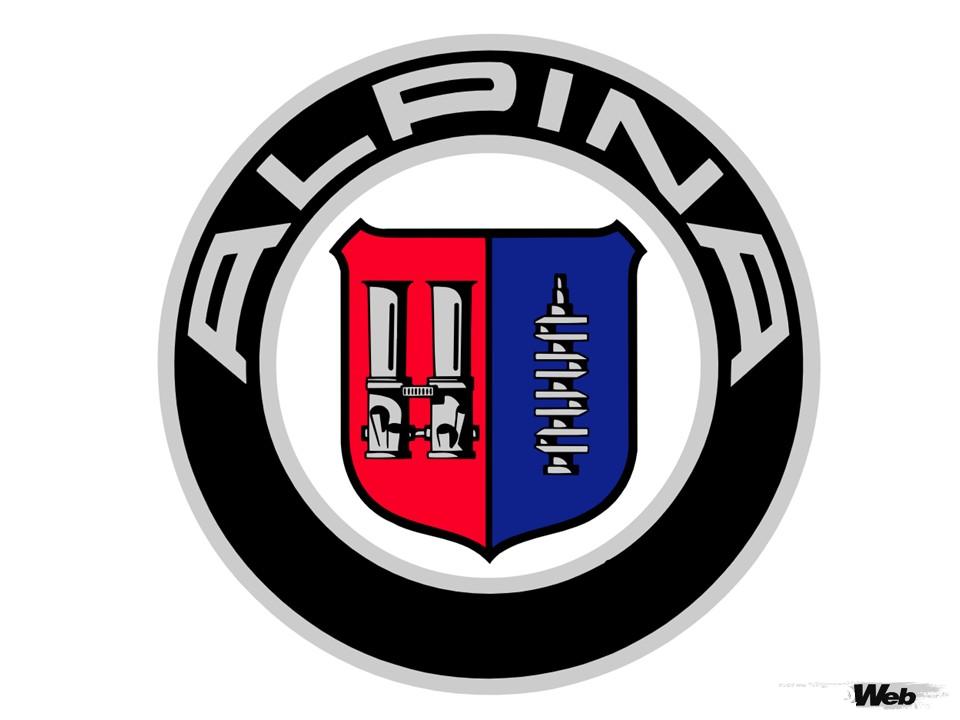
The Alpina emblem expresses sportiness and elegance with its red and blue colors.
The Alpina emblem is a circular badge with the brand name “ALPINA” at the top and a shield design inside. German cities have long used shield-shaped emblems to symbolize regional pride and the inheritance of technology and tradition. This is also the reason why Porsche uses a “crest,” or shield, as its emblem. You may also see similar designs in the world of sports, such as the German soccer team.
In the case of Alpina, this shield is divided into two halves. The red on the left half is thought to symbolize sportiness. The design depicted there is inspired by the twin carburetor for the BMW 1500, the first car the company developed after its founding. This likely expresses the brand’s passion for the carburetor, which was the starting point for everything.
The crankshaft is positioned vertically on the right side, which is thought to represent the capacity and torque of Alpina’s high-performance engines. The background color is a dark blue, which seems to express elegance, in contrast to the sporty red painted on the left side. With these two colors and two types of parts, the Alpina emblem likely conveys its identity as an “elegant and high-performance” car manufacturer.
High performance that is a bit different from the “M”

[1]

[2]

[3]
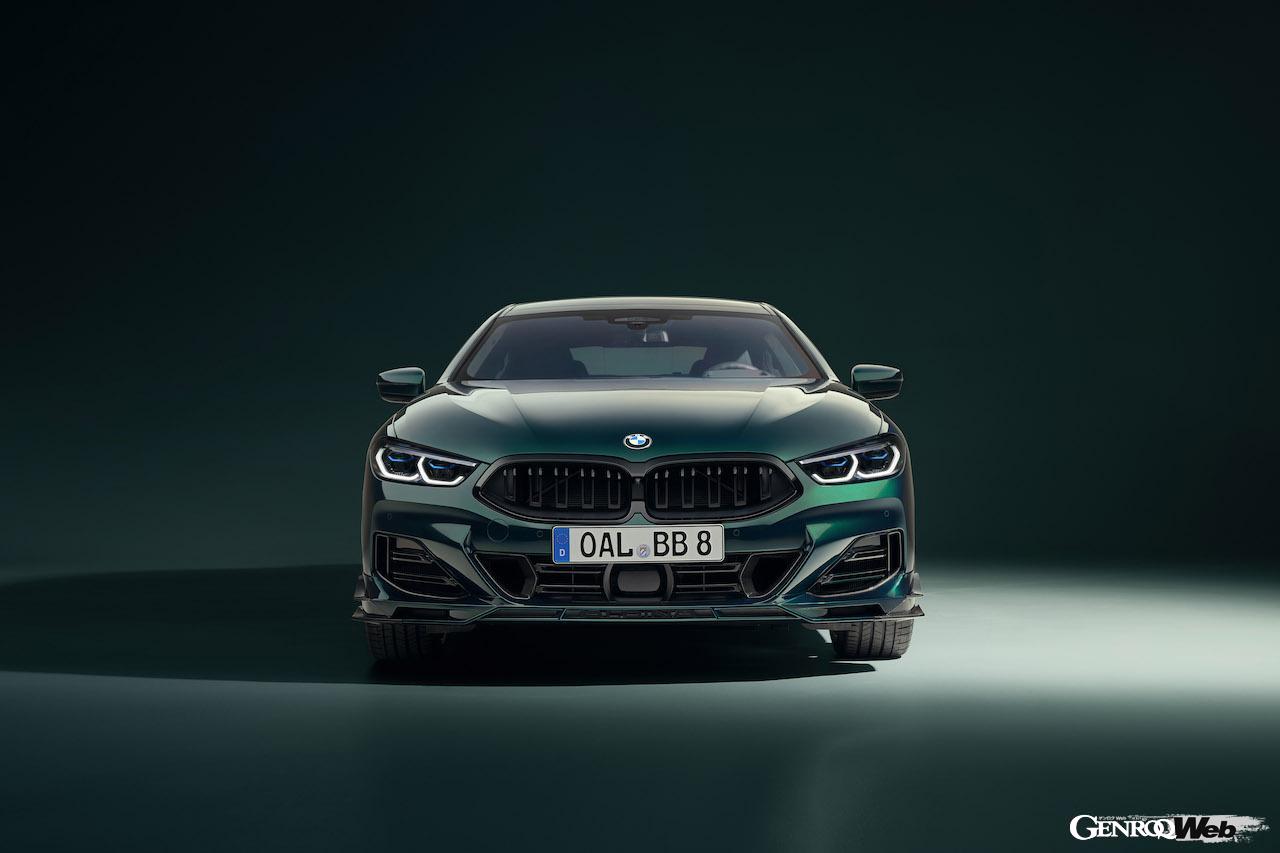
[1] BMW badges are placed on the nose and tail, and ALPINA emblems are placed on the engine cover and other parts. [2] In addition to the emblem in the center of the wheels, ALPINA lettering can be seen on the brake calipers. [3] The steering wheel has an ALPINA badge instead of a BMW badge in the center.
BMW M Motorsport GmbH, also part of the BMW Group, develops M models based on the concept of “ultimate sports driving honed on the race track.” On the other hand, BMW Alpina is positioned as a grand tourer that combines high performance with refined comfort. Its unique craftsmanship is incorporated into the engine tuning, suspension tuning, and interior design.
Alpina also entered the wine sales business in 1979, and currently has business with over 1,000 high-end restaurants and hotels. This corporate culture may also be influencing its approach to interior and exterior design and engineering, which is different from other tuners.
Alpina’s history began in a typewriter factory

[1]

[2]
[1] The origin of Alpina is the twin-carburetor engine developed for the BMW 1500. [2] The success of the BMW 3.0 CSL in motorsports made the Alpina name known around the world. (Photo is for illustrative purposes only.)
The official name of the Alpina company is ALPINA Burkard Bovensiepen GmbH & Co. KG, and it was founded in 1965 by Burkard Bovensiepen. Burkard’s father ran ALPINA, a company that manufactured typewriters and other products, in the town of Kaufbeuren, about an hour west of Munich. The company’s history began with the development of the powerful “Alpina Unit,” which used two Weber carburetors for the BMW 1500. This product was highly praised by BMW, and Alpina was officially recognized as a BMW supplier.
In the 1970s, Alpina competed in motorsports with the BMW 3.0 CSL. Together with legendary racing drivers such as Derek Bell and Niki Lauda, the company achieved success in touring car races, showcasing Alpina’s performance to the world. From 1978, the company began developing road cars based on the know-how it had cultivated in motorsports, aiming to achieve performance that exceeded that of the base model and a comfortable, smooth ride. In 1983, the company was officially certified as an “automobile manufacturer” by the German Federal Motor Transport Authority.
Entering a new era under the BMW Group

With the development and production capacity at the Buchloe plant set to be scaled down at the end of 2025, current employees will be offered placements within the BMW Group or affiliated companies.
Since 2000, the company has strengthened its relationship with BMW, and is trying to differentiate itself from the “M” brand by creating “elegant and high-performance” cars. Using BMW vehicles as a base, the company completely redesigns everything from the interior and exterior to the engine, transmission, and chassis. From luxury sedans to SUVs, including diesel engine models, skilled engineers tailor around 1,700 vehicles per year, with around 300 sold in Japan annually.
In 2022, Alpina Burkardt Bovensiepen decided to restructure its business and transferred the trademark rights of the “Alpina” brand to the BMW Group. Vehicle development and production, which has been carried out in Buchloe, a town next to Kaufbeuren, since 1978, is also scheduled to end at the end of this year. From 2026 onwards, BMW’s “Alpina” will occupy a place in the BMW Group’s luxury car lineup.
PHOTO/BMW