
Renault 5 Turbo 3E
Much more advanced specs than the prototype
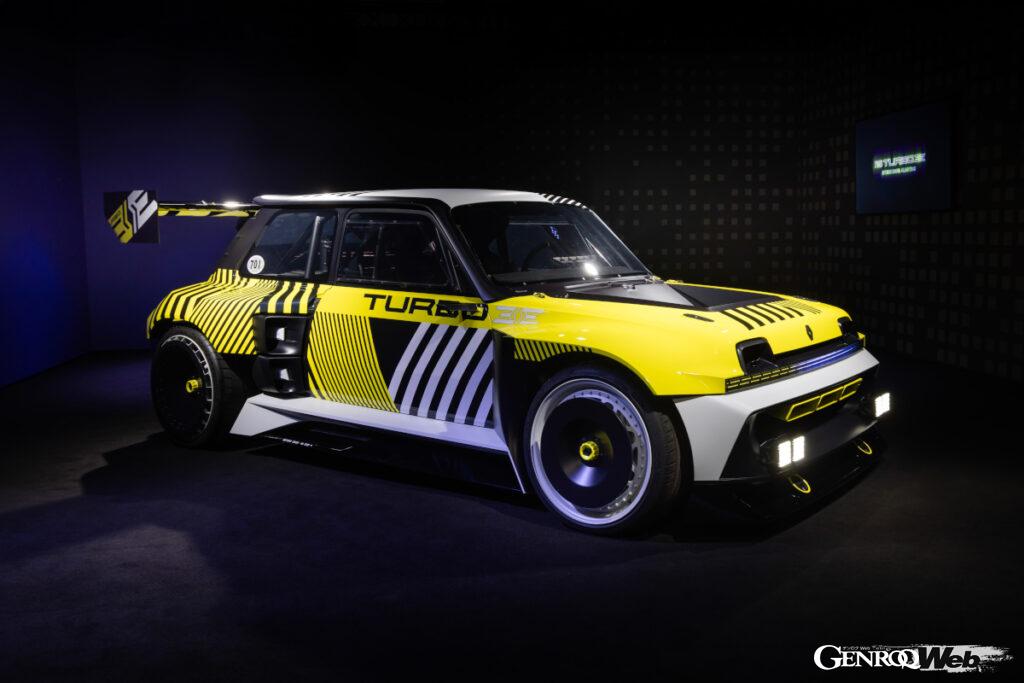
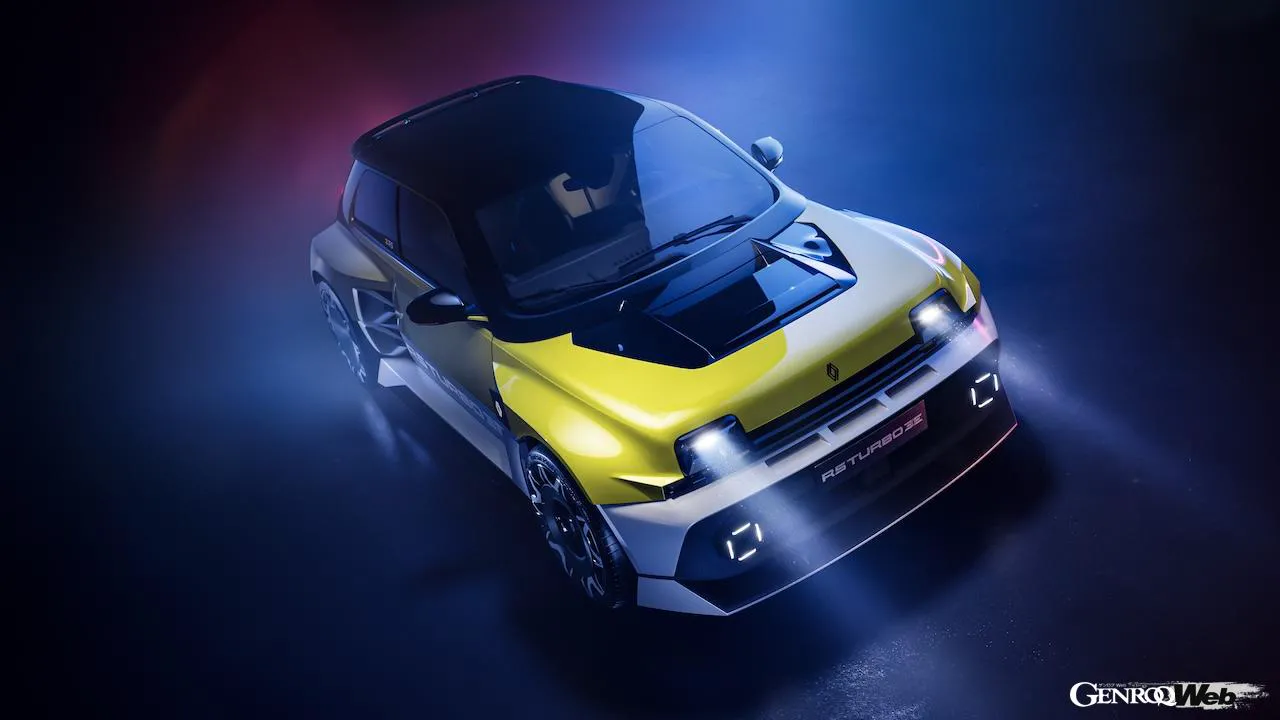
“Renault 5 Turbo 3E Prototype”

“Renault 5 Turbo”
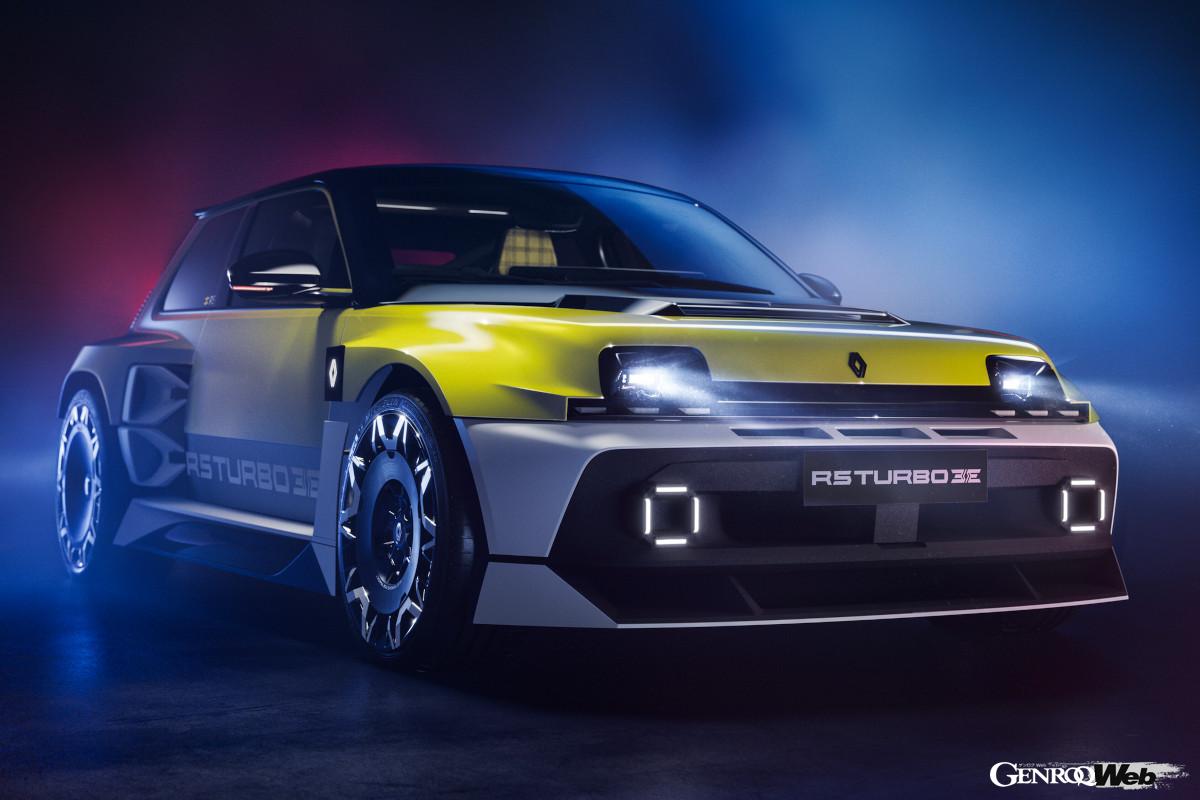
It’s a car that could be called quite a bold statement or a powerful move, but it’s probably legitimate when you consider that it’s a car that exudes brutalism and is the epitome of magnificent turbo technology. It’s the production version of the Renault 5 Turbo 3E, which I saw at the Flins plant, about 30 minutes west of Paris. The sudden announcement of the production model with teaser images at the end of last year was a surprise in itself. Less than a quarter later, it was unveiled to the press and dealers around the world.
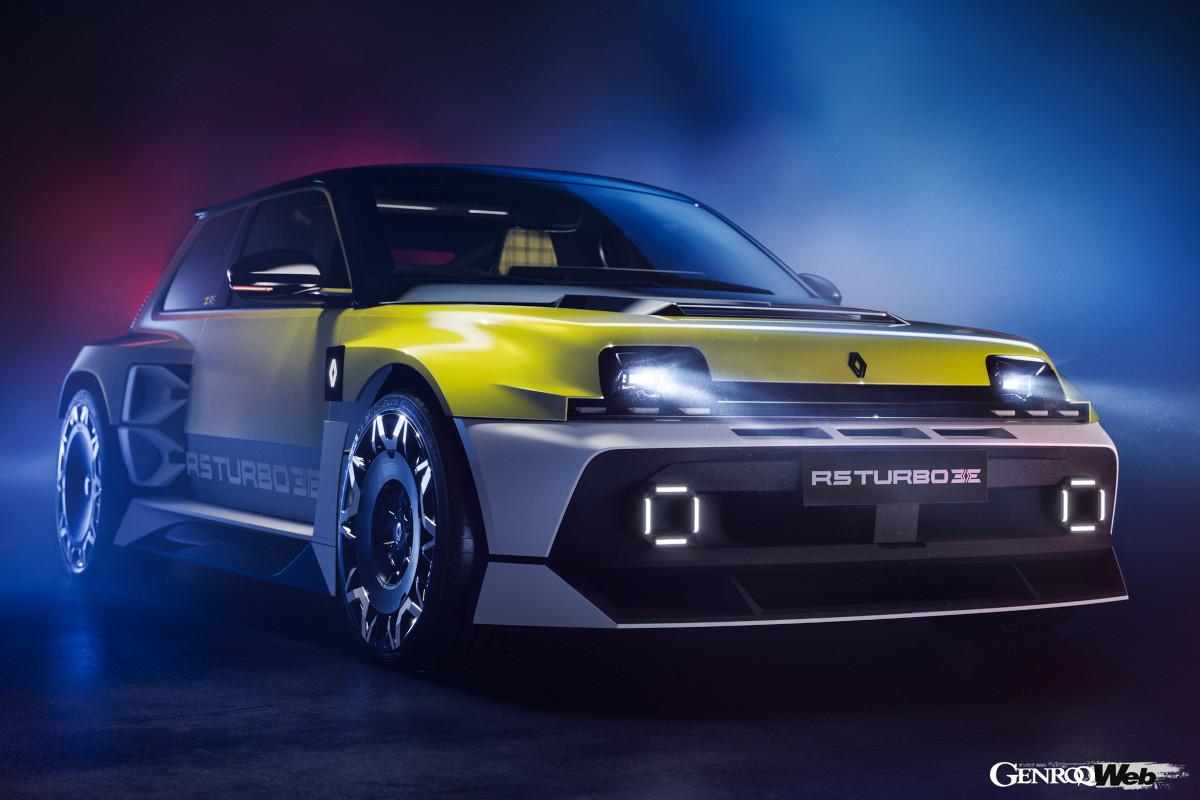
This time it’s not a rolling chassis, but a design mock-up that has just completed exterior validation. That said, it retains the rough-hewn feel of the prototype that was unveiled at the Mondial Paris two and a half years ago, but it’s clearly a “consumer” specification with a view to the mass market, with features such as a front bumper that is molded as one with the duct, front and rear fenders that now cover the tires, a modern NACA duct, and rear lights that are the same as those on the mass-produced 5E-Tech.
However, the specs have escalated significantly since the prototype. While the 2022 prototype had a maximum output of 380hp (385PS) and a maximum torque of 700Nm, this production version boasts 540hp (547PS) and a maximum torque of 4,800Nm (!) from two 200kW in-wheel motors. In other words, these figures are possible because the torque is not extracted from the drive shaft of a prime mover mounted near the center axis of the vehicle, but is generated directly from the inside of the left and right rear wheels, without any reduction gears or transmissions in between.
Renault claims the car will accelerate from 0-100km/h in under 3.5 seconds, reach a top speed of 270km/h, and have a WLTP range of over 400km thanks to its 70kWh NMC lithium-ion battery. The 800V system supports 350kW fast charging and 11kW standard charging.
Power-to-weight ratio is 2.65kg/PS
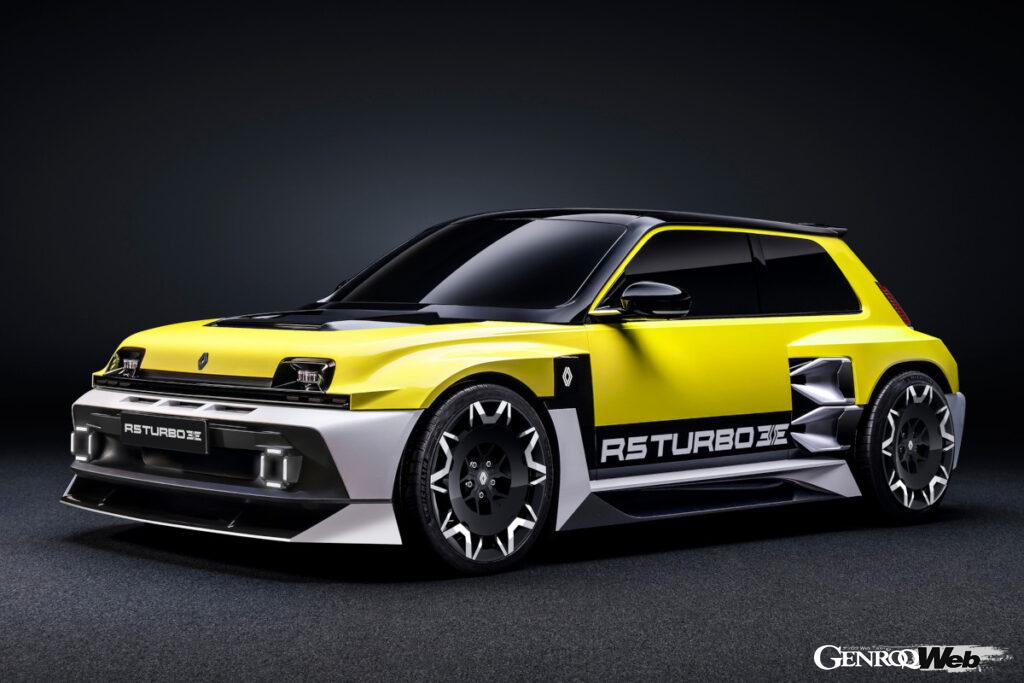
“Renault 5 Turbo 3E”

“Renault 5 Turbo 3E”
Another thing to note is that not only are the body panels made of carbon composite, but the aluminum platform is also specially designed. The battery weighs 530 kg of the 1,450 kg vehicle weight, but this results in a very low center of gravity. The power-to-weight ratio is 2.65 kg/PS, which is in the realm of what could be called a supercar.
Because the in-wheel motor is housed inside the rear wheel, the only space under the floor behind the battery is the electric management module, which mainly consists of an inverter and on-board charger. This means that the luggage compartment is actually quite spacious. Because it is an in-wheel motor, the unsprung weight should not be small, but the suspension uses a classic spring and damper system rather than a variable damping force system.
“We have optimized each motor coil, taking into account the distribution of the tread surface and other heavy loads. Torque is determined by the rotor diameter, and power is determined by the rotor thickness, but all of this was developed specifically for the 5 Turbo 3E,” says Frédéric Laurent, head of vehicle development engineering.
The reason for the existence of the 3 as a road car

“Renault 5 Turbo 3E”
Alpine is in charge of the technical development process. The in-wheel motor exhibited in the presentation space featured a 450mm diameter brake disc inside. The regenerative braking strength can be selected in four stages, and cooling air is taken in through air intakes in the rear fenders.
The answer to the question, “Why a turbo for a BEV?” is summed up in the unique packaging of this in-wheel motor. Rather than simply pursuing torque and power quantitatively, the lack of a transmission or reducer means that the transmission efficiency and vehicle control with extremely little delay or loss boost the BEV’s vehicle dynamics. This is the reason for the existence of the “3” as a road car, succeeding the Renault 5 Turbo 1 and 2, which were renowned for the flashy actions of renowned driver Jean Ragnotti, despite being a homologation car for rally racing.
The price has not been announced

“Renault 5 Turbo 3E”
“Renault 5 Turbo 3E”

“Renault 5 Turbo 3E”
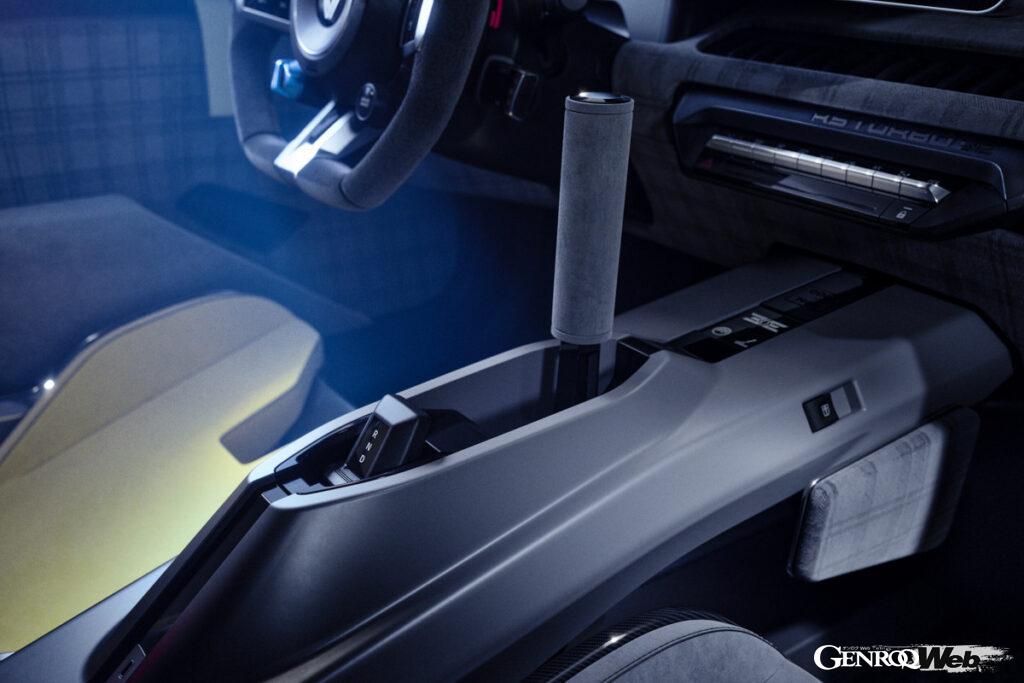
The actual interior was not revealed in this design mockup, but judging from the CG images, the steering wheel is the same as that of the Alpine A290, and the instrument panel and center display are similar to those of the 5E-Tech, but the graphics and theme skin are exclusive, and switches for unique functions such as a three-stage drift assist function can also be seen.
Standing upright from the floor is the handbrake, which cuts off the driving force when pulled. I felt like I was seeing proof that the rear brake has a large diameter of 450mm. After all, it’s not just a power slide, but rather the desire to control it by shifting the weight. The seats are carbon bucket seats, a familiar feature from the A110 R, and motifs and themes such as gray checkered fabric and yellow accents can be personalized to suit your taste.
By the way, even though Renault has started accepting orders, they have not announced the price. It is likely to be around 150,000 euros (approximately 24 million yen), excluding options and personalization, which is slightly more expensive than the current Alpine A110 R Turini, but not as expensive as the A110 R Ultim.