
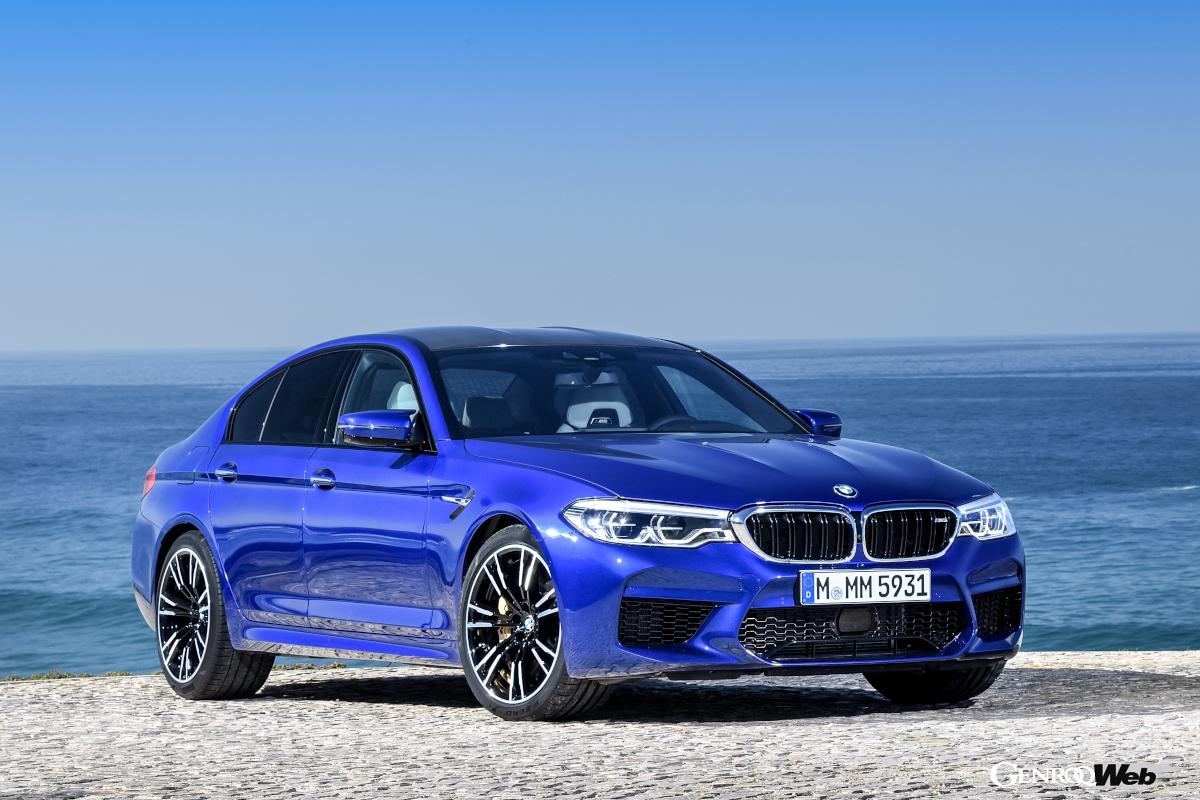
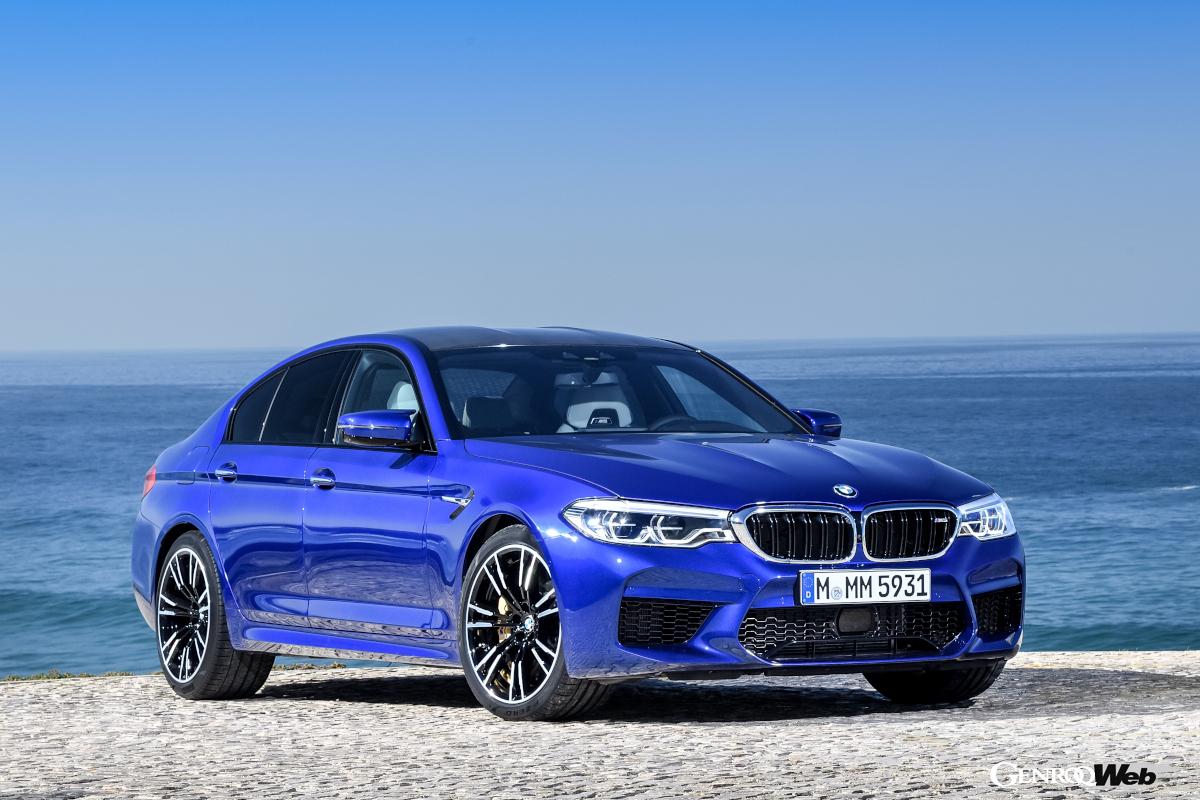
M5 (F90)
First to feature a four-wheel drive system

The BMW 5 Series, which has been competing for supremacy in the E-segment with the Mercedes-Benz E-Class and Audi A6, evolved into its seventh generation G30 model in October 2016.
While maintaining the styling concept, the car uses aluminum panels for the bonnet hood, doors, roof, and trunk lid, and the body shell is made of a higher proportion of high-tensile steel, aluminum alloy, and magnesium alloy, resulting in a weight reduction of approximately 100 kg compared to the previous model.In addition, the car has a lower center of gravity, a 50:50 front-to-rear weight distribution, and improved aerodynamics, resulting in a Cd value of 0.22, exceeding the previous model’s 0.25, and it can be said that the car is characterized by a shift in direction to further improve driving performance and sportiness.
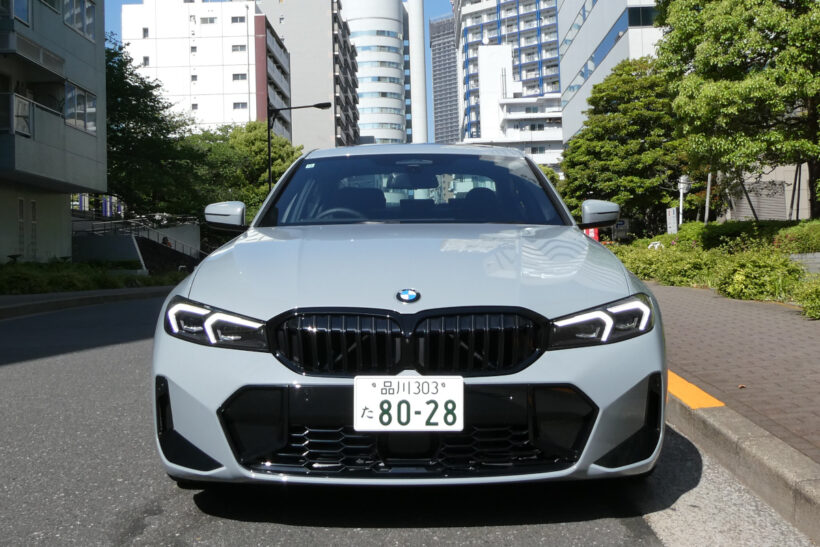
Then, in August 2017, the new F90 M5, based on the G30, was released. Its biggest feature is that it is the first M5 series model to be equipped with a four-wheel drive system. This is an M5-exclusive system that controls BMW’s xDrive and Active M Differential with Driving Dynamics Control, and it offers three modes: the default “DSC on 4WD mode,” “M Dynamic Mode (MDM)” which increases drive torque to the rear axle, and “2WD mode” which cuts off DSC and switches to rear-wheel drive.
Longest continuous drift recorded
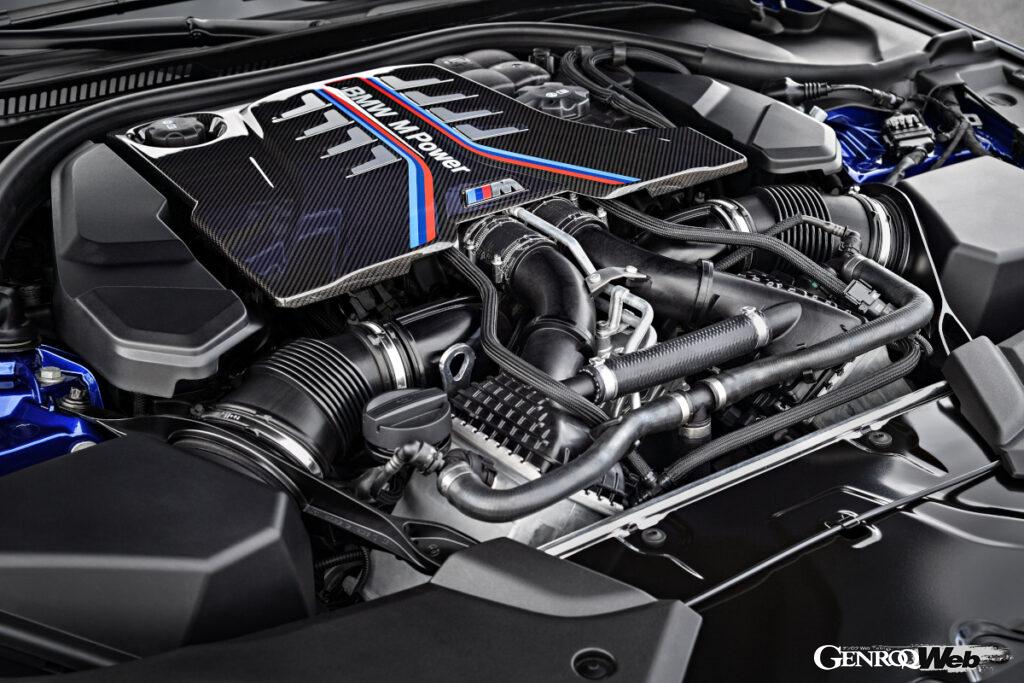

The engine is the same S63 type 4395cc V8 DOHC 32 valve as the previous model, but the maximum output has been significantly increased to 600PS/5600-6700rpm and maximum torque to 750Nm/1800-5600rpm.The gearbox has also been changed from a 7-speed DCT to an 8-speed M Steptronic (ZF GA8HP75Z) based on a torque converter AT.
It offers the same performance as its predecessor, with 0-100km/h acceleration in 4.4 seconds, and thanks to the effects of weight reductions in various parts such as an idle stop system, a brake regeneration system, and the use of CFRP in the roof (the vehicle weight is 70kg lighter than the previous model), average fuel economy has improved by more than 30% to 10.1km/liter (European combined mode).
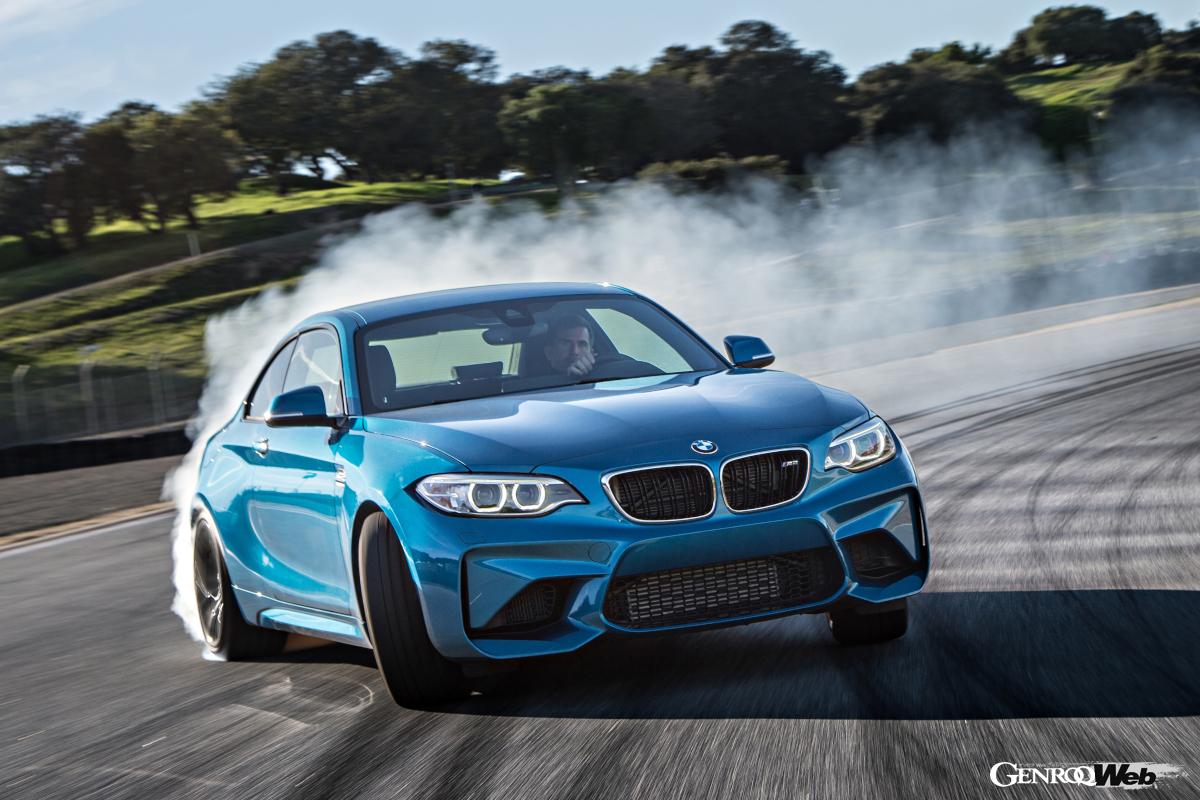
The suspension is the same as the base model, with a front double wishbone and rear multi-link combination, but the coils and dampers have been strengthened and the steering geometry has been changed for a special setting. It boasts nimble and stable handling, and in December 2017 it achieved the longest continuous drift of 374km and the longest twin drift of 79km, both of which were recognized by the Guinness World Records.
Then in 2018, the “M5 Competition Package” was released, which tuned the maximum output to 620PS/6000rpm, and included an increased front camber angle, a 7mm lowering, anti-roll bars, a special suspension with improved springs that stiffened the front and rear damping by 10%, and a new exhaust system.
A super performance saloon in both name and reality

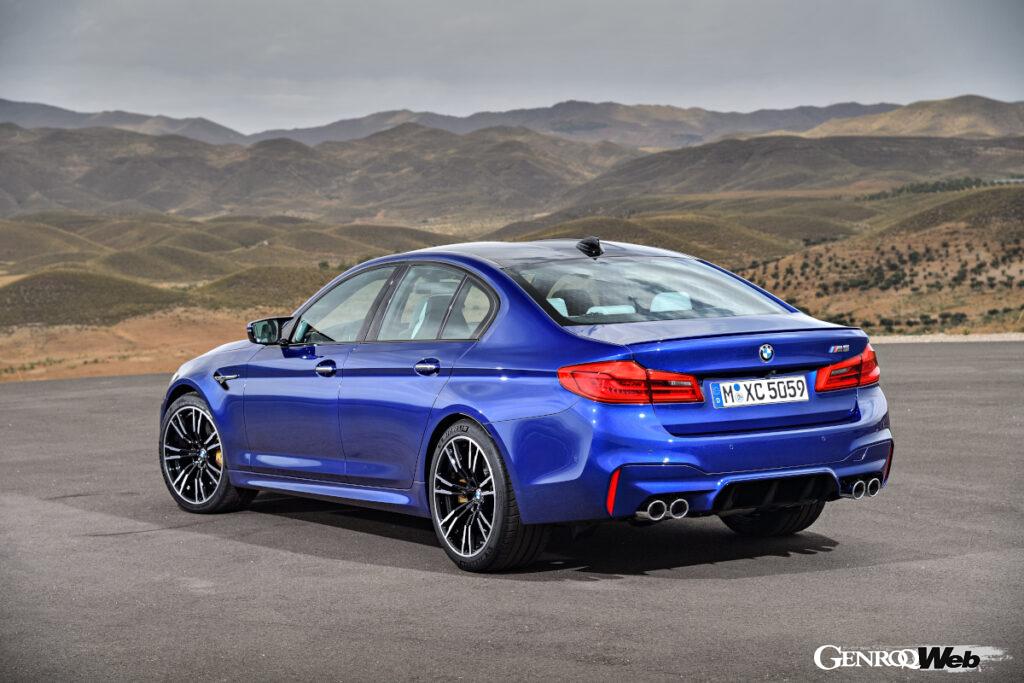
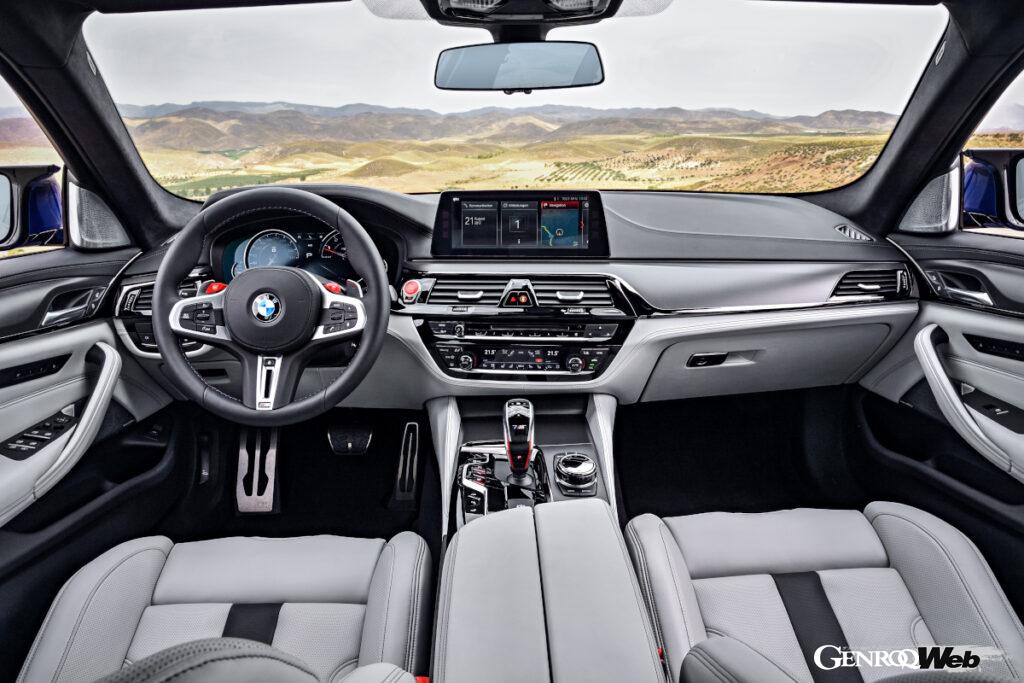
A minor change was announced in June 2020. The exterior included headlights equipped with daytime running lights, as well as changes to the taillights and the shape of the front and rear bumpers. The interior was updated, and improvements were made to every detail, including the addition of height-adjustable dampers, and the car was released as a 2021 model.
Furthermore, in 2021, the first CS version of the M5 will be available, the “M5 CS,” limited to 1,000 units. Its standard features include a 4.4-liter V8 twin-turbo engine producing 635 PS, M carbon ceramic brakes, four bucket seats with Nürburgring embroidery on the headrests, dampers from the M8 Gran Coupe, as well as a CFRP bonnet and hood, front splitter, lip spoiler, and rear diffuser. As a result, the vehicle weight has been reduced by 116 kg, and it boasts incredible performance with 0-100 km/h acceleration in 3.0 seconds, earning it the title of a super performance saloon in both name and reality.











![The S-Type, widely regarded as Bentley’s masterpiece post-war saloon [Bentley 100 Years of Car History]](https://wheelfeed.com/wp-content/uploads/2025/11/4703-1762127546348.jpg)