
![What is the 993 Porsche 911 Turbo, a car with a “Galaxy-level evolution”? [Car English Studies Vol. 01]](https://wheelfeed.com/wp-content/uploads/2025/04/1991-1761192320121.jpg)
911 dancing a “high-octane dance”
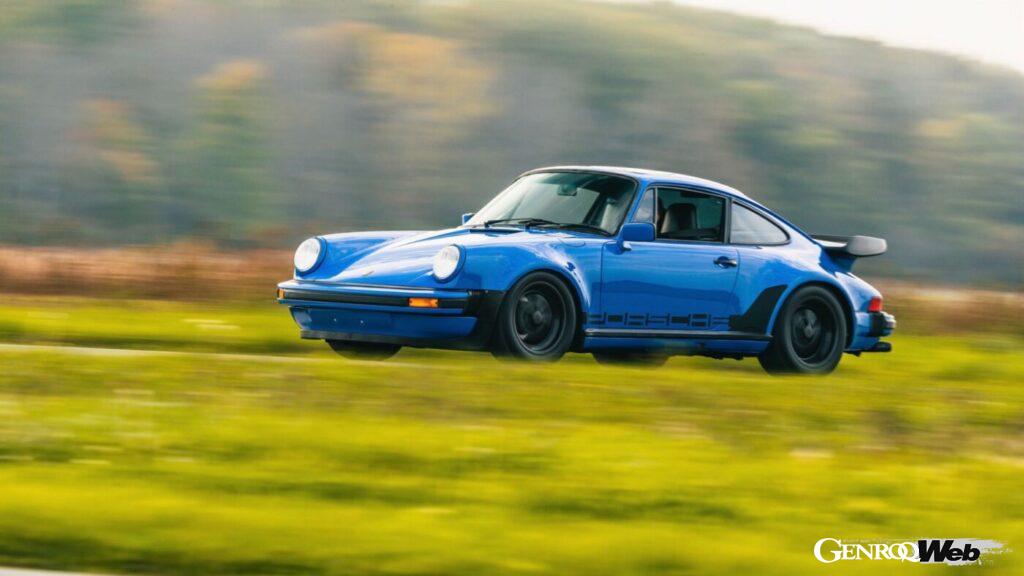
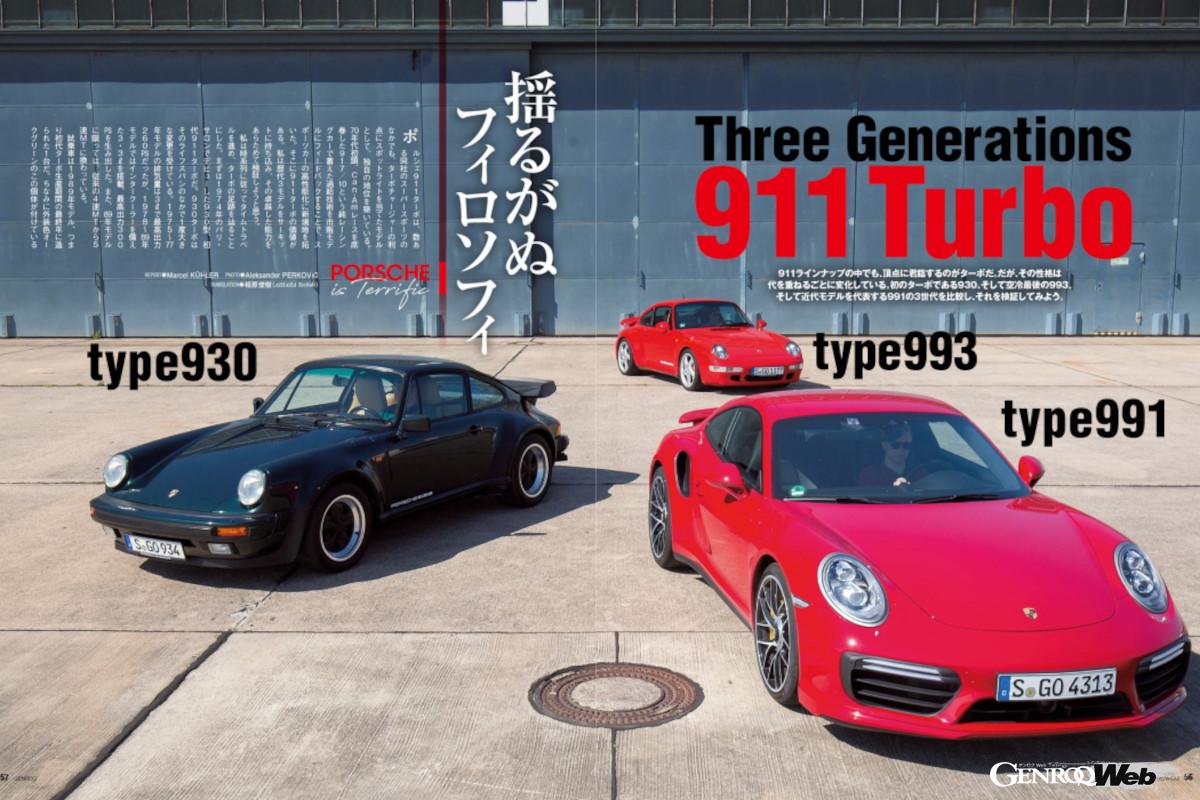
The Porsche 911’s “high-octane dance” began with the first-generation 930 (all photos are for illustrative purposes only).
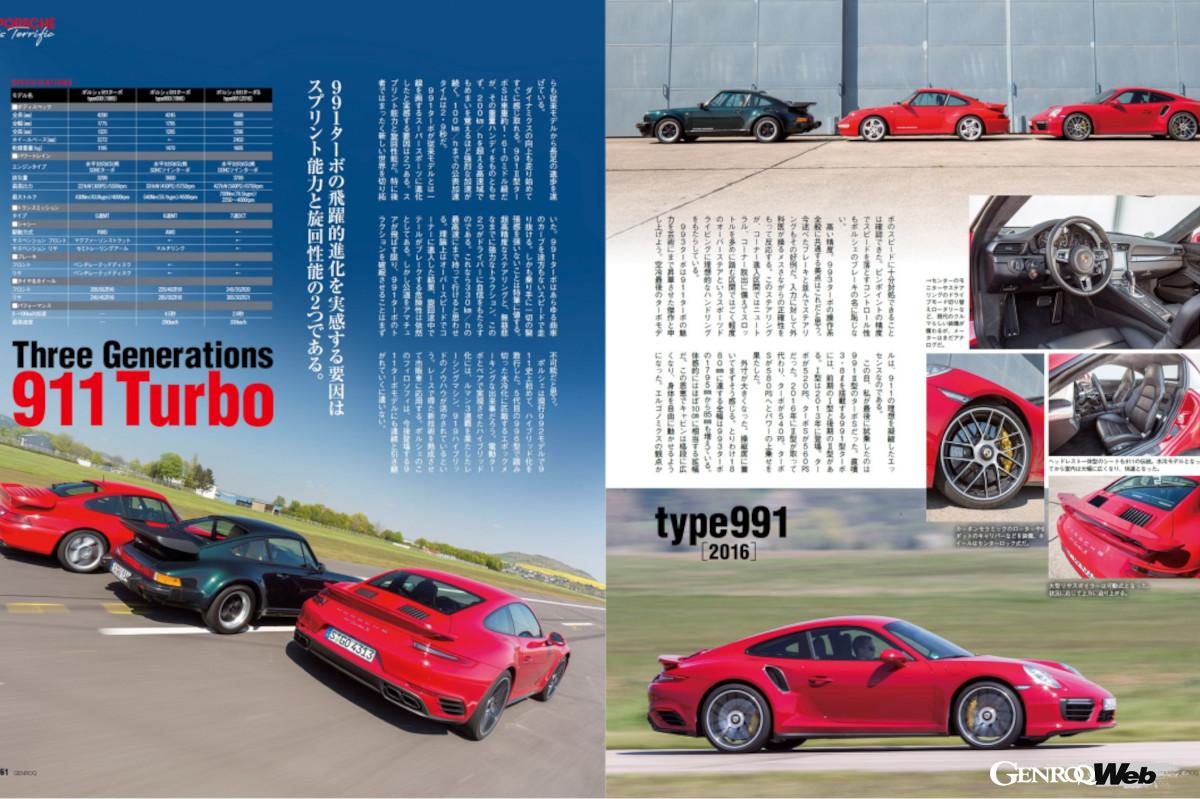
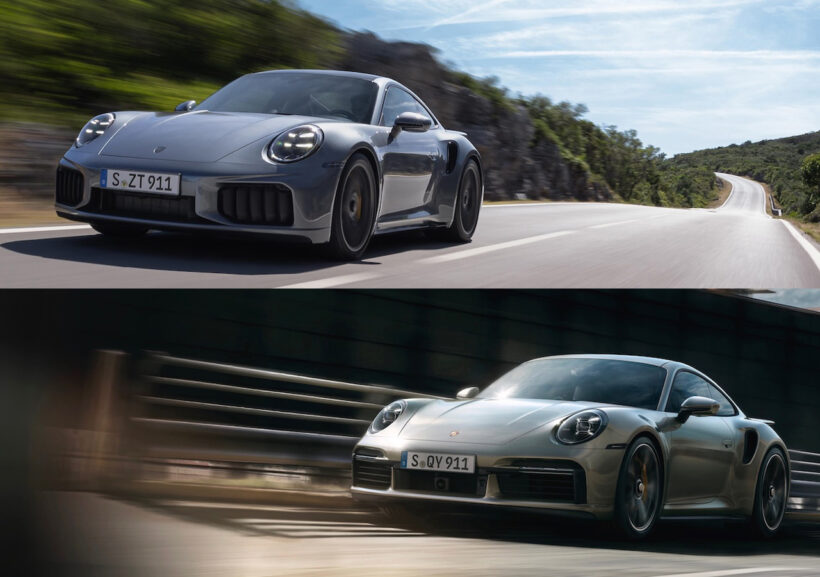
The first episode used comparative test drives of the first-generation Porsche 911 Turbo (Type 930), which was produced until 1989, the Type 993, which was released in 1995, and the current 911 Turbo S (Type 992) as teaching materials (written by Marcel Kühler, who contributes to German publications such as Auto Zeitung).
The title reads, “The Porsche 911 Turbo is considered the German super sports car par excellence. We asked three formative generations of the icon to a high-octane dance on the circuit.” Translated into Japanese, it begins with, “The Porsche 911 Turbo is the pinnacle of German super sports cars,” and continues with, “We asked three generations of this icon to dance a ‘high-octane dance’ on the circuit.” It’s clear that “dancing on the circuit” is a metaphor for high-speed driving, but it’s interesting that the “dance” is described as “high-octane.”
Needless to say, high octane refers to gasoline with a high octane rating and good combustion efficiency, but the term has also been derived and is used in slang to mean “energetic,” “vigorously,” or “active.” An English dictionary defines it as “vigorously energetic or forceful.” Calling attacking a circuit in the “pinnacle of super sports cars” a “high-octane dance” is a fitting expression for a car magazine.
Blistering suspension?

[1]

[2]
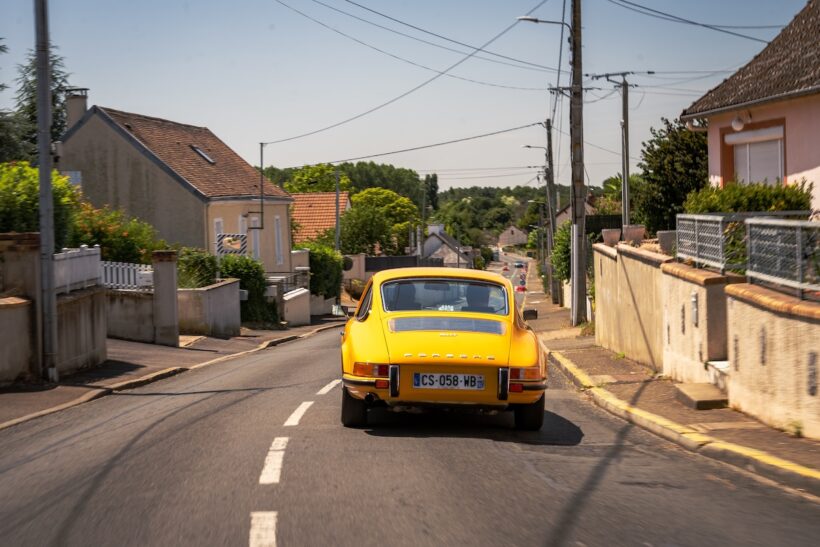
[1] The impression of the 930’s suspension was described as “bone-dry.” [2] The cockpit ambiance, which has been carried over to the current model, still shows its age.
The suspension of the first-generation 911 Turbo (930) is described as “bone-dry suspension.” Literally translated, this means “dry to the bone.” Here, the term is likely used with the nuance of “completely inflexible” or “extremely stiff.”
The statement “informing the driver of every little grain of sand on the road” seems to emphasize that the suspension of the first-generation 911 Turbo is so direct that it conveys even the tiniest bumps in the road surface to the driver. It seems that the general impression was not positive.
The 993’s acceleration and sharpness are “beyond the galaxy”

[3]

[4]
[3] The 993 is a significant step forward. [4] The dashboard layout and other aspects seem to share many similarities with the 930.
On the other hand, Mr. Kuehler felt that the Type 993 had undergone significant evolution. He said that the interior, with its dashboard layout and slightly upright pedals, was reminiscent of the early 911. However, after actually driving it, he said, “It’s galaxies away from the age of the 930.” It’s interesting that he makes such an extreme statement about the degree of evolution between the two cars, saying that they’re “as far apart as galaxies.”
In the next part, we will introduce some passages that express the impact of the acceleration of the second generation (993) and the current model (992).
PHOTO/PORSCHE AG
MAGAZINE/ GENROQ April 2025 issue