
Porsche 911 Targa 4 GTS
Classic design with an electric roof
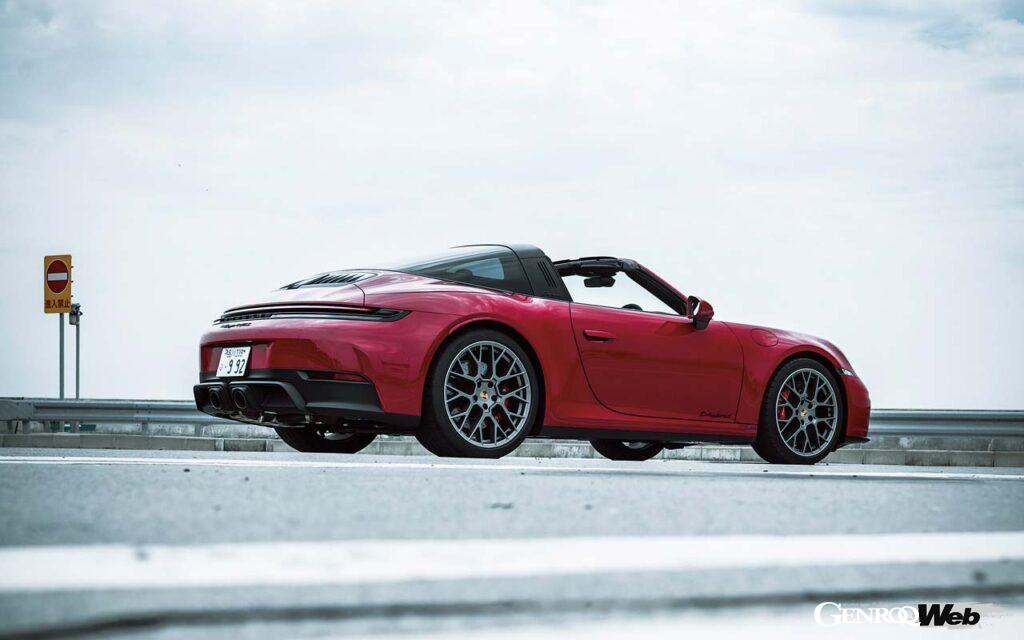
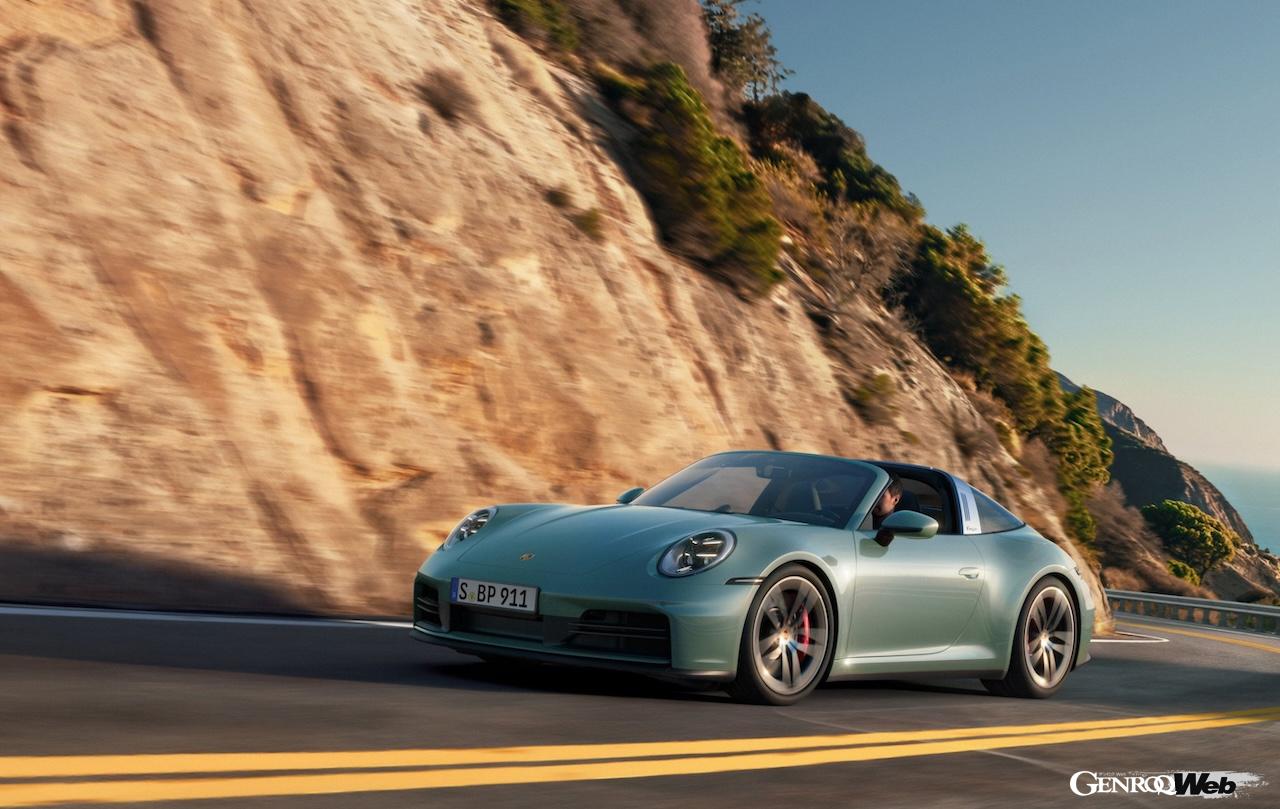
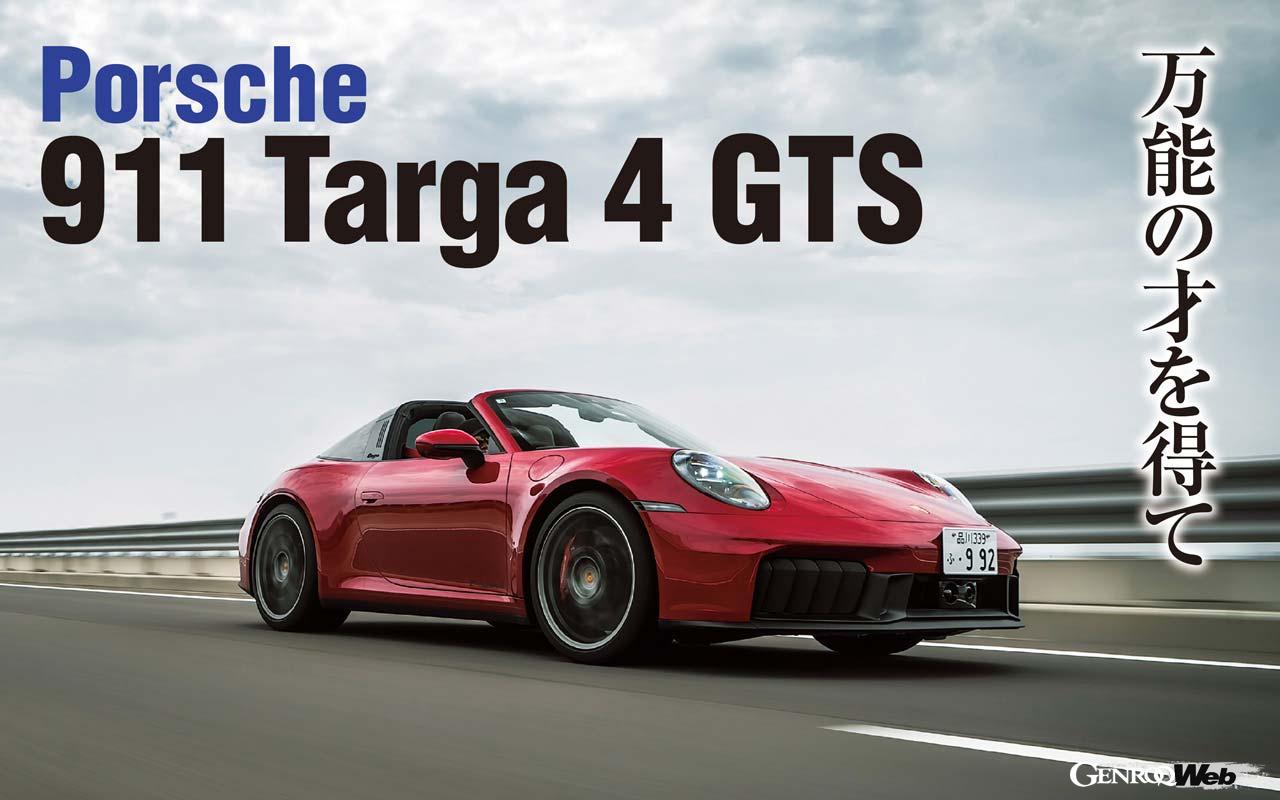
The Targa design from the narrow era to the 964 has been revived.
The 911 boasts one of the widest variations of any super sports car, but the Targa is one of the most unique models. The fact that there was already a Cabriolet, and yet another open-top option, suggests that there was enough room to develop two open-top models, and that there was enough demand for them. This is proof of just how popular the 911 is (although historically, the Targa was introduced before the Cabriolet).
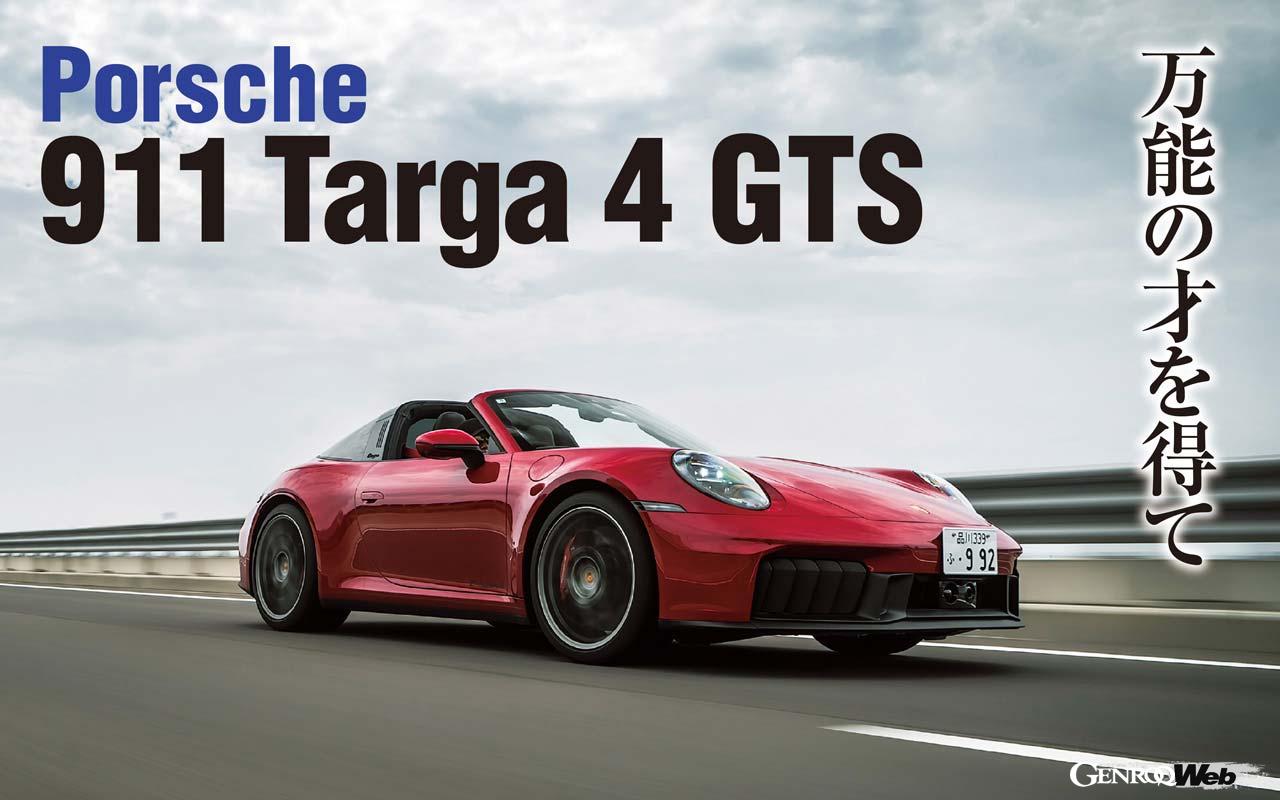
The current 911 Targa design is a revival of the Targa body, characterized by a thick roll bar and a deeply curved rear window, which was used from the narrow-body era in 1966 to the Type 964 era in 1993. This was introduced in 2014 with the previous Type 991, and I remember being very surprised at the time that this classic design was combined with an electric roof opening and closing mechanism. You can even sense the determination of Porsche engineers to somehow realize electric opening and closing with the old Targa design, and the Transformer-like opening and closing action is great entertainment in itself.
The Type 992 has undergone a minor change, with each model being replaced with a new one, but the Targa is first fitted with the GTS. Yes, that’s the much-talked-about hybrid engine. Its specs are the same as those of the previously released 911 Carrera GTS, with a 3.6-liter flat-six engine fitted with an electric single turbo. The eight-speed PDK is equipped with a built-in motor that produces 56 PS, for a total output of 541 PS/610 Nm. And being a Targa, of course, it’s all-wheel drive. According to the vehicle inspection certificate, the car weighs 1,760 kg. The 911 Carrera GTS also weighs 1,630 kg, so the Targa body and AWD system make it 130 kg heavier. However, acceleration from 0 to 100 km/h is 3.1 seconds, just 0.1 seconds slower than the 911 Carrera GTS, a surprisingly small difference likely due to the traction provided by the AWD.
A meter panel without analog needles
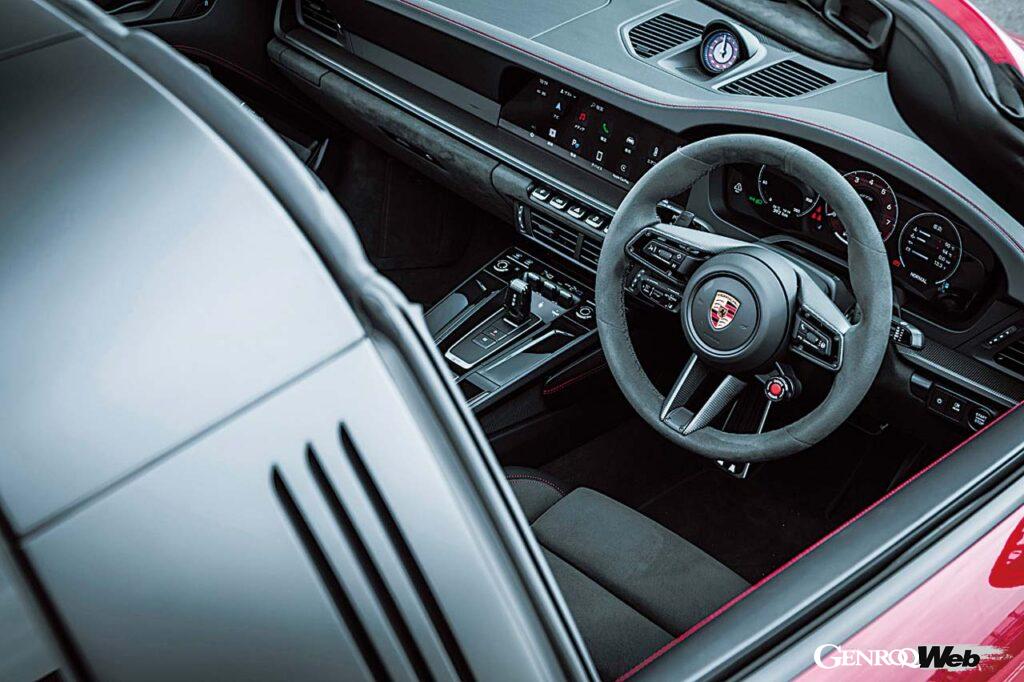
The steering wheel is made of Alcantara material called Race-Tex, and the area around the tachometer has a red accent color.


The open feeling when open is not inferior to that of a convertible. The seats with the GTS logo are optional adaptive seats plus. Real-time drive to the front and rear wheels, and the operation status of the motor and battery are displayed on the center monitor.
The interior has been updated in the same way as the other grades, with the meters no longer equipped with analog needles and the engine starter now a button, which stands out. However, the view from the slightly higher seating position, both the instrument panel and the view through the front window, are exactly like those of a 911, and this alone increases your confidence in the car. Just like the exterior design, you realize that this is a car whose “remaining unchanged” has meaning.
In fact, the return of the 3.6-liter displacement is very good news for an old Porsche fan like me. Even with a naturally aspirated engine, 600cc per cylinder is enough to produce kick-ass torque from the mid-range, but when you add the electric turbo and hybrid, the power is incredible. I’ve already experienced this powertrain in the 911 Carrera GTS, but even in the slightly heavier Targa, its speed doesn’t slow down one bit. What’s most surprising is how quickly the torque rises when you step on the accelerator from partial throttle. It’s thanks to the quick response of the electric turbo, which keeps the turbine turning with the motor, and the assistance from the motor, that the driver doesn’t even notice it, which is amazing.
Although it’s a hybrid, it doesn’t run on EV mode, so you can drive it just like a pure engine car, from city streets to highways and winding roads. While this was likely to avoid the added weight of a large battery, the company must have been confident that core 911 fans wouldn’t want it to run on EV mode.
Driving without even noticing it’s a hybrid
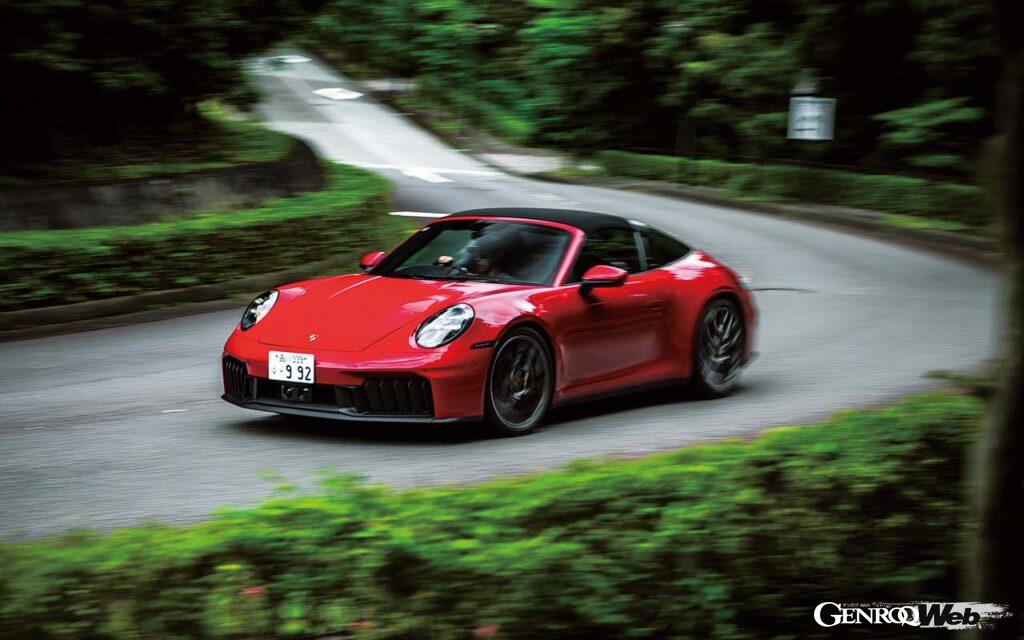
Beautiful, fun, and fast. The Targa 4 GTS further enhances its qualities as a versatile GT.
The suspension is quite stiff, but even when turning the steering wheel on winding roads, the front doesn’t react too sensitively, and you can adjust your position while feeling the firm grip. However, you still need to be aware of the weight behind the passengers. The rear axle weight is 1,120 kg, 80 kg heavier than the 911 GTS Coupe, and this is probably because it is concentrated almost entirely in the upper moving parts. Even the slightest movement of the steering feels like the rear roof is shaking with just a slight delay. That is perhaps the limit of the Targa body, but that doesn’t mean it’s a complaint. Rather, the overwhelming stability, with the feeling that all four wheels are gripping the road, more than makes up for this slight negative.
To begin with, the 911 Targa is not a 911 designed for racing on the circuit. It is beautiful, fun, and fast. The role of the 911 Targa is to be the ultimate all-around GT car that shines in everyday life. In other words, the new Targa 4 GTS, equipped with an electric turbo hybrid, is truly a proper evolution.
As always, Porsche’s product strategy is brilliant. While I acknowledge its excellence, I can’t help but feel a bit jealous.
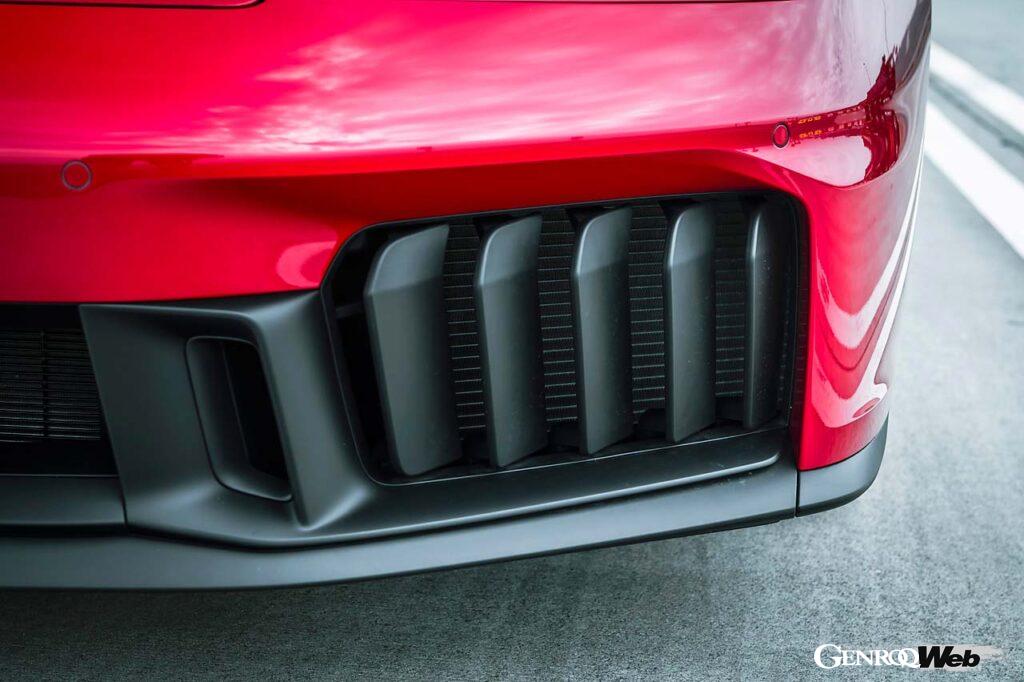

The GTS is the only car equipped with adjustable flaps to adjust the airflow. The RS Spyder wheels are 20 inches in the front and 21 inches in the rear. The tires are German-made Goodyear.
REPORT/Gensuke NAGATA
PHOTO/Kunihisa KOBAYASHI
MAGAZINE/ GENROQ August 2025 issue
SPECIFICATIONS
Porsche 911 Targa 4 GTS
Body size: Length 4533mm, width 1852mm, height 1299mm
, wheelbase: 2450mm,
vehicle weight: 1745kg
, engine: Horizontally opposed 6-cylinder DOHC turbo,
total displacement: 3591cc
, engine maximum output: 357kW (485PS) / 7500rpm
, engine maximum torque: 570Nm (58.1kgm) / ── rpm,
motor maximum output: 41kW
, motor maximum torque: 150Nm
, system maximum output: 398kW (541PS),
system maximum torque: 610Nm (62.2kgm)
, transmission: 8-speed DCT,
drive system: AWD,
suspension type: Front MacPherson strut, rear multi-link,
brakes: Front and rear ventilated discs,
tire size (rim width): Front 245/35ZR20, rear 305/30ZR21,
0-100km/h acceleration: 3.1 seconds,
top speed: 312km/h,
vehicle price: 27.47 million yen
[Inquiries]
Porsche Contact
TEL 0120-846-911
https://www.porsche.com/japan/