
![Was the 964 911, the still-popular air-cooled model, Porsche’s savior? [Porsche Chronicles]](https://wheelfeed.com/wp-content/uploads/2024/11/2932-1761205570355.jpg)
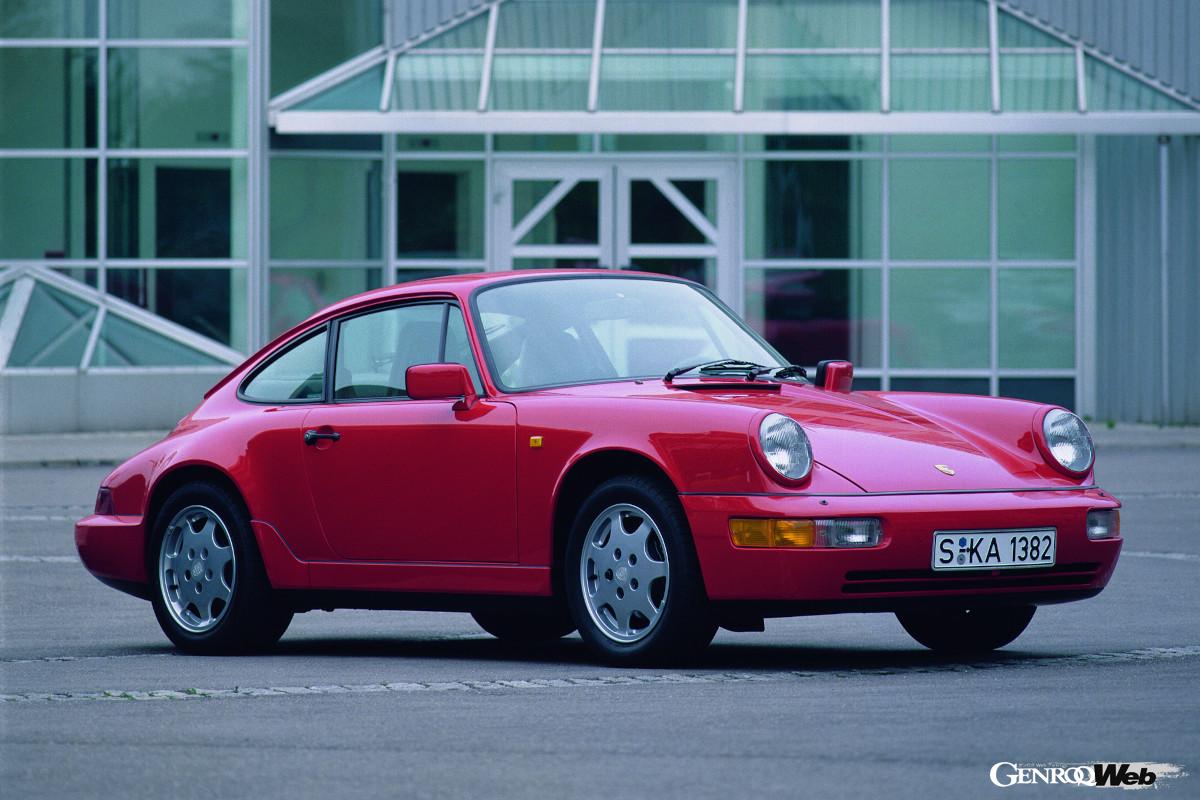
911 (Type 964) Carrera 2 / Carrera 4 / Cabriolet / Targa / Turbo / Carrera RS (1989-1992)
After “Black Monday”

911 E19

965
In 1980, Peter Schütz was appointed CEO. The 911 SC Cabriolet, which was developed under his leadership, was a huge hit, especially in the North American market, and the 911 regained its position as Porsche’s flagship model. However, this success did not last long.
In October 1987, the New York Stock Exchange experienced the biggest stock market crash in history, known as “Black Monday,” and the resulting global recession hit Porsche mercilessly, causing sales to plummet. Several projects that were on the verge of going on sale, such as the 928 Cabriolet, were scrapped, and the company was forced to withdraw from supplying engines to F1 and from its works activities in Group C. Eventually, the company faced such a serious management crisis that rumors of bankruptcy began to circulate.
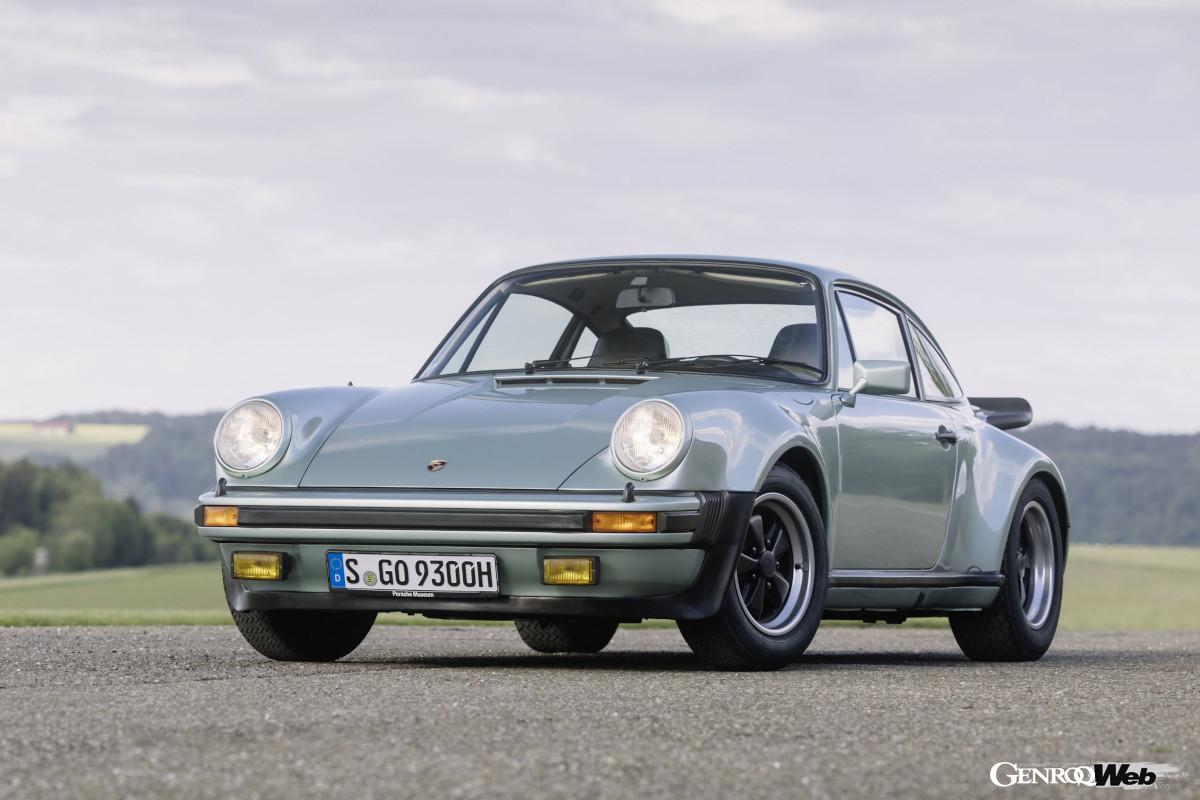
Meanwhile, the engineers in Weissach continued to develop the 911. In particular, as they continued developing the 959, they placed importance on improving aerodynamic performance along with 4WD, and in 1984 they produced the prototype 911 E19, which achieved a Cd value of 0.27 through various improvements, including slanted headlights, smoothing of various parts such as the bumper and rear window, side skirts and a rear wing.
Then, with the Black Monday incident, development of the flagship 965, a 4WD car with a water-cooled V8 DOHC rear-mounted engine, was frozen, and Porsche decided to concentrate its resources on developing the next 911. Thus, the 964 911 was announced in 1989.
The first full-time 4WD 911

Carrera RS
The biggest topic of the year was the addition of the Carrera 4, the first ever full-time 4WD system in the history of the commercially available 911. However, this was not the advanced torque split system used in the 959, which automatically transmits torque to the front wheels via a front differential containing a computer-controlled steel hydraulic multi-plate clutch.
It was a relatively primitive system in that drive was transmitted to the front wheels via a planetary gear center differential at the end of the gearbox, with the drive distribution fixed at 31% front and 69% rear, and combined with a differential lock mechanism that automatically locked the center and rear differentials and transferred torque to the tires that were not spinning when the ABS sensor detected wheel spin.
To make room for the 4WD system, the suspension springs were changed from the long-familiar torsion bars to coil springs. This not only increased the freedom of setting, but also adopted new designs for the bumper, underfloor, door mirrors, and electric rear spoiler based on the results of the 911 E19, resulting in a significant improvement in the Cd value from 0.395 for the 930 to 0.32.
The engine’s displacement was increased to 3600cc, and the cylinder head was completely improved, including the adoption of twin plugs, a first for a Porsche production vehicle, and it was equipped with an M64 air-cooled flat-six SOHC unit that produced 250PS.
There are three body types: coupe, targa, and cabriolet.

Targa

Cabriolet

Carrera Cup

Cabriolet Turbo Look
Sales of the 964 began with the AWD “Carrera 4,” with the RWD “Carrera 2” added in 1990. The Carrera 2 also attracted attention as it was equipped with the “Tiptronic,” a four-speed automatic transmission with torque converter and manual mode, which was the first for a commercially available vehicle and was jointly developed with ZF and Bosch.
In addition to the coupe, there were three body styles available: Targa and Cabriolet. In 1991, the coupe and cabriolet were offered with a turbo-look body with wide fenders.
When the one-make Carrera Cup race began in 1990, the following March, Toyota announced the “Carrera RS,” which removed the rear seats and power windows and instead adopted a lightweight body with thin glass and an aluminum hood, a specially tuned suspension that was 40mm lowered, reinforced brakes, specially designed magnesium wheels, a close-ratio 5-speed manual transmission, and a 3.6-liter unit with a lightweight flywheel that produced 260 PS.
The birth of various derivative grades

Carrera RS 3.8

turbo

Speedster
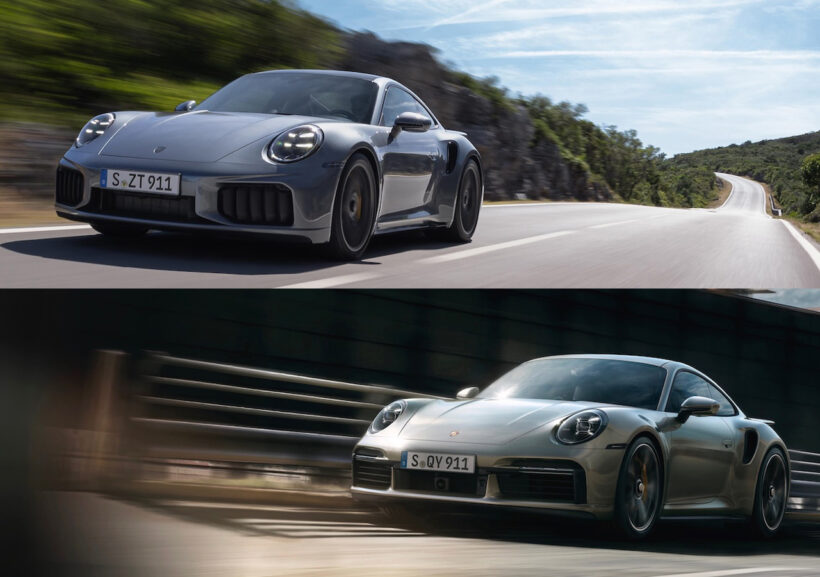
Then in 1991, the 911 Turbo was revived after a hiatus since 1989. Initially, it was equipped with a 3299cc unit with 320PS carried over from the 930, but in 1992, the Turbo S was released in a limited run of 80 units, tuned to 380PS and shaving 190kg off the weight by using carbon fiber in parts of the body. From the following 1993 model, the 911 Turbo was released, equipped with a 3600cc unit boasting a maximum output of 360PS, which was the main attraction.
Other models released in 1993 included the Carrera RS 3.8, an evolution of the RS 3.6, based on a turbo body with a large two-stage wing and a 300 PS 3746 cc engine for GT racing, and the final model in the series, the Speedster, based on the Carrera 2. The 964 brought the 911 back to the forefront of the sports car league, with a total of 63,762 units produced over five years, ensuring the lifespan of the 911.













![The S-Type, widely regarded as Bentley’s masterpiece post-war saloon [Bentley 100 Years of Car History]](https://wheelfeed.com/wp-content/uploads/2025/11/4703-1762127546348.jpg)