
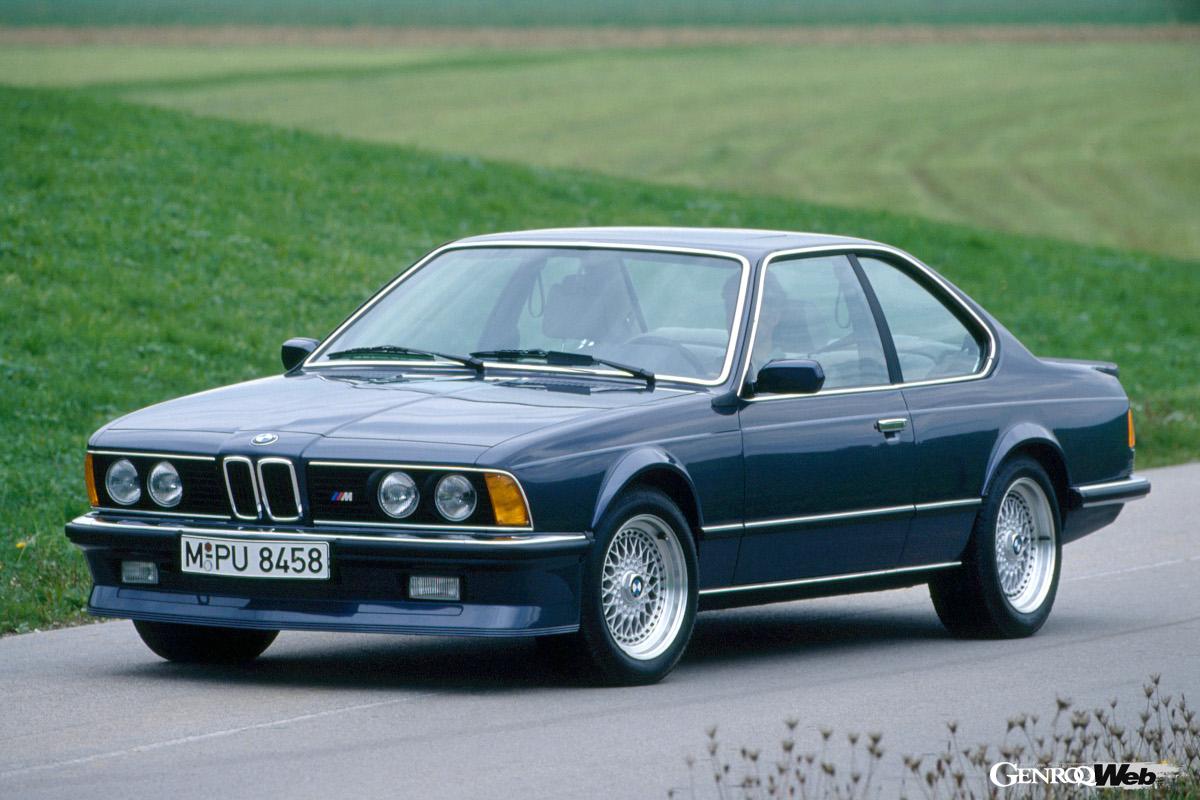
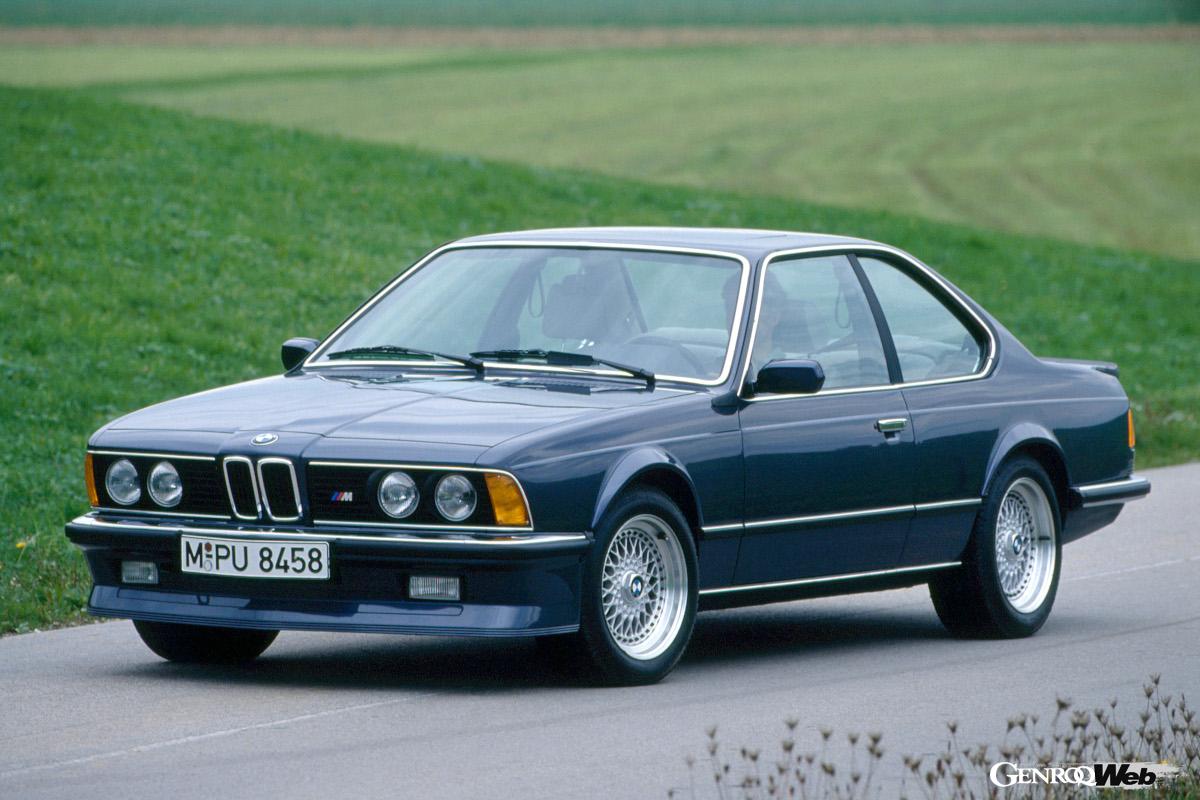
M635CSi
M6
It is equipped with a 3.5-liter inline 6 DOHC engine developed for the M1.
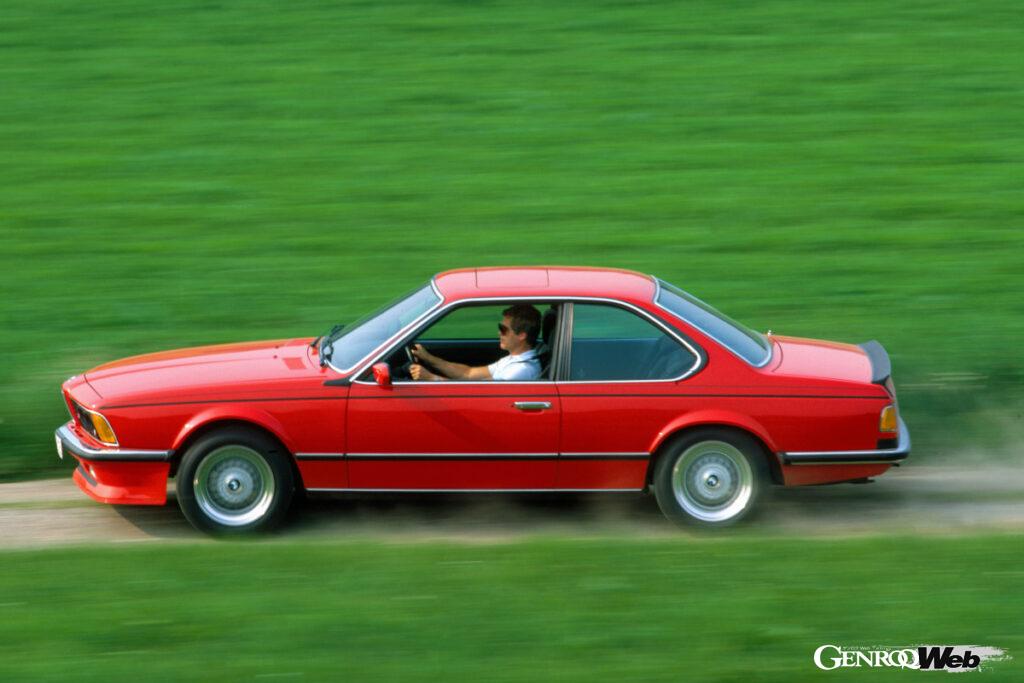
M635CSi
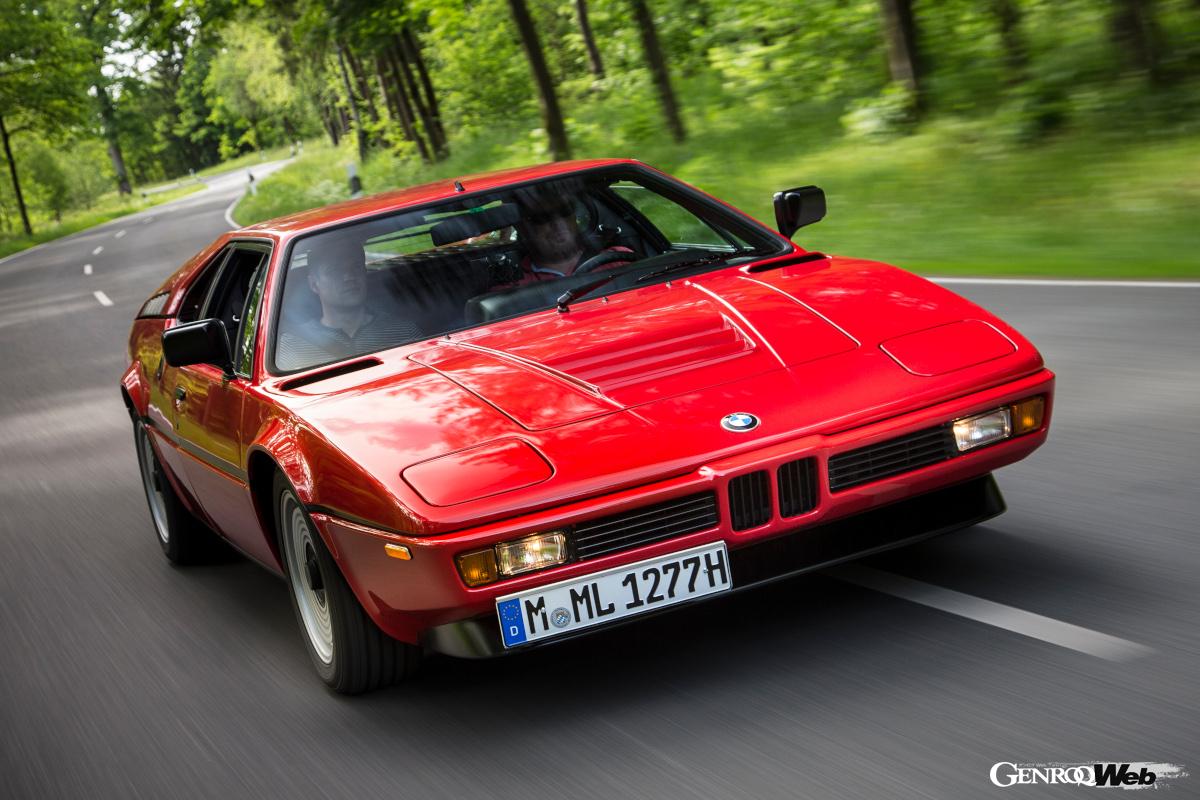
The M1, BMW Motorsport’s first dedicated model, debuted with much fanfare in 1978, but due to a combination of external factors, it was not a commercial success. Instead, BMW adopted a strategy of enhancing its sporty and brand image by producing special models modified by BMW Motorsport of existing vehicles. The first step was the launch of the M535i, based on the E12 5 Series, in 1979.
This was a 5 Series pulled from BMW’s production line, fitted with a 3.5-liter inline-six SOHC unit from the 635CSi. BMW Motorsport in Garching, near Munich, had reinforced the front and rear bulkheads and fitted special equipment such as a dog-leg Getrag close-ratio 5-speed manual transmission, limited slip differential, four-wheel ventilated disc brakes, BBS 14-inch alloy wheels, a front air dam, and a rear spoiler.
Then, in 1983, BMW released the M635CSi, based on the E24 6 Series. The 6 Series, which debuted in 1976 as BMW’s flagship coupe, had housed a straight-six SOHC engine in its nose, but the M635 CSi was based on the 3.5-liter straight-six DOHC 16-valve M88 unit developed for the M1, but the fuel injection system was changed from Kugelfischer to Bosch Motronic. In addition, the car was fitted with a wet sump and a significantly detuned 3.5-liter M88/3 unit, which had been reduced from the M88’s 480 PS to 290 PS for practical reasons.
In 1983, the Group A specification M635CSi was introduced.

M635CSi Group A
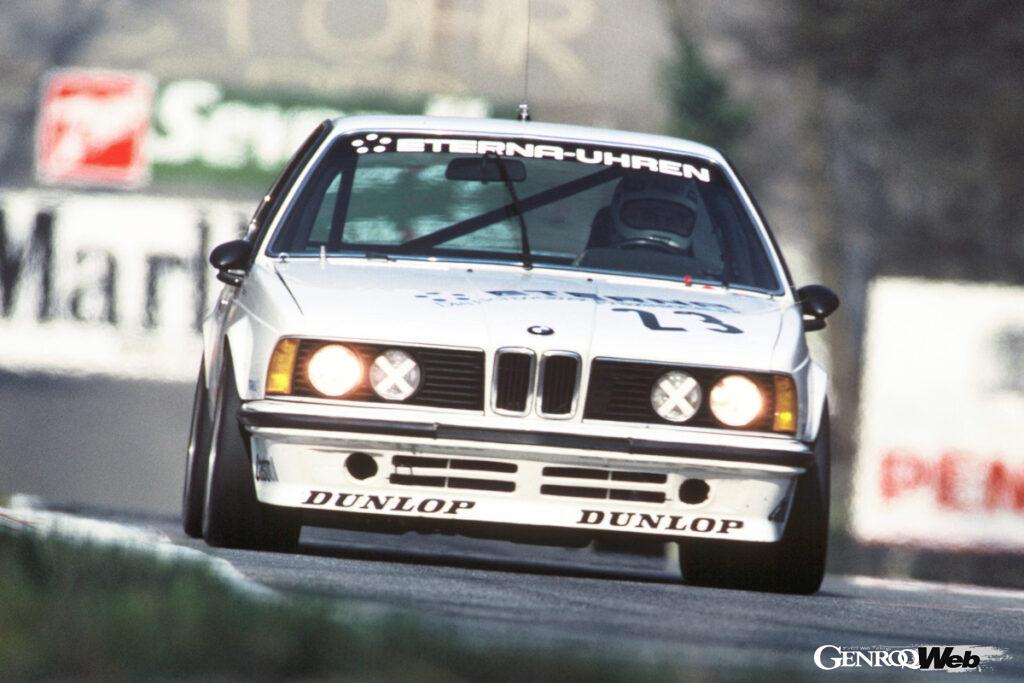
M635CSi Group A
Other features on the car include a 10mm lowered sports suspension, large front disc brakes with 4-pot calipers, BBS RS wheels, a front air dam, and a rear spoiler. Its 0-97km/h (60mph) acceleration time was announced to be 5.8 seconds.
However, due to exhaust gas regulations, the M635CSi was only sold in the European market, and for the North American and Japanese markets, a model equipped with an S38B35 type 3.5-liter inline 6 DOHC unit producing 260 PS and electronically controlled fuel injection was released as the “M6” in 1987.
Meanwhile, in accordance with the Group A regulations that began in 1982, BMW Motorsport introduced the 635CSi in 1983, but in order to meet the requirement of producing more than 5,000 units per year, the car was fitted with a 3.5-liter straight-six SOHC M30 unit instead of a straight-six DOHC. BMW Motorsport was responsible for the manufacturing and development of the body and suspension, but engine development and production was handled by Hartge, and assembly into race cars and race management was handled by AC Schnitzer.
Since 1985, the car has also participated in the All Japan Touring Car Championship.
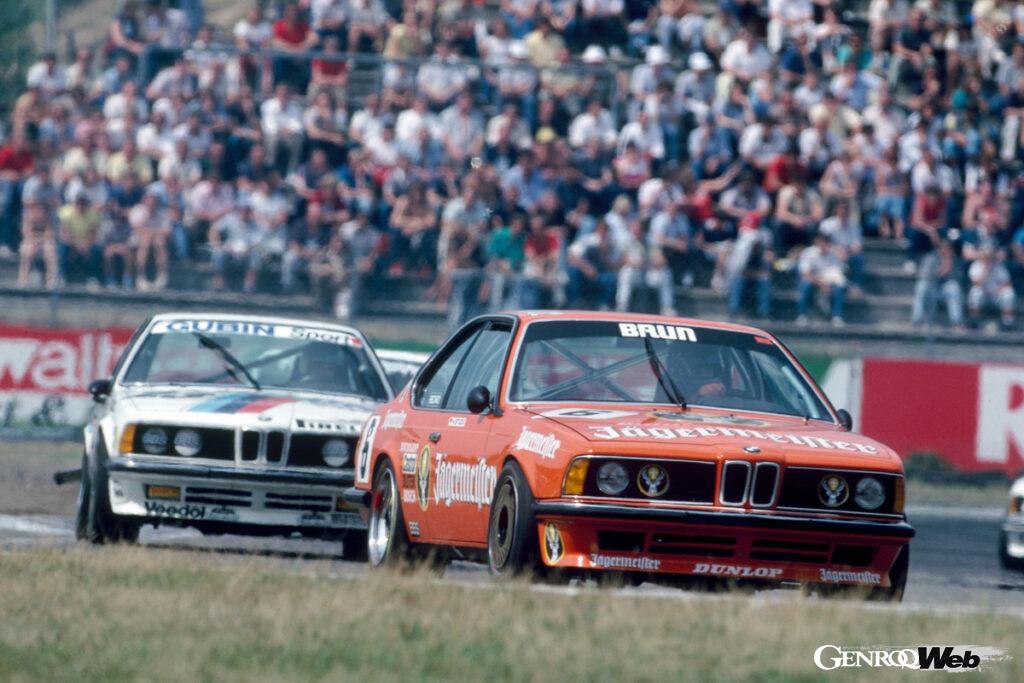
M635CSi Group A
The 635CSi competed in the European Touring Car Championship (ETCC), taking the series title in 1983 and finishing second in 1984, against strong competitors such as the Jaguar XJS and Rover Vitesse. It also enjoyed brilliant success in long-distance races around the world, recording three wins at the 24 Hours of Spa-Francorchamps, two wins at the 24 Hours of Nürburgring, and two wins in the RAC Tourist Trophy.
Incidentally, Autoburek Motorsports also competed in the All Japan Touring Car Championship, a Group A series, which began in Japan in 1985. The Hartge 635CSi was a works team, winning two races and becoming the first series champion with Naoki Nagasaka and Kazuo Mogi.











![The S-Type, widely regarded as Bentley’s masterpiece post-war saloon [Bentley 100 Years of Car History]](https://wheelfeed.com/wp-content/uploads/2025/11/4703-1762127546348.jpg)