
![The S-Type, widely regarded as Bentley’s masterpiece post-war saloon [Bentley 100 Years of Car History]](https://wheelfeed.com/wp-content/uploads/2025/11/4703-1762127546348.jpg)

S Type
Joint project with Rolls-Royce
After World War II, trends in the American market became important for the European automobile industry. Bentley was no exception, and increasing sales in the American luxury car market became a top priority.
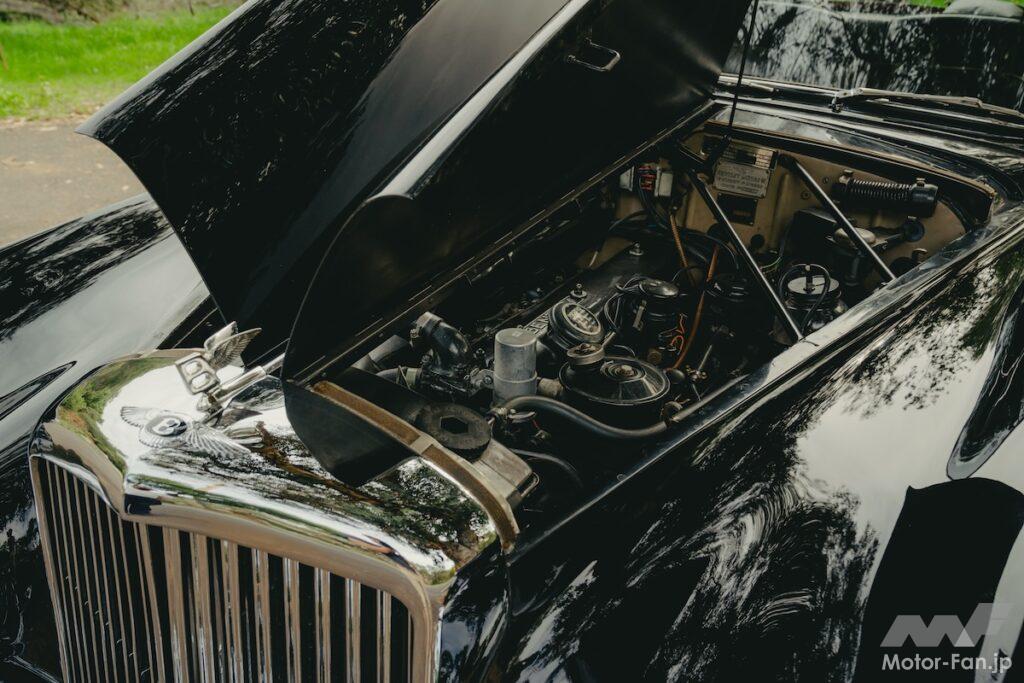
So, in the late 1940s, Crewe headquarters began developing a new car to replace the Mark VI and R-Type. Initially, they considered using military inline-8 or V12 engines, but because the nose-heavy design would have adversely affected handling, and because V8s were more popular in the American market, development moved forward with a newly designed V8 engine.
Development was led by Chief Project Engineer Ivan Everden and Chief Stylist John Blatchley, and was carried out as a joint project between Bentley and Rolls-Royce.
The chassis was newly designed, and although it was a steel ladder frame, it was reinforced with X-members, significantly increasing rigidity. The suspension was also redesigned, although the format was the same as the Mark VI, with double wishbones in the front and rigid in the rear. Another major change was that the suspension joints were changed to ball joints.
Sales began in 1955
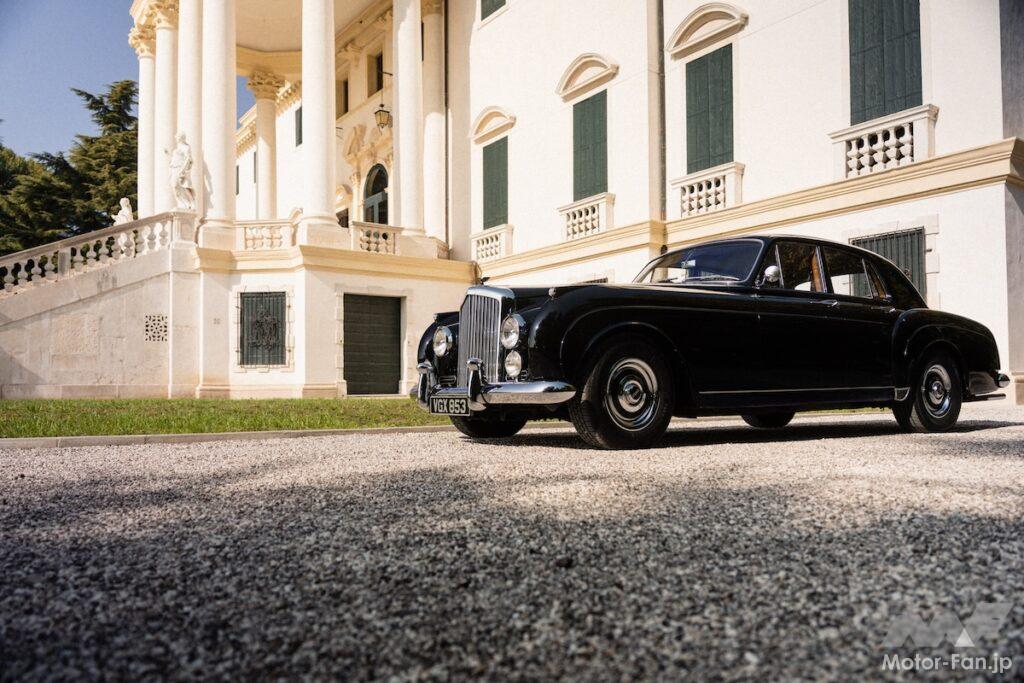
“S-type”
The standard four-door body by Blatchley was redesigned with a flush side design that integrated the modern fenders into the body, and was described as “a masterpiece of post-war Bentley and Rolls-Royce saloons.” While pressed steel was the main material, aluminum was used for the doors, hood, trunk lid, etc., contributing to weight reduction.
However, the development of the V8 engine was not completed in time, so the existing 4.9-liter inline 6-cylinder OHV was used as the base, and improvements were made such as using a light alloy cylinder head and increasing the compression ratio to 6.6, and it was equipped with a combination of SU twin carburetors.
The resulting “S-Type” went on sale in 1955 and was a success, with 3,072 standard-body and 35 long-wheelbase models produced by 1959. A two-door R-Type Continental was also produced based on a rolling chassis, and in addition to 218 HJ Mulliners, 185 Park Ward coupes and drophead coupes were also built.
Furthermore, HJ Mulliner, sensing that Continental customers wanted a sporty four-door saloon, developed a four-door Continental. Arthur Talbot Johnston, president of HJ Mulliner, named it the S-Type Flying Spur after the coat of arms of the Johnston clan of the Scottish Borders. Inspired by the Flying Spur, James Young also built a four-door model.
The S2 is equipped with the latest technology, a 6230cc V8 OHV engine.

S2

S2

S2
Meanwhile, in Crewe, under the direction of newly appointed chief engineer Harry Grills, chief engine designer Jack Phillips succeeded in developing the 6230cc V8 OHV “L-series” engine, which incorporated a wide range of cutting-edge technology, including a corrosion-resistant silicon-aluminum alloy cylinder block with wet liners, a crossplane crankshaft, and an aluminum cylinder head with porting adapted from aircraft engine technology.
In 1959, the “S2” model was released, featuring this V8 engine mounted in an S-type body. While there were few exterior changes, it came standard with power steering, electric ride control, and a Hydra-Matic 4-speed automatic transmission. Furthermore, the top speed increased to 185 km/h, and with the increased power, an air conditioner could be installed, although it was optional.
This S2 was also produced as an HJ Mulliner Continental, Flying Spur, Park Ward Coupe, and Drophead Coupe, but what’s more, HJ Mulliner produced just 15 Drophead Coupes, and one of them, UFF 366, was restored by Mulliner and is part of Bentley’s Heritage Collection.
S3 with a redesigned front mask
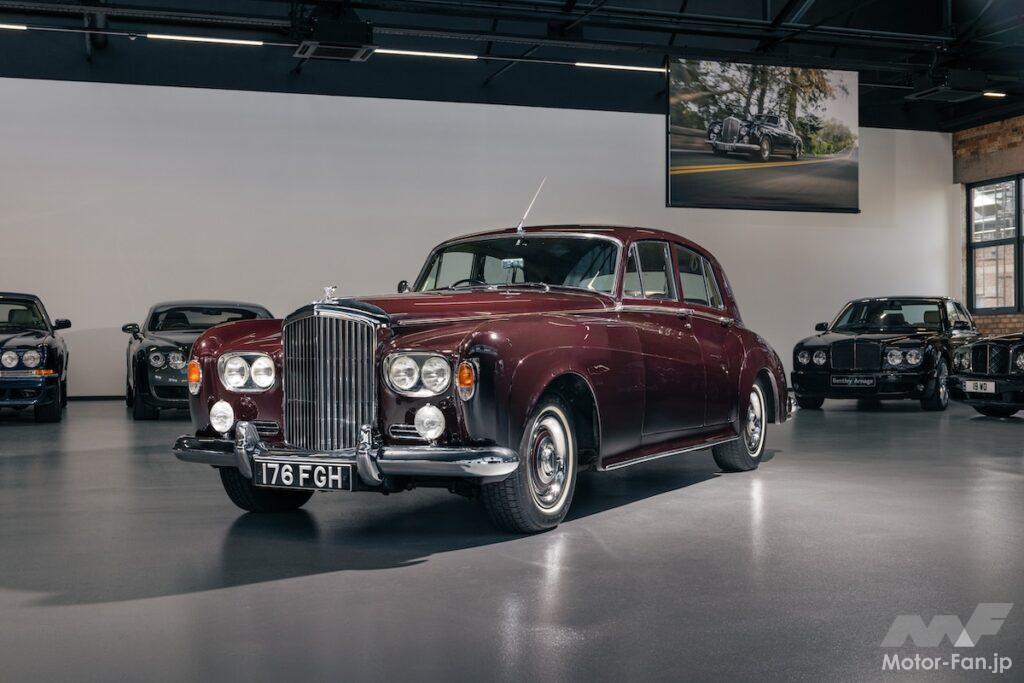
S3

The S3 was unveiled at the 1962 Paris Motor Show as an advanced version of the S2. While the internal components remained essentially unchanged, the front mask design was changed, with the number of headlights increasing from two to four. The 6230cc V8 engine’s compression ratio was increased to 9.0 to accommodate the use of high-octane gasoline, and the carburetor was also changed to a larger SU HD8. This increased maximum output to 218 PS, and despite the increased weight due to added equipment, the car boasted a top speed of 185 km/h.
Rolls-Royce acquired HJ Mulliner in 1959 and Park Ward in 1961, and Mulliner Park Ward was established as a division under the umbrella. They also designed the Continental and Flying Spur, some of which featured slanted four-lamp headlights known as “Chinese Eyes.”












![The MINI emblem’s “winged wheel” reveals the brand’s DNA [Car Emblem Secrets 20: MINI]](https://wheelfeed.com/wp-content/uploads/2025/10/1067-1761629513060.jpg)