
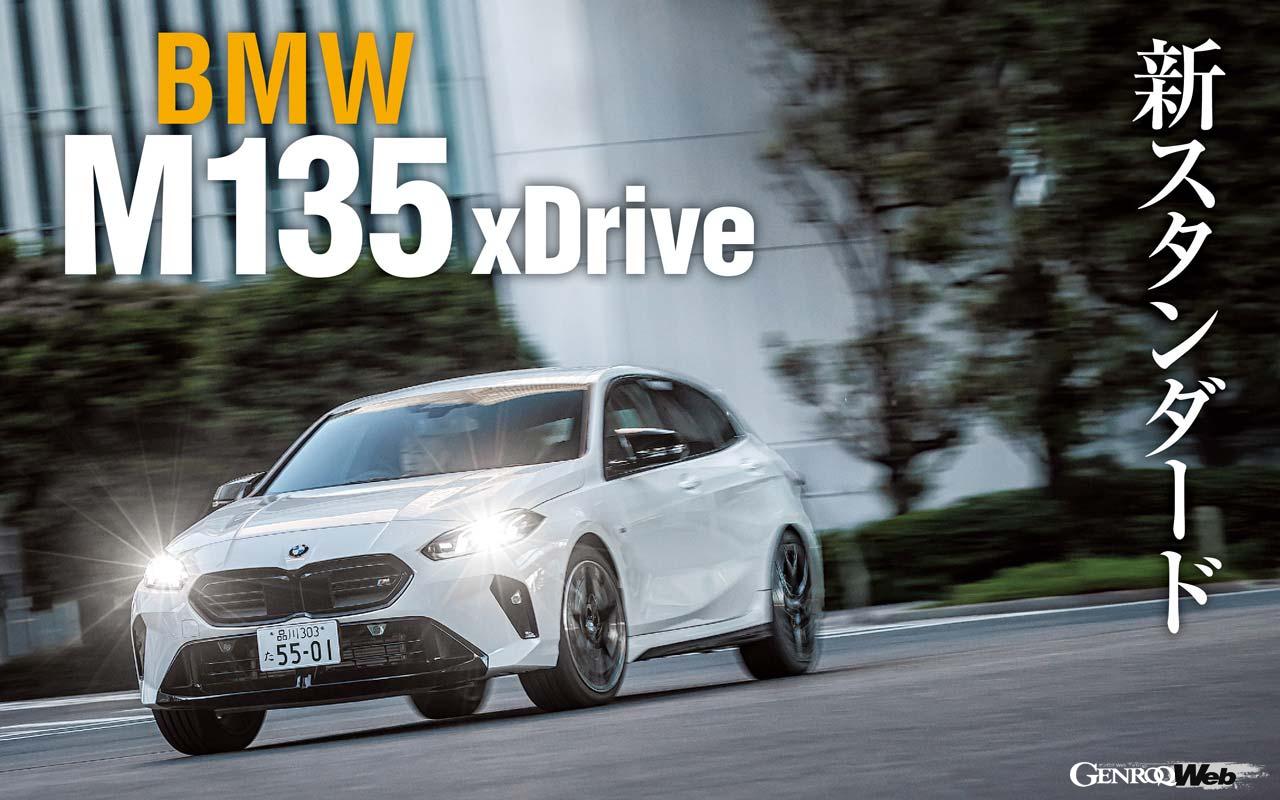
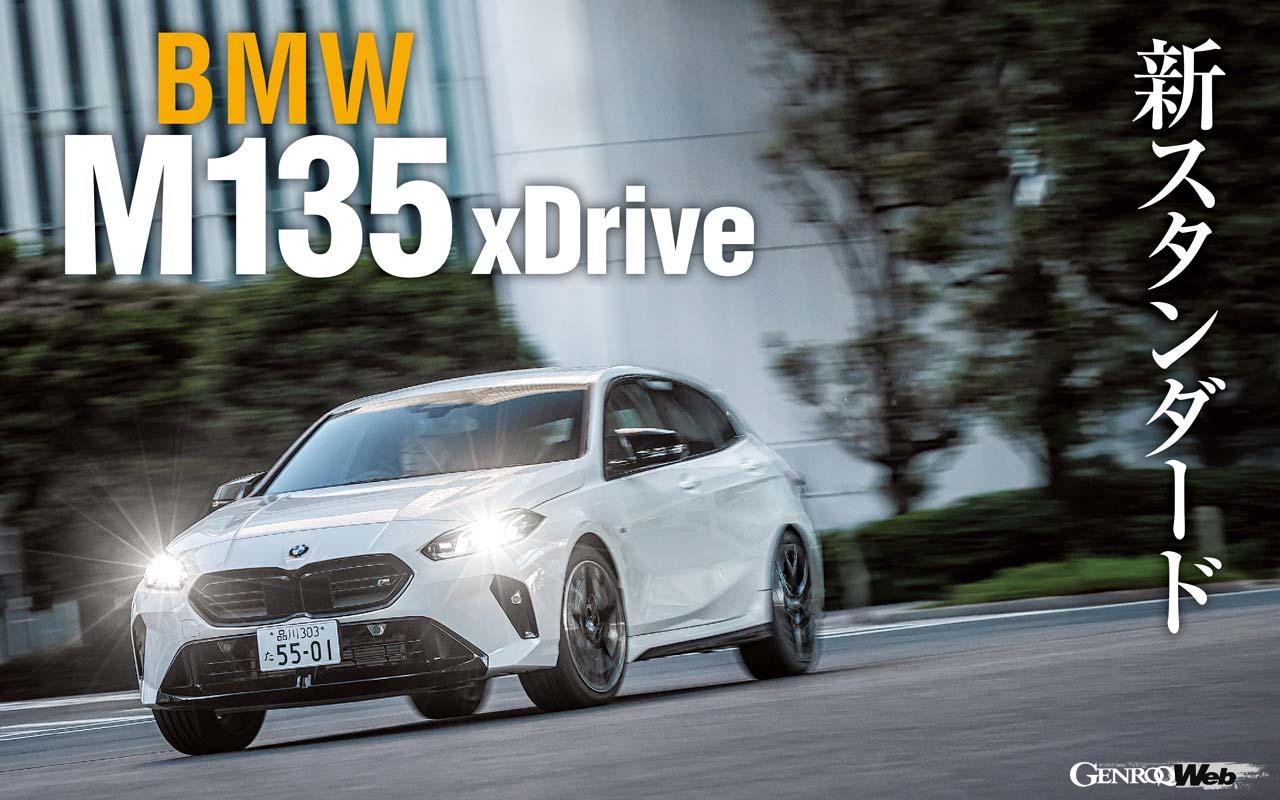
BMW M135 xDrive
The highlight of the C segment

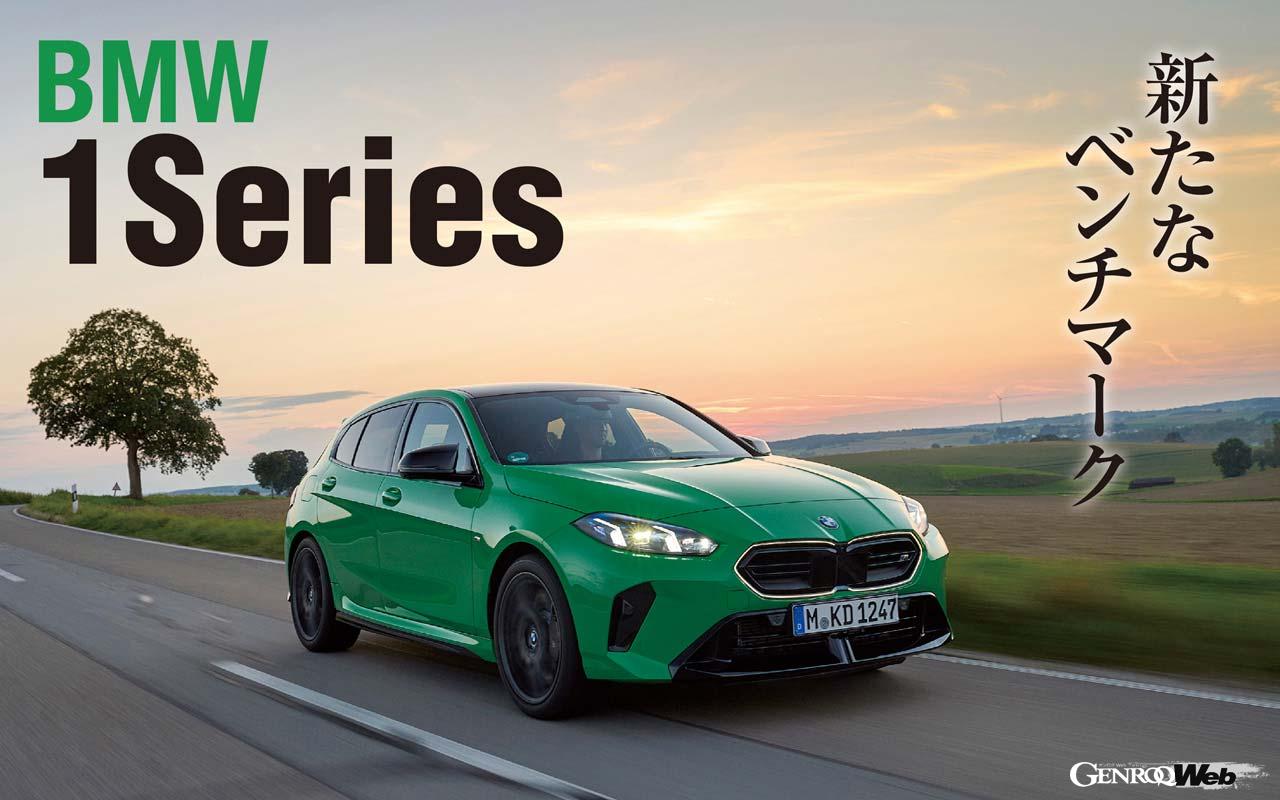
The M135 xDrive is one of the fastest cars in the C segment, yet it also offers the potential for refined driving.
Speaking of the 1 Series, the first and second generations were FR hatchbacks, a rare C-segment compact car typical of BMW. The third generation, the predecessor, finally evolved into a FF layout with a transversely mounted engine to compete head-on with its rivals. The new model, which is the first update in five years, naturally continues the FF layout.
It’s typical of BMW that the 2 Coupe still stubbornly sticks to the FR layout, but the other 2 Series models, X1/X2, and other entry-level BMWs in each segment have now all adopted the FF layout. Apparently, there are almost no complaints about the drivetrain for these FF BMWs, and they’ve been successful in attracting new customers. Also, being able to share key components with MINI within the group is a major benefit in terms of streamlining management and development.
The shift to front-wheel drive for entry-level BMWs has been considered a success, and the new 1 Series, including the improved platform of the previous model, can be said to be a normal evolution of the basic concept. While it has become a standard for BMWs to offer electric vehicles in the same body recently, this time around, all vehicles are equipped with 48V mild hybrids, but the lineup has started with only engine vehicles as before.
However, there were many negative opinions about the previous model’s design, and the new 1 Series has adopted a rather historic design technique for BMW: placing the kidney grille lower than the headlights. The FF layout tends to make the nose look short, which is contrary to BMW’s traditional sporty expression. The previous model also made efforts to make the nose look longer by using innovative A-pillar shapes, but the aim of this change in kidney position is to make the nose look even longer.
A sporty interior that exudes M style

[1]

[2]
[1] The car is equipped with a thick multi-function M leather steering wheel and the latest infotainment system, the BMW Curved Display. [2] The M sports seats with integrated headrests provide excellent seating comfort and a comfortable hold.
The interior design has also been completely redesigned, but it’s the usual stuff you’d expect from a modern BMW: a curved display and a knob-type shifter, but the air conditioning vents are now hidden and surrounded by brilliant ambient lighting.
The car we took out for this interview was the M135, the fastest sports grade. The 2.0-liter turbo + 4WD combination is the same as the previous model, but what’s new is that the transmission has been changed from a torque converter-type 8-speed automatic to a more efficient 7-speed DCT.
More than that, it’s something of a historical event that this car’s product name doesn’t have an “i” at the end. The new X3, which is scheduled to launch soon after, also won’t have an “i” at the end of its name for a gasoline-powered vehicle. The “i” was originally used in the late 1970s to highlight the inclusion of fuel injection, which was synonymous with high technology at the time. Then, after fuel injection became commonplace, it became a symbol for a gasoline-powered vehicle, but recently BMW has also started using the “i” as the initial letter for electric vehicles. Ultimately, gasoline has given way to electric. This is a sign of the times.
4-cylinder engine with excellent drivability

[3]

[3]
[3] Equipped with a 2.0-liter inline 4-cylinder turbo engine boasting an output of 300 PS/400 Nm. It has torque characteristics even at low speeds. The tires are Goodyear Eagle F1.
But back to the main topic. The advanced chassis and 4WD system allow the maximum power output and torque of 300 PS and 400 Nm to be fully controlled, a great feature that remains unchanged from the previous model. However, this time the ride quality is surprisingly refined.
The new M135’s ride quality has improved dramatically. As mentioned above, the platform is an improved version of the previous model, but the suspension is almost entirely new. Furthermore, just like the FF BMWs of the same generation, such as the 2 Series Tourer and X1/X2, the “M Adaptive Suspension” that comes standard on the higher-end 1 Series models also seems to work extremely well.
Incidentally, this variable damper is different from the electronically controlled continuously variable type used in FR systems; it is a mechanical type that switches damping force according to stroke speed, and in Japanese cars it is called a “frequency-sensitive” type. In fact, in the test drive report of the X1 M35i (which shares main mechanisms with the M135) in the July 2024 issue of this magazine, we described the dampers of that car as electronically controlled, but that was incorrect. The X1’s M Adaptive Suspension is also of the same frequency-sensitive type as this time. We respectfully apologize and would like to make this correction.
However, if I may make an excuse, the M Adaptive Suspension is so good that it gives the illusion of electronic control. The M135 equipped with it is one of the fastest cars in the C segment, and yet its refined handling is simply wonderful. The weight transfers smoothly when turning in, and the footwork is firm, never letting the car lurch even when the G-forces increase. The steering is light, and the consistent steering feel is smoother than the previous model, which is unusual for a front-wheel drive vehicle (although strictly speaking it is a 4WD).
The quality of the legs is shocking.
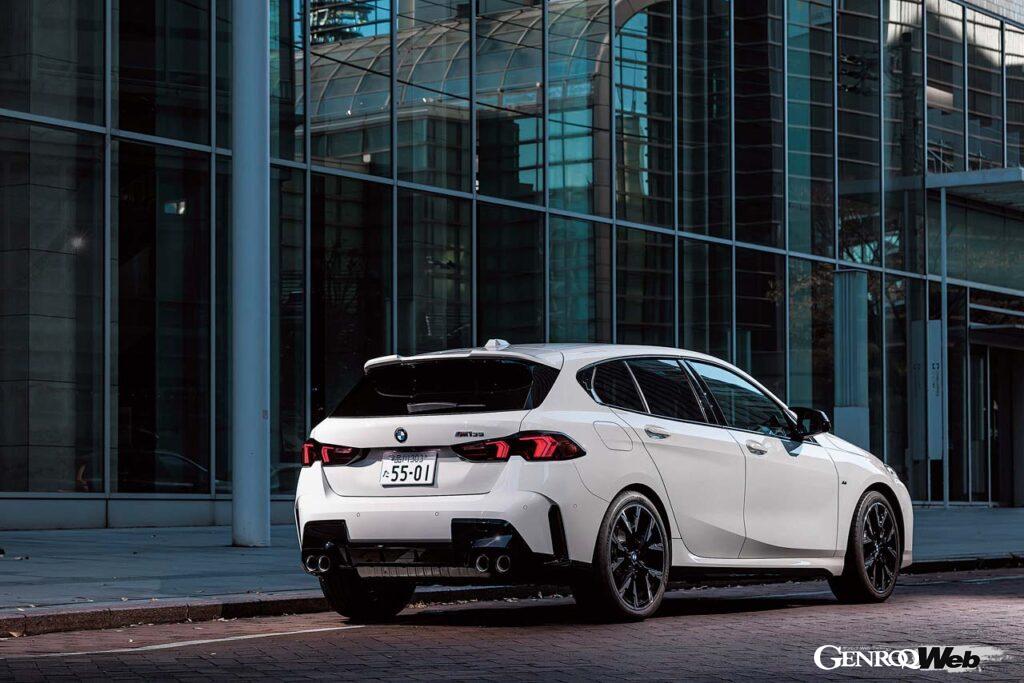
It uses frequency-sensitive M adaptive suspension. The suspension is extremely well-made!
This contrasts in a good way with the MINI, which uses the same basic structure but claims to have a go-kart feel by maintaining a firm horizontal position. And yet, the M135 also asserts new appeal not found in traditional BMWs, such as the thoroughly stable stability that only a FF-based 4WD can provide, and an engine sound that is more pleasant to listen to than powerful thanks to digital technology.
REPORT / Hiromune SANO
PHOTO / Ryota Sato
MAGAZINE / GENROQ February 2025 issue
SPECIFICATIONS
BMW M135 xDrive
Body size: Length 4370, Width 1800, Height 1450mm
Wheelbase: 2670mm
Engine: Inline 4-cylinder DOHC turbo
Total displacement: 1998cc
Maximum output: 221kW (300PS) / 5750rpm
Maximum torque: 400Nm (40.8kgm) / 2000-4500rpm
Transmission: 7-speed DCT
Drive system: AWD
Suspension type: Front MacPherson strut, rear multi-link
Brakes: Front and rear ventilated disc
Tire size: Front and rear 225/45R18
Fuel consumption rate: 12.5km/L
Vehicle price: 6.98 million yen
[Inquiries]
BMW Customer Interaction Center
TEL 0120-269-437
https://www.bmw.co.jp