
M3 (E36)
First adoption of variable intake system VANOS

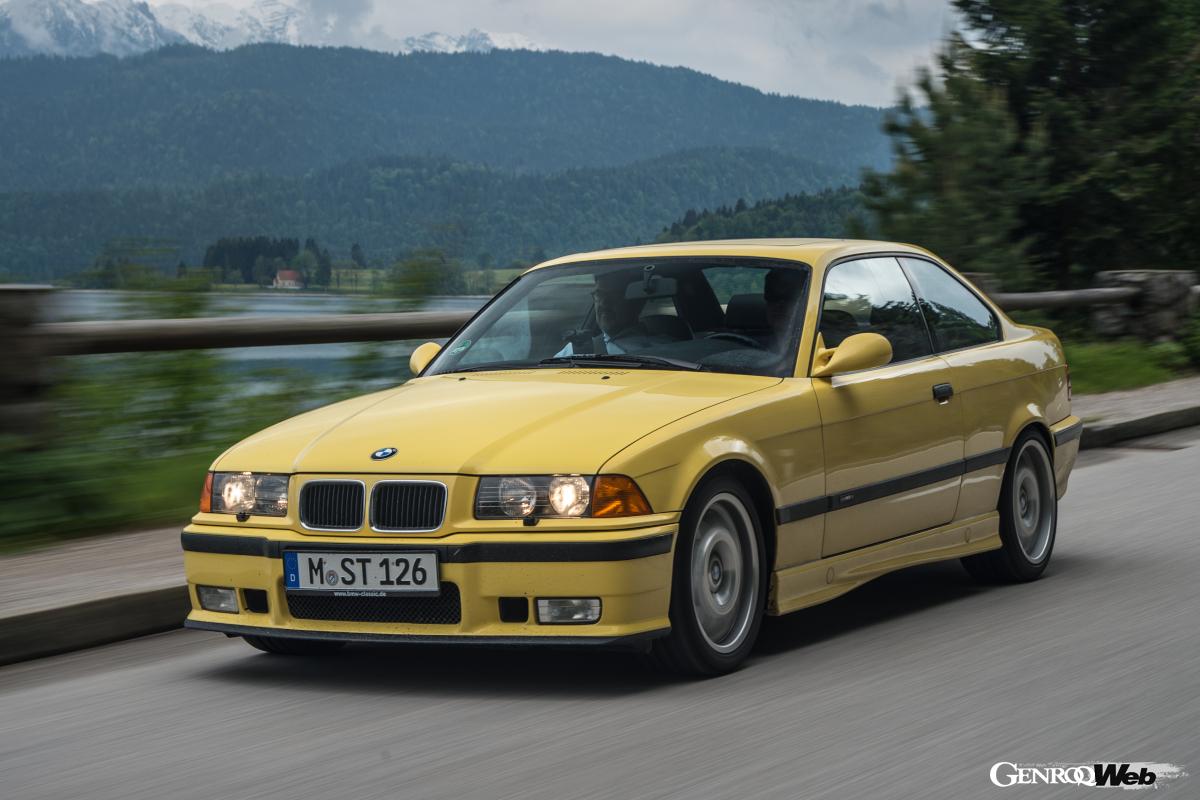
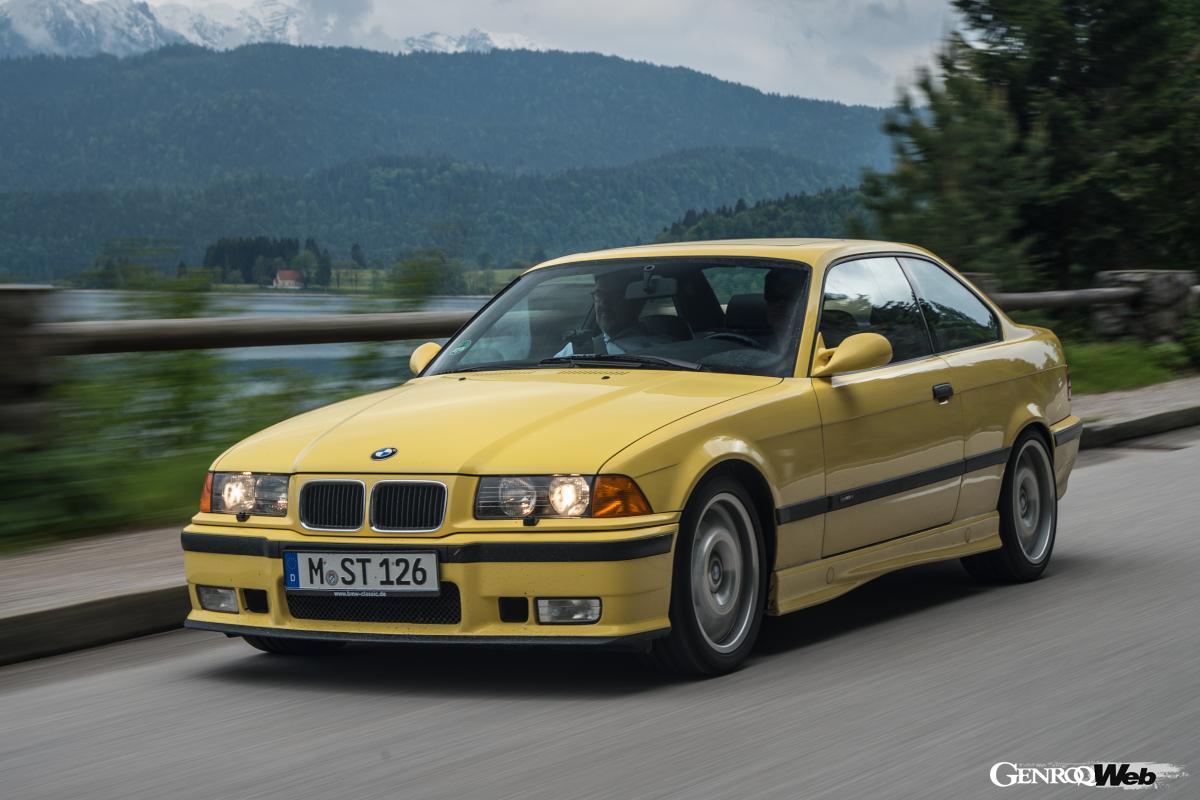
E36 type “BMW M3”
In 1993, BMW established BMW Motorsport GmbH as an organization to oversee its motorsport activities, and began developing and supplying the 6.1-liter V12 DOHC 48-valve engine for the McLaren F1. Meanwhile, the division that had previously been involved in the development and production of commercial M models was renamed BMW M GmbH.
Just before that, in November 1992, BMW announced the second-generation M3, based on the E36 3 Series that debuted in 1990. The end of Group A touring car racing had already been decided, and with economic growth slowing, especially in Germany, a trend of “what’s inside is what’s outside” spread, coupled with growing awareness of environmental protection, so although the car was based on a two-door coupe, the exterior was relatively tame, featuring only a special air dam, side skirts, and rear spoiler.
Also, since the base 3 Series had a long-nose design to increase engine flexibility, it was equipped with a 2990cc inline 6-cylinder DOHC 24-valve “S50” unit that produced 286 PS. Although the external dimensions of this engine were similar to the M50B25 unit of the 325i, most parts such as the cylinders, block, and crankshaft were custom designed, and it was also a topic of conversation that it was the first BMW to adopt a variable intake system called VANOS.
Minor change increases engine displacement

E36 type “BMW M3 Cabriolet”

E36 “BMW M3 Sedan”
The suspension is a combination of front struts and rear multi-links, which was changed from the E36, but the M3 has strengthened coil springs, dampers, stabilizers, etc. In addition, to cope with the increased power, the rear driveshaft is reused from the 850i, and the diameter of the front and rear ventilated disc brakes has been increased.
With these improvements, the second-generation M3 recorded a 0-100km/h acceleration time of 5.7 seconds and a top speed of 250km/h. Furthermore, a two-door convertible was added from the 1994 model, and a four-door sedan was also available from December of the same year, strengthening its position as a high-end sports model of the 3 Series from the previous model’s position as a Spartan homologation model.
Then, in September 1995, a minor change was made to the car. The engine displacement was increased to 3201cc, with maximum power output increasing to 321PS and maximum torque to 350Nm. The gearbox was also changed from a 5-speed manual to a 6-speed manual, and acceleration from 0 to 100km/h improved to 5.5 seconds.
This minor change was applied to the sedan in November 1995 and to the cabriolet in February 1996. In 1997, a two-pedal, six-speed SMG semi-automatic model was also added.
There’s also a road version of the “M3 GTR”

“BMW M3 GT”

“BMW M3 GT”

BMW M3 GT engine
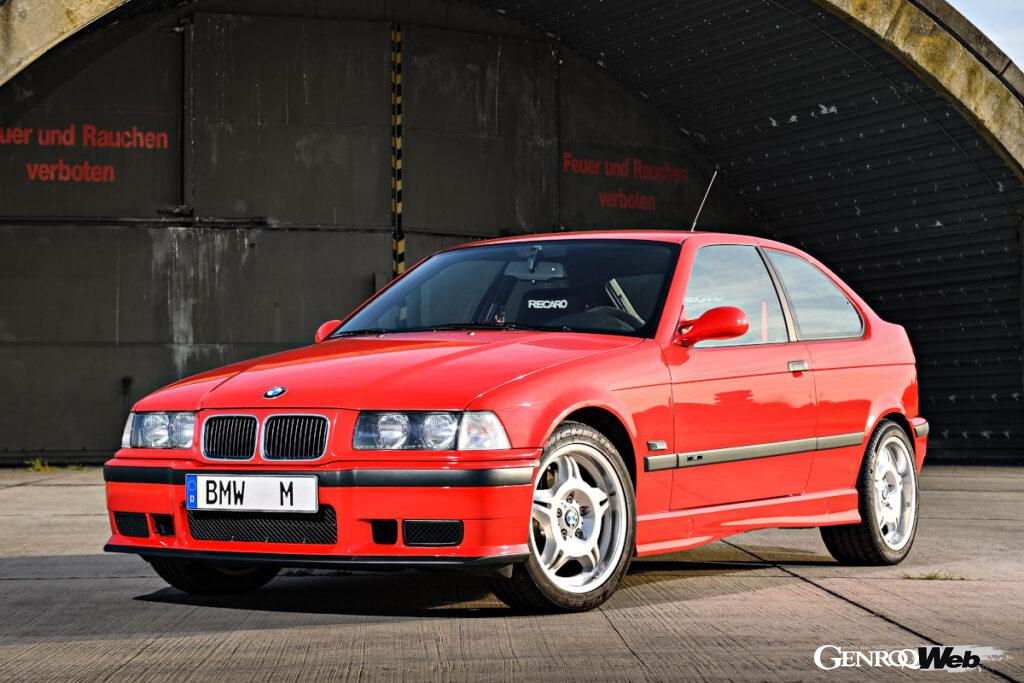
The never-realized “BMW M3 Compact”
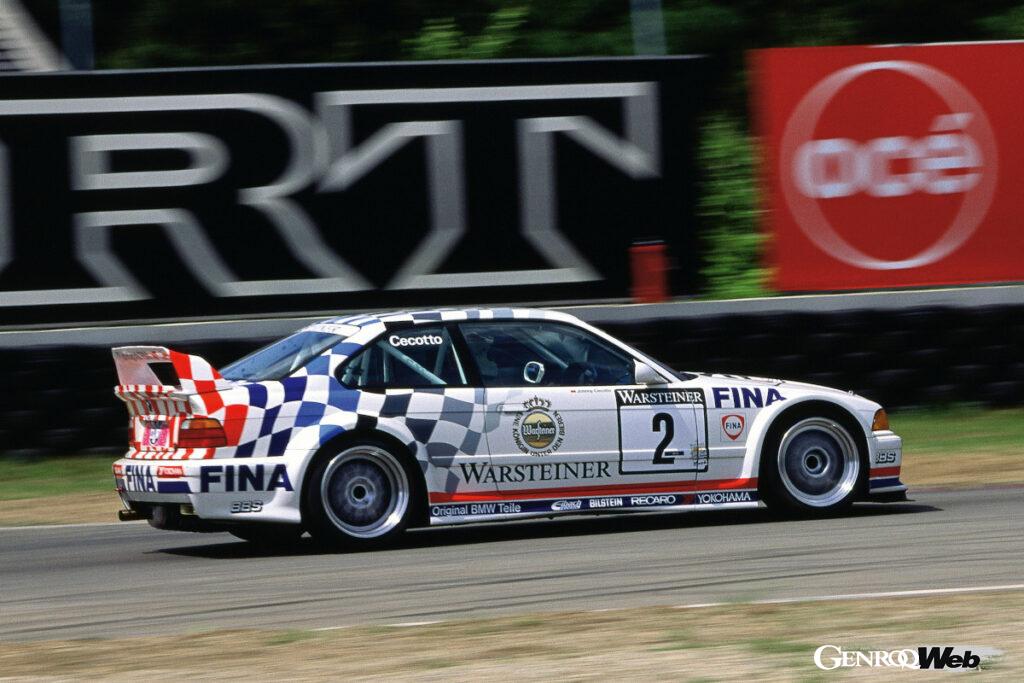
“BMW M3 GT”
Another limited edition model was the M3 GT, released in 1994 as a homologation model for FIA-GT Class 2 and IMSA GT. 356 units were made of the M3 GT, which featured an S50B30 engine producing 295 PS, a double rear wing, reinforced suspension, and wider 17-inch wheels.
In the US, the M3 Lightweight was released without air conditioning or a radio, and equipped with an aluminum hood, a large rear wing, etc. Interestingly, a single road version of the “M3 GTR” was also produced for the ADAC German GT Cup Championship, with extensive modifications including a wide body.
In the end, the second-generation M3 was praised for its outstanding dynamic performance and well-balanced chassis, and was a success, with 46,525 coupes, 12,603 four-door sedans, and 12,114 convertibles produced by 1998. Following this success, a prototype M3 based on the 3 Series Compact was made in 1996, but unfortunately it never came to fruition.












![The S-Type, widely regarded as Bentley’s masterpiece post-war saloon [Bentley 100 Years of Car History]](https://wheelfeed.com/wp-content/uploads/2025/11/4703-1762127546348.jpg)