

MERCEDES-AMG E 53 HYBRID 4MATIC+
×
BMW M5
A high-performance mid-size sedan representing Mercedes-AMG and BMW M

Mercedes-AMG E 53

BMW M5

Mercedes-AMG E 53

BMW M5
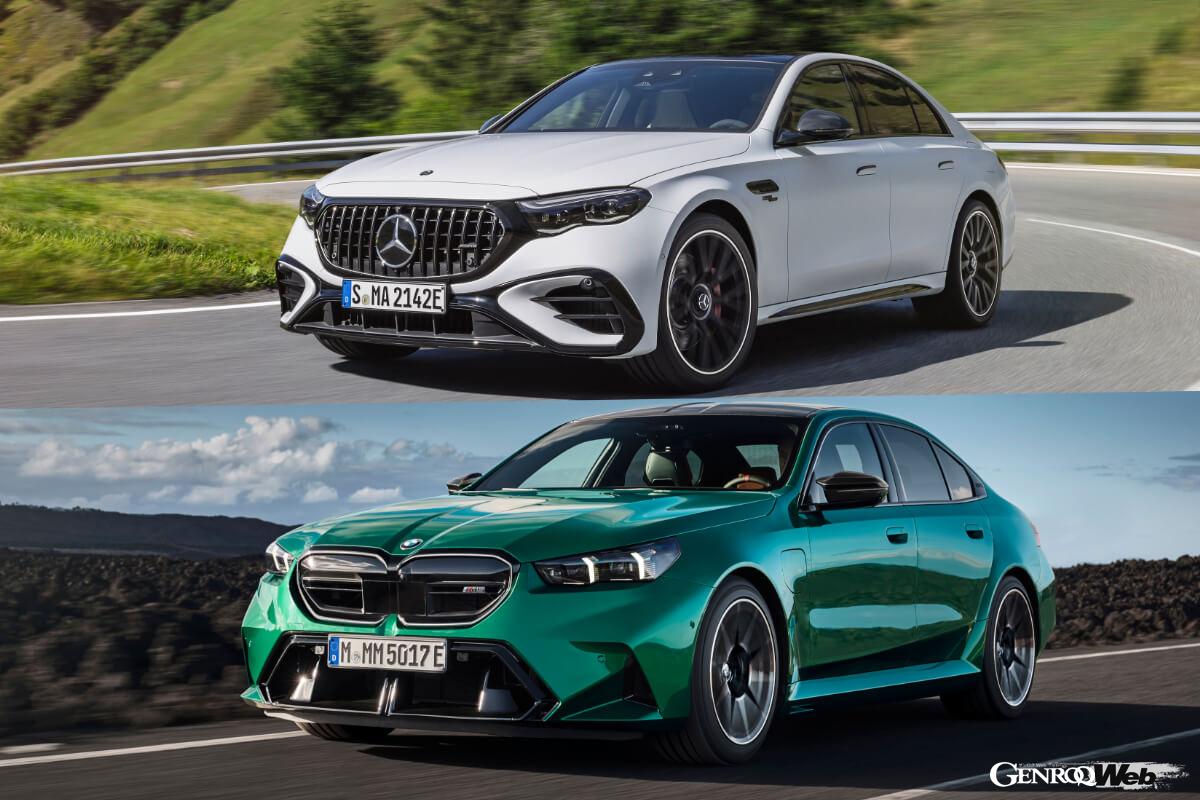
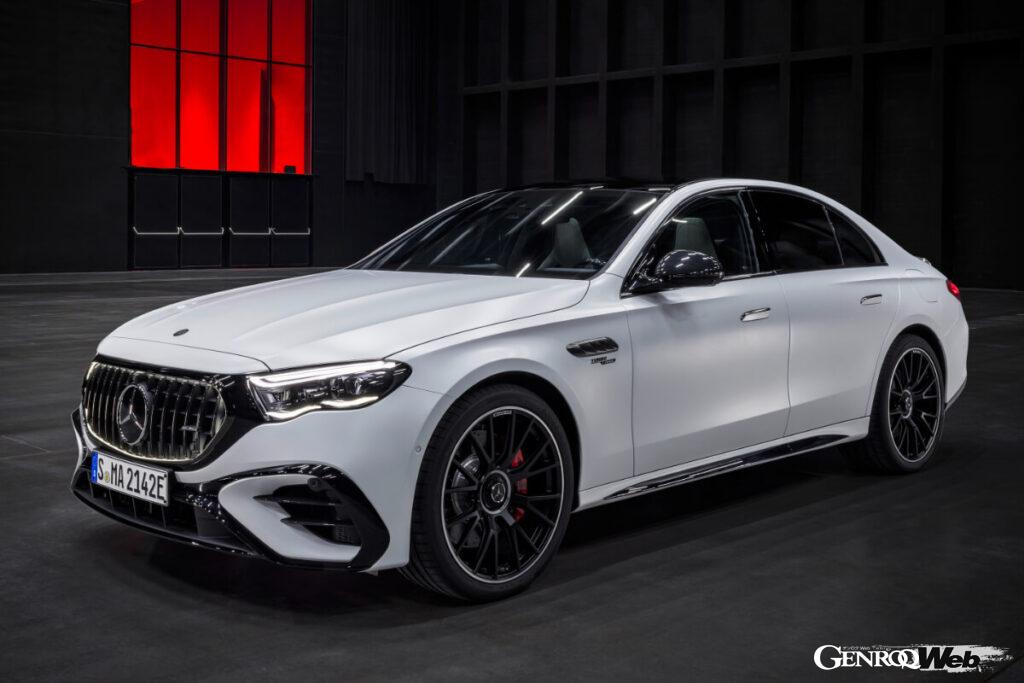
The latest high-performance saloons, the Mercedes-AMG E 53 and the BMW M5, are both historic models of the brand, and have undergone a normal evolution. The exterior of the E 53 features the Panamericana grille with vertical latticework, an icon of AMG models, and is wrapped in the elegant body and aero design unique to Mercedes-Benz.
The M5, on the other hand, is a size larger, 125mm longer, 70mm wider, 35mm taller, and has a 45mm longer wheelbase. However, it weighs almost the same at 2.4 tonnes, making it a heavyweight. Its shape is more linear and aggressive, and its black kidney grille with “Iconic Glow” illumination symbolizes its high performance.
The interiors of both models are based on the base model, with sports seats and special decorations, giving them a truly special model feel. However, while the M5 emphasizes a sense of unity with the driver, as is typical of BMW cars, the E 53 is more Mercedes-AMG-like, with a focus on balancing luxury and sportiness, as can be seen from the support shape of the seats.
Mercedes-AMG E53 HYBRID 4MATIC+
Body size = Length 4970mm x Width 1900mm x Height 1475mm
Wheelbase = 2960mm
Vehicle weight = 2390kg
Tire size = 265/40R20 (front) / 295/35R20 (rear)
BMW M5
Body size = Length 5095mm x Width 1970mm x Height 1510mm
Wheelbase = 3005mm
Vehicle weight = 2400kg
Tire size = 285/40R20 (front) / 295/35R21 (rear)
The biggest difference between the E53 and the M5 is the reliance on the motor
Mercedes-AMG E 53

BMW M5

Mercedes-AMG E 53

BMW M5
Although there is a difference in the engine type, straight-six and V8, both cars are plug-in hybrid cars equipped with engines that have more than enough power. Also, both are AWD, equipped with electronically controlled differentials and rear-wheel steering mechanisms. It is safe to say that the basic configuration of the powertrain and chassis is almost the same.
The biggest difference is the degree of dependence on the motor. The E 53’s drive motor has specifications of 163 PS/480 Nm, while the M5’s is 197 PS/280 Nm. While the E 53 uses a high-torque motor to compensate for its smaller displacement, the M5 relies primarily on the engine, with the motor assisting its inherent maneuverability.
The system output of both cars is 585 PS for the E 53, which rises to 612 PS when using the launch control “Race Start”, but it does not reach the M5’s system output of 727 PS. However, the maximum cruising range as an EV is 101 km for the E 53 and 75 km for the M5, so it can be said that the E 53 is more practical as a PHV.
Mercedes-AMG E53 HYBRID 4MATIC+
Engine type = Inline 6-cylinder gasoline turbo engine + motor
Displacement = 2996cc
Maximum output = 449PS/5800-6100rpm
Maximum torque = 560Nm/2200-5000rpm
Transmission = 9-speed AT
Drive system = AWD
BMW M5
Engine type = V8 gasoline turbo engine + motor
Displacement = 4394cc
Maximum output = 585PS/6000rpm
Maximum torque = 750Nm/1800-5400rpm
Transmission = 8-speed AT
Drive system = AWD
Comfort or overwhelming power?

Mercedes-AMG E-Class

BMW M5
The vehicle price of the E 53 is about 3 million yen cheaper. The AMG E-Class is a model that strikes a high level of balance between everyday usability and sporty performance, and its overall performance, including price, is the best in its class.
The M5, on the other hand, is more expensive, but it offers impressive power and handling. It also has a spacious back seat, but its true essence is that of a driving machine.
Both the E 53 and the M5 are models that represent their respective brands. The latest E 53 and M5 are both PHVs, but the E53 is closer to a luxury car, while the M5 is closer to a sports car, just like previous models. Even though they are electrified, the AMG and M characteristics are firmly inherited.