
![The birth of the powerful and luxurious flagship model “8 Litre” [Bentley 100 Years of Car History]](https://wheelfeed.com/wp-content/uploads/2025/09/1144-1761630901343.jpg)

8 Litre
A powerful and luxurious model
Bentleys have won numerous victories in races such as the 24 Hours of Le Mans, and the “Bentley Boys” who drove them have become idol-like favorites. As a result, owning a Bentley has become a status symbol for royalty and celebrities, but at the same time, there has been a growing demand for larger, more powerful, and more luxurious models than sports cars.
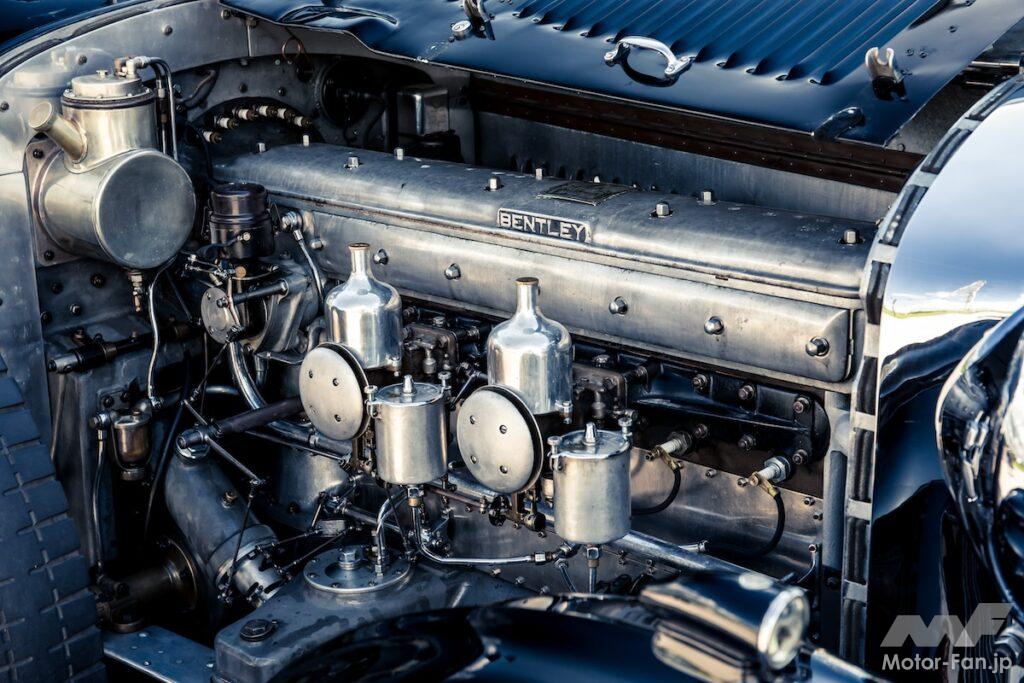
In response, WO Bentley instructed the development of a flagship model that would be more powerful than the 6 1/2-liter engine. Based on the 6 1/2-liter engine, the bore was increased to 110 mm, resulting in a displacement of 7983 cc, larger than that of the Rolls-Royce Phantom, and a straight-six SOHC 4-valve engine was developed.
This engine, which produced 220 HP, featured aluminum alloy pistons, twin spark ignition with separate coils and magnetos, just like the previous straight-six, and a crankcase made from magnesium alloy Elektron to reduce weight.
100 mph in complete silence
To handle the power, the steel ladder frame chassis was reinforced with cross members, and the brakes were equipped with dewandelle vacuum servo-assisted drum brakes on all four wheels.
The standard chassis had a wheelbase of 144 inches (3700 mm), but a long-wheelbase version (156 inches) was also available. Three short-wheelbase versions (138 inches) were also produced.
At the time of the announcement, WO Bentley himself said, “I have always wanted to build a car that could run 100 miles per hour (approximately 160 km/h) in complete silence. I think I have now achieved that goal.” Bentley announced the top speed of the 8-Liter as 201 km/h. People were surprised to learn that even with the heaviest saloon body, a top speed of over 160 km/h was guaranteed.
Developing a cheaper 4-liter version
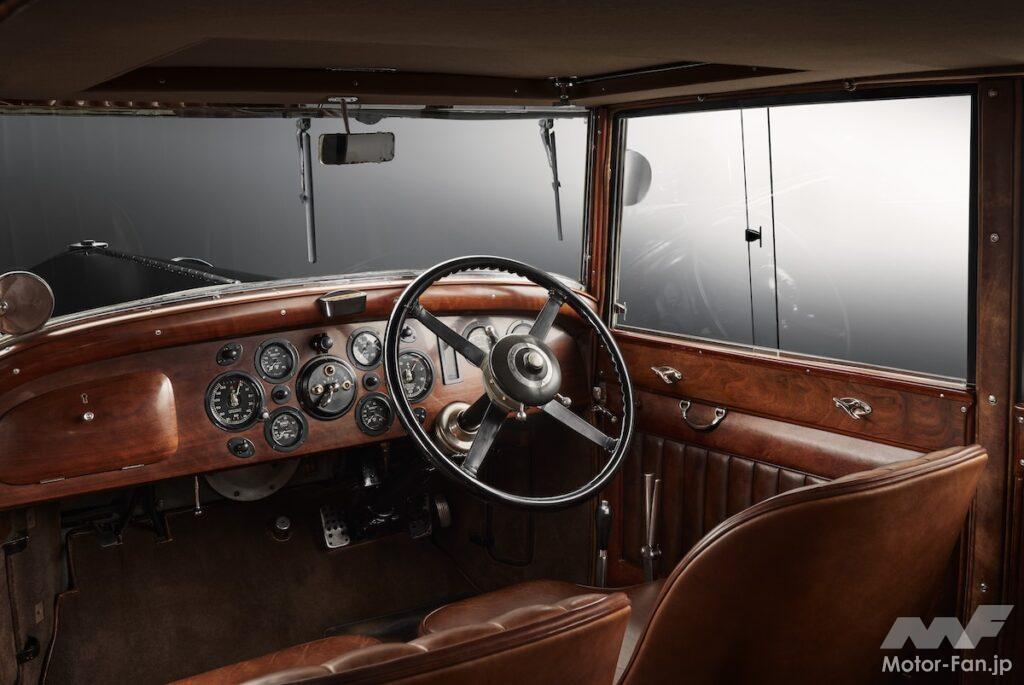
The 8 Liter was finally released, but in September 1929, the American stock market crashed, triggering the Great Depression. The car was hit hard by the aftermath, and production of the 8 Liter was reduced to just 100 units by 1932.
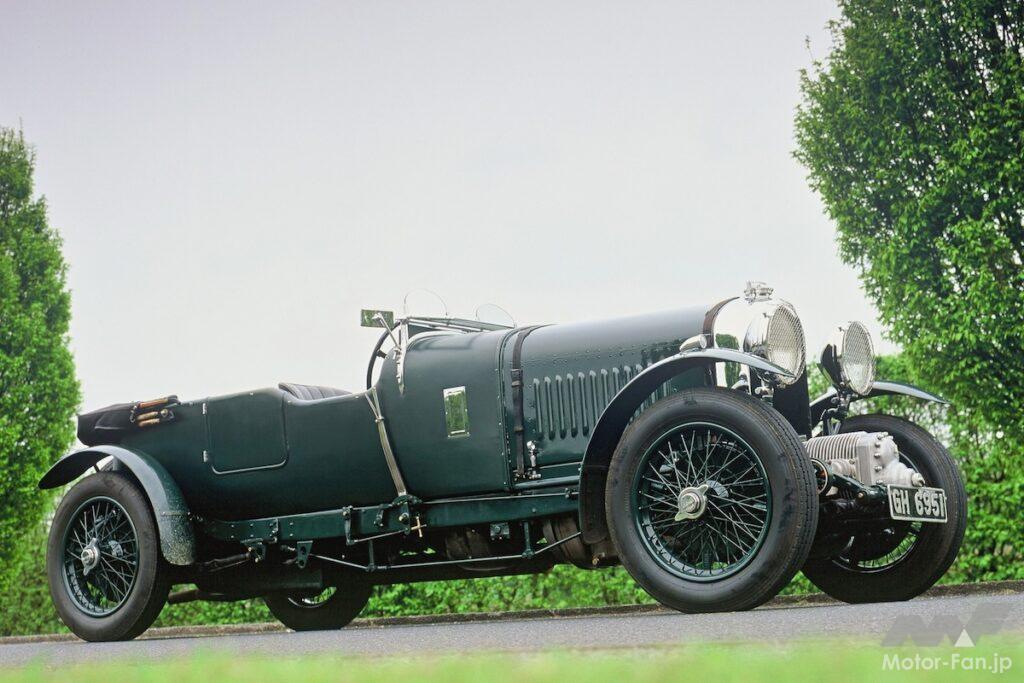
In response, Bentley developed a cheaper version, the 4-Liter, in 1931, by mounting a 4-Liter Ricardo IOE straight-six engine on an 8-Liter chassis. Aiming to capture the market for the Rolls-Royce 20HP, nicknamed the “Baby Rolls,” the car was disappointing, with production of only 50 cars. Bentley Motors’ financial situation rapidly deteriorated. By the summer of 1931, the company was unable to repay its huge loans, and despite the efforts of Woolf Barnato, the company was placed into receivership.
The administrators then began negotiations to sell the car to Napier & Sons. The two companies had planned to complete the acquisition by October 1931, but suddenly British Central Equitable Trust made a higher offer. After a court-mediated bidding process, British Central Equitable Trust won the Bentley for £125,000.
Merger with Rolls-Royce
After the acquisition, it was discovered that British Central Equitable Trust was a front company for Rolls-Royce, and thus the merger of Bentley into Rolls-Royce was completed without the knowledge of WO Bentley and other management.
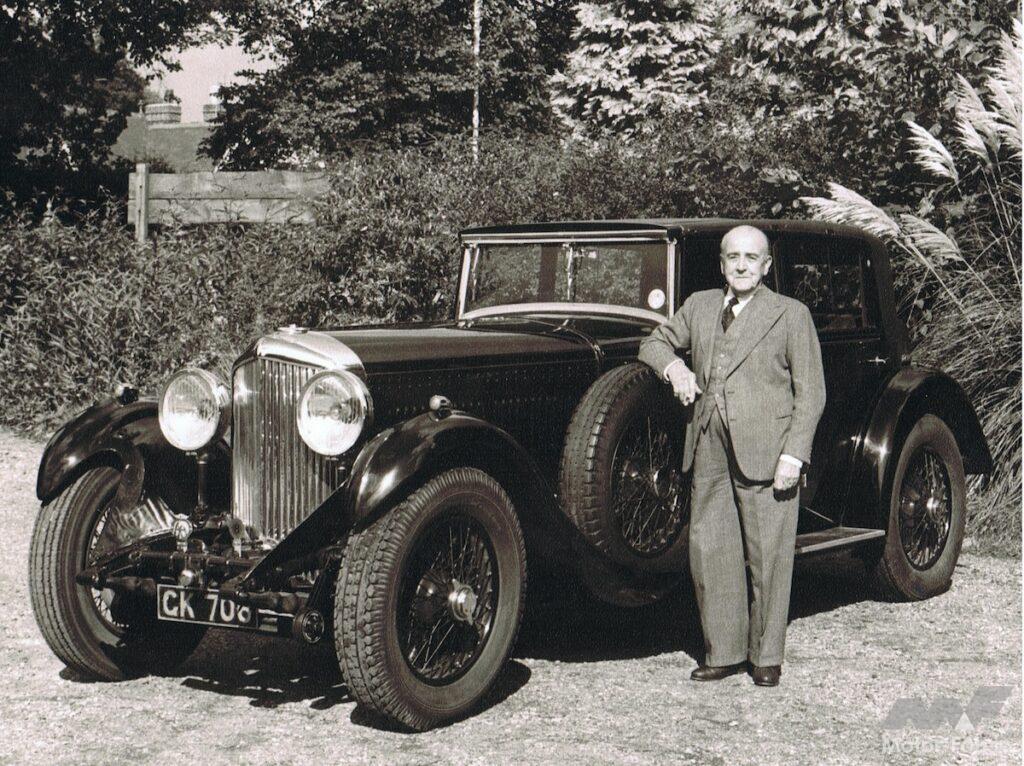
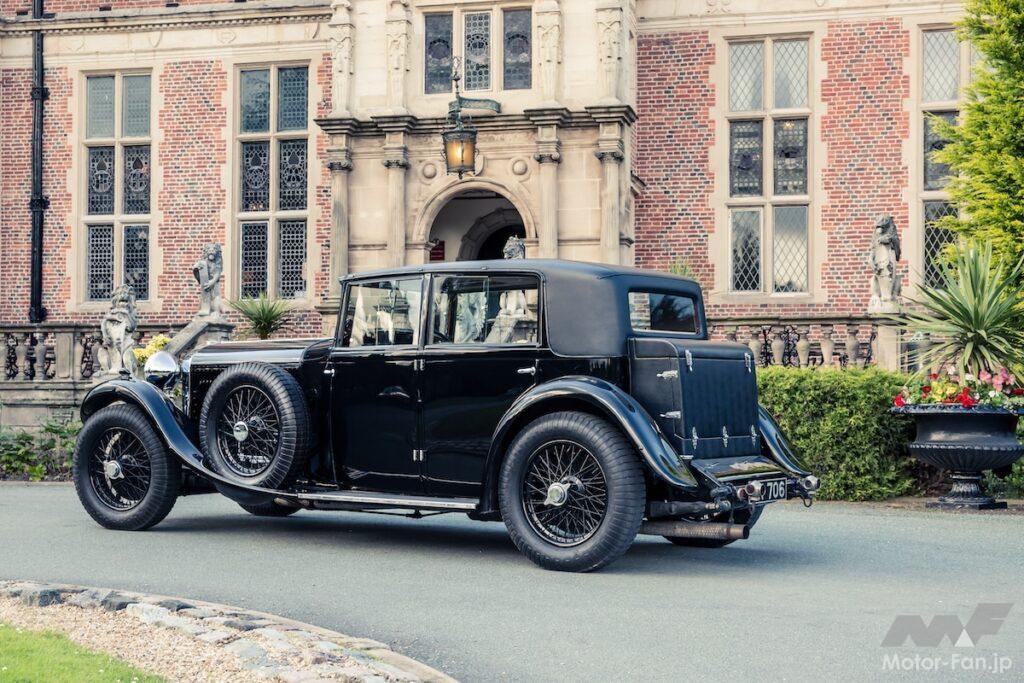
Incidentally, the 8-litre “GK706” with a Weyman fabric body still stored at Bentley Motors was used by WO himself as a company car. After being acquired by Rolls-Royce, it was sold and passed around to several owners, but in 2006 Bentley bought it back, restored it, and once again owns it as a “company car”.










![Will the second-generation Azure be the last big Bentley convertible? [Bentley 100 Years of History]](https://wheelfeed.com/wp-content/uploads/2026/01/4739-1768026248200.jpg)