
![The background of the BMW M1, a mid-engine sports car created for motorsports [The history of BMW M]](https://wheelfeed.com/wp-content/uploads/2025/02/2303-1761196729862.jpg)
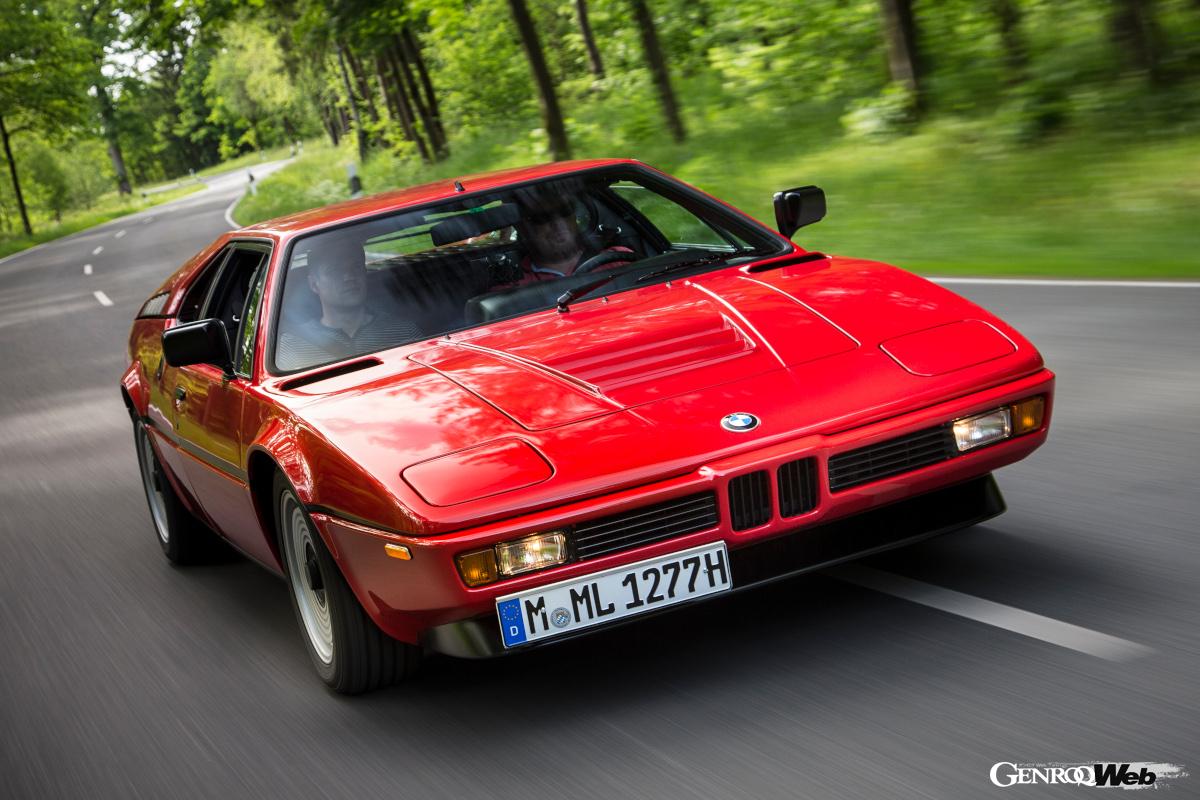
BMW M1
Initially, there was also a proposal to equip it with a V12 engine.

BMW M1
In order to participate in the World Sportscar Championship, which began in 1976, BMW Motorsport began development of the 320i for the under 2.0 liter class, which was an E21 3 Series with an M12/6 engine installed, as well as a Group 5-specific vehicle that could aim for an overall win, and a Group 4 vehicle that would serve as the base for that.
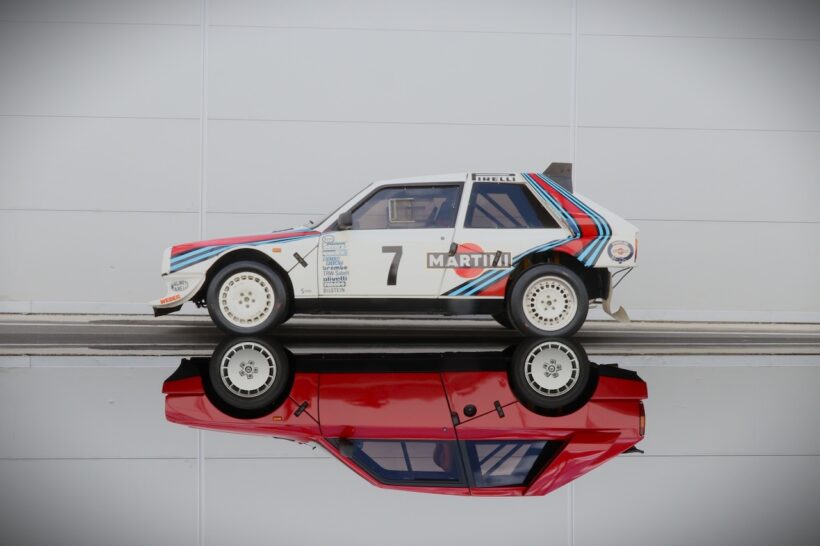
Standing before them at the time was the Porsche 935, which was so overwhelmingly strong that it was later mockingly said to have “destroyed Group 5.” In response, Jochen Neerpasch, team director of BMW Motorsport, decided to develop a two-seater mid-engine sports car like the Lancia Stratos, with the sole purpose of winning Group 4/5.
Initially, there was a plan to use a V12 engine, which was under development, but the project was halted due to the oil crisis. Paul Roche developed the M88 unit, a dry-sump, upright-mounted unit based on the 3.5-liter inline-six DOHC 24-valve unit from the 3.5 CSL. However, BMW did not have the know-how to build a mid-engine chassis to accommodate it. Furthermore, to be homologated as a Group 4 car, 400 cars had to be produced over a 24-month period.
Dallara was in charge of development


So Neerpasch approached Lamborghini, the Italian giant that was struggling financially at the time, and signed a contract for development and production. At the time, the person in charge at Lamborghini was Chief Engineer Franco Ballardini, but the actual development was handled by Dallara, led by Giampaolo Dallara.
Dallara, who had already gained experience with the Miura and Stratos, designed a rectangular steel frame chassis with a longitudinally mounted M88 and double wishbone suspension at the front and rear. The body design was entrusted to Italdesign, led by Giorgetto Giugiaro.
The first prototype was completed in the summer of 1977, and the project seemed to be progressing smoothly, but development was delayed when Lamborghini used the funds it received from BMW to develop the Cheetah off-road model. This meant that the car could not be unveiled at the Geneva Motor Show in March 1978 as scheduled. To resolve this situation, BMW tried to acquire Lamborghini, but the plan was thwarted by strong opposition from labor unions and suppliers. In the end, the partnership between the two companies broke down after seven prototypes were completed.
The original plan was for the engine to be manufactured by BMW Motorsport, the 5-speed gearbox by ZF, the steel tube frame by Marchesi, and the body by Italdesign, with Lamborghini manufacturing the suspension and carrying out the final assembly. However, the FRP body manufactured by TIR in Italy and assembled by Italdesign did not meet BMW’s quality standards, so it was decided that everything would be assembled at Bauer in Germany, with final adjustments to be made by BMW Motorsport.
A one-make race with Group 4 specifications will be held

BMW M1 Procar

BMW M1 Procar
After many twists and turns, the BMW M1 officially debuted at the Paris Motor Show in September 1978. However, with a price nearly twice that of a Porsche 911 and a production rate of only a few cars per month, obtaining homologation proved difficult. Nierpasch then approached Max Mosley, a friend from his days with March BMW, and in 1979, a one-make, professional car race was held for an M1 tailored to Group 4 specifications as a support race for the F1GP. The car also competed in the 24 Hours of Le Mans as a prototype, and these achievements led to the special approval of Group 4 homologation at the end of 1980, when the 400th car had been produced.
However, the World Sportscar Championship had already disappeared, and new Group A, B, and C regulations were scheduled to be issued from 1982, completely blocking the M1’s path to racing.
In the end, production ended after 53 race cars and 400 road cars (there are various accounts) were completed. To this day, no BMW-made, mid-engine sports car has been produced commercially.












![The S-Type, widely regarded as Bentley’s masterpiece post-war saloon [Bentley 100 Years of Car History]](https://wheelfeed.com/wp-content/uploads/2025/11/4703-1762127546348.jpg)