
![The avant-garde virtual project “Ferrari F76” pays homage to the first Le Mans-winning car [VIDEO]](https://wheelfeed.com/wp-content/uploads/2025/10/4616-1762127942073.jpg)
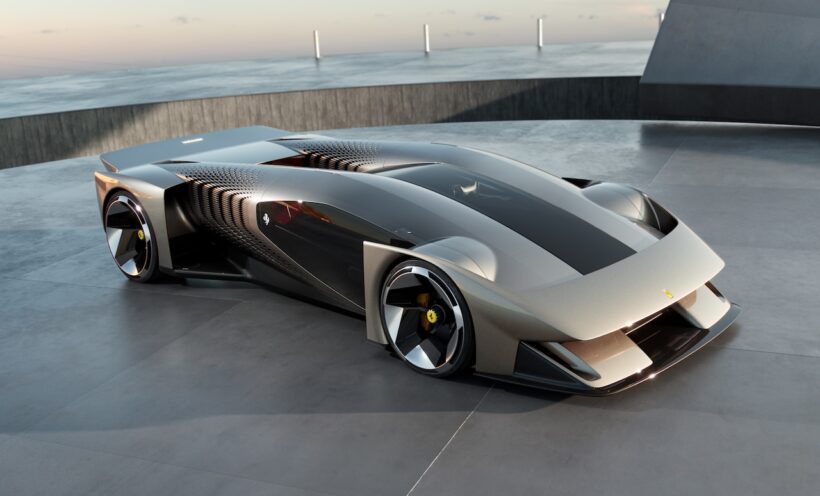
Ferrari F76
Designing with new digital methods
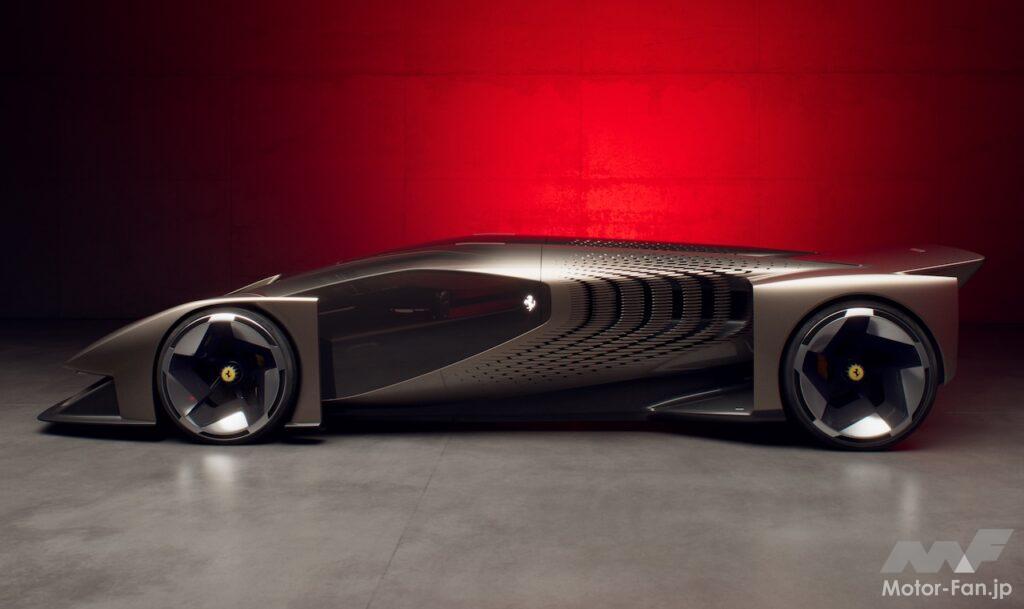
The Ferrari F76 has been released in the form of an NFT (non-fungible token) and was designed for participants in the Hyper Club, a customer program that supports the WEC.
The Ferrari F76 will be released as an NFT (non-fungible token: non-substitutable digital data). Rather than a concept car intended for commercial sale, it is an advanced virtual project that combines generative design and digital technology, based on Ferrari’s motorsport tradition.
The F76 was a design project for participants of the Hyper Club, an exclusive VIP program introduced to the World Endurance Championship (WEC). Hyper Club participants, who support the Ferrari 499P competing in the WEC, shared the development process of the F76 with Ferrari’s design team.
The F76, designed by the Ferrari Styling Centre under the direction of Flavio Manzoni, is a design statement that anticipates the future of Ferrari. Its parametric approach, which combines form, function and performance, aims to push the boundaries of automotive design.
Combining biomimicry, architectural principles, engineering, and computer science, the F76’s innovative design approach goes beyond mere styling concepts and could potentially lead to multiple patented technologies.
Unique dual fuselage structure
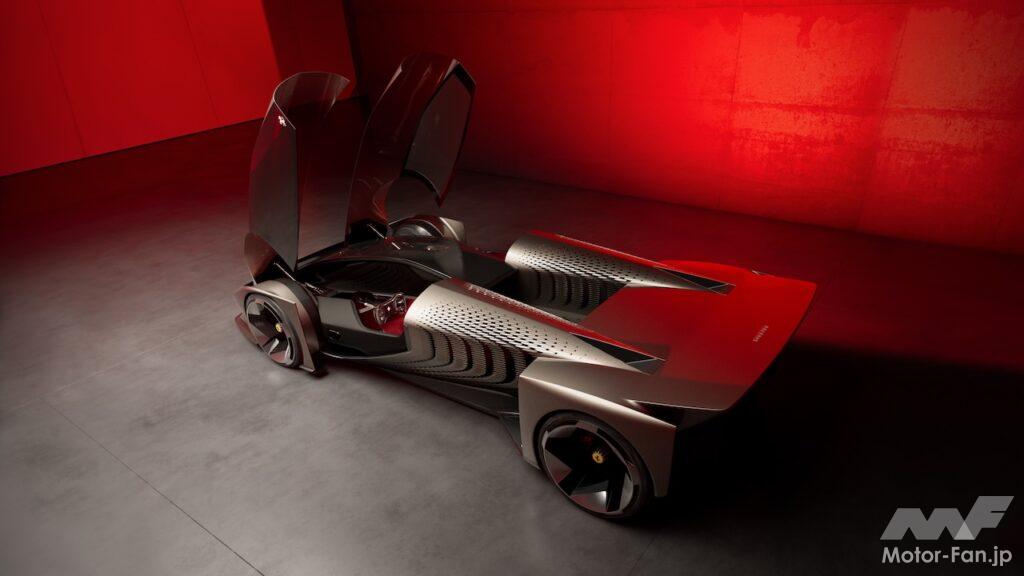
The F76 featured a “dual fuselage” design with separate left and right cabins.
The F76 features a dual fuselage design and meticulous aerodynamics. Its distinctive aerodynamic fenders, which break conventional wisdom, are designed to deliver the ultimate in driving performance.
The two cabins are separated on the left and right sides, and the wheelbase is aligned with the cabin length, allowing for a new interaction between the underbody and bodywork. The spatial shape of the center section allows the entire body to be used as an aerodynamic component, making it possible to maximize the ground effect.
At the front, a floating band is placed between the fenders, emphasizing the center opening and the side ducts flowing above the wheels. On either side of the band are two retractable headlights, reminiscent of the pop-up headlights of Ferraris from the 1970s and 1980s. This gives the F76 a look reminiscent of a traditional Ferrari.
The airflow separated at the front reunites in the rear section, and a two-stage wing at the top of the tail improves the efficiency of the rear diffuser. The side section features vertical cuts inspired by the F80. This design suggests that the F76 will influence future production designs.
The rear section features two vertical components. The central part of the upper wing has a beam-like shape, emphasizing Ferrari’s new design language, the “gate.” The four taillights are also integrated into the wing.
A cockpit for sharing the driving experience
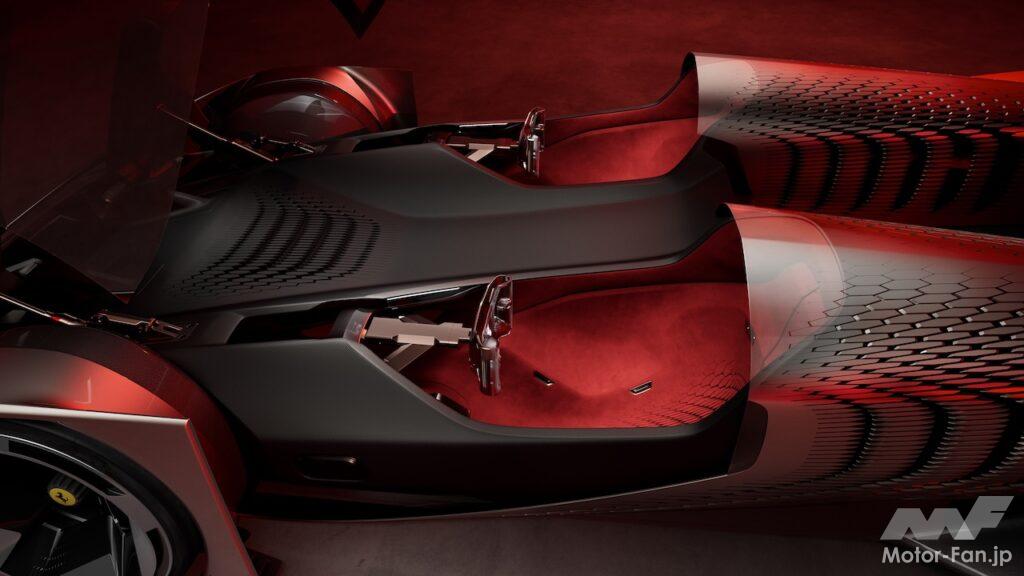
The steering wheel and pedals are located in the left and right cockpits, allowing passengers to fully share in the driver’s experience.
The twin-hull interior creates a shared driving experience. The two separate cockpits are synchronized with all controls, from the steering wheel to the pedals, using fly-by-wire technology, allowing both passengers to share the driving sensation in real time.
The F76 design project offered customers an unprecedented personalization experience. Participants chose from multiple design proposals distributed exclusively through the three-year “Hyper Club” program. Through this platform, program participants were involved in every step of the design process, leading to the completion of the F76 design.