
![The 991 Carrera finally gets a turbocharged engine, a major change for the 991 [Porsche Chronicles]](https://wheelfeed.com/wp-content/uploads/2025/01/3937-1761202088435.jpg)
991 Carrera / Carrera S / Carrera GTS / Carrera T / Carrera 4 / Carrera 4S / Carrera 4GTS / Turbo / Turbo / R / GT2 RS / GT3 / GT3 RS / Speedster
Body size increased but weight reduced

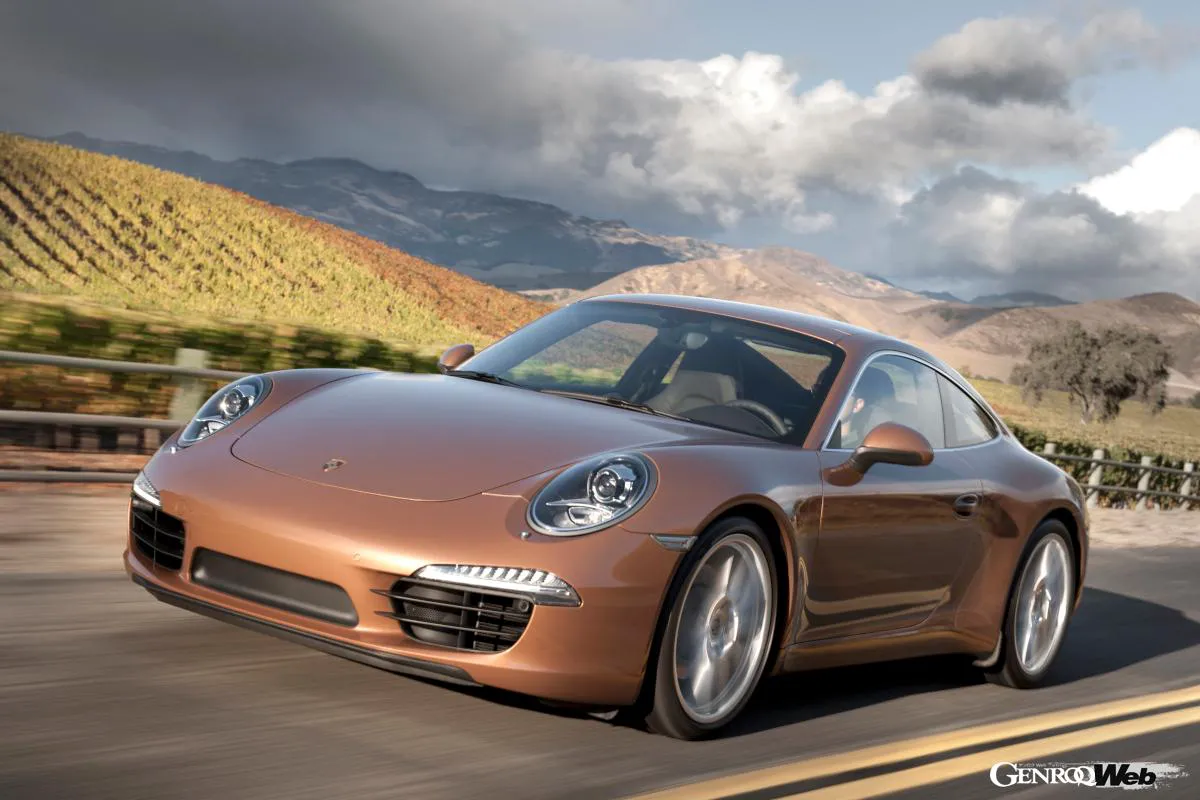
911 Carrera S

911 Carrera GTS Cabriolet
Since the 996 model, Porsche has used the method of revamping the body and chassis with a full model change and then revamping the powertrain with a minor change, but the 991-type “911,” which debuted in 2011 and could be called the “second generation water-cooled,” followed this practice by appearing with a significantly changed body.
Although the overall width is not significantly different from the 997 model, the overall length has been extended to 4,500 mm. At the request of the racing department, which aims to win the WEC GTE Pro class with the 911 RSR, the wheelbase has been increased by 100 mm, and the front tread has been increased by 45 mm for the Carrera and 55 mm for the Carrera S. This has resulted in improved maneuverability and driving stability.
In addition, 47% of the body shell is made of aluminum alloy. In addition, high-tensile steel plates and hot-rolled steel are used in various places, resulting in a nearly 20% improvement in torsional rigidity compared to the 997. On the other hand, despite the increase in body size, the car has succeeded in reducing the weight of the body-in-white by 25 kg and the vehicle weight by 60 kg.
The suspension is completely revamped, with front MacPherson struts and rear multi-links, following the format of the 997. Extensive use of aluminum has helped to reduce weight, and the car is also characterised by the active use of electronic devices such as PDCC (active stabilizer), PTV (torque vectoring), dynamic engine mounts and electric power steering in addition to PASM and PSM.
RWS’s “GT3” is here

991 interior

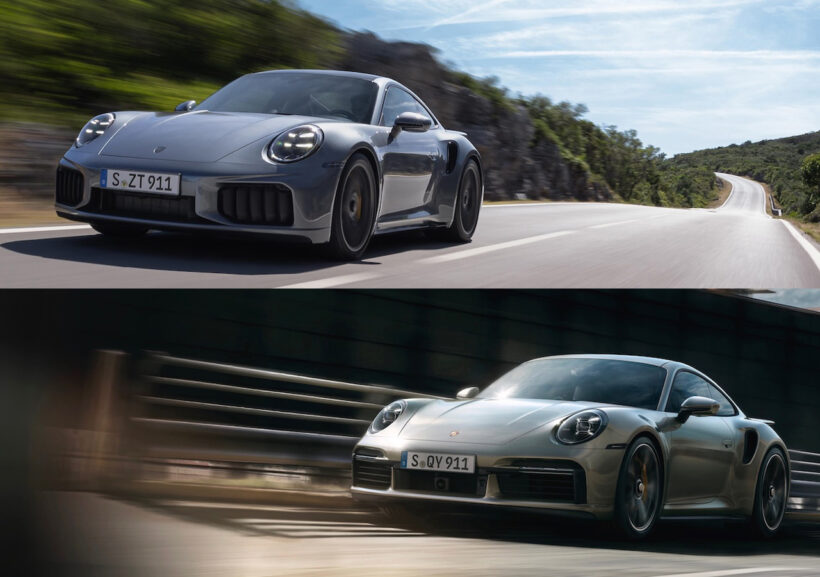
911 Turbo S
While the engine is based on that used in the 997, the Carrera’s displacement has been downsized from 3.6 liters to 3.4 liters in line with the trends of the times. By adopting a sleeveless cylinder, an assembled camshaft, a new engine management system, and an intake and exhaust system, the maximum output has been increased to 350 PS for the Carrera and 400 PS for the Carrera S, while also achieving both weight reduction and improved cooling efficiency.
Meanwhile, the interior has been modernized, inheriting the image of the 911, with a large center console modeled after the Panamera and a multi-display installed in part of the meter. Comfort has also been improved, with the 911 being equipped with independent temperature control for the left and right sides for the first time.
In 2013, the GT3 was released, equipped with a 4.0-liter naturally aspirated flat-six engine producing 475 PS and active rear-wheel steering, Porsche’s first 4WS system. Furthermore, the Carrera 4’s wide body was further widened, and the 911 Turbo and Turbo S, both with 3.8-liter twin turbo engines producing 520 PS and 560 PS, were added to the lineup. Also in 2014, the Targa 4, a revival of the classic Targa bar, was announced, generating a lot of buzz.
Downsized flat-6 twin turbo

911 R

911 Carrera S
The 991 underwent a minor change in 2015, evolving into the so-called “991.2” model. In order to comply with the 2021 emissions regulations, the naturally aspirated unit was finally discontinued, and both the Carrera and Carrera S were replaced with a flat-six twin-turbo engine that was downsized to 3.0 liters.
This new 3.0-liter twin-turbo engine uses a VarioCam Plus intake camshaft and a variable valve timing exhaust camshaft. It also features reduced friction loss in each part, as well as a resin oil pan and aluminum crankcase for weight reduction.
The body features variable flaps in the front intakes to improve aerodynamics and cooling efficiency, and the 7-speed PDK and 7-speed MT have also been updated. The interior also features a steering wheel similar to the 918 Spyder, and the PDK paddle shifters have become more common, with left-down and right-up paddles.
In 2015, the 911 GT3 RS was released, based on the 991.1, equipped with a 4.0-liter naturally aspirated engine producing 500 PS and featuring significantly revised body aerodynamics. In 2016, the 911R, limited to 991 units, was released, combining a 4.0-liter naturally aspirated engine producing 500 PS with a 6-speed manual transmission.
The 911 GT2 RS reaches 700 PS

911 GT2 RS

911 GT3 RS
In 2017, the GT3 evolved based on the 991.2. In June of the same year, the 911 GT2 RS was released, featuring a 3.8-liter flat-six twin-turbo engine with 700 PS and a 7-speed PDK. In 2018, the 911 GT3 RS was released, featuring a 4.0-liter naturally aspirated engine tuned to 520 PS.
As such, the 991 series saw an expansion of variations for both the 991.1 and 991.2 models, but production ended in 2019 with the release of the GT3-based “911 Speedster,” limited to 1,948 units, before being passed on to the next-generation 992.













![The S-Type, widely regarded as Bentley’s masterpiece post-war saloon [Bentley 100 Years of Car History]](https://wheelfeed.com/wp-content/uploads/2025/11/4703-1762127546348.jpg)