
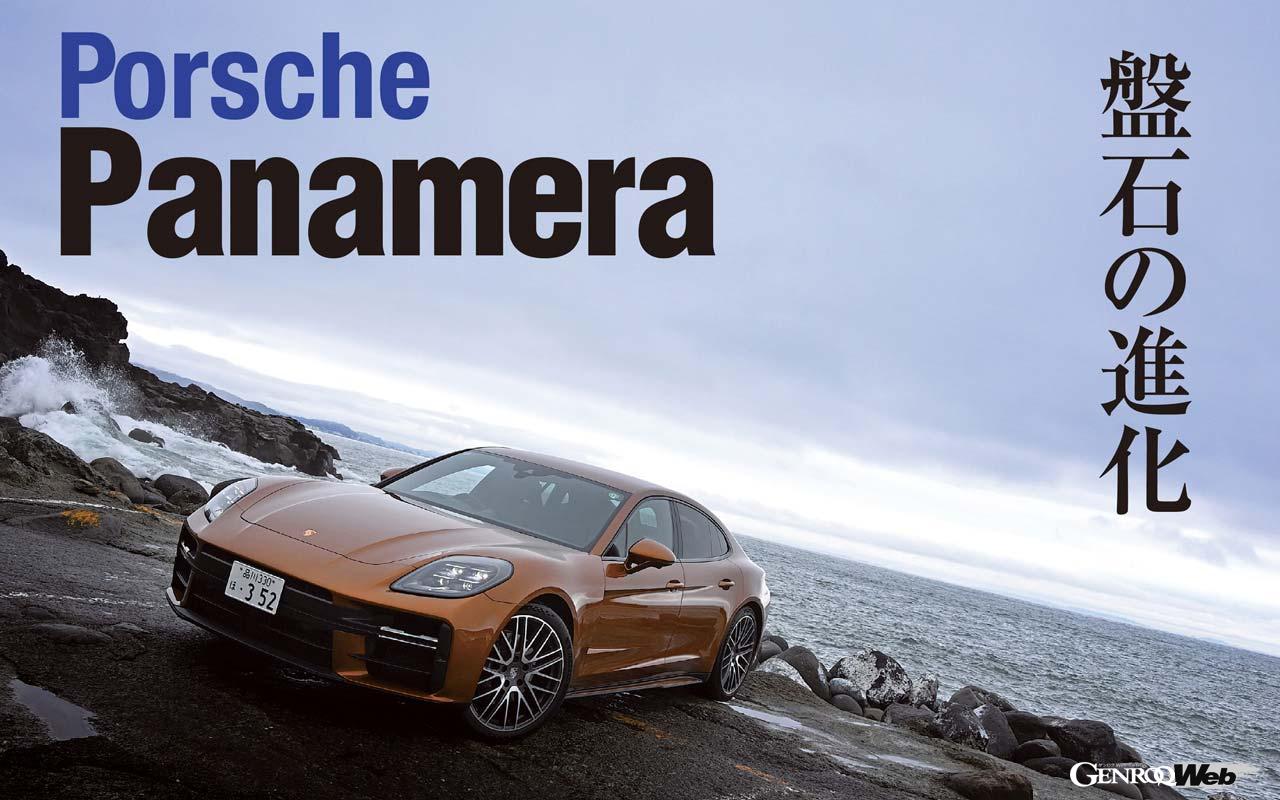

Porsche Panamera
The body size is almost the same as the previous model
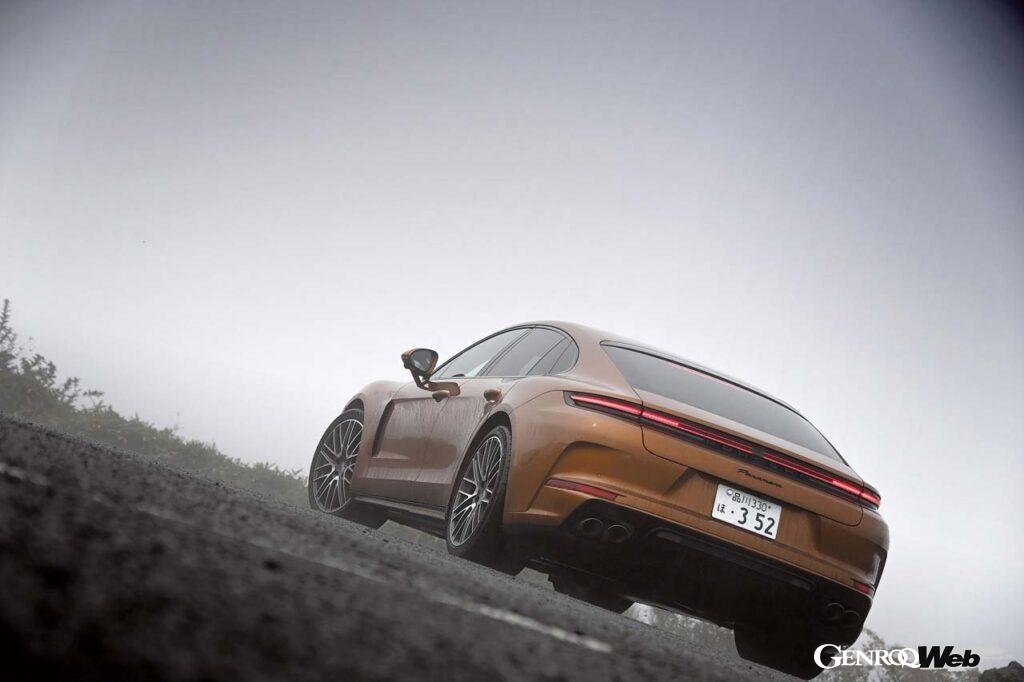
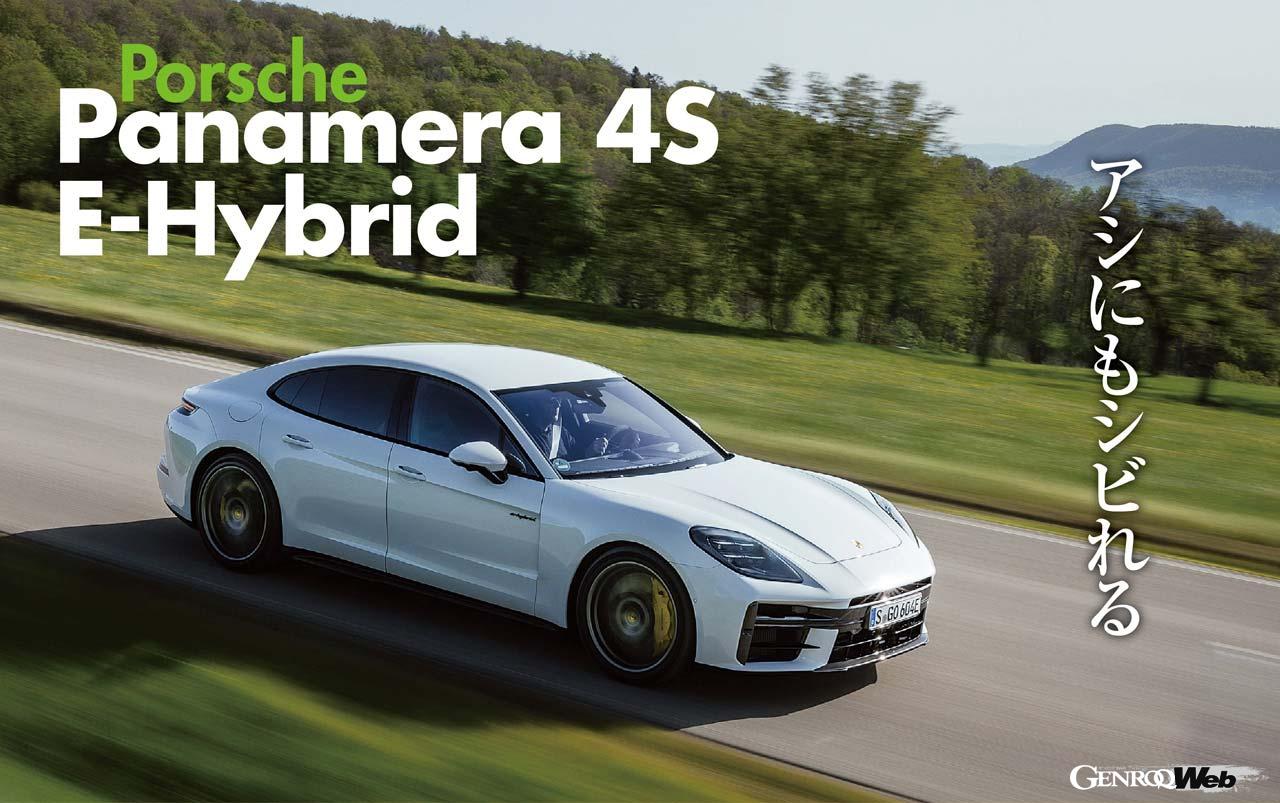
The test drive vehicle was equipped with the optional Sport Design Package (695,000 yen). The front and rear bumpers and side skirts have a more stylish design. The wheels were also optional 21-inch “911 Turbo Design” (653,000 yen).
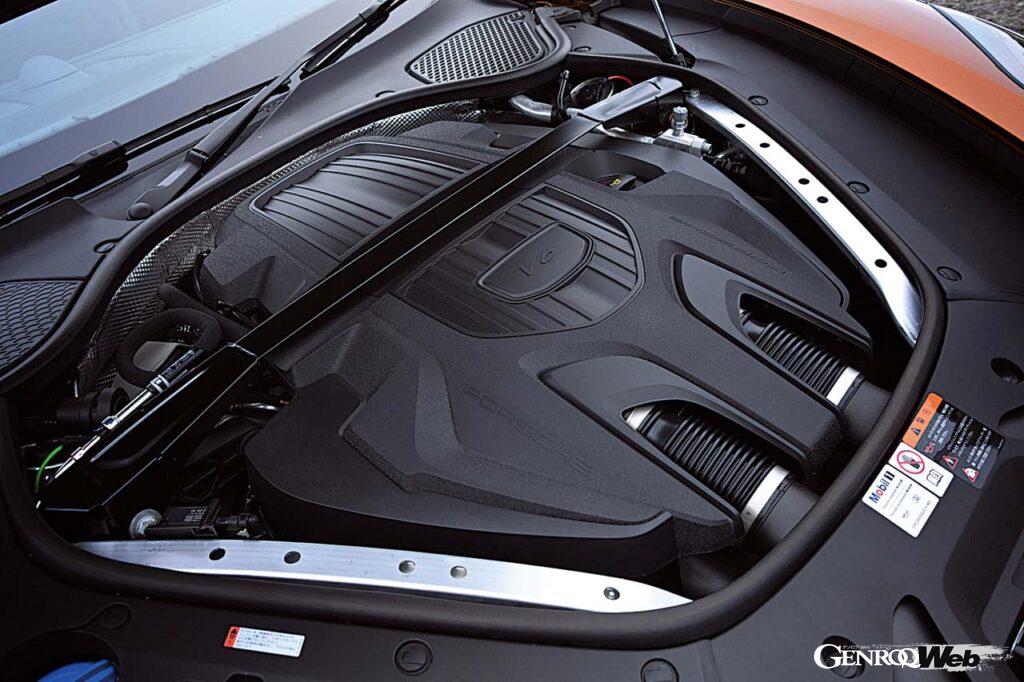
The Panamera and its AWD version, the Panamera 4, are fitted with a 2.9-liter V6 twin-turbo engine. The bore and stroke are a long stroke of 84.5 x 86.0 mm. The redline starts at 6,800 rpm.
The styling is surprisingly similar to the previous 971 model. However, the character lines, front and rear combination lamps, and side window graphics all have sharper edges to create a sharper impression, and the more you look at it, the more new it becomes. Everyone will recognize it as a Panamera, and previous owners will know the difference. It’s quite a bold styling.
The size is almost the same, so I looked into it and found that the overall length has only increased by 3mm. The overall width, height and wheelbase are exactly the same as the previous model. It is a good sign that the excessive expansion of body size has been stopped, but the Panamera’s body is already full-size. Perhaps Porsche has realised that this is the limit for a sports saloon. The platform is the “MSBw”, an improved version of the previous “MSB”.
For this reason, the driving feel is simply an extension of the previous model. The test drive vehicle was a base model Panamera with a 2.9-liter V6 twin-turbo engine. The specifications are a maximum output of 353 PS and a maximum torque of 500 Nm, which is an increase of 23 PS and 50 Nm compared to the previous model due to optimization of boost pressure, fuel injection amount, ignition timing, etc.
The merits of the base model

The air suspension has a new mechanism, allowing for a much wider range of adjustment between comfort (softer) and sportiness (harder).
The car’s weight of 1,885 kg is 25 kg heavier than the previous model, but this is more than offset by the increase in power. Therefore, the basic Panamera’s virtue of “the chassis is superior to the engine” has been firmly inherited, and no matter how you swing it around, from winding roads to highways, it shows no signs of breaking down. Since the boost kicks in around 2,000 rpm, there are times when you think, “If only there was a little more power…”, but there is no doubt that it is an absolutely fast car. Conversely, it is this sense of security that makes this basic Panamera the most premium car for some people.
And what makes this even more impressive is the suspension, which is the new model’s true strength. All vehicles come standard with air suspension, which was also the case with the previous model, but the new model has a completely revamped mechanism. The damper has been changed from the previous one-valve type to a two-valve type, making it possible to control the extension and compression sides separately. This means that the range of swing between comfort (softer) and sporty (harder) is significantly larger. In addition, the number of air spring chambers has been changed from three to two, resulting in a lighter car.
There are three driving modes: the familiar “Normal,” “Sport,” and “Sport Plus.” When driving in “Normal,” the car offers the feel of a luxury saloon, far removed from the Porsche brand image. When going over rough roads or overpasses, only a low, small “thud” is emitted, and the impact felt by the body is smaller than you would expect given the condition of the road.
Taking a curve like that at that speed?

[1]

[1]

[2]

[3]
[1] High-back seats with integrated headrests. A center console is also installed in the rear seats, making the vehicle accommodating four people. The test vehicle was equipped with the optional leather-free interior (priced at 216,000 yen). [2] Luggage capacity is 494 to 1,328 liters. The rear seat backs are split-foldable in a 60:40 ratio. The tailgate can be opened and closed electrically with the push of a switch. [3] The instrument panel has been updated to a new generation type that began with the Taycan. The meter is a full LCD type without a nacelle, and gear changes are performed using a small lever located to the left of the meter.
What’s interesting is when you select “Sport” or “Sport Plus.” The throttle response becomes sharper depending on the mode, so while you’re actively enjoying manually operating the 8-speed DCT, you’ll notice that the new air suspension firmly controls the vehicle’s posture, minimizing roll when cornering. “I’m taking that curve at that speed, and that’s all?!” This makes you feel safe entering corners at a higher speed.
Furthermore, the optional rear-axle steering system works well. It turns smoothly and compactly in tight corners and boasts outstanding stability in high-speed corners. So while driving around on winding roads, you forget that you’re driving a large, heavy four-door saloon. In my case, it’s true that the 911 Carrera T crossed my mind.
Depending on the mode selected and the driver’s mindset, the Panamera can transform into either a luxury saloon or a sports car, and the new model has further strengthened this character.
SPECIFICATIONS
Porsche Panamera
Body size: Length 5052mm, Width 1937mm, Height 1423mm,
Wheelbase: 2950mm,
Vehicle weight: 1885kg
, Engine: V6 DOHC twin turbo,
Total displacement: 2894cc,
Maximum output: 260kW (353PS) / 5400-6700rpm,
Maximum torque: 500Nm (51.0kgm) / 1900-4800rpm,
Transmission: 8-speed DCT,
Drive system: RWD,
Suspension type: Front double wishbone, rear multi-link
, Brakes: Front and rear ventilated discs,
Tire size: Front 265/45ZR19, rear 295/40ZR19,
Top speed: 272km/h,
0-100km/h acceleration: 5.1 seconds
, Vehicle price: 14.66 million yen
REPORT / Naohide Ichihara
PHOTO / Wataru Tamura
MAGAZINE / GENROQ February 2025 issue
[Inquiries]
Porsche Contact
TEL 0120-846-911
https://www.porsche.com/japan/