
Bentley Continental GT Speed
Completely renewed every two generations

[1]

[2]

[3]
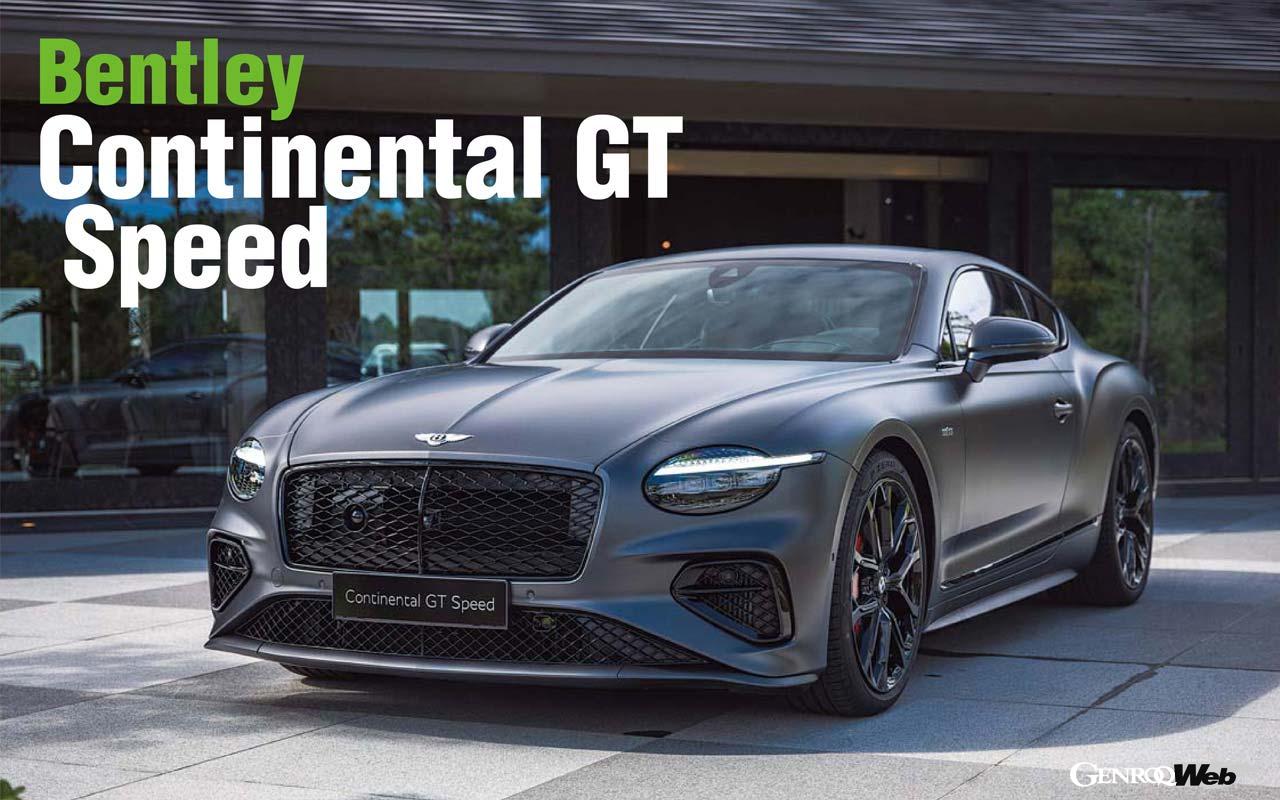
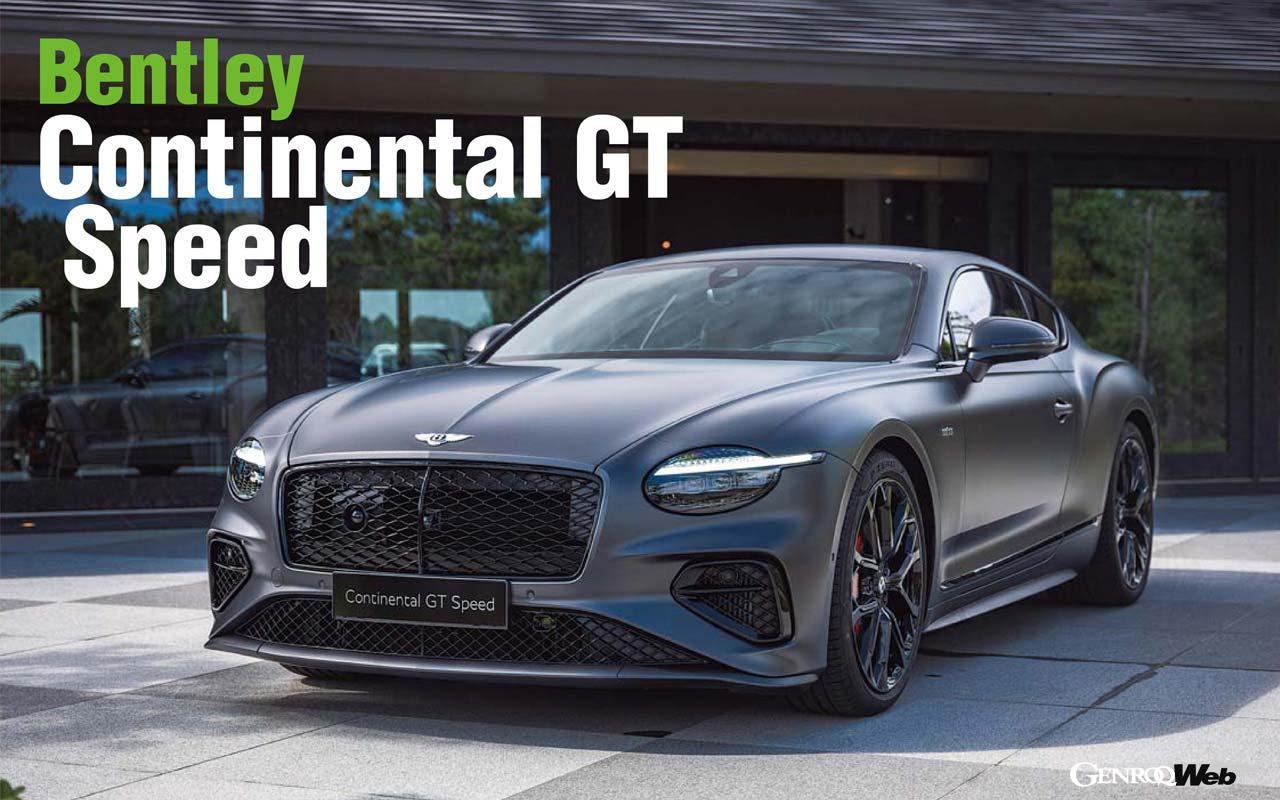
[1] The most obvious change is the headlights, which have been changed from four round lights to two lights. This is the first time a single headlight has been used since the 1959 “S2.” [2] The 4.0-liter V8 is equipped with two single-scroll turbos and is combined with an electric motor with 190 PS/450 Nm. With the support of the motor, there is almost no turbo lag or shift shock. [3] The front-to-rear weight distribution has changed from the previous model’s 55:45 to 49:51, which is the first time for a Conti-GT that it is closer to the rear, bringing about a dramatic change in driving performance. It is said that 68% of the components have been renewed from the previous model.
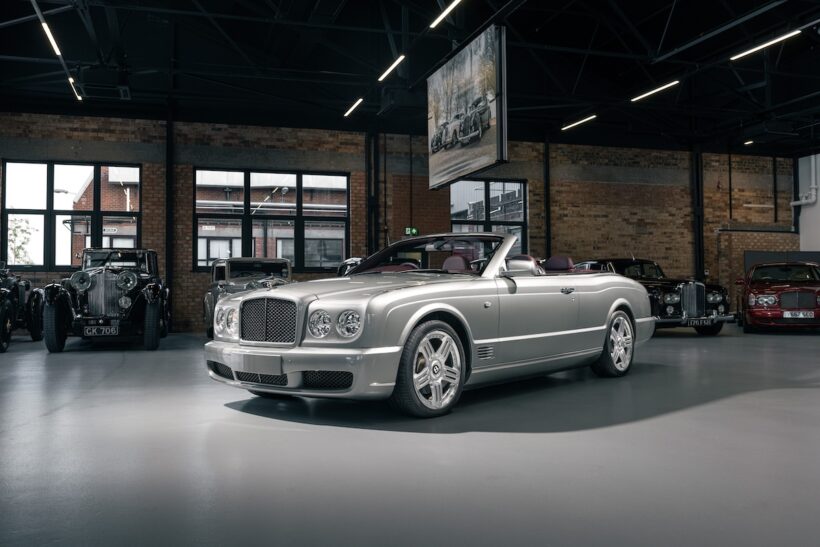
Seven years after the release of the previous model, Bentley’s luxury sports tourer, the Continental GT, has been reborn as a new model. At first glance, the interior and exterior design hasn’t changed much, and at first, one wondered if it was just a major minor change. However, the wealthy buyers of this class of car don’t usually like drastic image changes. So the key is how to “change without changing,” and in fact, when the Continental GT switched from the first generation to the second, it was only a major minor change. Bentley’s theory on model changes is to completely revamp every two generations.
And when you look at the details, you’ll notice that there are indeed many changes. The biggest topic is that it has finally become a plug-in hybrid (PHV). The powertrain combines a 4.0-liter V8 twin-turbo (600PS/800Nm) with a powerful motor (190PS/450Nm), for a total system output of 782PS/1000Nm, finally achieving high performance at the level of a super sports car. The previous “Speed” had a 6.0-liter W12 twin-turbo engine that produced 659PS/900Nm, so while the engine displacement has been downsized, it has actually added 123PS/100Nm.
The battery is located under the trunk floor and has a capacity of 25.9 kWh. It’s quite a size, but it allows for an EV driving range of up to 81 km. If you’ve already figured it out, you’re a sharp-tongued person. That’s right, the basic configuration and specifications of the powertrain are the same as those of the Porsche Panamera’s top-grade “Turbo SE Hybrid.” According to an engineer who visited Japan, during development, each brand within the group shared their respective requirements, such as power, system weight, and EV driving range, and worked together to exceed targets in all areas.
A more substantial feel than its predecessor

[1]
[2]

[2]

[3]
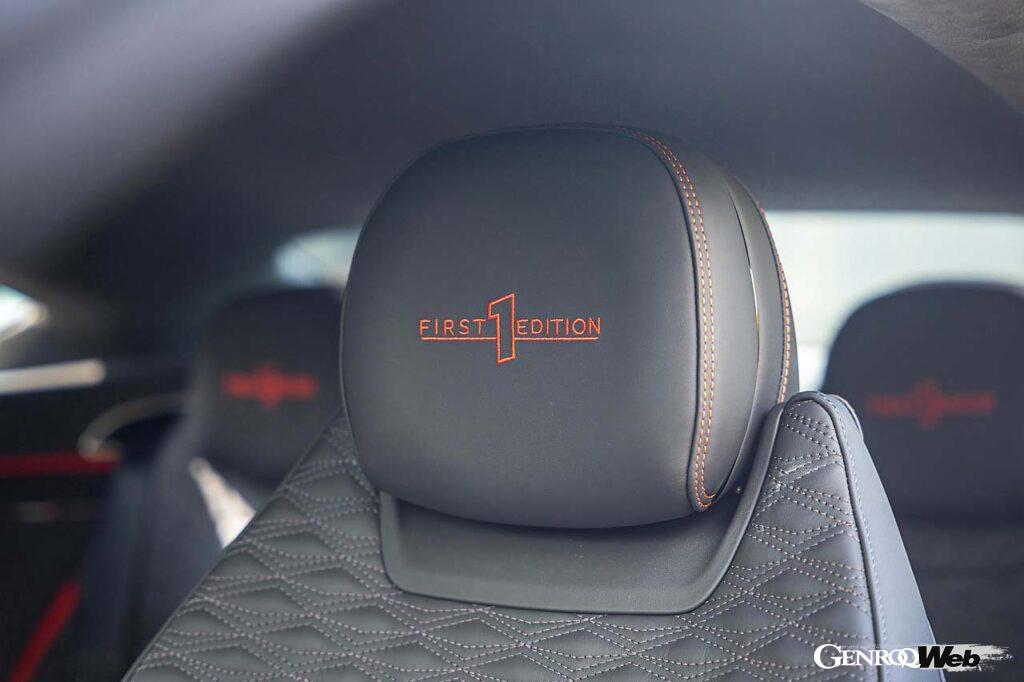
[1] There are no major changes to the interior, including the instrument panel. As before, the center monitor can be chosen from three patterns: a 12.3-inch display, triple analog meter, and trim panel. [2] A new design has been adopted for the quilting pattern on the seats. The test drive vehicle was the first edition to commemorate the launch, and the interior and exterior have been specially coordinated. The front seat headrests have embroidery. [3] This is one of the first editions available in four colors, and is called “Nightlife.” With the model change, the rear combination lamps have been made wider from left to right, giving it a sportier image.
The test drive of the new Continental GT was held at the circuit inside “THE MAGARIGAWA CLUB,” a members-only driving club in Minamiboso City, Chiba Prefecture. The test drive car was a European model and did not yet have a license plate number. As this was an international test drive event for the Asia-Pacific region, there were many Asian members of the press in attendance, not just Japanese.
When I got into the car, the shape of the instrument panel and steering wheel was that of the familiar Conti GT. I felt a little reassured by the presence of the AT selector lever standing tall on the center console. There are four driving modes: “B (Bentley mode),” “Comfort,” “Sport,” and “Custom,” but I started in the default “B” mode. However, even when I pressed the starter button, there was no usual wake-up bark. This is because, as long as there was enough charge in the battery, the car would start off using only the motor.
I was a little taken aback when I stepped on the accelerator. With a normal hybrid, the engine would start once the car had gained some speed, but this one just kept going smoothly on the motor alone. On this day, it was able to go from the start to 130km/h, even when climbing a moderate incline, using only the motor.
Observing the ride quality closely in this quiet cabin, I noticed that it felt heavier than the previous model. “Could it be because of the weight?” I wondered, and upon investigation, I discovered that the new model’s 2,459 kg is 186 kg heavier than the previous model. As you know, weight has an effect on ride comfort. In other words, the hybrid system has improved fuel efficiency while also adding a sense of luxury. The suspension has also been drastically revamped, with new dual-valve dampers and newly developed dual-chamber air springs. The track conditions on the circuit were excellent, so I can’t say for sure, but I can imagine that the new suspension is also doing a good job.
Extremely natural handling

The new Continental GT was released in June, followed by the new Flying Spur in September. This time, I had the opportunity to test drive both cars for a short time. Although there are no major changes to the exterior, Bentley calls both cars full model changes. What is the reason for this?
And as I stepped hard on the accelerator before heading uphill, a famous MAGARIGAWA road, the 4.0-liter V8 kicked into action for the first time. I also switched the driving mode to “Sport.” Even taking into account that the weight is constantly on the rear due to the uphill corners, the new model is clearly lighter. The engine has been upgraded from 12 to 8 cylinders, and the heavy battery has been placed in the rear, improving the front-to-rear weight balance. This is clearly noticeable. What’s more, it’s equipped with a rear-wheel steering system and a 48V high-speed controlled active anti-roll bar, which is just the tip of the iceberg.
The previous Speed was powerful but front-heavy, and it rolled quite a bit, so I had to use my head to the fullest to figure out how to control the car, and it was a nerve-wracking ride. I thought that was the character of the Conti GT, but with the new model, that habit has completely disappeared. It has extremely natural handling. On top of that, it has been refined to a high-quality ride, so what else can you call this but a normal evolution? This time, I only did four laps around the circuit, a short ride up to about 170 km/h, so there were many things I couldn’t test, but I still got a good glimpse of the new model’s capabilities. I would like to try it out again at a later date.
Bentley aims to convert all of its models to EVs by 2030. The new Continental GT has steadily increased the weight of electric drive in that process, making it an important car for predicting Bentley’s future.
REPORT / Naohide Ichihara
PHOTO / Bentley Motors
MAGAZINE / GENROQ December 2024 issue
SPECIFICATIONS
Bentley Continental GT Speed
Body size: Total length 4895mm, total width 1966mm, total height 1397mm
Wheelbase: 2851mm
Vehicle weight: 2459kg
Engine: V8 DOHC
Total displacement: 3996cc
Maximum output: 441kW (600PS) / 6000rpm
Maximum torque: 800Nm (81.6kgm) / 2000-4500rpm
Motor maximum output: 140kW (190PS)
Motor maximum torque: 450Nm (45.9kgm)
Transmission: 8-speed DCT
Drive system: AWD
Suspension type: Front double wishbone, rear multi-link
Brakes: Front and rear ventilated disc
Tire size: Front 275/35ZR22, rear 315/30ZR22
Top speed: 335km/h
0-100km/h acceleration: 3.2 seconds
Vehicle price: 39,303,000 yen
[Inquiries]
Bentley Call
TEL 0120-97-7797
https://www.bentleymotors.jp/