
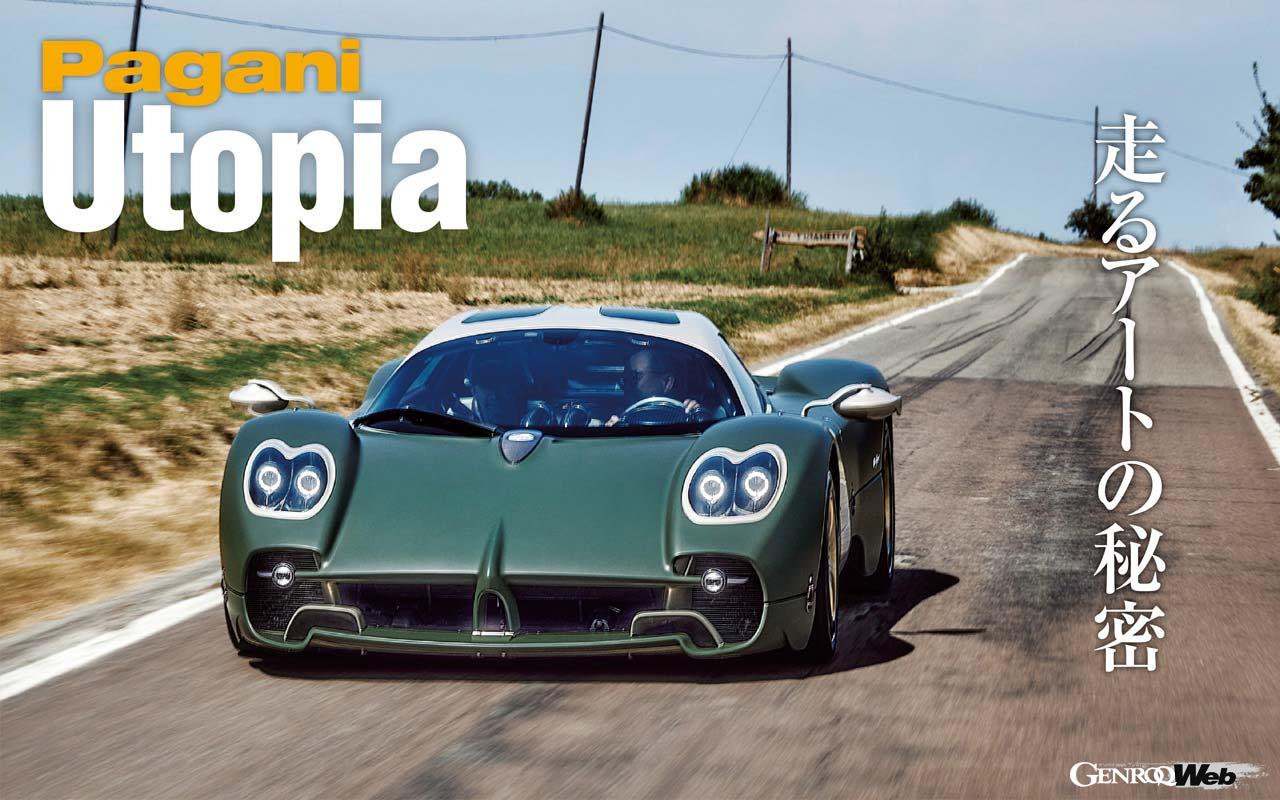
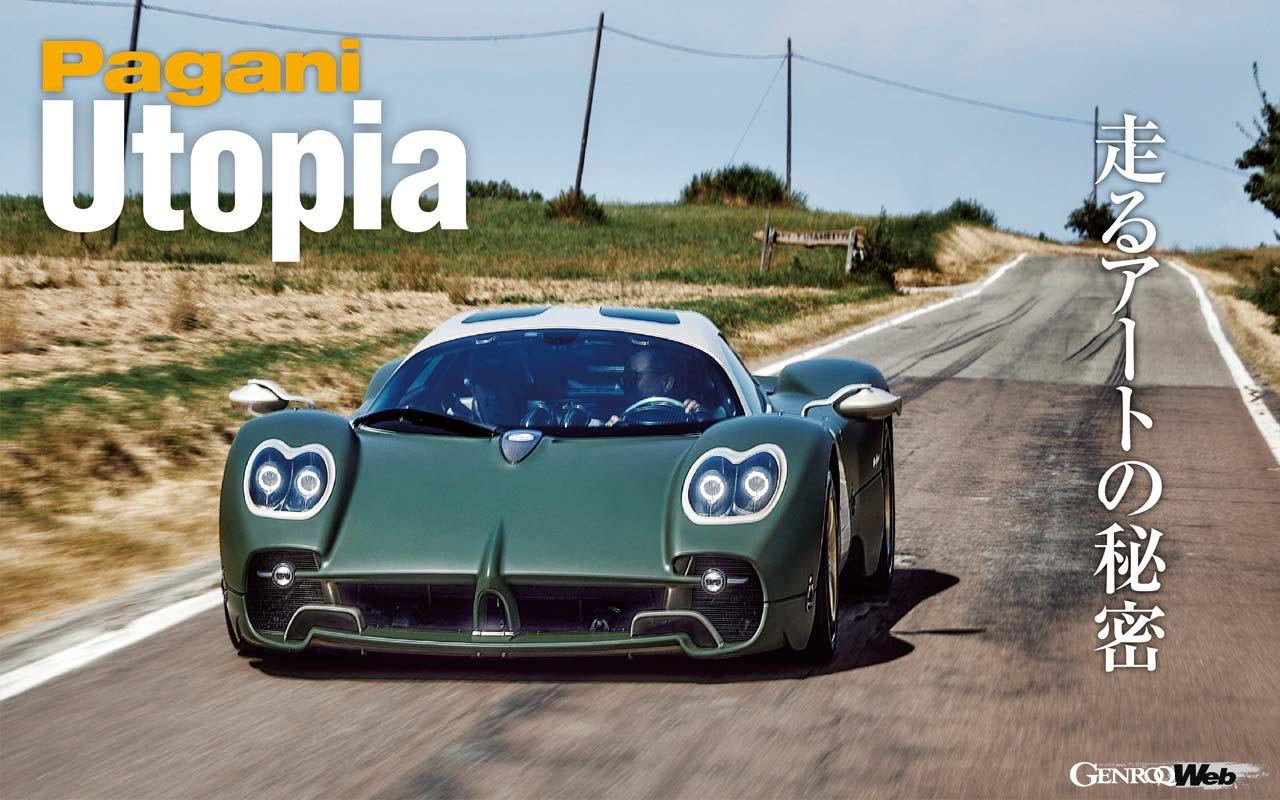
Pagani Utopia
The dream I had almost given up on came true
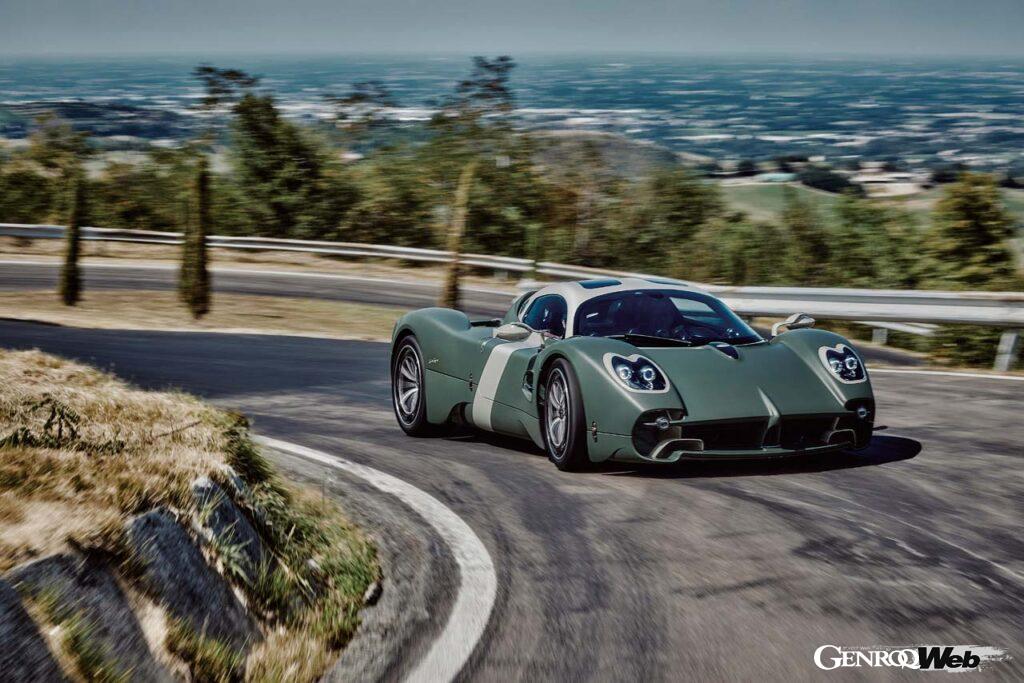
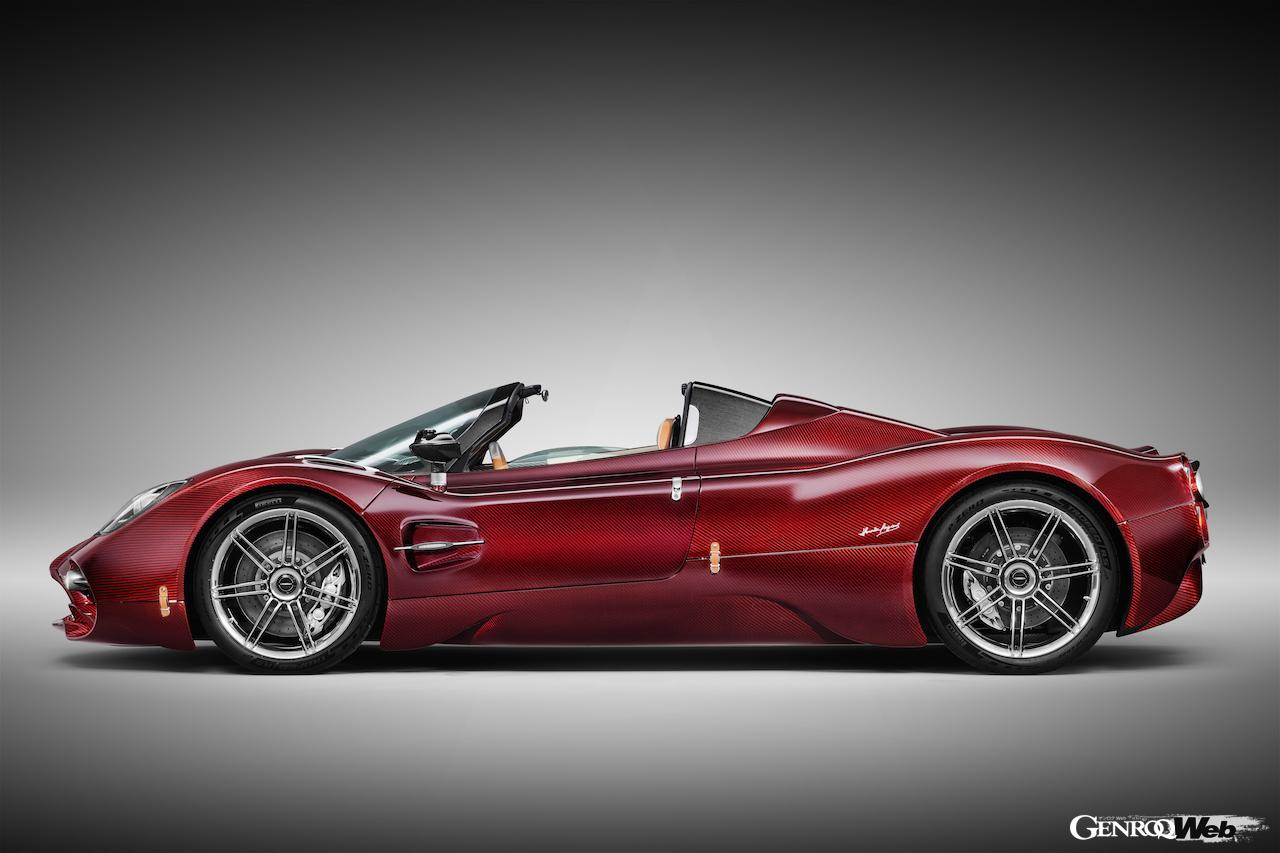
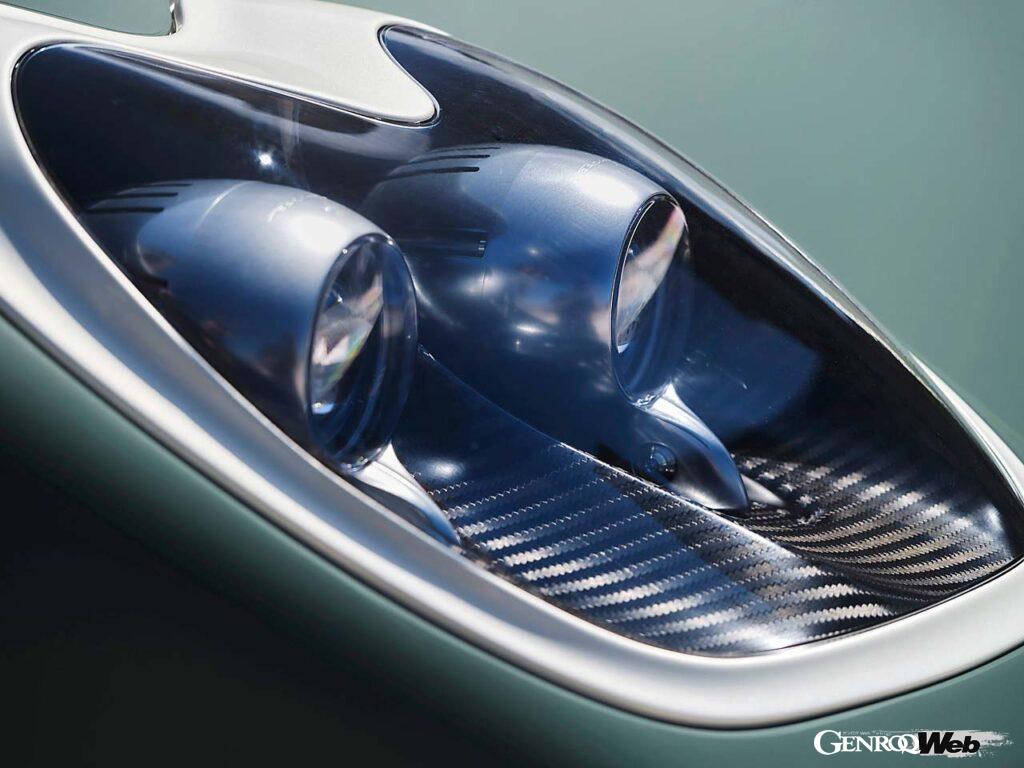
Pagani’s attention to design and beauty can be seen in parts such as mirrors and lights.
864 PS, three-pedal manual. Rear-mounted, rear-wheel drive. Pagani. No other phrase could intimidate a driver so much as this.
I have experience with Pagani. I’ve driven the Zonda and Huayra, so I guess I have quite a lot of experience as a Japanese journalist. The Zonda had three pedals, but the last Zonda F had 650 PS. It was also naturally aspirated. From the Huayra onwards, the Mercedes-AMG V12 was fitted with two turbochargers, giving it 730 PS, but it was a two-pedal, single-clutch transmission.
The Utopia has a twin turbo that produces 864 PS and weighs just 1,280 kg, a weight that’s a throwback to the Zonda era. To think that a rear-mid supercar with such specs, worth hundreds of millions of yen, could be driven with a manual gearbox! While I was happy that my dream, which I had given up on, had finally come true, as I mentioned at the beginning, I was also quite scared.
I slipped into the unexpectedly chic cabin and, strangely, felt calm as I gazed upon the scenery, which had been meticulously designed down to the last detail. It must be a design ingenuity. I enjoyed the feel of the shift lever. I pressed down on the clutch pedal. It didn’t seem difficult to use.
The development theme is engagement with the machine
[1]
[2]

[3]
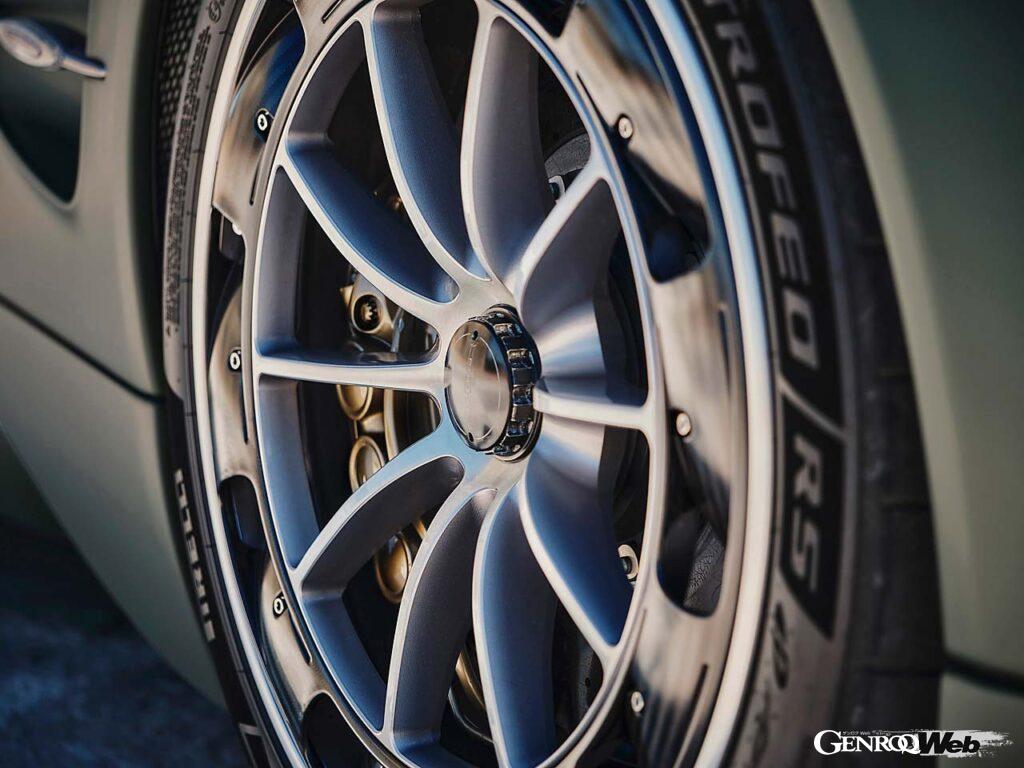
[1] The center-lock wheels are designed with aerodynamics in mind. The front brakes are six-pot. [2] Pagani’s attention to design and beauty is evident in parts such as the mirrors and lights. [3] The mid-mounted engine is a Mercedes-AMG V12 engine, assembled by AMG for Pagani.
The Mercedes-AMG 6.0-liter V12 twin-turbo engine cranks up smoothly and without any hesitation. It’s surrounded by a brave exhaust and mechanical noise, but it’s not deafening. It’s trained just enough to inspire the driver.
With the engine idling, I engaged the clutch and started driving slowly. The first thing that struck me was how comfortable the ride was. It was definitely more comfortable than the Zonda and Huayra. What’s more, every movement was direct. The body of the car felt even tighter. At city speeds, I could immediately see that the biggest theme in the development of the Utopia was engagement with the car.
At the Maranello test drive, I opened the throttle on the familiar open road. Just as I felt my body tense up, the roar of the V12 engine hit me directly in the back of my head. At the same time, the vibration hit my lower back, and the mechanical noise stimulated my brain. The car’s response to opening the throttle was incredibly direct, and the acceleration was overwhelming, even beyond its specs.
I continued to attack the narrow winding roads, occasionally passing pandas, small trucks, and tractors, without slowing down my pace. It was easy to get a sense of the width of the car, and the position of the tires was easy to understand. In tight corners, I felt as if the front axle was moving as one with my upper body. It was as if I was holding the two front wheels with both arms and moving them. This made it extremely easy to place the front wheels on the intended line. And it wasn’t just on tight bends. The feeling didn’t change even in relatively fast corners.
Gear changes are incredibly smooth, the clutch pedal is reasonably light and doesn’t tire your left foot, and the throttle is just heavy enough to be easily controlled.
Spartan yet exceptionally luxurious

[1]

[1]

[1]
[2]
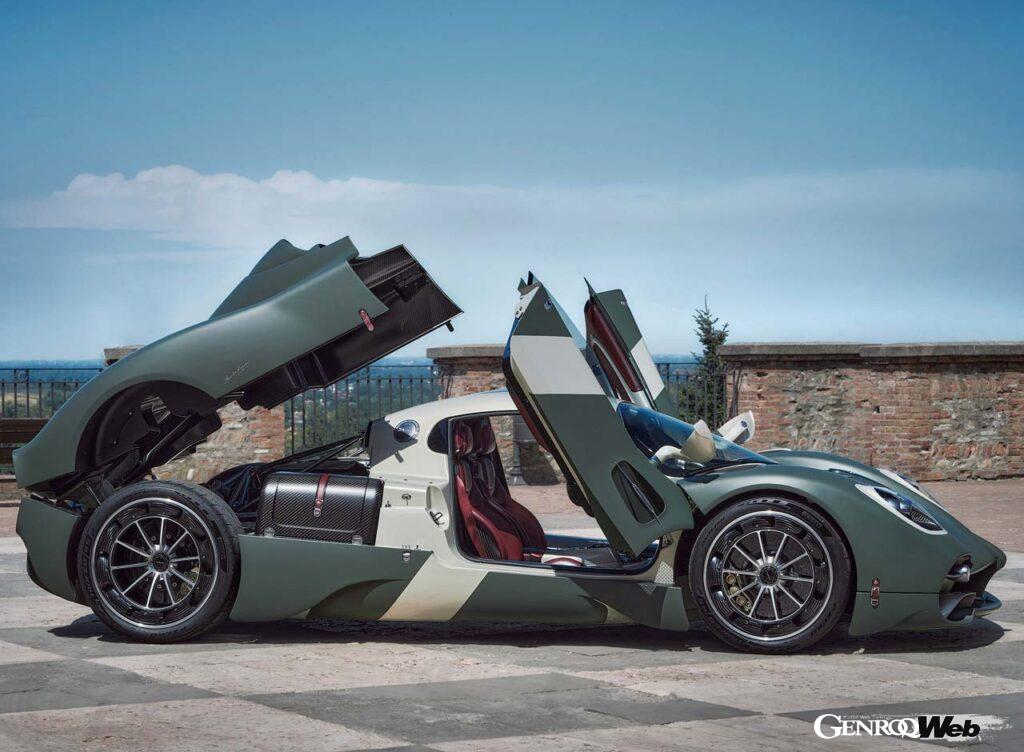
[1] The interior, which makes extensive use of analog meters, has a classic atmosphere unique to Pagani. The pedals and gearbox are all machined aluminum parts. [2] The rear cowl is a single piece that can be lifted up. There is also space on both sides to store items.
The best part was the deceleration feel. My body sinks smoothly. I can clearly feel the state of the front wheel through my arms, and the rear wheel through my waist. I can keep riding with confidence.
So even if the rear wheel slipped a little, I didn’t panic. My nervousness before getting in was all but gone, and my body quickly became accustomed to the car.
After the agreed test time, I parked the car. I raised the dihedral doors and stepped out onto the ground, my back soaked. The air conditioning was on full blast. It was the sweat of excitement and emotion. It’s an experience that’s hard to come by in a modern supercar, even a 12-cylinder model. Pagani is supremely emotional.
The development concept of the Utopia is that, despite its gorgeous appearance, it should be simple, light, and full of driving fun, which is as clear and simple as anything for a sports car. Just hearing that puts it in the same worldview as the Mazda Roadster.
That’s the concept behind Pagani’s hypercars. Both the Zonda and Huayra are Spartan machines that make generous use of expensive, lightweight materials, just like racing cars, but they are truly “jewels on wheels” that are crafted with an exceptional luxury through attention to detail and appearance. The Utopia is an evolved version of that.
Power-to-weight ratio is an astounding 1.5kg/PS
[1]
[2]
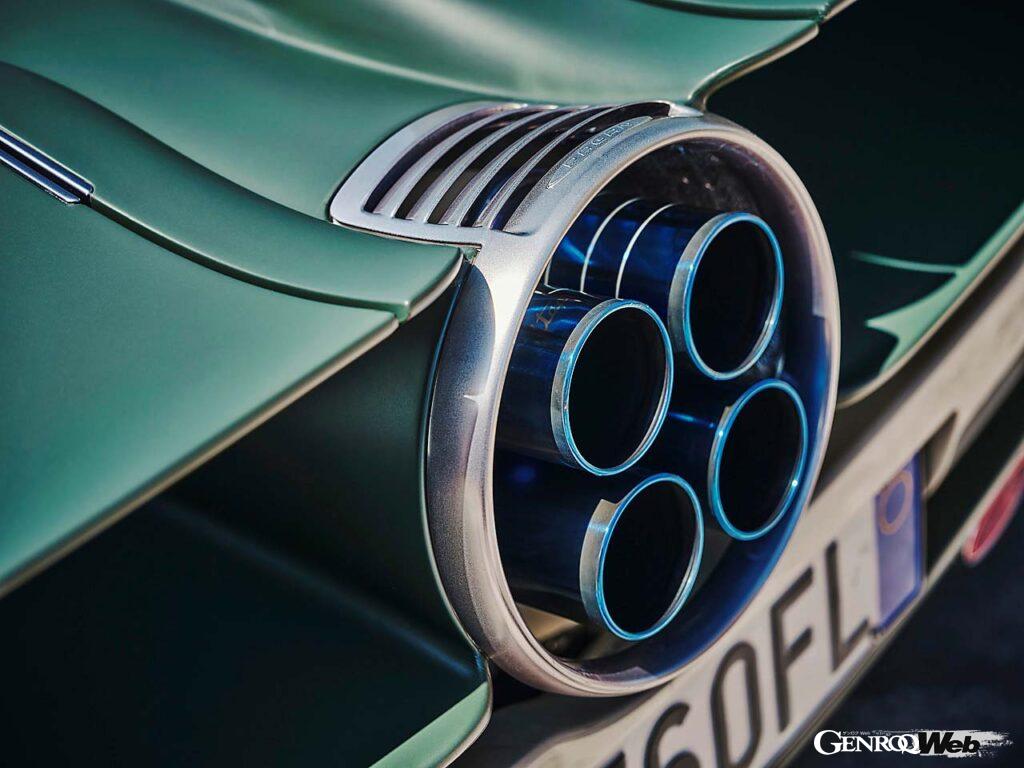
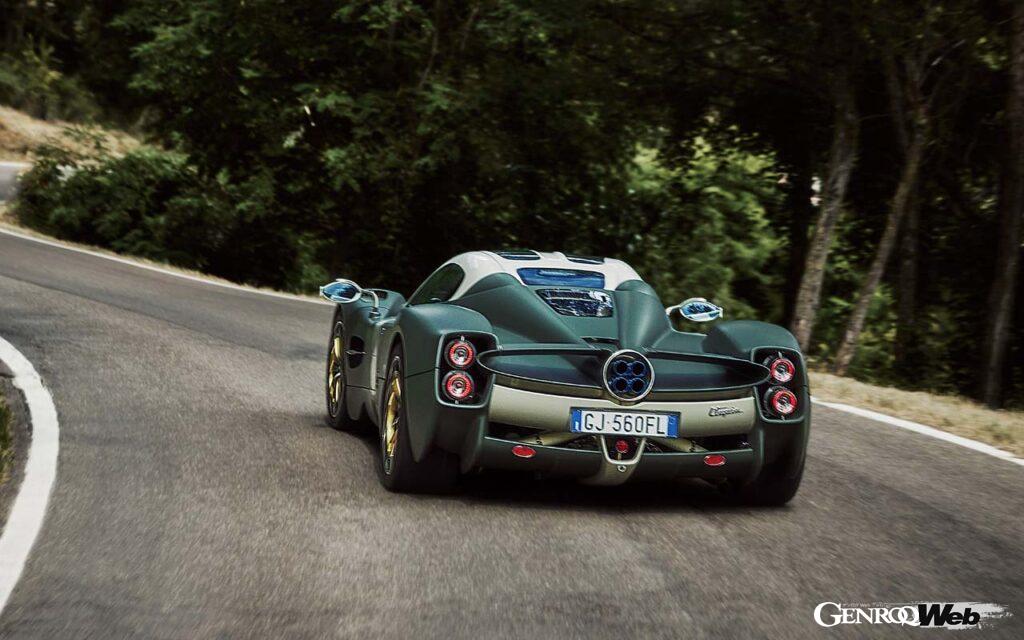
[1] Pagani’s attention to design and beauty can be seen in parts such as mirrors and lights. [2] The visual of the four-pipe exhaust system located in the center of the rear has now become an icon of Pagani.
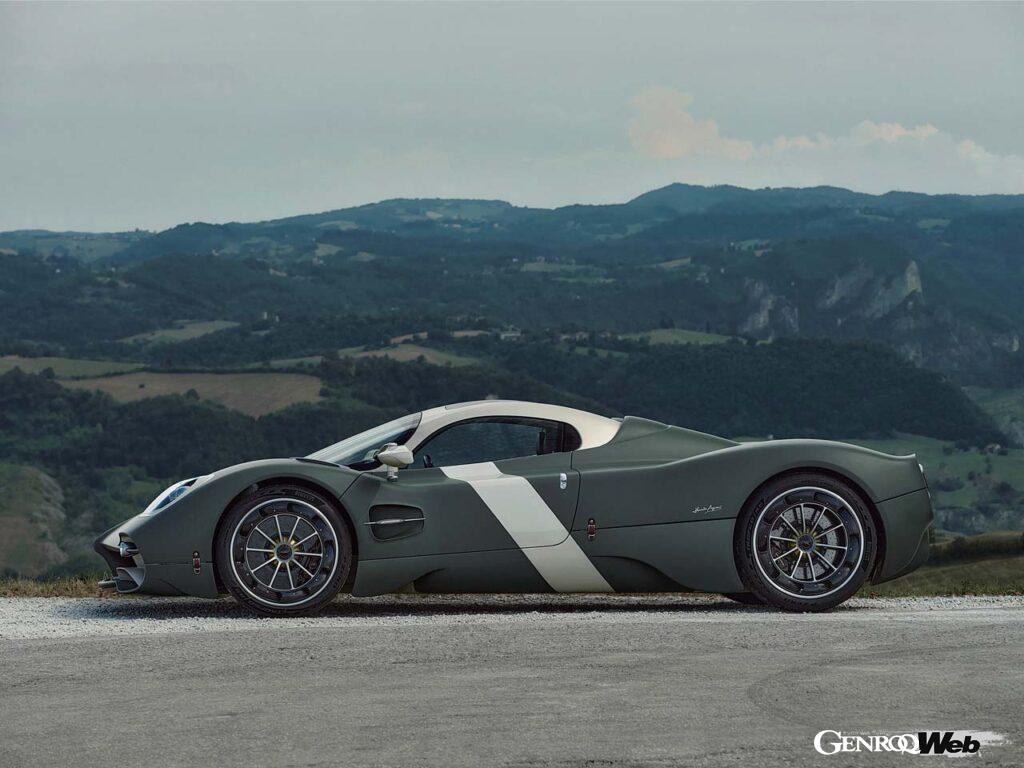
When I arrived, the test vehicle was located behind the museum, which has now become a popular tourist spot on a par with Maranello and Sant’Agata. The champagne gold body was still covered in the matte green film used at Goodwood. The car was fitted with carbon rims, a symbol of the sports package, and Pagani’s specially developed P Zero Trofeo RS wheels. I was told that I was the first journalist in the world to drive this specification on a public road, which made me feel even more nervous.
Looking inside the car, the metallic shining stick shift stands out with a striking presence. The revival of the three-pedal manual transmission is the result of listening to the requests of many customers who want more interaction with the machine rather than competing for specs and lap times.
Behind the cabin sits a 6.0-liter twin-turbo V12 engine, redesigned by Mercedes-AMG for Pagani and still in production today. Just looking at the figures—864 PS and 1100 Nm of torque—might seem a little underwhelming in today’s hypercar world, where even 2000 PS are on the market. But remember, the 2022 Utopia weighs just 1280 kg dry, the same as the 1999 Zonda. And even with all this equipment, the power-to-weight ratio is an astounding 1.5 kg/PS.
The 12-cylinder engine is the lifeblood of Pagani
Pagani is the most beautiful super sports car today.
Horacio Pagani has never pursued just specs. He has always prioritized light weight above all else, and has always placed importance on overall performance. I was able to speak with him for the first time in a while, and I was happy to hear him declare, “The 12-cylinder engine is the lifeblood of Pagani. I have no intention of giving up on it.”
REPORT / Jun NISHIKAWA
PHOTO / Ryosuke MAKITA
SPECIAL THANKS / Luca BONACINA (MOTO Milano)
MAGAZINE / GENROQ November 2024 issue
SPECIFICATIONS
Pagani Utopia
Body size: Length – Width – Height – mm
Wheelbase: – mm
Vehicle weight: 1280 kg
Engine: V12 DOHC twin turbo
Total displacement: 5980 cc
Maximum output: 635 kW (864 PS) / 6000 rpm
Maximum torque: 1100 Nm (102 kgm) / 2800-5900
rpm Transmission: 7-speed manual
Drive system: RWD
Suspension type: Front and rear double wishbone
Brakes: Front and rear ventilated disc (carbon ceramic)
Tire size: Front 265/35R21 Rear 325/30R21
[Inquiries]
SKY GROUP
https://www.sky-g.org/pagani/