
McLaren 750S
This isn’t a game
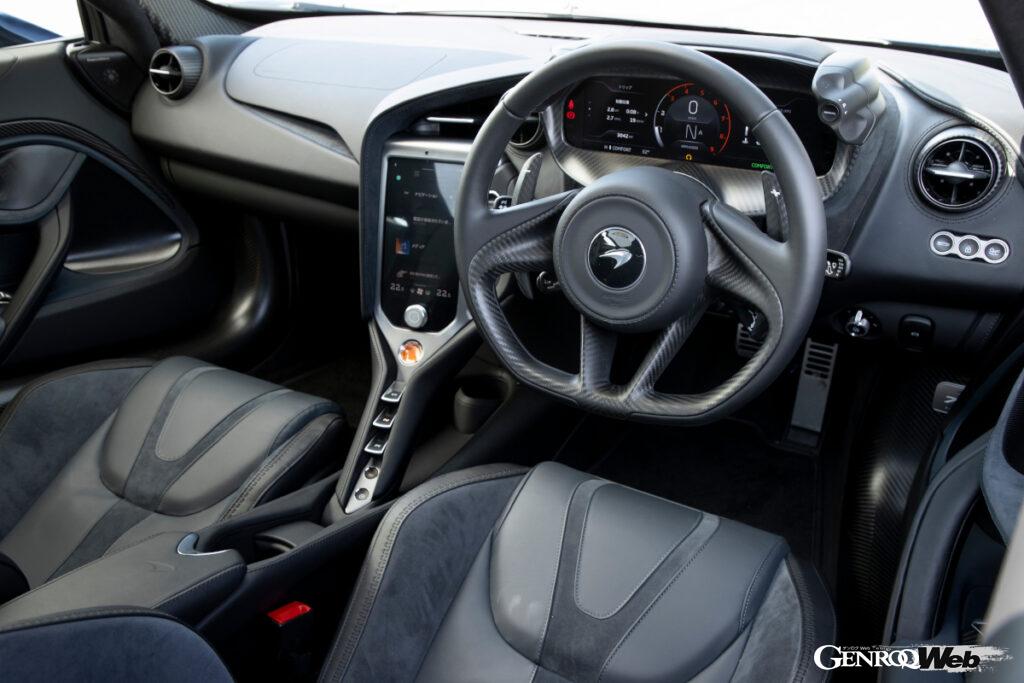
Another McLaren feature is a steering wheel that has no switches whatsoever.
When you grip the thin oval rim of the extremely simple steering wheel, which is devoid of anything unnecessary for driving, you feel the pressure of “this is not a game” transmitted from your palms to your entire body.
In the past, steering wheels like this were described as being like those in a racing car, but nowadays, F1 machines and GT racing cars are filled with countless switches and displays, making them a very busy sight. On the other hand, the McLaren instruments in the 750S remain as stoic as ever.
The same goes for the shift paddles, which have a firm, solid feel, and are a seesaw type that allows you to shift up and down with just one hand if necessary, as before, but the meter nacelle has been changed to an electrically adjustable type that moves with the steering column. When you selected Track mode on the 720S, the meter unit rotated and changed to a minimal bar display, but this mechanism has been omitted from the new 750S. In fact, this is also said to be part of the pursuit of weight reduction.
What is required is “determination”
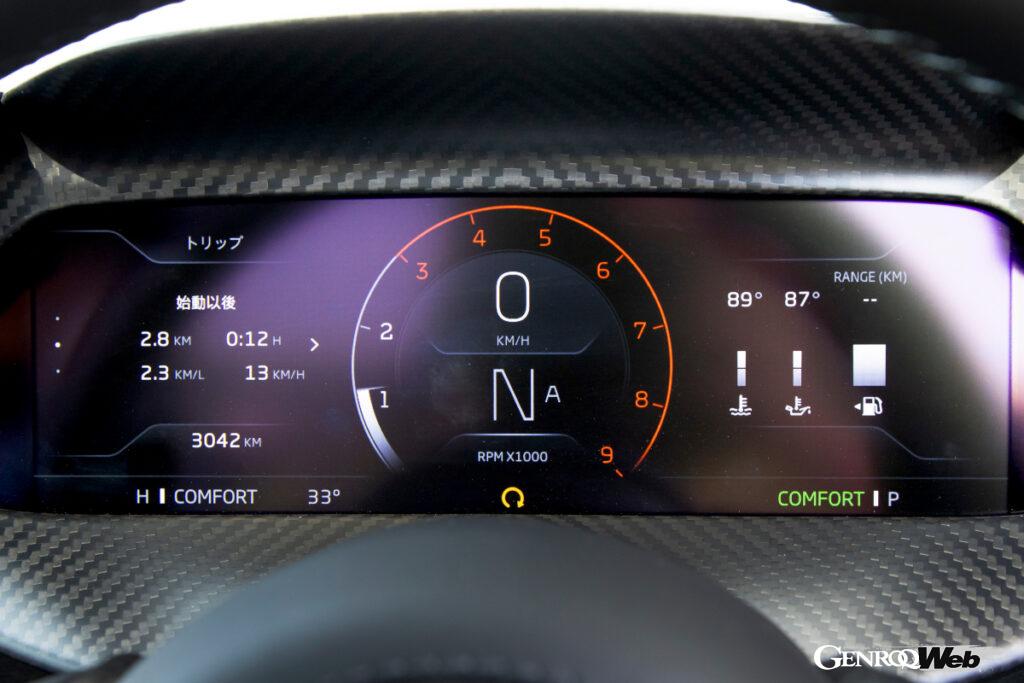
Comfort Mode
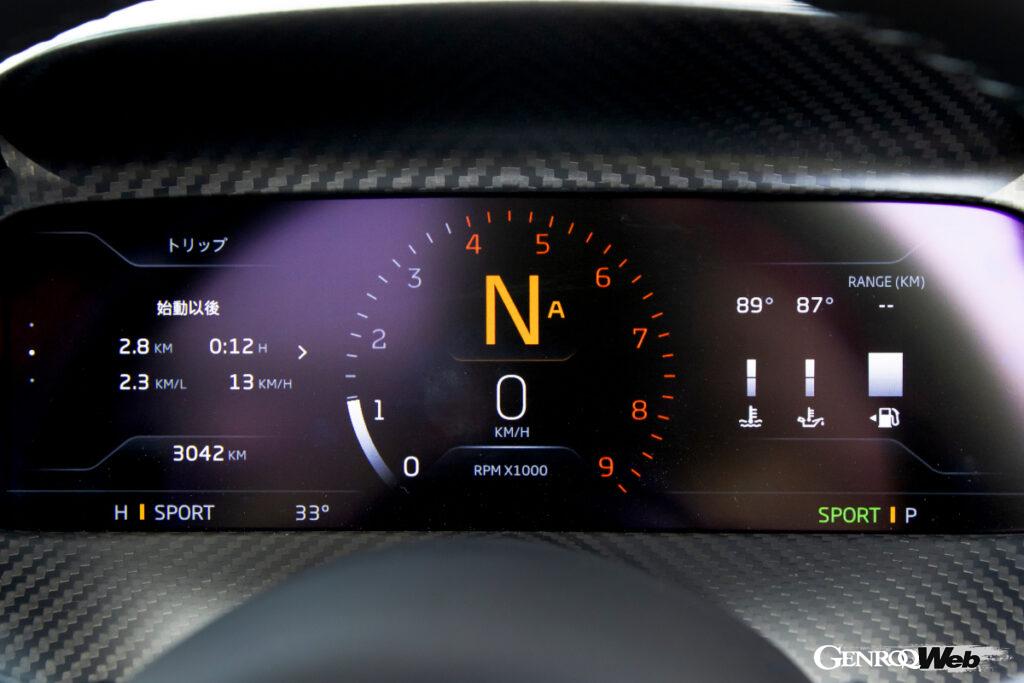
Sport Mode

Track Mode

The carbon fiber interior is simple.

The electric seat can be adjusted precisely. The adjustment switch is located in the center next to the seat.
The throttle and brake pedals are also positioned in a driving position that assumes left-foot braking, as is typical from the start. The sturdy, professional-looking brake pedal can be used with the right foot, but using the left foot makes for a more natural riding position.
Furthermore, the brakes require a fair amount of pressure. The standard carbon ceramic brakes are incredibly effective if you press them firmly, but they are a little weak at subtle control at low speeds when driving around town or parking in a garage (it’s hard to tell when you first press the brakes), and even when you think you’re pressing the brakes when waiting at a traffic light, the car may start to creep. In short, just sitting in the seat and checking your surroundings makes you realize that the McLaren is something special. It requires a certain level of resolve.
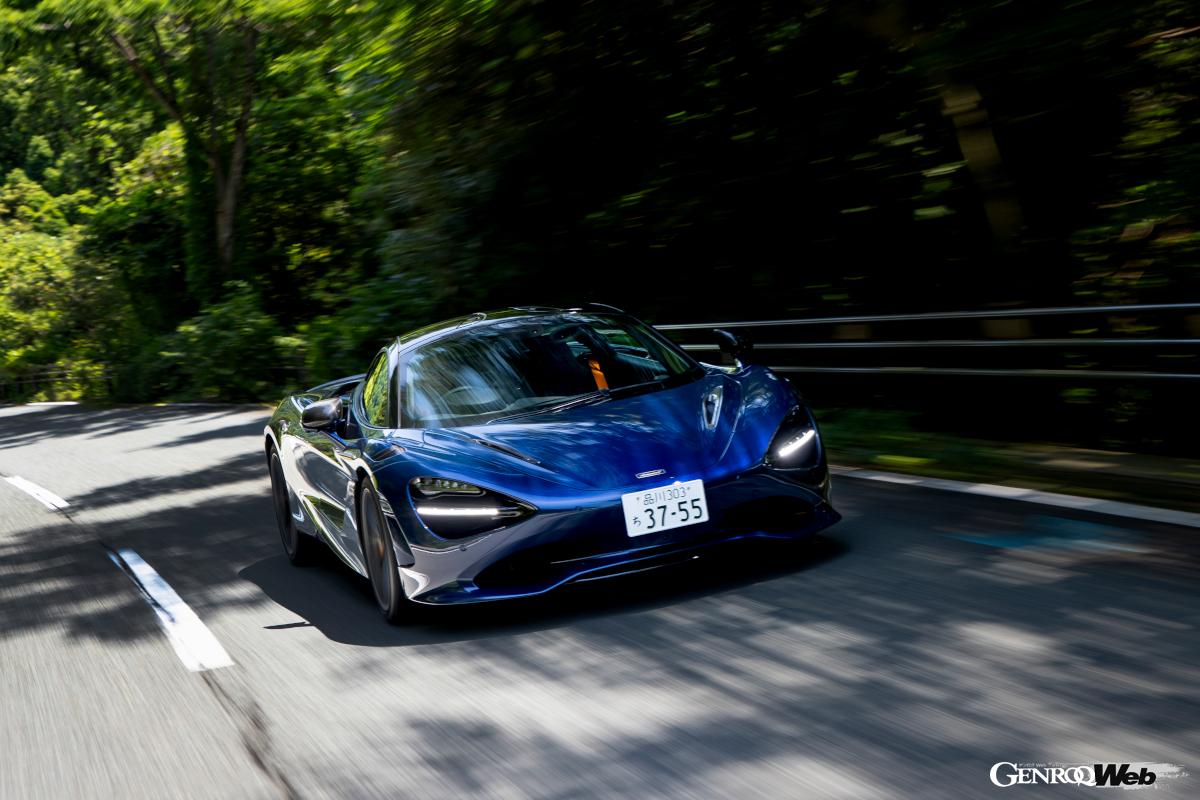
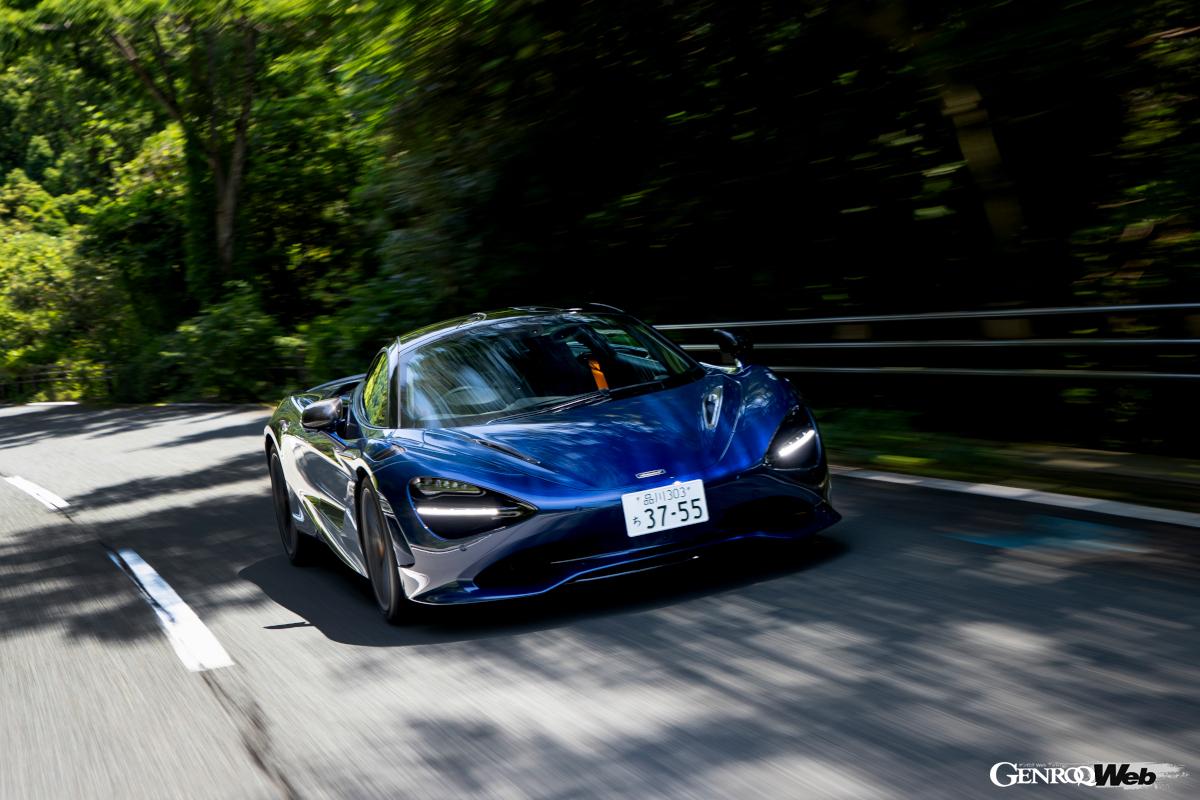
However, as long as you drive normally, there is no need for any special operation or patience. As the name suggests, the 750S, which arrived in Japan two years ago as the successor to the 720S, is equipped with a 4.0-liter V8 twin-turbo unit that produces 750 PS/7500 rpm and 800 Nm/5500 rpm, boasting that it is the lightest and most powerful McLaren ever, but in the city or on the highway, even at 2000 rpm it has more than enough drivability, and the 7-speed DCT shifts up smoothly and smoothly.
Clearly lighter weight than other super sports cars

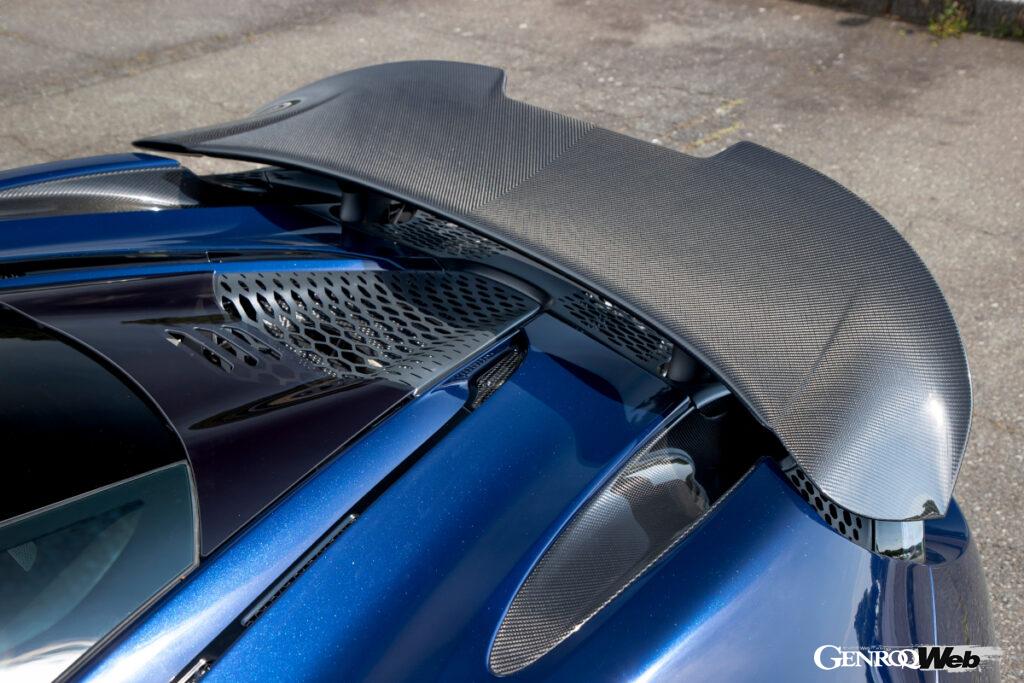


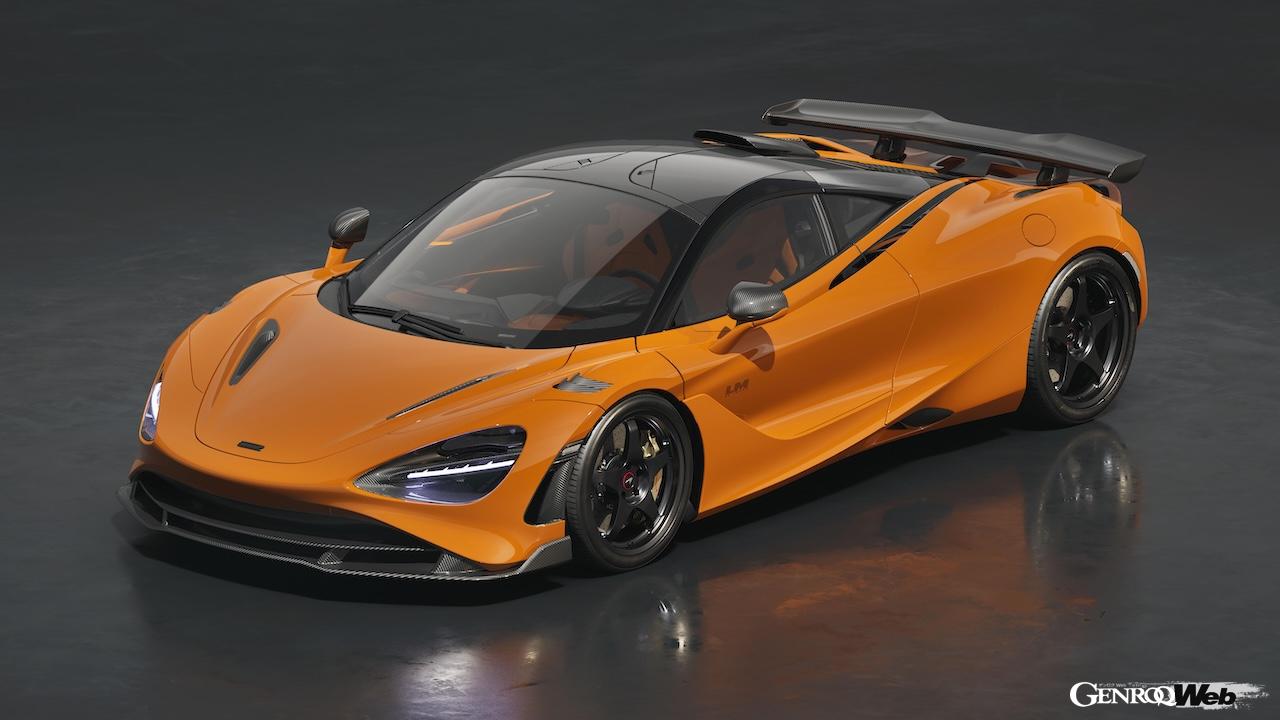
The exterior is thoroughly aerodynamic.
The interior is also surprisingly quiet, which is perhaps why there’s a creaking sound coming from deep inside the dashboard. The V8 twin-turbo is flexible but sluggish at low revs, but of course it changes drastically from around 4000 rpm onwards, exploding and revving up to over 8000 rpm in an instant. However, to be honest, I couldn’t really feel the 30 PS and 30 Nm increase. This is because the 750S is characterized by the fact that it has been thoroughly lightened by further shaving off weight (from the seats, wheels, windshield, etc.) from the already lightweight 720S, resulting in a weight reduction of 30 kg compared to its predecessor.
According to the documents, the official dry weight is 1277kg, and the DIN weight when filled with oils and grease is 1389kg, but the vehicle inspection certificate also states that it is 1390kg, which is less than 1400kg. This is clearly lighter than other super sports cars. Moreover, the final gear ratio is said to be 15% lower than the 720S, so rather than having more power, it is simply overwhelmingly faster.
In fact, 0-100km/h acceleration is 2.8 seconds, 0.1 seconds faster than the 720S (0-200km/h is 7.2 seconds, 0.6 seconds faster!), while the downforce of the further refined aerodynamic body is said to be 15% higher than the 720S, and the top speed is slightly lower at 332km/h (the 720S was 341km/h). The aim is clear.
There’s a reason for everything
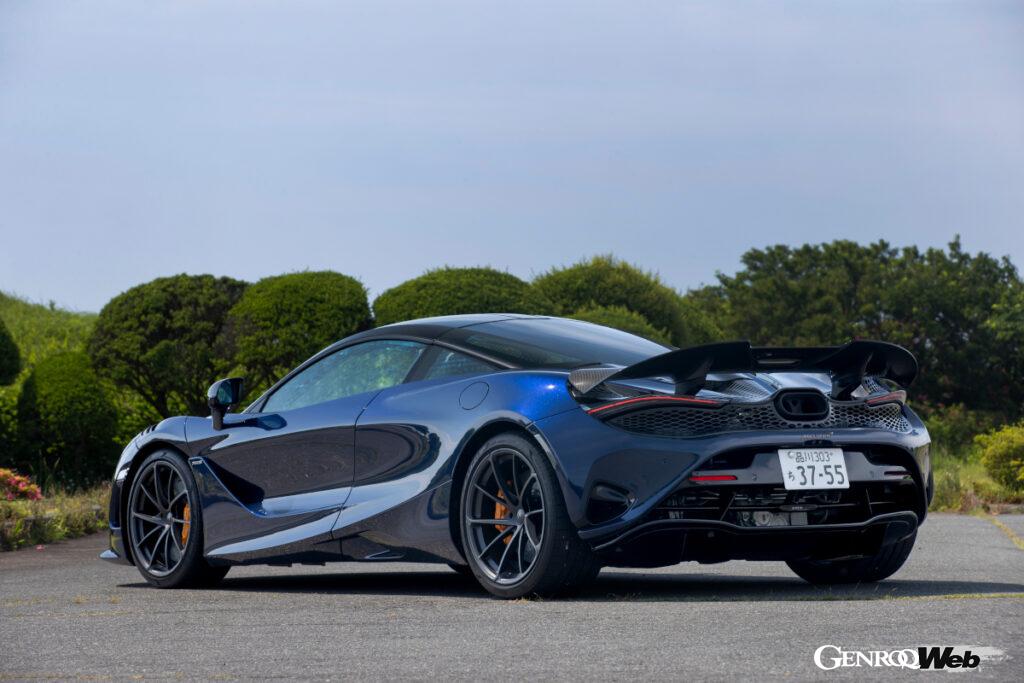
The rear styling of the 750S. The exhaust pipe placed above the license plate is also the result of a focus on weight reduction.
Even though the 750S is now lower geared than before, if you push it to the 8500 rpm limit in second gear, it will exceed 110 km/h, so it’s not possible to fully utilize its capabilities on Japanese mountain roads. The PCC III (Proactive Chassis Control) variable suspension, which has evolved to its third generation, feels tighter than before, and the steering gear ratio is also quicker, but the true value of the McLaren is still in the high-speed range.
Just like a real racing car, as the speed increases, the steering feel becomes sharper and sharper, and stability also improves dramatically. The sense of stability that sticks to the ground when braking from high speed with the air brakes deployed is quite impressive. The effectiveness of the aerodynamics is evident in such situations, without any pretense or theatrics.
McLaren has scientific and rational reasons for everything from the body shape to the interior design, but public roads are simply too narrow to get a glimpse of the true essence of the 750S, which is aimed straight at the circuit.
PHOTO/Kenji ICHI
SPECIFICATIONS
McLaren 750S
Body size: Length 4569, Width 1930, Height 1196mm
Wheelbase: 2670mm
Vehicle weight: 1277kg (Dry)
Engine: V8 DOHC twin turbo
Total displacement: 3994cc
Maximum output: 552kW (750PS) / 7500rpm
Maximum torque: 800Nm / 5500rpm
Transmission: 7-speed DCT
Drive system: RWD
Suspension type: Front and rear double wishbone
Brakes: Front and rear ventilated disc (carbon ceramic)
Tire size (rim width): Front 245/35ZR19 (9J) Rear 305/30ZR20 (11J)
Vehicle price: 41.7 million yen