
Dallara EXP
To build only racing cars

Dallara Automobili is the “only one” in the world of formula car manufacturing. Founded in 1972, it has only been 25 years since I first started visiting, but the company has grown significantly in that time. Today, the company designs all the formula cars in the world, including IndyCar, Super Formula, and even the pinnacle of Formula 1, and even oversees their own manufacturing.
According to a Dallara staff member, “Designing and producing formula cars alone is not a viable business. However, every weekend, a formula car race is held somewhere in the world, and each time we receive many orders for repair parts, wings, cowls, etc. That’s where the idea for the business comes in.” Dallara had the world’s most advanced carbon fiber technology, as well as molding techniques and a factory.
The founder, Giampaolo Dallara, is a self-made man on a par with Enzo Ferrari and Colin Chapman (Lotus) in the automotive world. After studying aerodynamics at university, he worked for Ferrari, Maserati, Lamborghini, and De Tomaso, determined to become involved in racing car design. He eventually decided that he had no choice but to go independent and focus solely on making racing cars.
For supercars that have become too complicated


On his 80th birthday, November 16, 2016, Giampaolo unveiled a road car called the Dallara Stradale. Since designing the legendary supercar, the Lamborghini Miura, another of Giampaolo’s dreams has been to release a road car bearing his own name.
The Stradale’s design concept is simple: a “real sports car that anyone can enjoy.” It is a simple sports car that is the polar opposite of the latest supercars that astound people with their specs and design. When I invited Giampaolo to Kyoto about 10 years ago (before the Stradale was announced), I asked him to “design another supercar like the Miura,” but he flatly refused.
“Supercar design has become too complicated nowadays. The performance is incredible and the costs are enormous. Even if it were possible to build one, it would be an incredibly expensive car (and in fact the hypercar trend started after that). What I want to design is an affordable sports car that even an old guy like me can enjoy driving and somehow afford to buy.”
Faithful to the driver’s wishes in every way

The resulting Stradale is a racing car that can be driven on public roads. It comes in three styles: barchetta, roadster, and gullwing coupe, and features a monocoque body and full carbon fiber body panels. It’s a truly one-of-a-kind lightweight sports car.
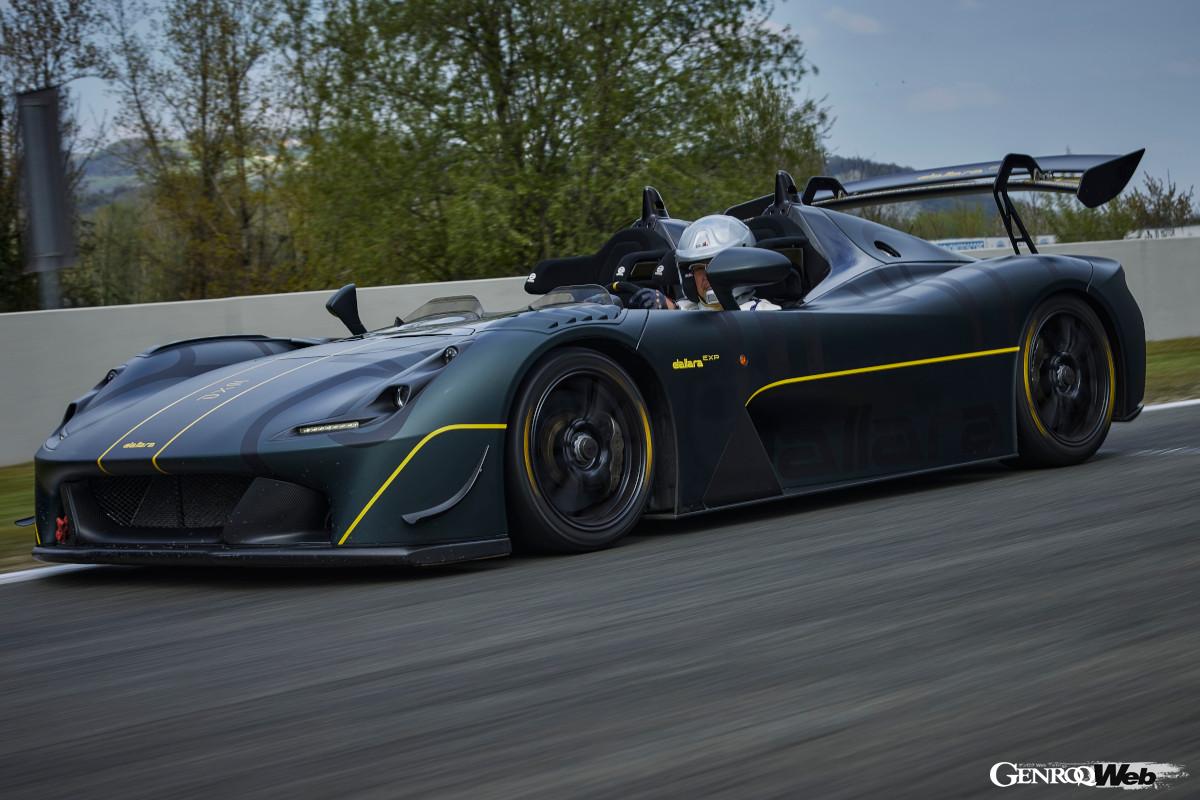
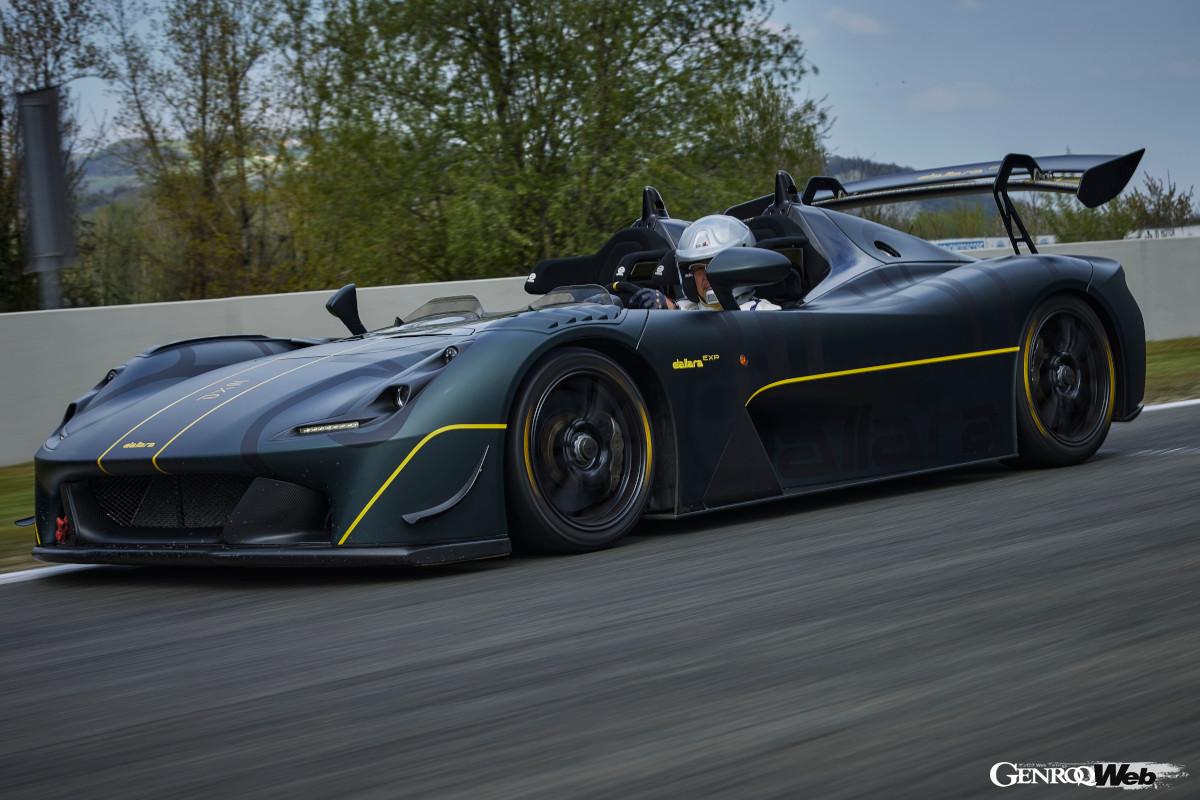
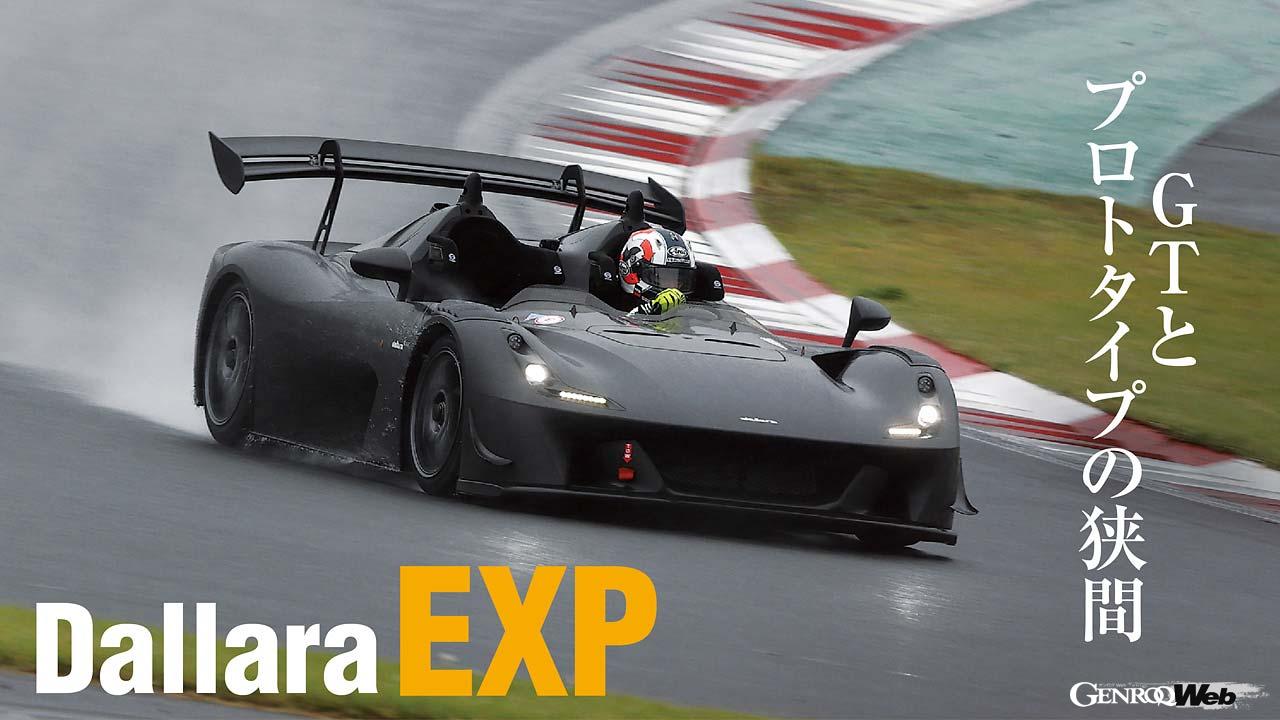
The subject of this article is the EXP, a track-specific machine derived from the Dallara Stradale. It features a mid-mounted Ford 2.3-liter inline-four turbo engine tuned to a maximum output of 500 PS and a maximum torque of 700 Nm. We decided to test it at the Varano Circuit, close to Dallara’s headquarters.
First, I checked the course layout in a standard Stradale. To my delight, it was a three-pedal manual transmission. As always, it was comfortable to ride, and yet it felt like it faithfully responded to the driver’s intentions in every way. The accelerator pedal, of course, as well as the brakes and steering, all had excellent response. It was direct and quick, but didn’t go too far ahead of the driver. It was a course I’d driven on before in a Stradale. I remembered the route.
An overwhelmingly combative atmosphere
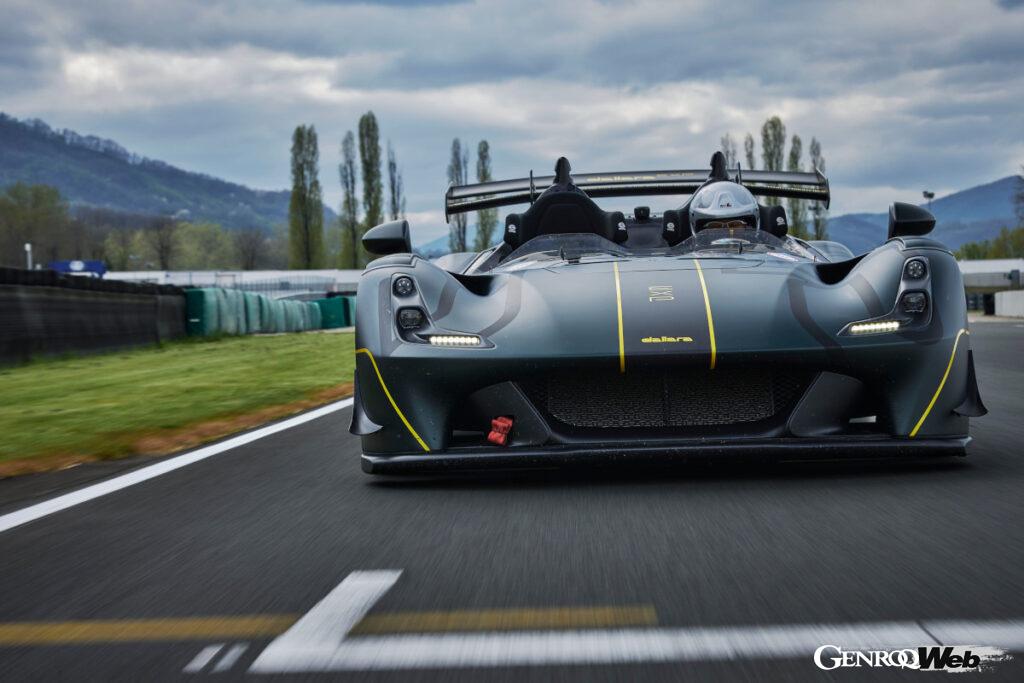
After experiencing the fact that “lightness is justice on the circuit” with the Stradale, I got into the main subject, the EXP. The windshield-less barchetta body has been fitted with a number of aerodynamic devices, and numerous ducts have been drilled into it. Another distinctive feature is the huge, effective-looking rear wing. Of course, it has slick tires. Compared to the Stradale, it has an overwhelmingly more aggressive feel.
This is a two-pedal car. However, if you start slowly like in a road car, it won’t move forward. You press down hard and engage the transmission. It relentlessly pushes you up, and your heart rate inevitably rises. Not only is the sound of the exhaust loud, but the wind noise of your body exposed to the air is deafening.
The ride feels completely different from the Stradale. The sense of unity with the machine, which was world-class for a road car, is even better. It’s as if you’re connected to the machine not just with your whole body, but at a neural level. As you complete more laps, that is, as you become more accustomed to the machine, your freedom increases. Encouraged by the tremendous braking power, you open the throttle generously and maintain a “fast” cornering speed to make effective use of the downforce.
Sports that train your mind and body

The downforce is frightening. It’s hard to believe I’ve mastered it, which actually makes me feel at ease. But it’s actually thrilling. This is because, even though the car has plenty of room to maneuver, the driver feels unprecedented cornering G-forces. When an amateur like me gets into a racing car, I tend to lose my composure. But the Dallara EXP is different. The challenges of each situation are clearly memorized, and I feel like I can calmly improve my level of proficiency. At the same time, the strain on my body gradually increases. Driving a Dallara EXP on a circuit is a sport that trains both the mind and body.
What is a sports car? It teaches us that on both public roads and circuits. The Stradale and EXP, created by Giampaolo, were modern miracles created by a formula car manufacturer.
PHOTO/dallara
SPECIFICATIONS
Dallara EXP
Body size: Total length 4180, total width 1870, total height 1170mm
Wheelbase: 2475mm
Vehicle weight: 890kg
Engine: Inline 4-cylinder turbo
Total displacement: 2300cc
Maximum output: 368kW (500PS) / 6000rpm
Maximum torque: 700Nm (71.4kgm) / 4000rpm
Engine: 6-speed RMT
Drive system: RWD
Suspension type: Front and rear double wishbone
Brakes: Front and rear ventilated disc Tire
size: Front 205/45ZR17, rear 255/35ZR18
Vehicle price: 43.56 million yen










![Test drive of Land Rover’s latest off-roader, the Defender Octa, on a dirt course [Video]](https://wheelfeed.com/wp-content/uploads/2025/08/1270-1761529533682.jpg)