
Mercedes-Benz S 450 d 4MATIC
×
LEXUS LS500h
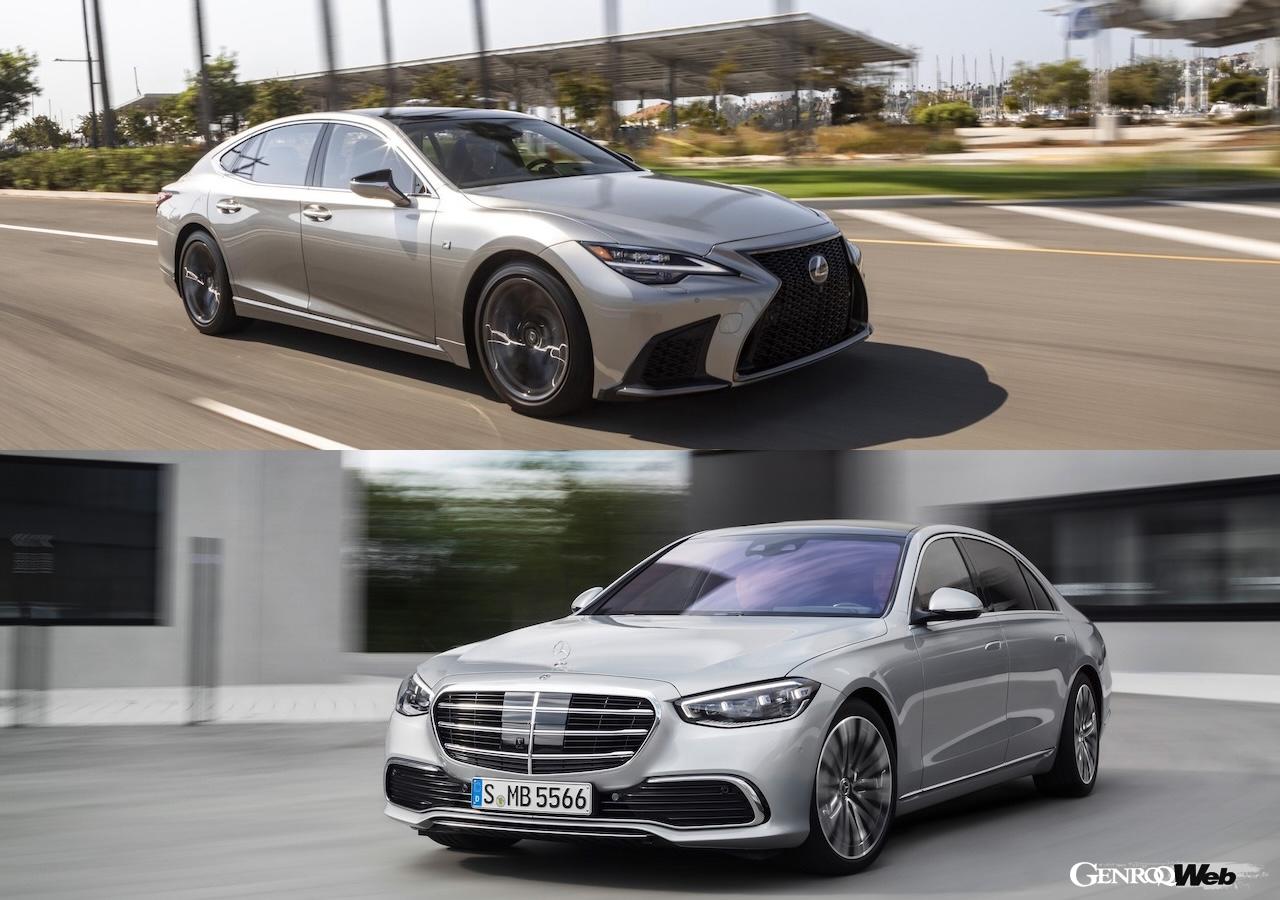
Almost the same size but with contrasting appearances

Mercedes-Benz S 450 d 4MATIC

Lexus LS500h

Mercedes-Benz S 450 d 4MATIC

Lexus LS500h
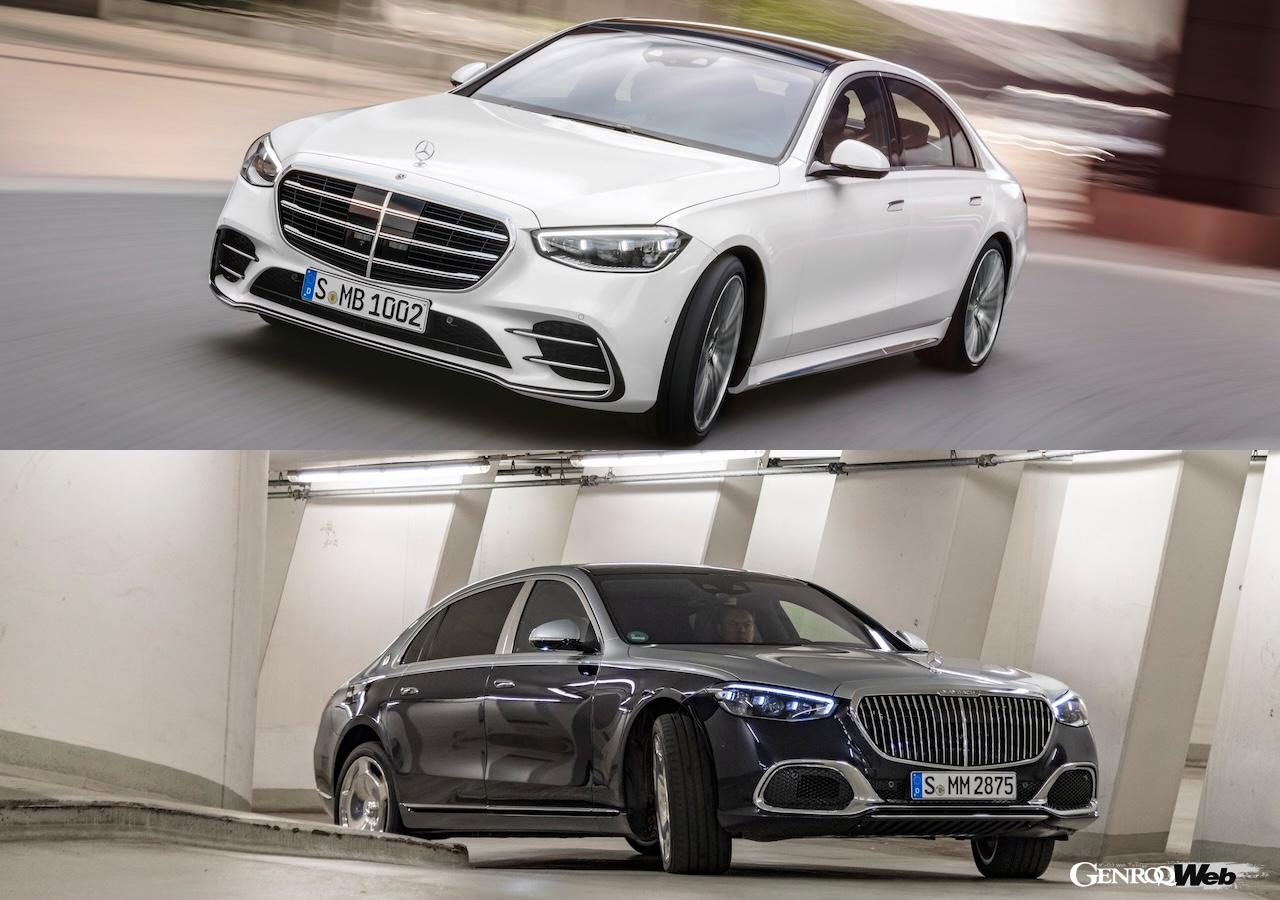
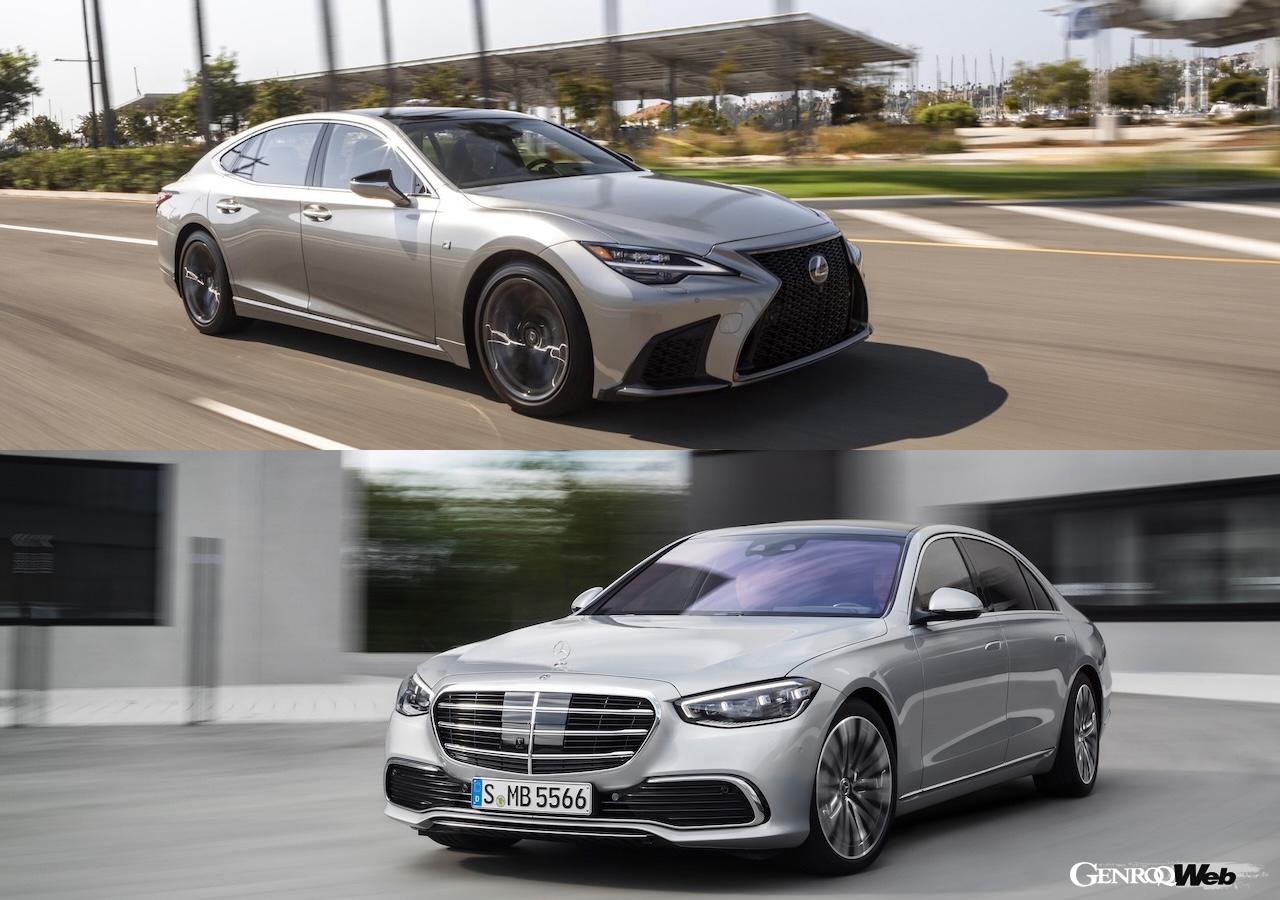
This time, we’ll compare the hybrid Lexus LS500h and the diesel mild hybrid Mercedes-Benz S 450 d 4MATIC. The first generation Lexus LS model debuted in Japan in 1989 as the Toyota Celsior. The current fifth-generation model was released in 2017, and underwent a facelift in 2020. The car features a sharp, edgy exterior with the distinctive Lexus spindle grille at its center. In contrast, the Mercedes-Benz S-Class has a large Mercedes-typical grille at its center, but has a softer appearance.
The LS no longer offers the long body that was available until the previous model, and only offers one standard body type with a total length of 5235 mm and a wheelbase of 3125 mm. The LS500h is 55 mm longer in total length and 20 mm longer in wheelbase than the S 450 d 4MATIC, but the dimensions are almost the same. Nevertheless, the LS500h’s adoption of six light windows makes the cabin appear larger than the S 450 d 4MATIC.
Mercedes-Benz S 450 d 4MATIC
Body size = Length 5180mm x Width 1930mm x Height 1505mm
Wheelbase = 3105mm
Vehicle weight = 2130kg
Tire size = 255/45R19
Lexus LS500h
Body size = Length 5235mm x Width 1900mm x Height 1460mm
Wheelbase = 3125mm
Vehicle weight = 2280 (RWD) / 2360 (AWD) kg
Tire size = 245/50R19 (front), 245/50R19 (rear)
High economy thanks to full hybrid

Mercedes-Benz S 450 d 4MATIC

Lexus LS500h
The current LS model no longer uses the 4.6-liter V8 engine that was in the lineup until the previous model. In an effort to downsize the power unit, the LS500h is equipped with a hybrid powertrain that combines a 3.5-liter V6 twin-turbo with a motor, achieving a maximum system output of 359 PS.
On the other hand, the S 450 d 4MATIC is equipped with a 3.0-liter inline 6-cylinder clean diesel engine and an integrated starter generator (ISG), producing a maximum output of 367 PS.
Both the full hybrid LS500h and the S 450 d 4MATIC, which combines a highly efficient clean diesel with an ISG, are characterized by their high fuel economy. However, in terms of driving feel, while the S 450 d 4MATIC has the strong torque typical of a diesel, the LS500h is characterized by its linear power delivery provided by its electric motor.
Mercedes-Benz S 450 d 4MATIC
Engine type = Inline 6-cylinder diesel turbo + ISG
Displacement = 2988cc
Maximum output = 367PS/4000rpm
Maximum torque = 750Nm/1350-2800rpm
Transmission = Electronically controlled 9-speed AT
Drive system = AWD
Lexus LS500h
Engine type = V6 + hybrid system
Displacement = 3456cc
Maximum system output = 359PS/6600rpm
Maximum torque = 356Nm/5100rpm
Maximum motor torque = 300Nm
Transmission = Electric CVT
Drive system = RWD/AWD
The Lexus LS500h: the pinnacle of Japanese values

Mercedes-Benz S 450 d 4MATIC

Lexus LS500h

Mercedes-Benz S 450 d 4MATIC

Lexus LS500h
The LS500h features a 12.3-inch TFT LCD meter with a 12.3-inch horizontal display. The frequently used physical switches for the seat heaters and seat ventilation remain on the console. The S 450 d 4MATIC combines a 12.3-inch meter display with a striking vertical 12.8-inch OLED media display.
Both models boast comfortable rear seats worthy of a flagship, with ample leg and headroom, luxurious trim and seats, etc. While the S 450 d 4MATIC makes extensive use of chrome parts to emphasize its dazzling luxury, the LS 500h incorporates the essence of Japanese culture into its interior, with ornaments such as Nishijin brocade and platinum leaf available.
These two luxury saloons are the epitome of “Germany” and “Japaneseness.” There’s a price difference of over 3 million yen, but if you’re looking for the luxury that you expect from a Mercedes-Benz, the S 450 d 4MATIC is the one for you. If you’re looking for a more reasonable price than the S-Class and value Japanese attention to detail, the LS500h would be the perfect choice.