
A German writer’s writing that clearly describes the characteristics of a car
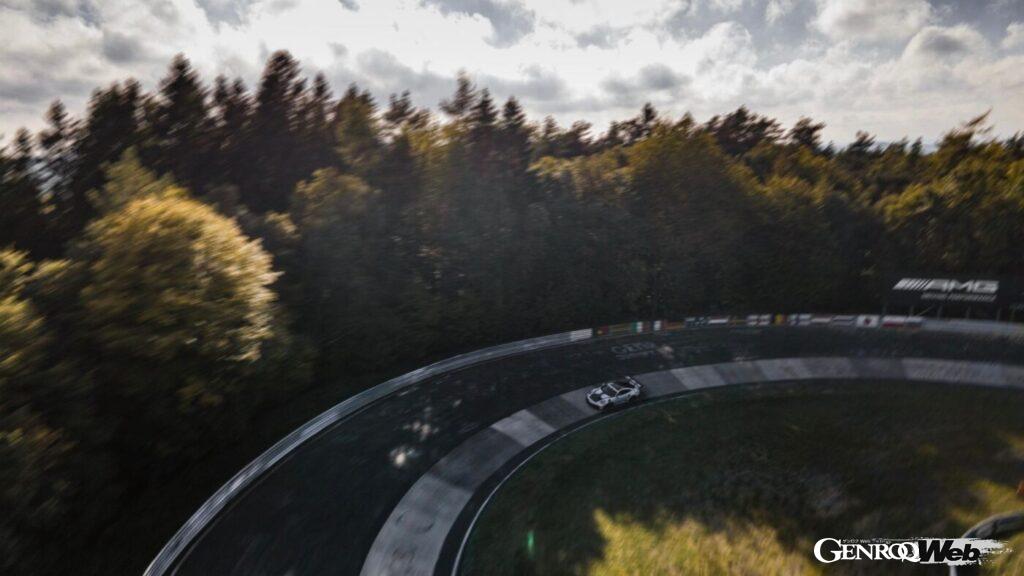
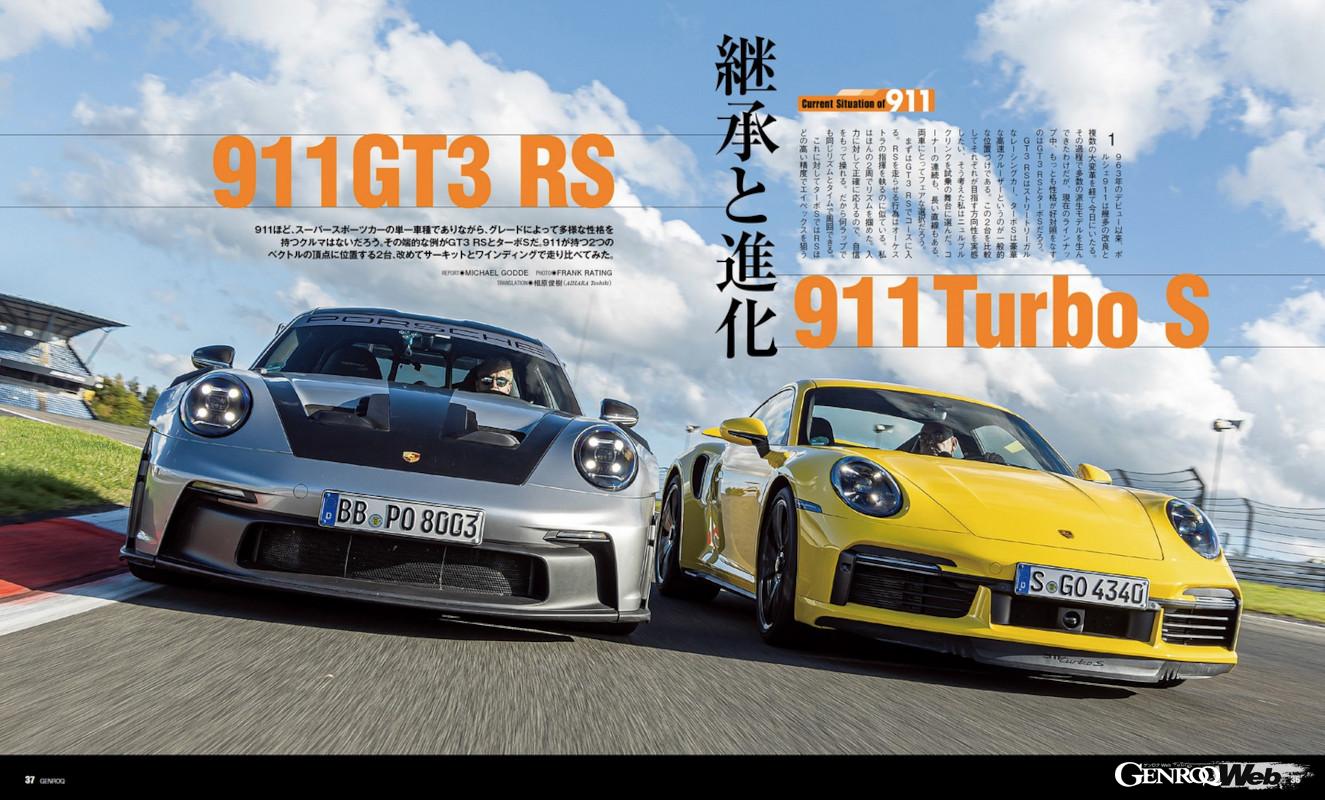
They brought two of the ultimate 911s to the “holy ground” of the Nürburgring.
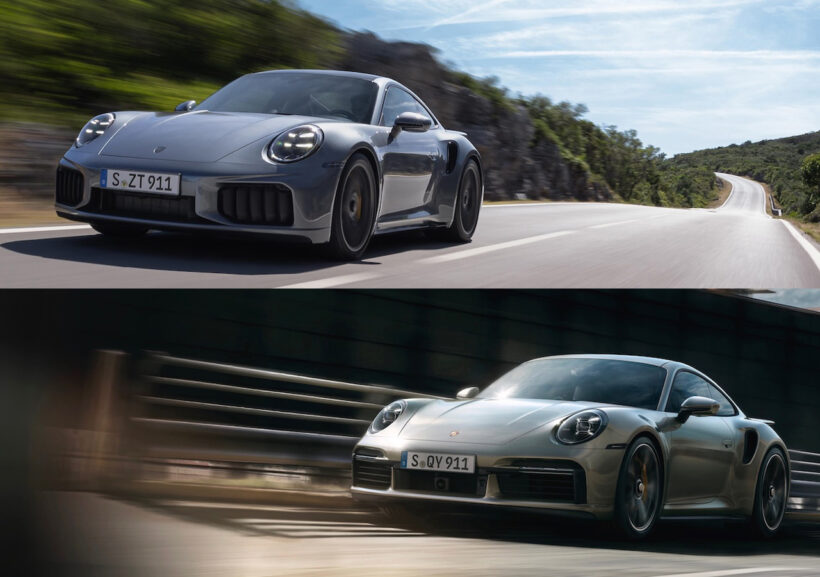
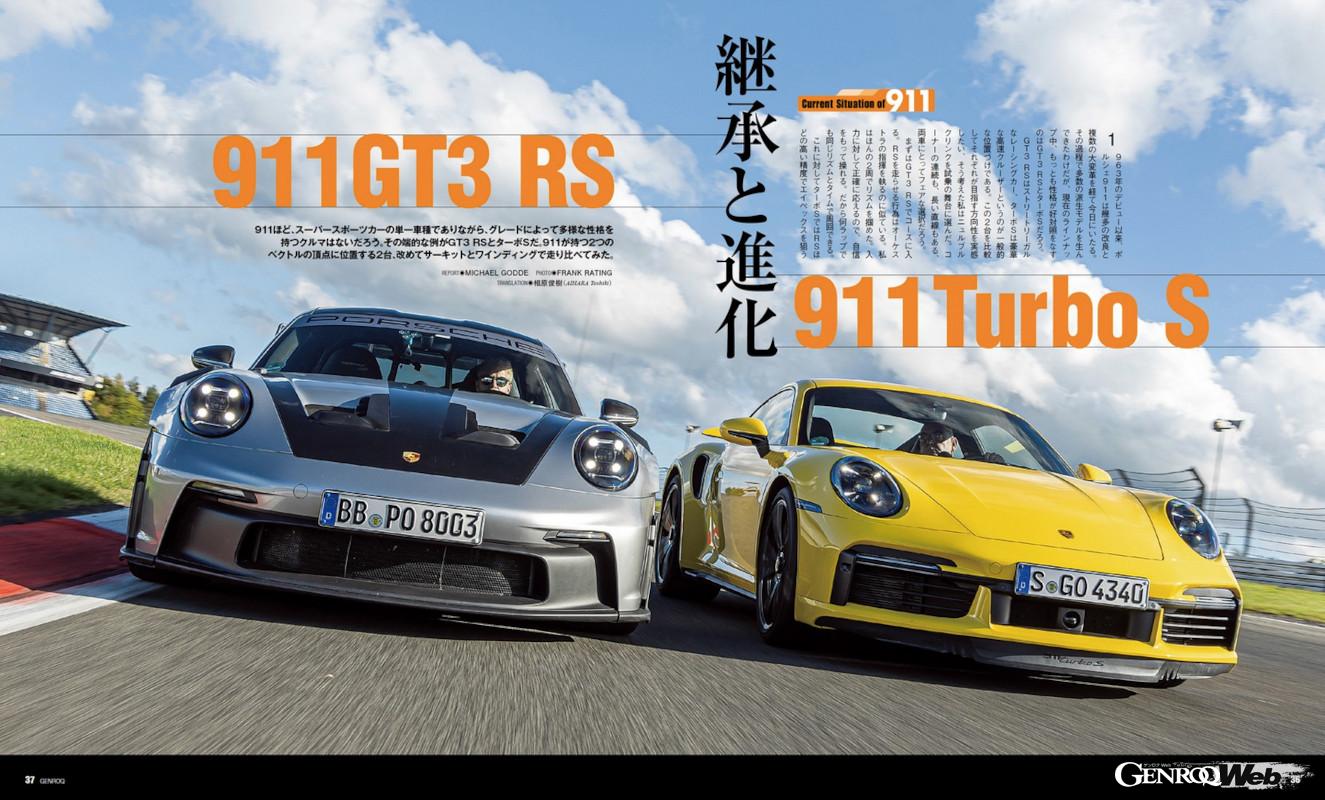
The teaching material this time is an article about a comparative test drive of the Porsche 911 GT3 RS, a “top-class racing car with a license plate,” and the 911 Turbo S, a “comfortable sports car for public roads,” at the Nürburgring and surrounding roads. Michael Godde of Germany’s Auto Zeitung magazine describes the characteristics of the cars in easy-to-understand terms.
The differences between the two models in terms of handling, aerodynamic performance, engine feel, and comfort are explained in simple terms, giving the strong impression that the story is built on facts. In the past two articles by British journalists introduced in this series, some of them felt overly poetic. Germans tend to rely on facts, while the British are particular about style. While the writer’s personality may be a factor, I feel that the national character is also reflected.
A metaphor combining classical music and heavy metal

The GT3 RS engine sound is expressed in opera and heavy metal.
That said, this article is not dry. Early on, when he drove the GT3 RS at the Nürburgring, he likens his first impression to classical music, saying, “It’s like conducting an orchestra. I got the rhythm after just two laps.” (Genroq magazine)
He then goes on to compare the GT3 RS’s engine characteristics, and particularly its sound, to opera and heavy metal.
When the RS breathes in the depths of its four-litre displacement, in the middle of its power output, it makes the air with full-bodied timbre to vibrate and then, above 7000 revolutions, its infernal speed aria smashes over the straight, as if Pavarotti were giving Hell’s Bells from the top of his throat, one is in love with it.
This translates literally to the following:
“As the RS breathes deep into its 4.0-liter engine, it vibrates with a rich, mellow tone as it approaches the mid-range of power. Then, once it hits 7000 rpm, it unleashes a hellish speed aria down the straight, like Pavarotti belting out ‘Hell’s Bells’ from the depths of his throat. You just can’t help but fall in love.”
The metaphor combines the legendary Italian opera singer Luciano Pavarotti with the song “Hell’s Bells” by Australian hard rock band AC/DC, dramatically depicting the engine sound of the GT3 RS as a ferocious heavy metal roar combined with the volume and technique of Pavarotti’s voice.
Rich wine-like taste
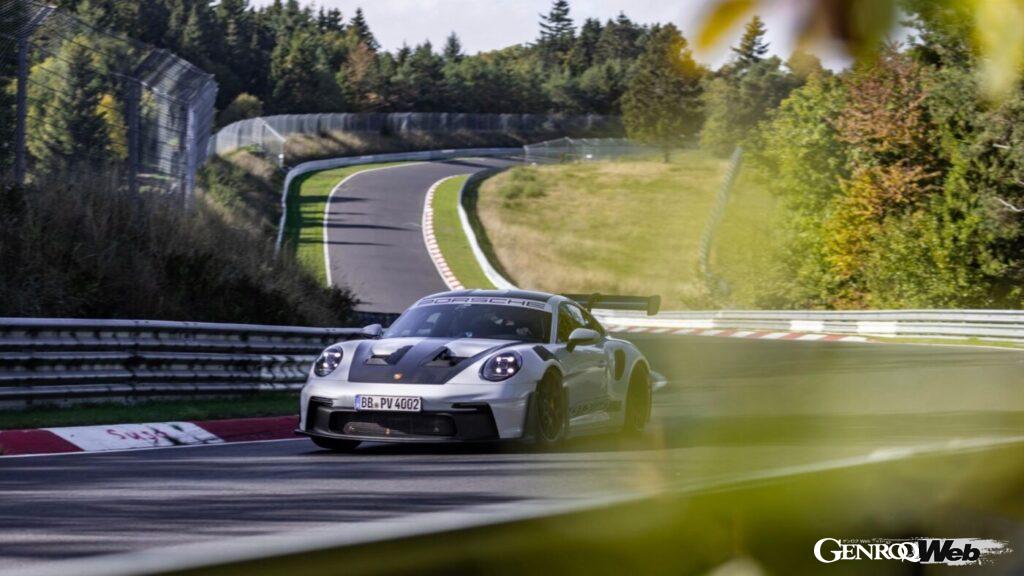
He also said it tasted like a rich wine.
Furthermore, the way the sound “vibrates” is described as “it makes the air with full-bodied timbre to vibrate.” Following on from opera and hard rock, the next analogy is music and wine. Timbre is a word that describes the texture, such as the way a sound resonates and its individuality, and in Japanese it means “tone.” This is combined with the expression “full-body,” which is used to describe wine with a rich, mellow, and powerful flavor. This literary metaphor is used to convey that the engine sound of the GT3 RS is not just loud, but also gives a sense of depth and profoundness.
Opera and wine, beloved since ancient times, are deeply rooted in European life. This metaphor also suggests that automobiles, which are industrial products, and Porsche in particular, have already become a part of European culture.
PHOTO/PORSCHE AG