
Hankook iON Formula E
Tires with tread patterns similar to those of commercial vehicles


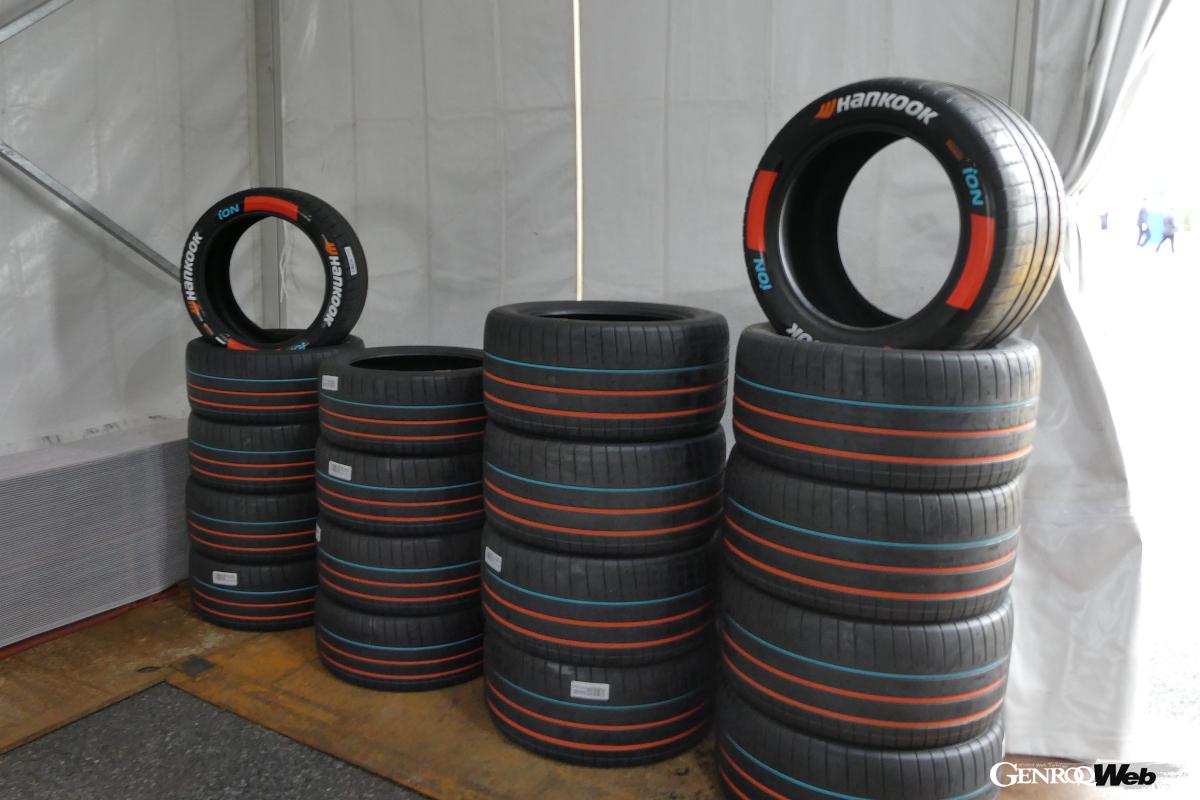
Hankook Tire garage behind the pit.
The Tokyo E-Prix, the eighth and ninth rounds of the 2024/2025 ABB FIA Formula E World Championship (Season 11), will be held at Odaiba in Tokyo from May 17th to 18th. It is a double-header, with one race on each side of the weekend.
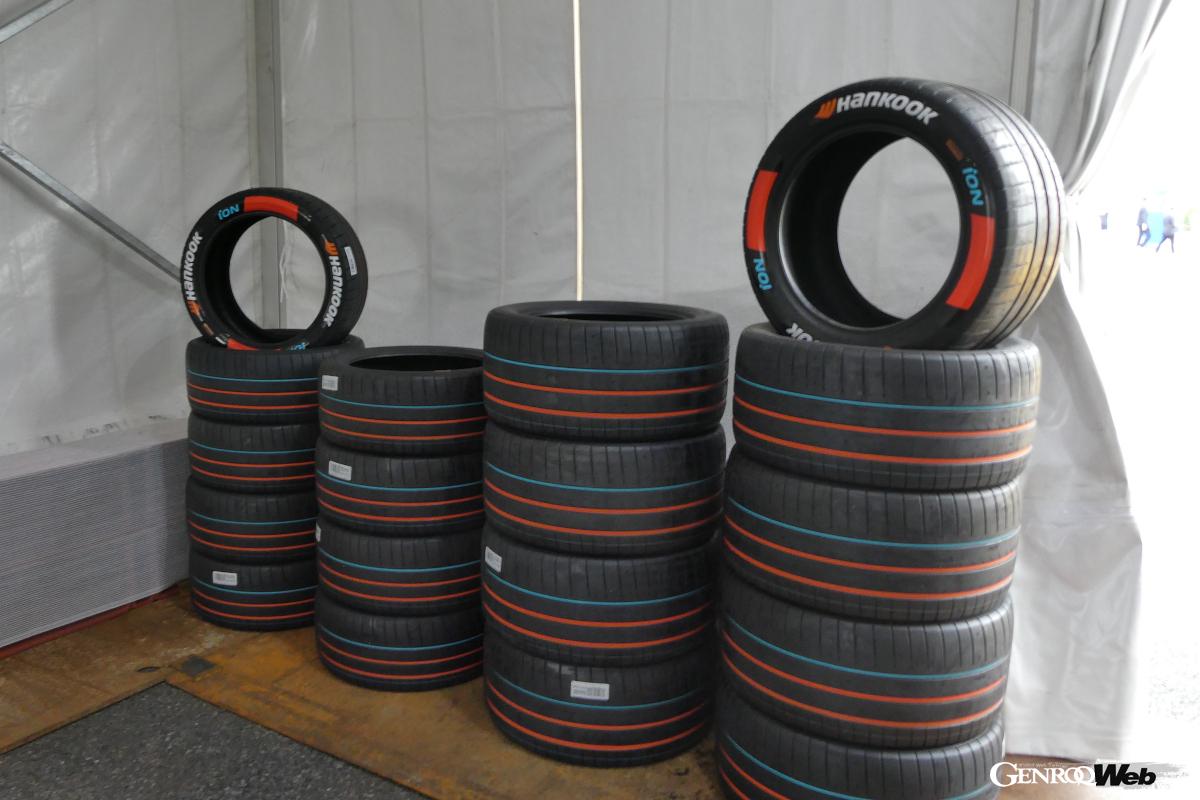
Hankook Tire has been the sole supplier of tires for Formula E since Season 9 of 2022/23, replacing Michelin. Formula E tires have the same tread pattern (grooves) as commercial vehicles and are designed to perform well in both dry and wet conditions. This reflects the series’ philosophy of emphasizing sustainability in racing. The race tires stacked in the pits are engraved with the logo of Hankook’s EV-specific brand “iON,” suggesting that the technology will be used in commercial EV tires.
Smoothly connecting high-speed corners

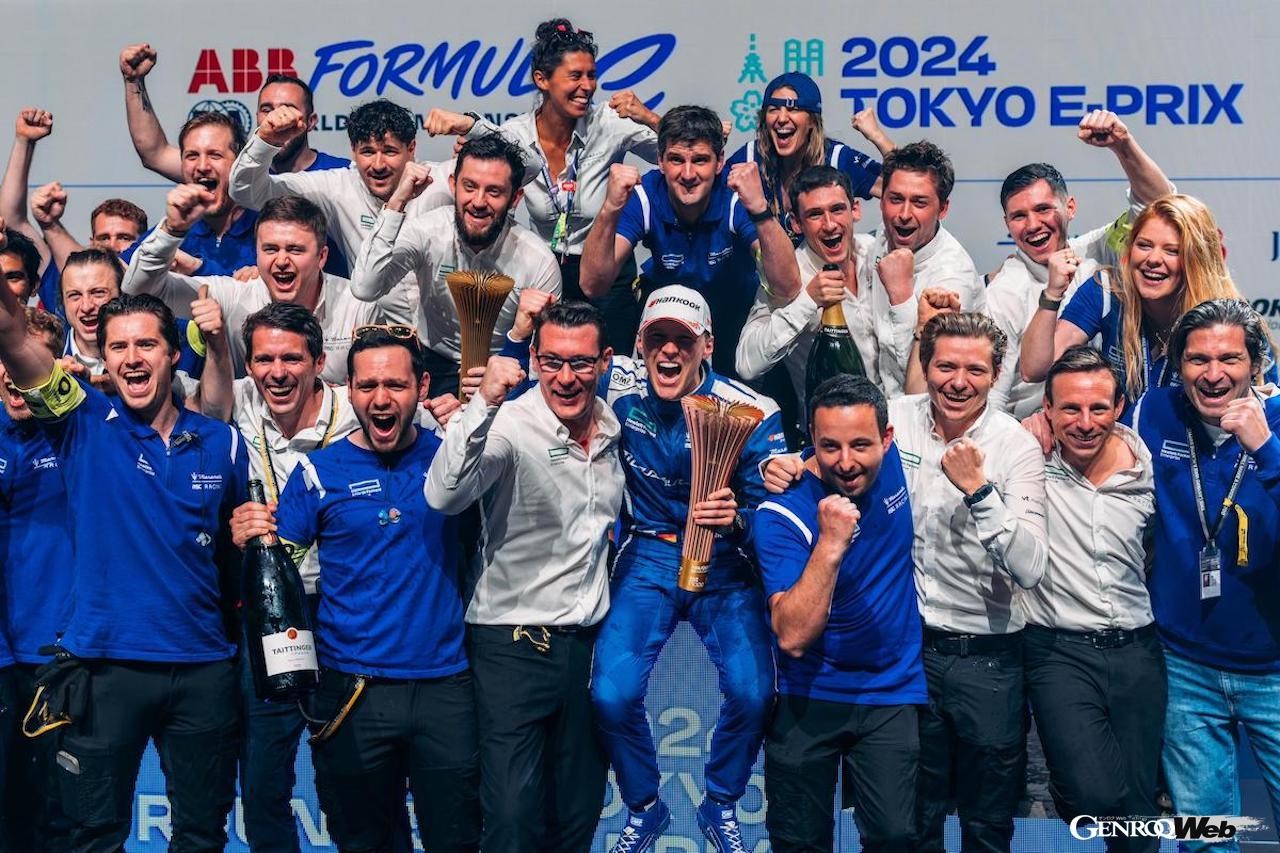
Maximilian Gunther was the winning driver at last year’s Tokyo E-Prix.
Prior to the free practice on May 16th, Maximilian Gunther (DS Penske), winner of last year’s Tokyo E-Prix, spoke to the media at the Hankook Tire garage behind the pits. Gunther is one of the talented drivers, having taken his sixth career win in the third round of the season in Jeddah.
“Winning the inaugural Tokyo race last year was a very special moment for me. I have been preparing thoroughly for this year’s race. Although we are in the middle of the season, I am in good shape. I would like to keep this momentum and turn it into a good result.”
What about the course for this year’s Tokyo E-Prix?
“I think this year’s race and course will be very exciting once again. Although there aren’t as many jumps as last year, bottoming will still occur on the downhill sections. At this circuit, it’s important to maintain a smooth flow between the high-speed corners, while at the same time being conscious of energy management. There will also be plenty of opportunities for overtaking.”
“Turns 9 and 16 are especially important. Both are the fastest corners on the course, so being able to consistently exit Turn 9 at high speed will lead to overtaking at the following Turn 10. This was a crucial point last year as well. This year’s tires have improved grip and peak performance, so I’m having a lot of fun attacking them.”
It is important to bring it to the correct operating temperature

PHOTO=Formula E

The sixth race, held in Monaco, was held on May 3rd.
Formula E races are often held on public roads, where surfaces are bumpy, traction is limited and top speeds are low, making tyre temperature management, set-up and driving style all the more important.
“Keeping the tires at the right temperature is important on any circuit, but it’s especially difficult on a street circuit.”
He also spoke about how to handle wet conditions.
“Rainy weather on a street circuit can make things very slippery. That’s why bringing the tires to the right operating temperature gives you confidence in the car’s behavior and the ability to attack. For example, Monaco has few sections where you can drive at full throttle, and there are many bumps and braking points. But we’re fully prepared in both dry and wet conditions.”
Maximum performance within a limited number of units
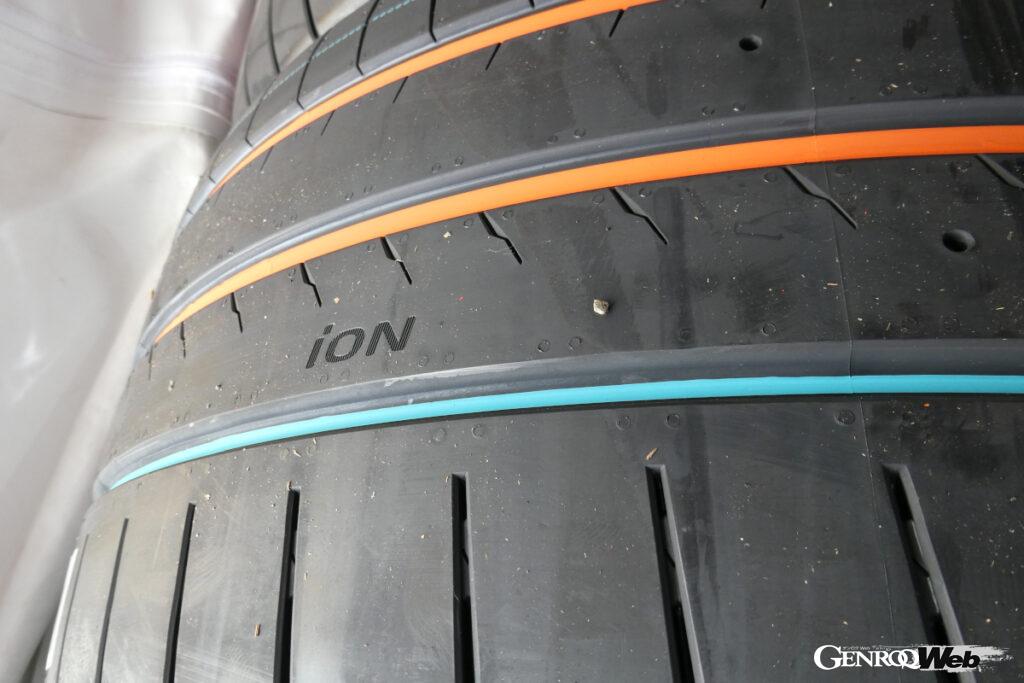
Racing tires engraved with the logo of Hankook’s EV-specific brand, “iON.”
Finally, we asked about tire development and the application of technology to commercial vehicles.
“Formula E tires are very unique in that they must perform well in all conditions, including dry, wet, and intermediate. They also need to be able to complete the race without changing tires, so grip and wear must be properly managed. Even with production cars, you don’t change tires just because it starts to rain. In that sense, Formula E is an important forum for technological development.”
35% of used tires will be recycled and reborn as new tires, and data obtained from the race will also be used to develop tires for production cars.
Only two sets of tires can be used per race (three sets in the case of a double-header). It is not always possible to use new tires in qualifying and the final race, so determining the timing of their use is key to strategy. A set of tires reserved for dry conditions may not be optimal if rain suddenly falls. The meticulous strategy of extracting maximum performance from a limited number of tires is one of Formula E’s unique attractions. Hankook will serve as the official tire supplier for four years, starting from Season 9, and will continue to supply tires until Season 12 in 2025/26. It has been decided that Bridgestone will then take over that role from 2026.
PHOTO/GENROQ, Formula E