

Maserati was born in the city of Bologna
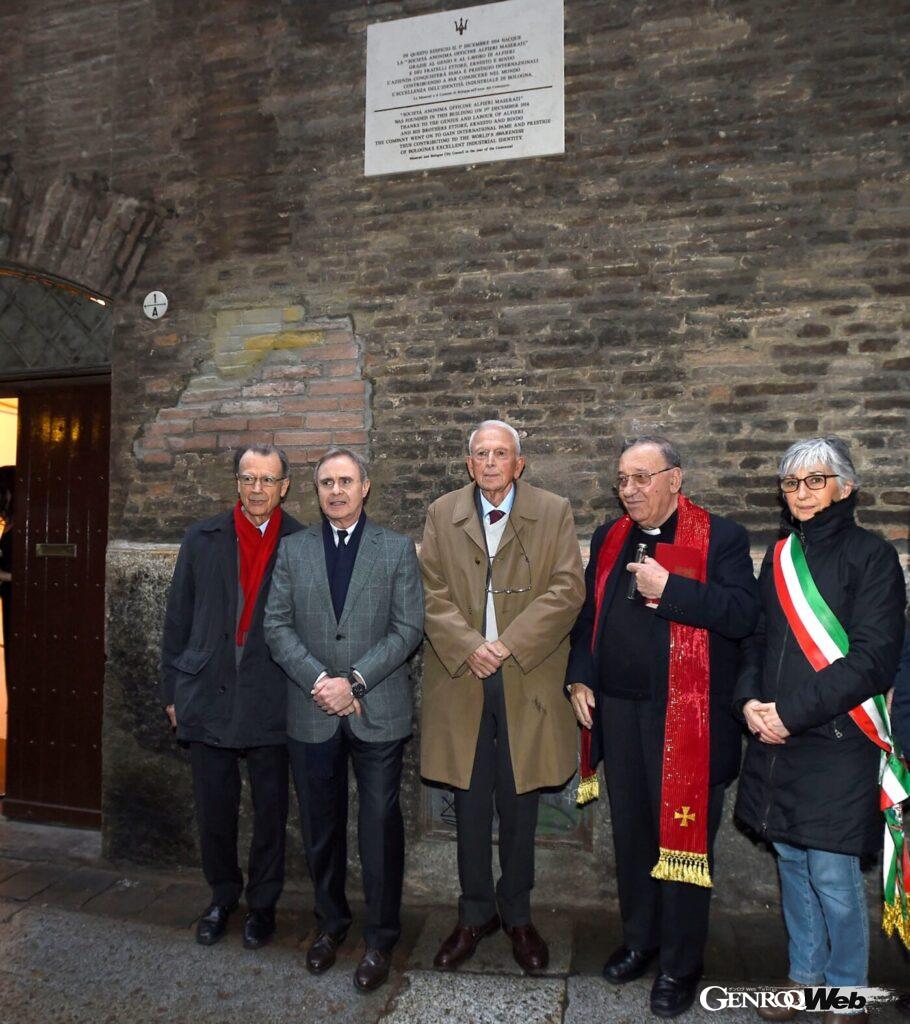
In Bologna, the city where the company was founded, the Maserati brothers gathered in front of the company’s former headquarters on Via Pepoli near Piazza Maggiore.
In 1914, the Maserati brothers founded the workshop “Società Anonima Officine Alfieri Maserati” in Bologna, Italy. Alfieri Maserati, the central figure, was a man with a passion for racing and a visionary approach to technology.
It initially started as a sports car tuning company, but with Alfieri’s help Maserati evolved into an automobile manufacturer.
The Trident, a symbol of pride in one’s hometown
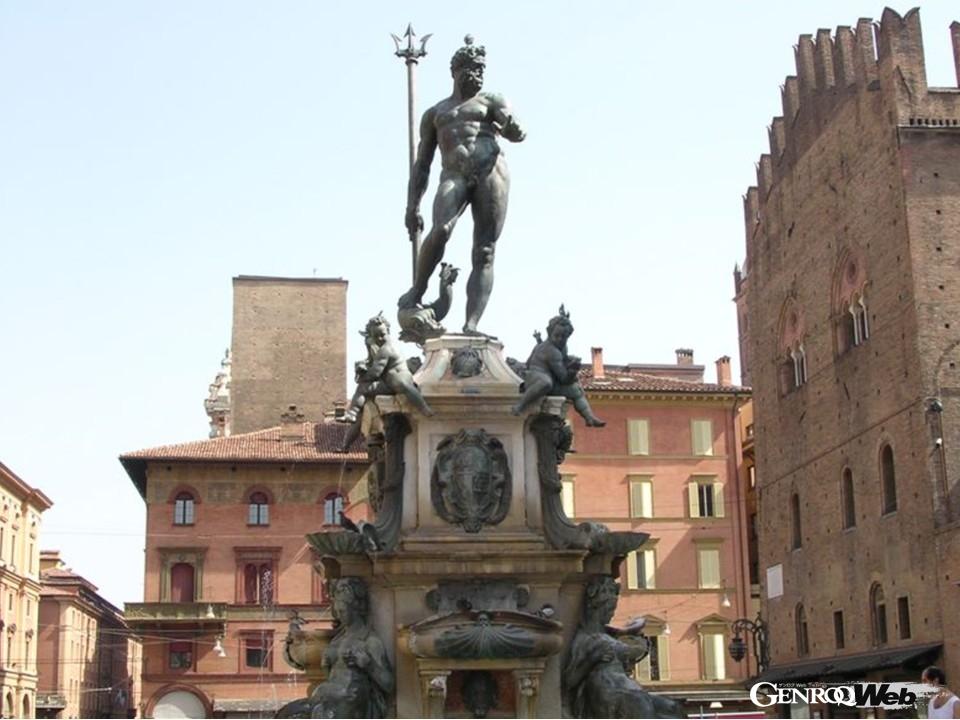
The fountain in Piazza Maggiore features a powerful figure of Neptune holding a trident.
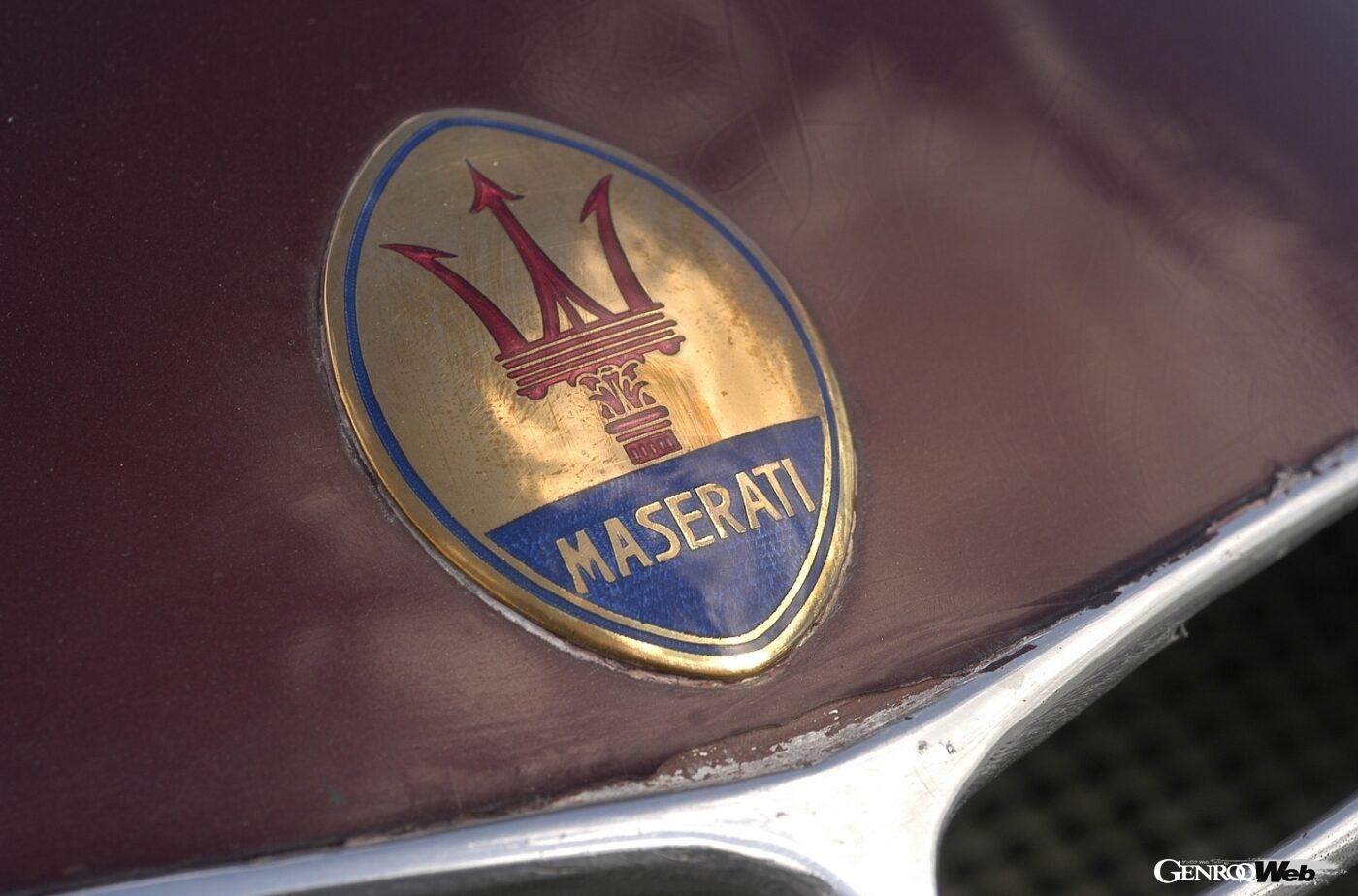
The emblem known as the “Trident” was designed by Alfieri’s brother, Mario, who was a painter. A trident is a spear with three prongs. This is also the name given to the trident wielded by Neptune, the god of water in Roman mythology.
Piazza Maggiore, a landmark of Bologna where Maserati was born, is home to a fountain beloved by locals, where the godly statue of Neptune holding a trident stands, and remains a symbol of Bologna to this day.
Inspired by the statue’s trident, Mario designed the Maserati emblem that remains to this day, symbolizing Neptune’s courage and power while also paying homage to Bologna, the city of his birth.
The birth of Gran Turismo and the forerunner of GT cars
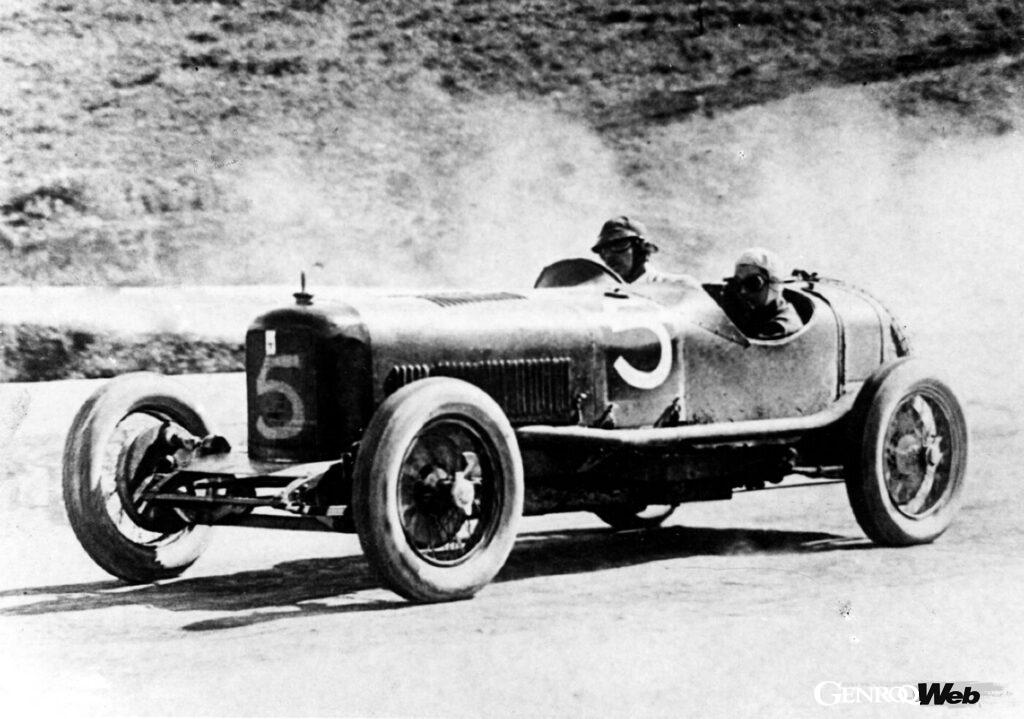
The Maserati Tipo 26 competed in the Targa Florio.
In 1926, Maserati made its debut in the world of racing, competing in the Targa Florio with the Tipo 26. The company continued to win races with numerous other cars, including the 8CM driven by Tazio Nuvolari, making its name known around the world. The technology developed in racing was also applied to production cars, firmly establishing Maserati’s position as a sports car brand.
Although Maserati seemed to be doing well in terms of car manufacturing, it seemed to be in financial difficulty. In 1937, the company was acquired by businessman Adolfo Orsi and moved its headquarters to Modena.
Trident’s evolution


[1] This was the first emblem designed by Mario. [2] From Modena onwards, the oval shape was adopted, which continues to this day. [3] Some high-performance models have long had a large trident badge on the front grille (pictured is the GT2 Stradale).
The original emblem, which began with the Tipo 26, featured a trident and the word MASERATI arranged vertically on a vertical rectangle. After the company’s ownership was transferred to Orsi, it was changed to a vertical oval that is still used today. The layout, with the bottom third blue with the word MASERATI set against a background color and the trident in the top two-thirds, has remained essentially unchanged, but has been refined over time.
Some theories suggest that throughout history, the brand has also used a solid red version, or a design in which the MASERATI lettering was enlarged and protruded from the oval. Some models also feature a large trident badge on the front grille in addition to the emblem. On current models, it seems common to see trident badges on the rear quarter pillars in addition to the grille.
Maserati continues to grow

The Maserati 3500GT, nicknamed the “White Lady.”
Orsi’s skills stabilized the company and solidified its position. In 1947, the company began mass production of the 1500 Gran Turismo, which gave birth to the category known today as the “GT (Gran Tourer).”
They also began developing small GT and two-seater models. The 3500GT was nicknamed the “White Lady” and was considered the most beautiful Maserati. At the 1966 Turin Motor Show, they unveiled the Ghibli, designed by Giorgetto Giugiaro and equipped with a V8 engine. At the same time, they were also developing a luxury sedan equipped with a racing engine. This was the Quattroporte.
From Citroën to Peugeot
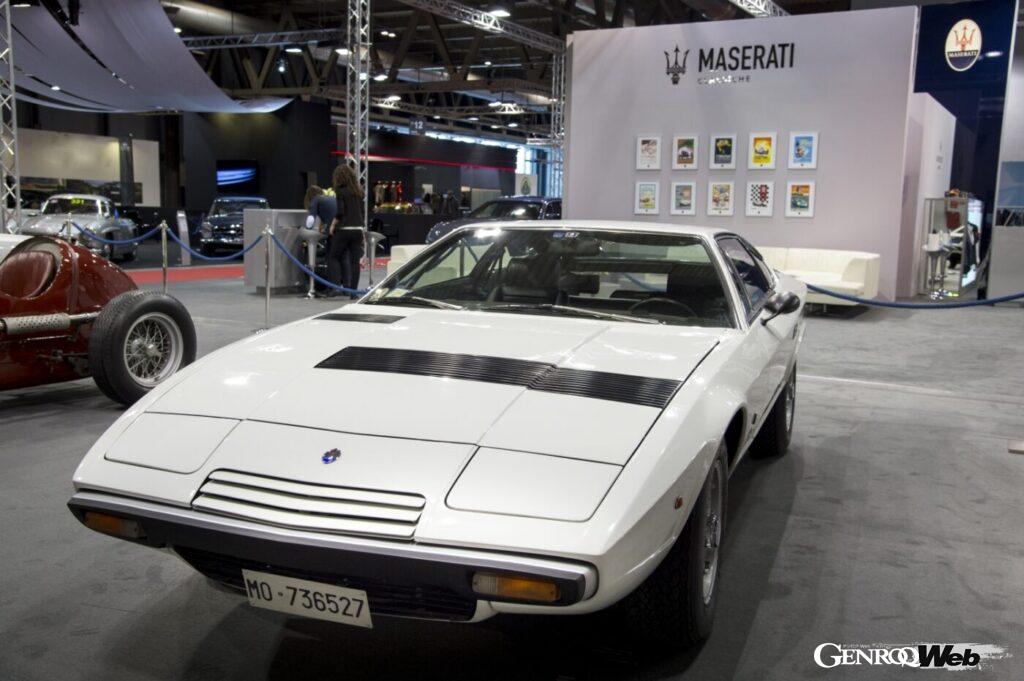
The Maserati Khamsin was designed by Marcello Gandini.
The automotive industry then underwent a period of transformation. As the transition from custom-made, handcrafted cars to mass production began, Orsi sold 60% of Maserati’s shares to Citroën in 1968. During the Citroën era, Maserati released famous cars such as the Bora, Merak, and Khamsin. Eventually, Maserati was taken over by Peugeot and the Italian public organization GEPI (Company for Industrial Management and Investment).
With Ferrari

The Maserati Biturbo was a hit, selling 37,000 units.
In the 1980s, Maserati aimed to create cars with “luxurious and beautiful bodies, powerful six-cylinder engines, and reasonably priced vehicles.” Based on this vision, cars such as the Biturbo were released.
In 1993, it became a subsidiary of Fiat, and four years later it became a subsidiary of Ferrari. The 3200GT, equipped with a body designed by Giugiaro and a Ferrari V8 engine, debuted at the Paris Motor Show in 1998. In 2004, the MC12 supercar, based on the Enzo Ferrari, was released.
The trident is a symbol of eternity
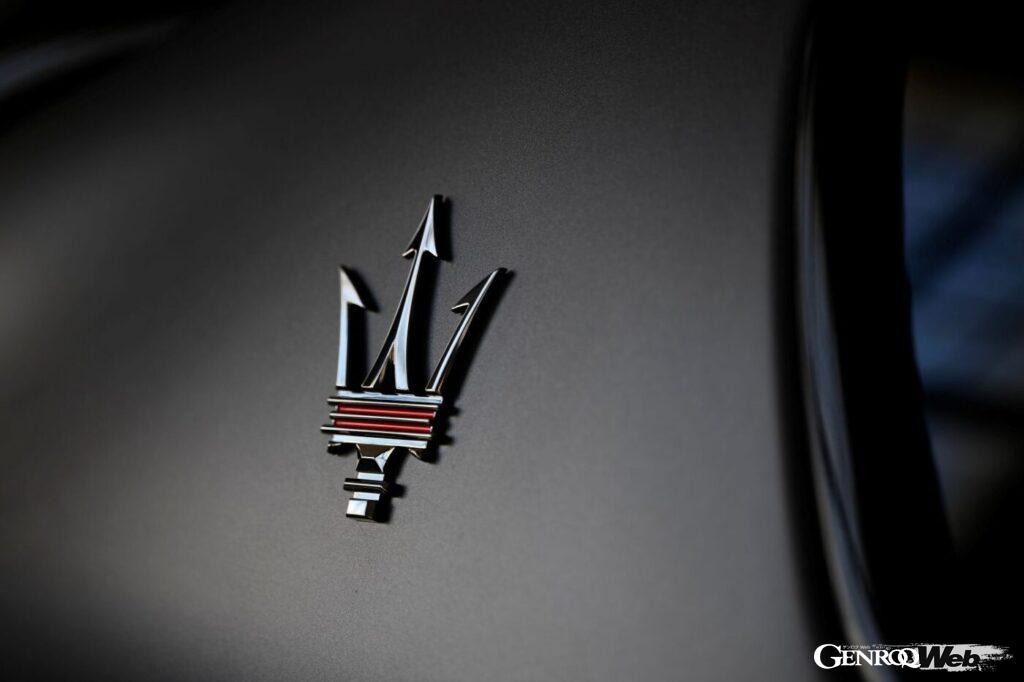
Even now that it is part of a cosmopolitan corporate group, Maserati’s identity remains linked to Neptune in Bologna.
In 2005, Maserati left Ferrari to join Alfa Romeo. Following the merger of Fiat Chrysler Automobiles and Groupe PSA in 2021, Maserati is now part of Stellantis. After being under the umbrella of Citroën, Peugeot, Fiat, and Ferrari, Maserati is now part of a cosmopolitan group made up of Italy, France, and the United States.
Maserati’s history has been full of turbulence, but also of passion, innovation and challenge. Even though the owners have changed, the Trident emblem has inherited the spirit of the founder and continues to symbolize the Maserati brand identity.
PHOTO/MASERATI