
![Is the acceleration of the 991 Porsche 911 Turbo due to a catapult? [Car English, Vol. 02]](https://wheelfeed.com/wp-content/uploads/2025/04/1953-1761191758176.jpg)
Expressing overwhelming acceleration with “crush”

The acceleration of the 993 model is expressed as a “crash.”
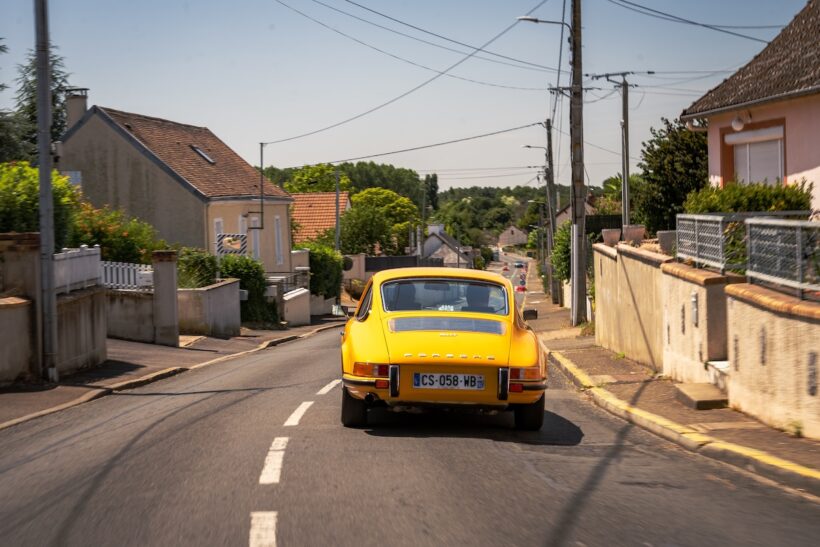
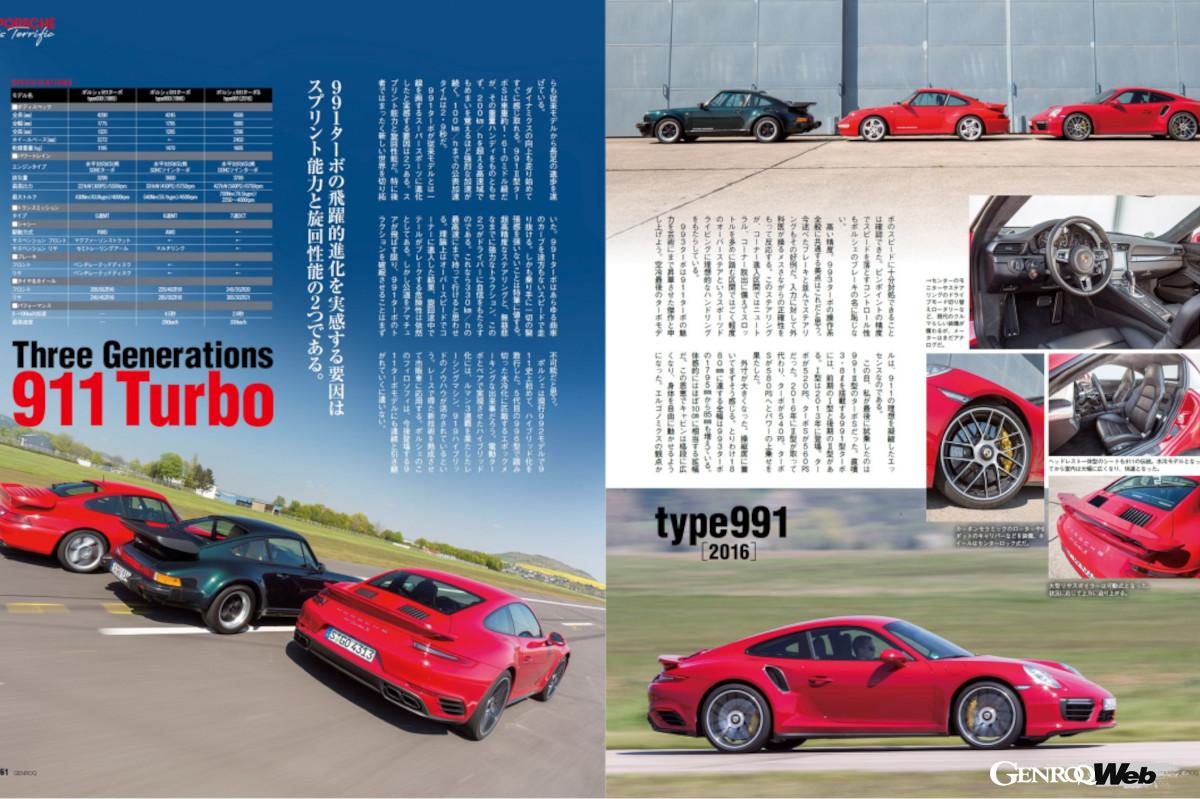
Following on from last time, this time we will be presenting a comparative test drive report of the first generation Porsche 911 Turbo (Type 930), which was produced until 1989, the Type 993, which appeared in 1995, and the previous 991 model 911 Turbo S (written by Marcel Kühler, who contributes to German publications such as Auto Zeitung).
The article also found an interesting description of acceleration. The test 993 engine was fitted with a genuine option package, which increased power from the original 408 PS to 450 PS thanks to a larger turbocharger, modified control unit, and additional oil cooler. The car accelerates from 0 to 100 km/h in just 4.1 seconds, and the article describes it as “The Indian red Turbo crushes the 100 km/h mark after just 4.1 seconds.”
While “crush” is often used to mean “to crush” or “to pulverize,” in this case it is used figuratively. It has the nuance of “overwhelming power” or “to clear easily,” and it can be said to be used to describe the incredible power and smoothness with which the 993 Porsche 911 Turbo accelerates. In Japanese, it would be something like, “The Indian Red Turbo easily surpasses 100 km/h in just 4.1 seconds.”
Handling is “as sharp as a scalpel”
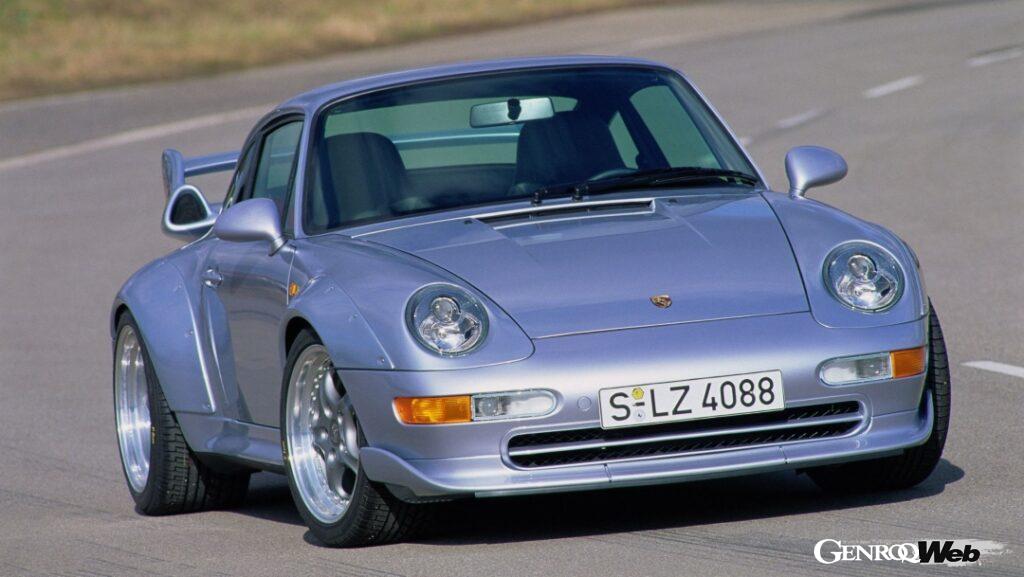
The handling sharpness of the 993 model also seems to have improved significantly from the 930.
There also seems to have been a notable improvement in the precision of the handling. “The 993 Turbo responds to steering inputs with scalpel-like sharpness.” A scalpel is a surgical knife. This speaks to the extremely sharp, sharp steering feel of the 993.
The overwhelming acceleration of the current 911 Turbo S


Experience the acceleration of a “storm”
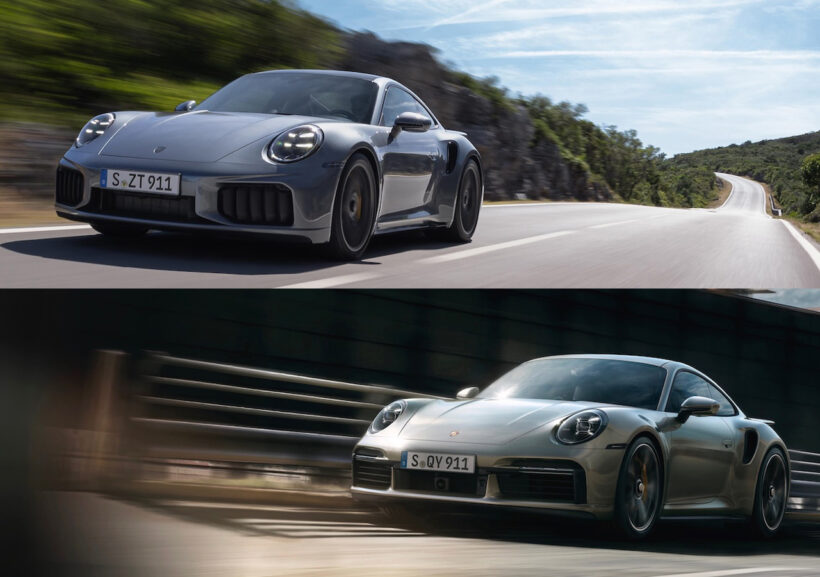
The last car he test drove was the predecessor model Type 991, the 911 Turbo S, whose acceleration was even more impressive. He described it as “an extremely responsive 580 PS boxer engine that catapults the 1,600 kg coupe forward.” The word “catapult” is a verb derived from the catapults used in ancient European wars and the launching devices of fighter planes, and carries the nuance of “to blast something away with great force.” It seems the dynamic expression was used to convey the overwhelming sense of acceleration of the Porsche.
The 993’s 0-100 km/h acceleration time was 4.1 seconds, but the Type 991’s was a significant improvement at 2.9 seconds. This impression is expressed as, “The 911 Turbo S storms to 100 km/h in 2.9 seconds and on to a maximum speed of 330 km/h.” “Storms” is used as a verb with the nuance of “to rush forward like a storm” or “to charge forward with great force.” Like “catapults,” it is an expression that emphasizes the tremendous acceleration. In Japanese, it would be something like, “The Type 991 Turbo S accelerates to 100 km/h in 2.9 seconds and then continues on to a top speed of 330 km/h.”
Genroku Web will continue to pick up interesting English expressions from articles written by overseas journalists in our magazine, GENROQ, and will introduce various aspects of the world of cars.