
![How the Porsche 911, still synonymous with sports cars, was born [Porsche Chronicles]](https://wheelfeed.com/wp-content/uploads/2024/11/4160-1761207903904.jpg)
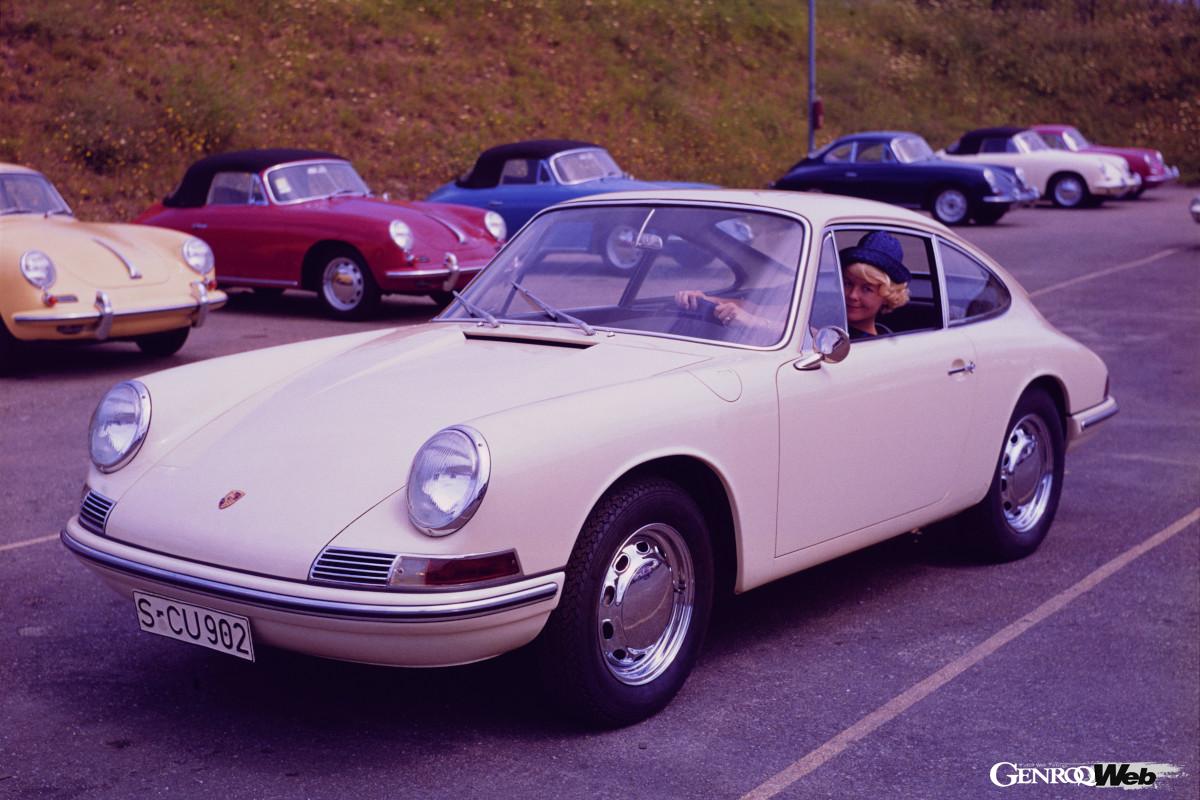
911 (1963-1973)
Powerful 6-cylinder engine

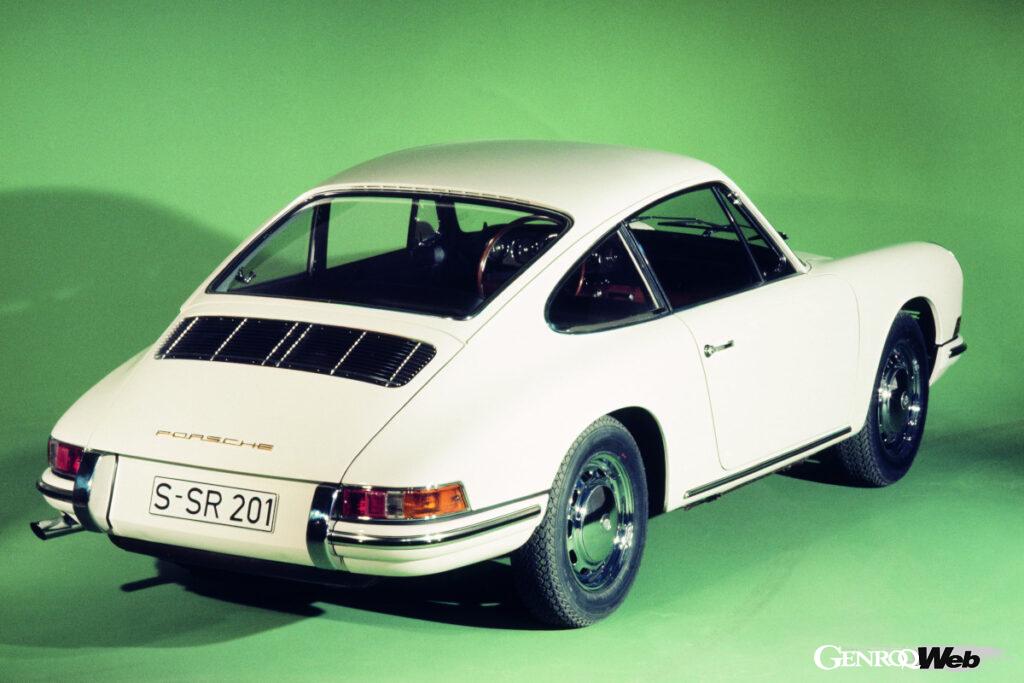
It is equipped with a 1991cc air-cooled, horizontally opposed, 6-cylinder, SOHC Type 901 engine in the rear.
While the 356 was a huge hit, especially in North America, the market demand for more power was growing day by day. In response, Porsche made various improvements to the 356, but in 1957, Ferry Porsche ordered the development of a high-performance 2+2 GT that could seat four adults as a successor to the 356.
At this point, Porsche’s development team began developing a powerful six-cylinder engine to replace the previous flat-four. To accommodate this, the chassis was developed into Porsche’s first monocoque structure, boasting high rigidity by combining a floor pan with box-shaped sills on both sides and a stressed-skin roof. Aiming to secure more luggage space in the front and improve handling performance, the suspension was also revamped with a combination of MacPherson struts and torsion bars in the front and semi-trailing arms and torsion bars in the rear.
Car name changed due to Peugeot complaint
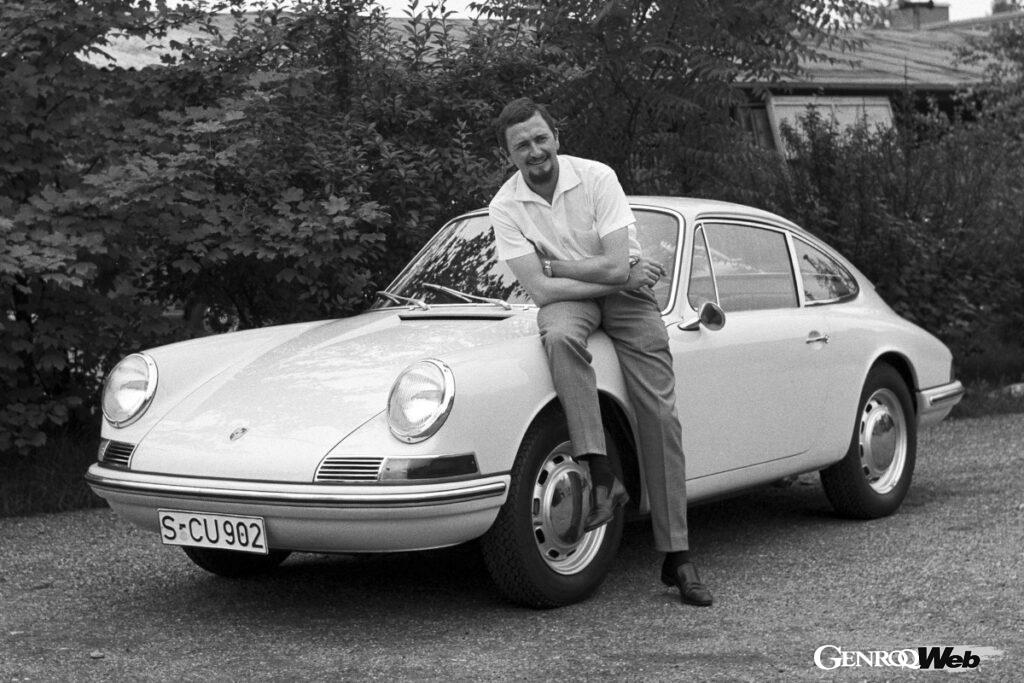
The design was created by Ferry’s eldest son, Ferdinand Alexander (Butzi) Porsche.
The body design was handled by Ferry’s eldest son, Ferdinand Alexander (Butzi) Porsche, who designed the prototype “Typ 754” with a notchback-style roofline in 1959, but Ferry did not like it, so it was changed to the fastback-style style that is still used today.
At the time, the car was fitted with a six-cylinder OHV engine, which added two cylinders to the 356’s four-cylinder OHV, but this produced a lot of vibration and noise, so the engineering team led by Hans Thomalla developed a new 1991cc air-cooled, horizontally opposed, six-cylinder, SOHC Type 901 engine. This was developed with the intention of converting it to motorsports, including the racing sport “904,” and featured advanced, ample design features such as “viral” cylinders with aluminum cooling fins built into the cast iron cylinders, a seven-bearing forged crankshaft, and a dry sump.
On September 12, 1963, Porsche made a spectacular announcement of its new model, named “901,” at the Frankfurt Motor Show. The response was overwhelming, but the name was changed to “911” after a complaint from Peugeot, who had trademarked the three-digit number with a zero in the middle. Behind the scenes, things weren’t going smoothly, with the monocoque body requiring high precision and complex processes, and preparations for manufacturing the flat-six engine not progressing smoothly. Furthermore, the balance between the large, heavy flat-six unit and the chassis could not be resolved, preventing full-scale mass production.
After expanding the engine displacement, the car is now in a state of completion.
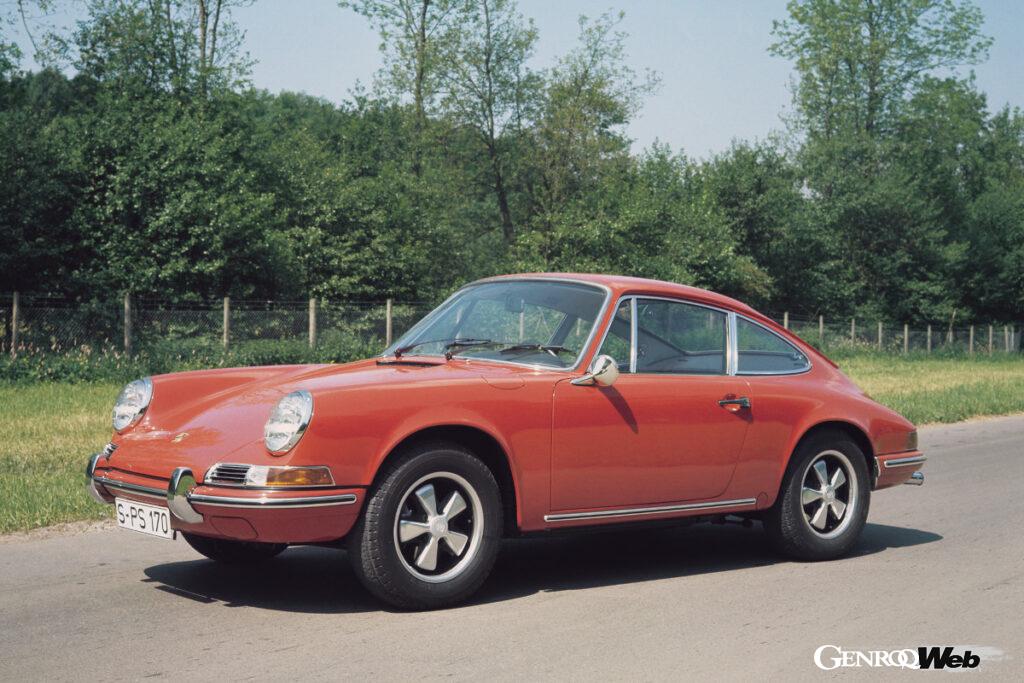
LWB model

Targa
The 911 finally entered full-scale mass production in 1965, demonstrating high performance far exceeding the standards of the time. The 1966 model saw the carburetor change from Solex to Weber, improving engine starting and response, and leading to a dramatic increase in production numbers. The 1967 model saw the addition of the high-performance “911S,” with an engine tuned to 160 PS, and the “Targa,” equipped with a stainless steel rollover bar that also reinforced the body and a detachable hardtop. In August, the two-pedal, semi-automatic Sportomatic and the cost-saving “911T,” detuned to 110 PS, made their debut.
When the car first debuted, a temporary fix was implemented, such as adding a 22 kg weight to the back of the front bumper to improve the chassis balance of the tail baby, but the 1969 model saw its first major minor change, with the wheelbase extended by 57 mm to improve maneuverability. Another notable change was the addition of Bosch mechanical fuel injection as standard equipment on the standard 911E and 911S.
For the 1970 model, the engine displacement was increased to 2195cc to compete with rivals such as Ferrari’s Dino 246GT. The 1972 model saw a further increase to 2341cc. In addition, the gearbox was changed to the larger-capacity 915-type 5-speed manual transmission from the 1972 model. With the addition of a front air dam and improvements to the suspension, the 911 finally reached a state of perfection.
A new market called Homologation Special

Carrera RS 2.7
Furthermore, in 1972, an important model was released that will become a part of the 911 series. This was the 911 Carrera RS 2.7, commonly known as the “713 Carrera.” This was a homologation model developed to meet the Group 4 GT regulation of “producing 500 units per year,” and was equipped with a 210 PS flat-six engine that adopted Nikasil plated cylinders inherited from the 917 and increased displacement to 2697cc. The body was also equipped with special aero parts such as enlarged rear fenders and a rear spoiler known as a ducktail, and significant weight reduction was achieved by removing the rear seats and adopting a thin windshield.
When the Carrera RS 2.7 was unveiled at the Paris Motor Show in February 1972, orders flooded in from all over the world, far exceeding the planned 500 units. Ultimately, 1,580 units were produced, more than three times the planned figure, and this marked the beginning of the development of a new market for homologation specials, which led to the current “GT3.”













![The S-Type, widely regarded as Bentley’s masterpiece post-war saloon [Bentley 100 Years of Car History]](https://wheelfeed.com/wp-content/uploads/2025/11/4703-1762127546348.jpg)