

POLO STORICO
Polo Storico staff experience


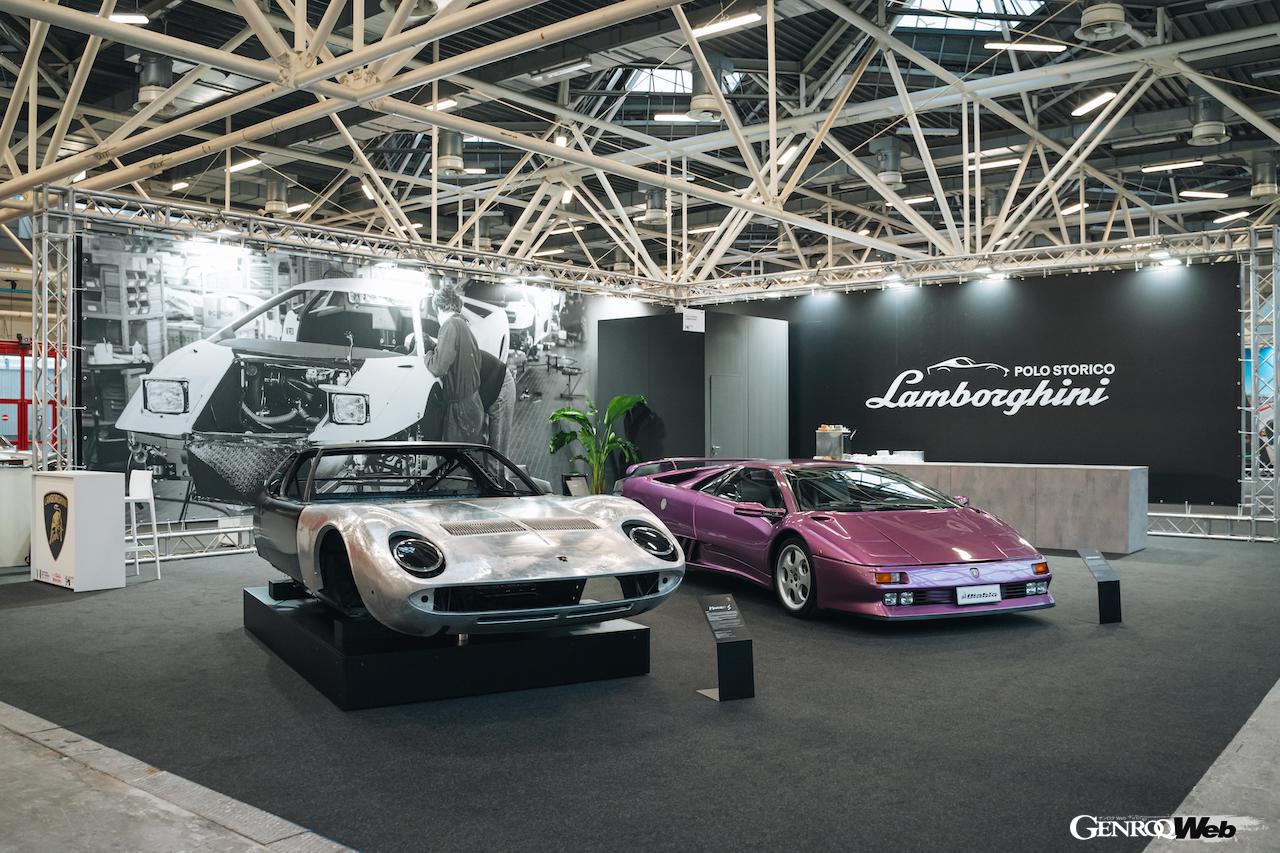
Exactly 10 years ago, Lamborghini officially launched its classic car division. It was named Polo Storico, which roughly translates to “historic center.” Its role was very clear: to enhance the brand’s value by accurately conveying its heritage to the future. Premium brands know that tradition is a value that cannot be imitated by anyone.
This May, Polo Storico, the after-sales service division of Sant’Agata Bolognese, celebrated its 10th anniversary. Their main tasks are (1) organizing the archives, (2) issuing certifications for classic models, and (3) supplying and restoring genuine parts. Over the past 10 years, they have provided over 200 certifications and restored over 40 vehicles.
“Would you like to try working for Polo Storico?” I received such an invitation from Lamborghini that I visited Sant’Agata Bolognese. Upon entering the famous main factory entrance, I could see the glass-walled museum slightly to the right of the front. Further to the right of that was the historic entrance, an area where the old factory buildings remain. I headed to the opposite area, on the left side of the front.
After showing our passports and receiving our entrance pass, we proceeded through an area off-limits to the general public. The Polo Storico department was on the first floor of the building just before the Centro Stile. It’s a place that’s usually difficult for even those of us in the media to enter, with only customers who have placed orders allowed in.
From over 30,000 documents


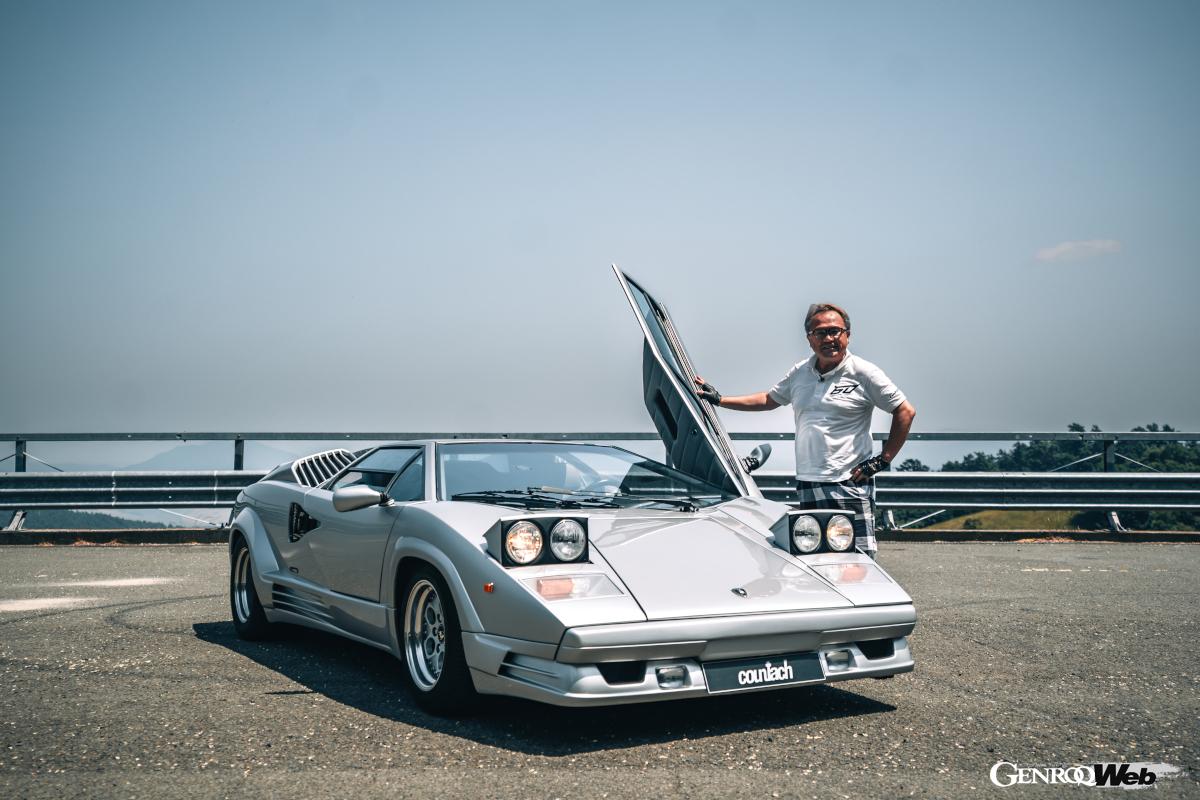
“As a member of Polo Storico, this is the car you’ll be inspecting today.” The model we were given was a silver Countach 25th Anniversary (hereafter referred to as “Aniba”). First, we checked the vehicle. Normally, we would photograph and examine various designated areas (which vary depending on the model), but when a vehicle is brought to Sant’Agata, as in this case, we directly check the important parts, such as the chassis number and engine number, and compare them with documents in the archive.
Sixty items, including the interior and exterior, are checked, including color, parts, tire size, wheels, and glass. The most important point is matching the frame number with the body number. Replaced consumable parts such as batteries and various cords are acceptable even if they are not original parts. Similarly, even if the color of the interior or exterior has changed, it will simply be noted on the certificate that it has changed. The Aniva we were in charge of was missing its original tool case.
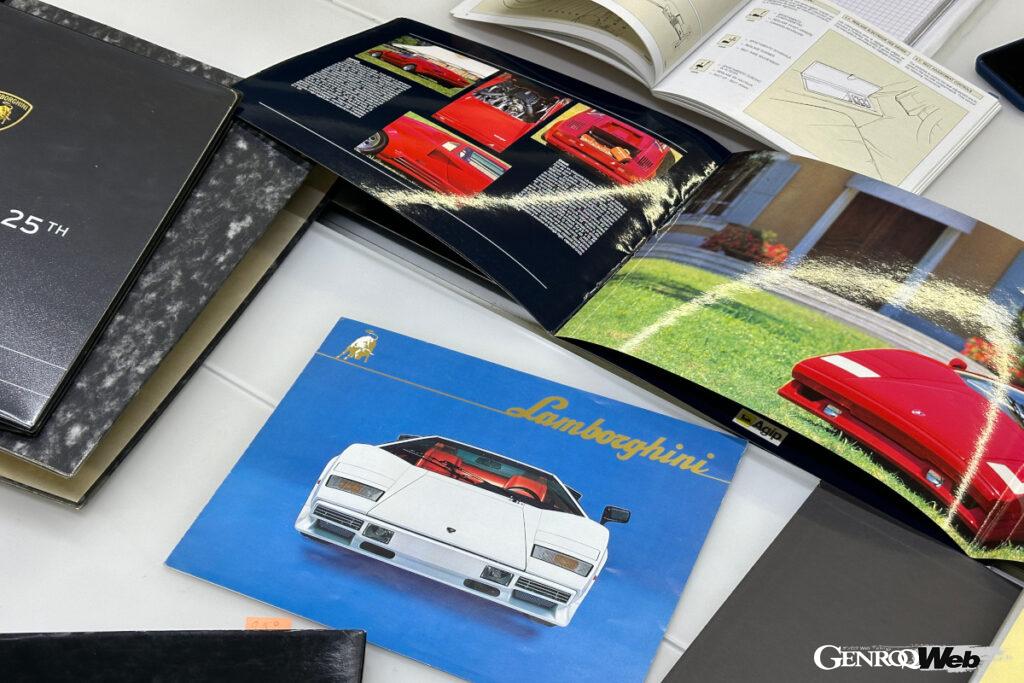
From the more than 30,000 documents collected over the past 10 years, we pull out materials related to the Aniva and compare them with the checklist. One of the most important documents is the “SCHEDA DATI ANAGRAFICI VETTURA” (Vehicle Specific Data Sheet), which records the condition of the car at the time of production. By the time of the Aniva, the data had already been significantly simplified to a single A4-sized sheet, but in the early days of the “400GT2+2” in the mid-1960s, it was as long as 12 pages. It recorded all sorts of data, such as the weights and manufacturers of the main parts that make up the engine, and bench test results.
The older it is, the harder it is to judge


Using the chassis number, we were able to find the data sheet. The sheet states that this silver car was ordered on May 30th, 1990, production started on June 13th (coincidentally, this inspection took place on the same day 35 years later!), rolled off the production line on July 4th, and was delivered the following day, the 5th. Incidentally, the order was placed by Lamborghini headquarters. Moreover, this is the final model of the Countach, and it has remained in Sant’Agata since it rolled off the production line.
Because it was such an example, it was easy to check whether the interior and exterior colors and each part were original. However, cars before the Miura often had been modified over the course of several generations of owners, and repairs and restorations were not uncommon. In other words, the older the car, the more difficult it becomes to determine its authenticity. At Polo Storico, we not only use data sheets, but also gather as much photographic data as possible from catalogs and magazines from the time, and also seek the cooperation of employees from that time, to determine its authenticity. On this day, a man who had worked at Santagata for over half a century, since 1966, was watching over our work.
By the way, do you know what the most troublesome part is when maintaining a classic model from the 1970s or 1980s? It’s the tires. Recently, I’ve heard many cases of people giving up on buying a car because they couldn’t find new tires of the right size. Pirelli has been very enthusiastic about restoring classic Lamborghini models, and many models (such as the Cinturato) are being resold under the brand name “Pirelli Collezione.”
I was impressed by how agile the movements were, even more so than I remembered.


Finally, there’s the test section. Polo Storico’s certification process only involves static testing, so dynamic performance is not an issue. However, dynamic testing is essential after restoration. This time, we were able to experience that as well.
Treating the silver Anniba as a finished product, I check the interior and exterior. If there’s anything I’m concerned about, I make a note of it right away. I start the engine. I turn the ignition and listen to the sound of the fuel pump, and when it runs smoothly, I lightly pump fuel into the engine while turning the key. I gently press the accelerator pedal, and the V12 wakes up with a roar.
I start the drive with an idle start (just release the clutch). It’s been a while since my last Anniba. I’m impressed by how much more nimble it is than I remember. The V12 is as powerful as ever, and not only the exhaust sound, but also the mechanical noise, intake sound, and even the rumble of the transmission are all pleasant to the ears. The V12’s mechanical concerto is a real treat for car enthusiasts. The excellent weight balance shines through. This means it turns in quicker than you’d expect. Combine that with throttle work and you can’t help but agree that the Countach was indeed a sports car.
Now I’m happy with the “small” body size. More than anything, I feel proud to be driving it and seeing the smiles on people’s faces as I go along the road. I’m reminded that the Countach is that kind of car, and that Lamborghini is a brand that was created by that kind of car. Protecting, knowing, and communicating the heritage means determining the direction of the brand. I was reminded that new value is born as a result.










![Hyundai unveils music-driven fully electric concept model in collaboration with MIYAVI [Tokyo Auto Salon 2026]](https://wheelfeed.com/wp-content/uploads/2026/01/4741-1768026274388.jpg)