
Mercedes-AMG GT 63 SE Performance
A PHEV with robust performance

[1]

[2]
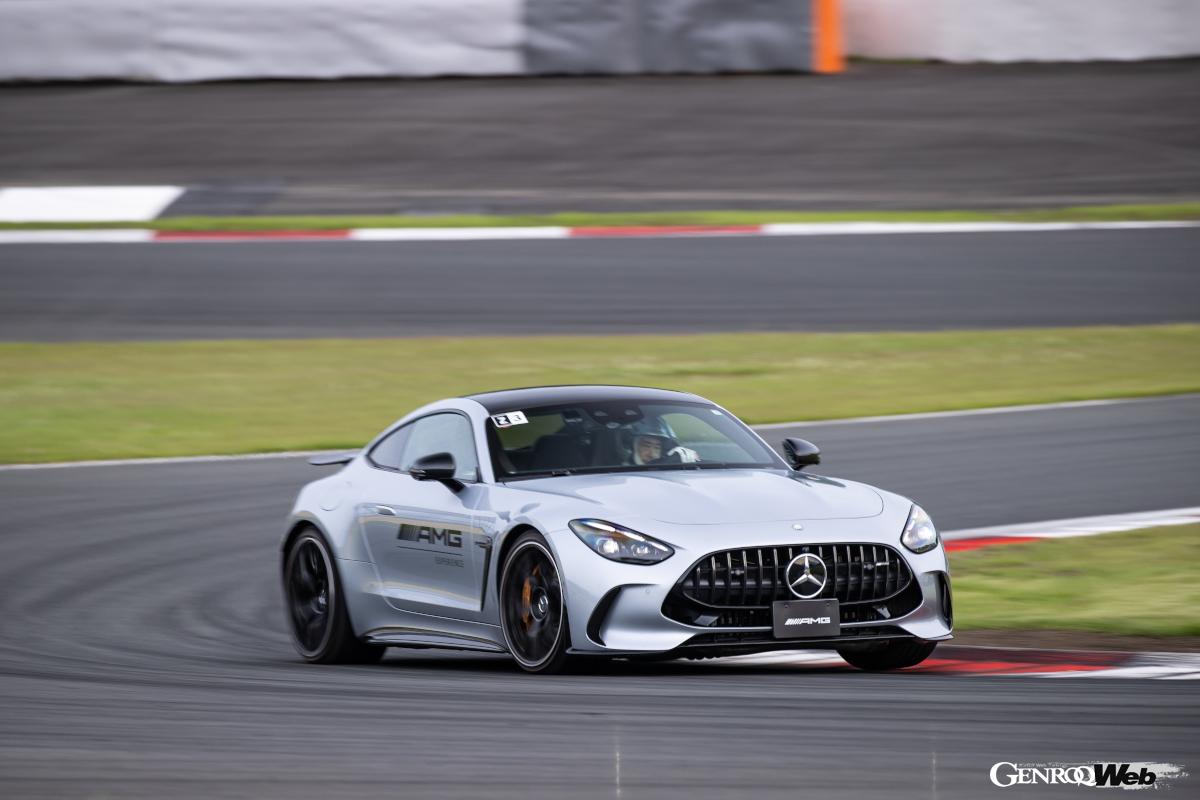
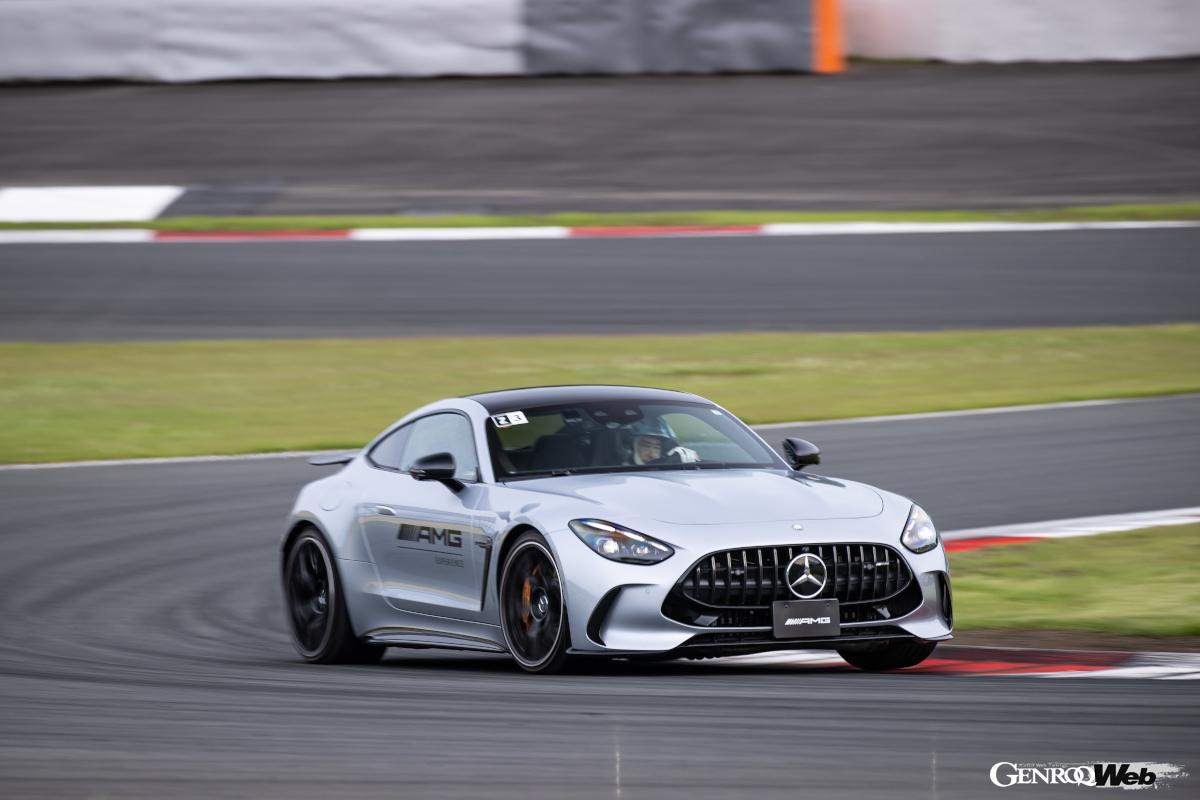
[1] The M177 type 4.0-liter V8 twin-turbo engine produces a maximum output of 612 PS and a maximum torque of 850 Nm. [2] We were also able to take a comparison test drive with the “GT 63 SE Performance.” The “GT 63 SE Performance” can be distinguished by the presence or absence of a charging lid on the right rear.
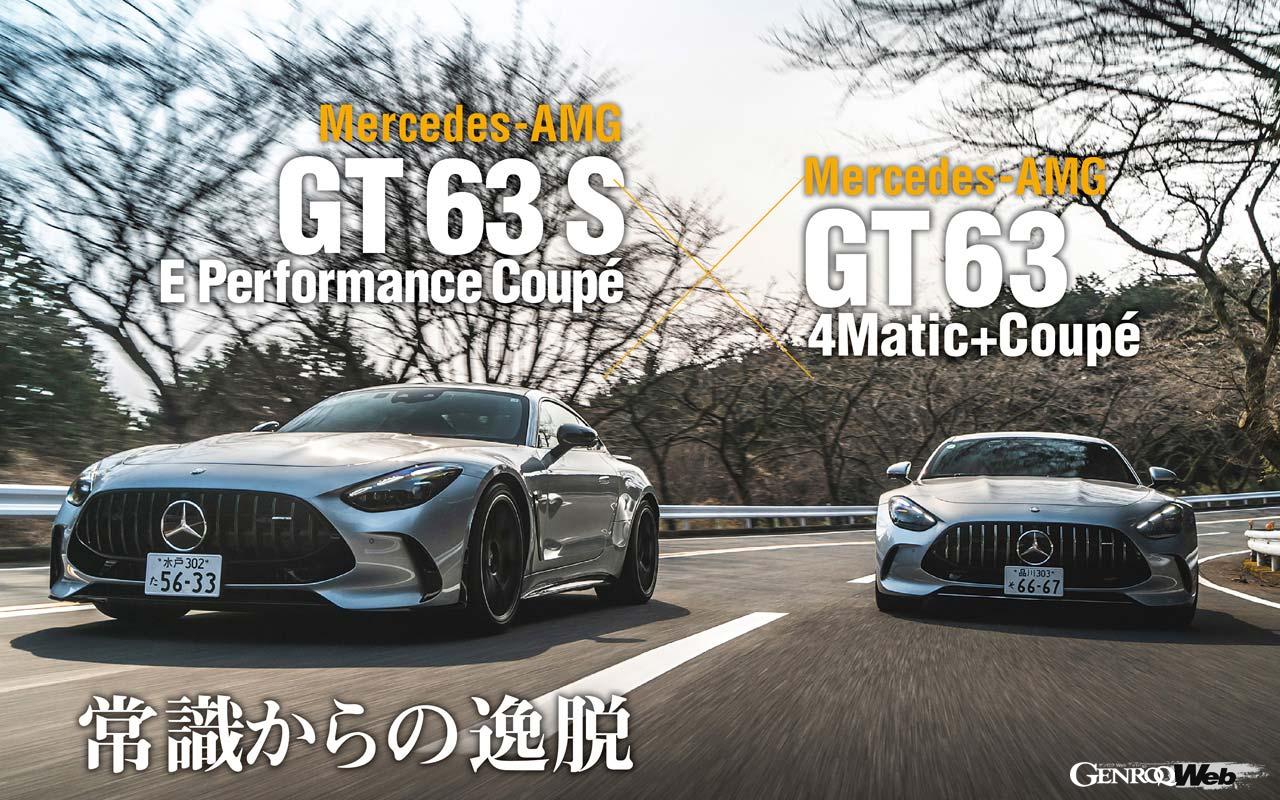
I test drove the GT 63 SE Performance, the top-of-the-line model of the second-generation Mercedes-AMG GT Coupe, at Fuji Speedway. Compared to the thoroughly stoic first-generation model, the second-generation AMG GT Coupe is sometimes thought of as a degenerate sports car, with its emphasis on comfort, AWD, and 2+2 configuration. However, based on my test drive of the early GT 63 4Matic+ at Tsukuba Circuit , I had a feeling it would still have some pretty solid performance.
The model I test drove this time is an E-Performance model, which, as the name suggests, employs a so-called plug-in hybrid architecture. The powertrain is a P3 hybrid system that combines a 4.0-liter V8 twin-turbo engine that produces a maximum output of 612 PS and a maximum torque of 850 Nm with an electric motor that produces 204 PS/320 Nm. The transmission is a 9-speed automatic that uses a wet multi-plate clutch instead of a torque converter, and the drivetrain is 4Matic+, or AWD. The overall system boasts an astonishing maximum output of 816 PS and a maximum torque of 1,420 Nm (!), achieving performance that is sure to impress even among today’s increasingly extreme supercars.
This P3 hybrid system combines instantaneous power and drive control by placing a motor in the transmission or downstream of the transmission, and shares a package with the S-Class “S 63 E Performance,” for example. The battery installed is a 6.1kWh lithium battery that allows for a maximum EV driving range of 13km, but this is not for eco-friendliness, but is purely performance-oriented.
Mercedes is truly impressive on the circuit.

[1]

[2]

[3]
[1] Sports seats that combine comfort with support for circuit use. [2] The switch layout will be familiar to anyone who has driven a Mercedes-AMG. [3] The GT 63 SE Performance that I test drove this time was equipped with a fixed rear spoiler.
I climbed into the GT 63 SE Performance car that was prepared in the pit. The cockpit, which features a design that combines digital and analog elements, known as “hyper analog” as introduced in the AMG GT, has a layout that makes it intuitive for those familiar with Mercedes cars to know where everything is. The quality of the trim is also high, and there’s no hint of a sweaty sports car.
The steering wheel is equipped with a drive mode change dial on the right spoke and various setting switches for the suspension, ESC, etc. on the left spoke, and as expected, it can be operated intuitively. There are a total of eight drive modes. In addition to the “Slippery,” “Comfort,” “Sport,” “Sport+,” “Race,” and “Individual” modes available in the GT63, ”Electric” and “Battery Hold” have been added, giving the feeling of an electric vehicle. On a circuit like today’s, “Race” would be the only option, but I first took to the course in “Sport+.”
It is equipped with a 12.3-inch digital cockpit display and an 11.9-inch vertical media display, and the latter can display lap times and sector times when you select Track Pace mode while driving on a circuit, so it is just as comprehensive on the circuit as it is on public roads. It’s a Mercedes-made car, as you’d expect.
The sound, acceleration and control are all great.

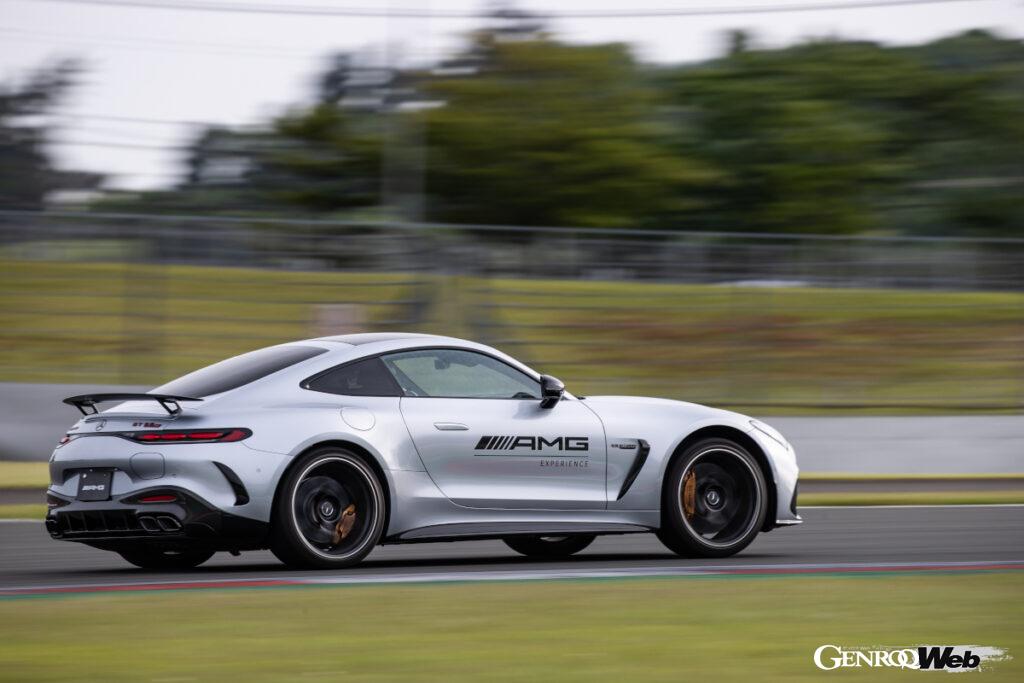
The test car was fitted with carbon ceramic brakes to help with unsprung weight and special Michelin Pilot Sport S5 wheels.
Quietly leaving the pits and going full throttle from the exit of the first corner, I was immediately able to experience the tremendous traction provided by the electronically controlled LSD and 4Matic+. The acceleration of 0-100km/h in just 2.8 seconds, along with the mixed sounds of the V8 twin turbo and the motor, exhilarated the driver. Incidentally, although this was a test drive for the media, it was a free run with no leading car. Although disabling the ESP was prohibited, this shows the high expectations Mercedes-Benz Japan has for the AMG GT flagship.
The overwhelming acceleration makes the next corner seem to close in on me, but I was also impressed by the precise control of the rear axle steering and ESP in high-speed corners like the 100R. At the same test drive, I also test drove the non-hybrid GT 63 4MATIC+, and even though the ESP mark on the meter panel flashed rapidly, there was no sudden stall and the car accelerated smoothly and reliably. However, the tail of the car drifted unexpectedly when exiting tight corners like hairpins and Dunlop Corner. The tail of the GT 63 4MATIC+ did not drift as much, so the wild horse-like behavior and rear kick-off feeling when exiting are unique characteristics of the GT 63 SE Performance, and it can be said that it is quite hard-trained.
Not only electronic controls but also aerodynamics have made a great contribution. Like the previous model, it is actively using active aerodynamics, and thanks to the air deflector at the bottom of the front that lowers by 40mm depending on the speed, it is said to be able to suppress front lift by up to 50kg. The standard rear spoiler is adjustable in five stages and can be angled up to 22 degrees to improve stability at high speeds, but the car I test drove this time was fitted with the optional fixed rear wing, but I was unable to ride a standard wing car of the same grade, so I was unable to compare it. I would like to try this if I have the opportunity.
A ride that doesn’t make you feel the weight of the car
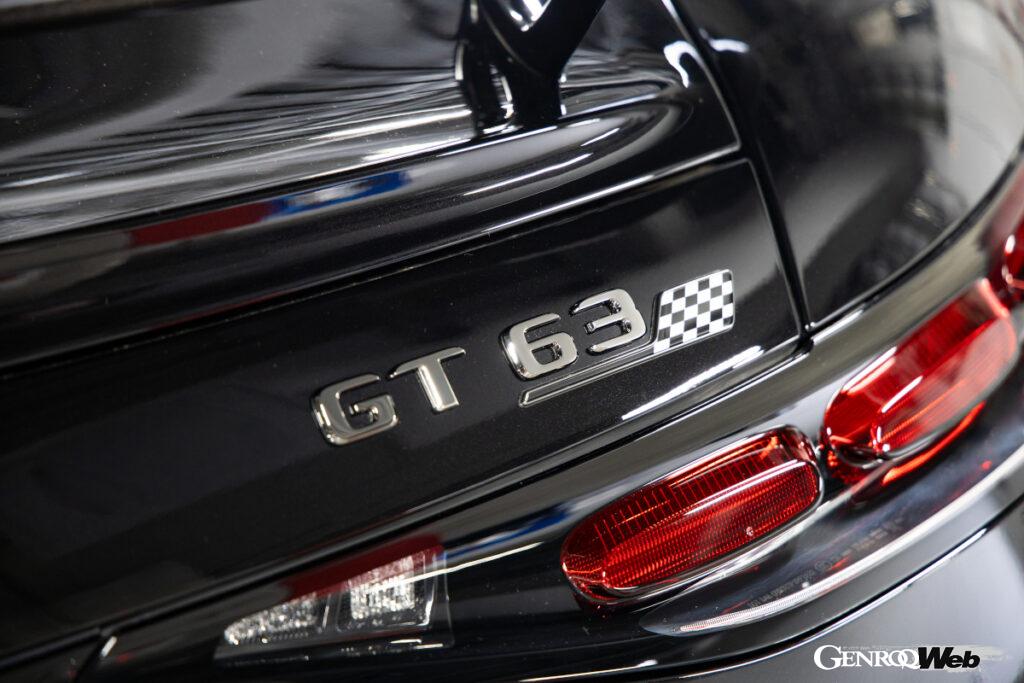


At the test drive event held at Fuji Speedway, the “GT 63 PRO 4MATIC+”, which has not yet been introduced in Japan, was also on display.
The AMG carbon ceramic brakes provided an exceptional sense of security even at the end of the straightaway, reaching speeds of 300 km/h. At 2,150 kg, the car weighs nearly 200 kg more than the non-hybrid GT 63 4Matic+. I braked comfortably past the Panasonic sign (more than 300 meters before), but speaking with other participants, it seemed like they had no problem pushing as hard as they could. While the car was about two seconds faster than the non-hybrid GT 63 4Matic+, the difference in top speed was nearly 20 km/h, so the difference was surprisingly small. Personally, I achieved a time similar to that of the Porsche 911 GT3 (992.1 model), meaning a professional could aim for a 1 minute 50 second time. Since the original GT is still active in the GT3 category, we’re looking forward to seeing the development of a GT3 machine based on this new model.
As mentioned above, the plug-in hybrid and AWD configuration make the car heavier, but after completing the circuit run, we can confidently say that it is a pure sports car with an appealing driving feel that makes you forget about its weight. AMG’s aluminum architecture, designed specifically for sports cars, skillfully inherits the pure FR sports car image of the previous model, while also increasing practicality with the option of a 2+2 seating layout. Above all, it doesn’t sacrifice luxury.
It looks like a luxury coupe, and its interior is also sophisticated, but when you change the mode on the circuit, it transforms into a beast baring its fangs. The Mercedes-AMG GT 63 SE Performance is a car worthy of being called a modern “intelligent super sports car,” surprisingly capable of driving at will despite its heavy weight.
PHOTO/AKio HIRANO, Mercedes-Benz Japan
SPECIFICATIONS
Mercedes-AMG GT 63 SE Performance
Body size: Length 4730, Width 1985, Height 1355mm
Wheelbase: 2700mm
Vehicle weight: 2150kg
Engine type: V8 DOHC twin turbo
engine Total displacement: 3982cc
Maximum engine output: 450kW (612PS) / 5750-6500rpm
Maximum engine torque: 850Nm / 2500-4500rpm
Motor type: AC synchronous
motor Maximum output: 150kW (204PS) / 4500-8500rpm
Maximum motor torque: 320Nm / 500-4500rpm
Maximum system output: 600kW (816PS)
Maximum system torque: 1420Nm
Transmission: 9-speed AT
Drive system: AWD
Suspension: Front and rear multi-link
Brakes: Front and rear ventilated disc
Tire size: Front 295/35R20, Rear 305/30ZR21
Vehicle price: 30.85 million yen










![Test drive of Land Rover’s latest off-roader, the Defender Octa, on a dirt course [Video]](https://wheelfeed.com/wp-content/uploads/2025/08/1270-1761529533682.jpg)