

Lamborghini Centro Stile
Lamborghini design continues to evolve
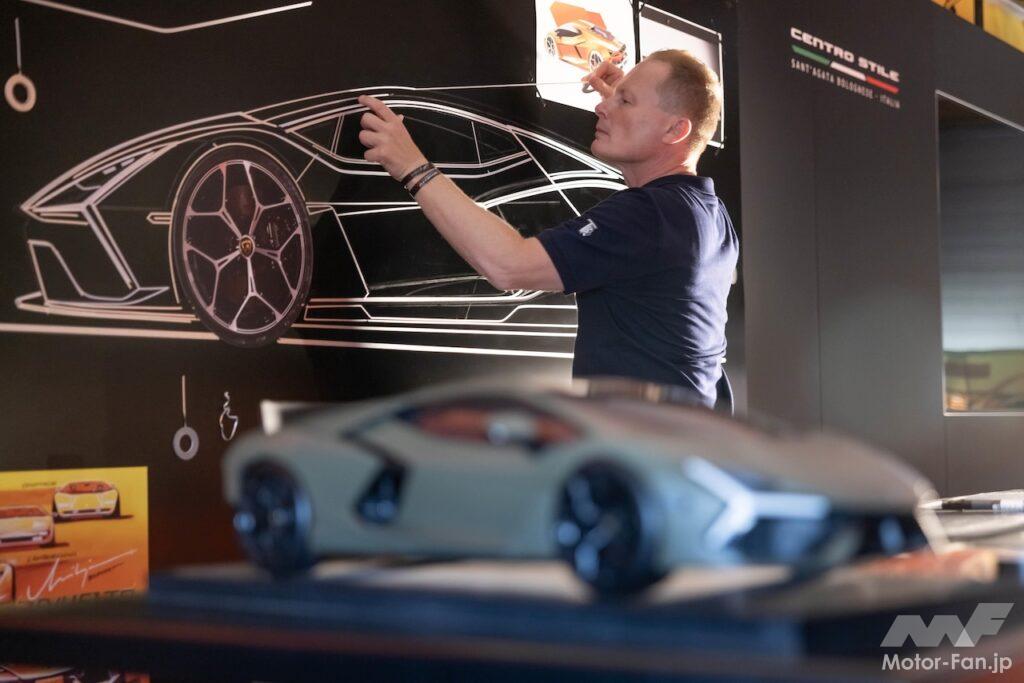
Lamborghini, which launched its own design department in the 2000s, is not only actively involved in commercial models and concept cars, but also in collaborations with other fields. The photo shows Mitya Borkert, who currently heads Lamborghini’s design department.
October 2025 marks the 20th anniversary of the Lamborghini Centro Stile. The creation of an in-house design department marked a major turning point in the history of Lamborghini. From that moment on, all new super sports cars, derivatives, innovative concept cars, special editions and limited-edition vehicles will be created under the direction of the in-house design department, which will continue to create new works well into the future.
Stephan Winkelmann, Chairman and CEO of Automobili Lamborghini, commented on the significance of the Centro Stile:
“Lamborghini Centro Stile is one of the driving forces behind our brand. For the past 20 years, Lamborghini design has not only been about creating mass-produced super sports cars, but has also been about constantly creating new surprises.”
“From concept cars to limited editions, we have broken new ground and made Lamborghini attractive as a collector’s item. I believe design is the foundation of everything. Furthermore, Centro Stile extends Lamborghini’s design DNA beyond the automotive world through collaborations with partners in other fields such as yachting, audio, architecture and fashion.”
Systematizing Lamborghini-like design

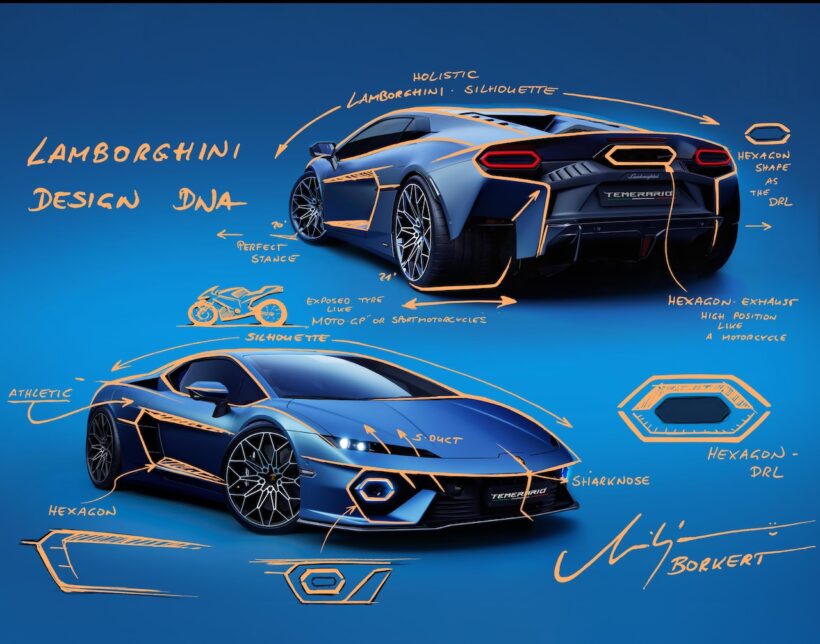
The “Lamborghini-esque design” established with the Countach has been systematized by the Centro Stile and is incorporated into current models.
Founder Ferruccio Lamborghini understood the importance of exterior design in Gran Turismo as early as 1963. He commissioned Franco Scaglione to design the first prototype, the 350 GTV, and entrusted the first mass-produced models, the 350 GT and 400 GT, to Milan’s Carrozzeria Touring. While the
Miura, designed by Bertone in 1966, featured soft curves, the Marzal prototype, which appeared in 1967, introduced wedge shapes and hexagonal motifs. The stunning Countach of 1971 established Lamborghini’s iconic silhouette under the direction of Marcello Gandini.
This gave birth to a design culture within the Lamborghini brand, which would later be further developed by the Centro Stile. Mitya Borkert, Lamborghini Design Director, explained the process as follows:
“It has been 20 years since the Centro Stile was founded. A Lamborghini super sports car is the fusion of performance engineering and design. Only when these two are combined can it be a true Lamborghini. If R&D is in-house, then design should be too. Over the past 20 years, the Centro Stile has systematized Lamborghini’s design DNA, architecture and functionality, defining it as the brand’s genetic material.”
In-house design developed under Audi
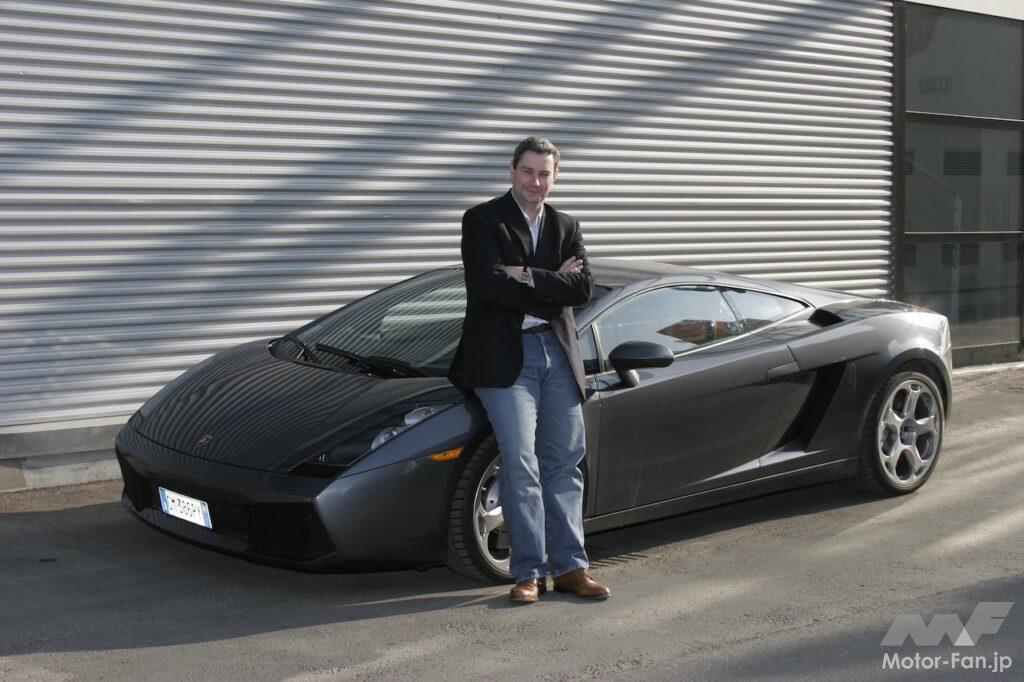
Belgian designer Luuk Donckerwolke ushered in the era of in-house design at Lamborghini.
The 1980s saw the company lay the groundwork for its own in-house design department, with the 1981 Jalpa, based on the Urraco, and the 1986 LM002 designed by then-Technical Director Giulio Alfieri. Later, during the Chrysler era, the Diablo replaced the wedge shape with more modern, rounded proportions. In 1998, Audi acquired Lamborghini, marking the start of the establishment of a full-fledged in-house design department.
That same year, Luuk Donckerwolke joined Lamborghini from Audi as project manager, and in 2003 became head of the design department. A native of Belgium, Donckerwolke oversaw the design of the final Diablo, as well as the 2002 Murcielago and the 2004 Gallardo. His passionate and emotive approach established a more modern, muscular design language and a pure, taut surface structure that defined the Lamborghini identity.
“The Murciélago marked a major leap forward for Lamborghini in terms of design. When I first saw the Murciélago at the Geneva Motor Show, I instantly felt the emotion and presence of Lamborghini. It embodied the principle of ‘form follows function’ and ushered in a new era as the V12 flagship,” recalls Borkert.
Centro Stile began operations in 2005

In 2005, Centro Stile was launched, producing a number of ambitious designs, including the Murciélago-based Reventon, which became the precursor to subsequent low-volume production models.
In 2003, at the suggestion of Walter de Silva, then head of design at Audi, the decision was made to establish Lamborghini’s first in-house design center. This was a measure that embodied de Silva’s vision of preserving Lamborghini’s DNA while ensuring creative independence and a long-term design strategy.
In early 2005, Stephan Winkelmann became CEO and took on the role of integrating design, R&D, and brand strategy. In late 2005, the Centro Stile officially began operations.
“This was the beginning of an explosive era of innovation. The launch of Centro Stile enabled designers to think strategically and creatively as a team, working extremely closely with other departments,” says Borkert.
In 2006, Italian designer Filippo Perini was appointed head of Centro Stile, and under his direction, the Murciélago LP640, Gallardo Spyder, Gallardo Superleggera, and Gallardo Spyder Performante were among the models introduced.
Numerous design projects also emerged. The 2007 Reventon was the first limited edition car based on the Murcielago, offering completely new design and performance. Featuring sharp lines and a hexagonal, Y-shaped design inspired by aircraft, the Reventon became the starting point for subsequent limited edition and custom models.
Lamborghini design continues to evolve
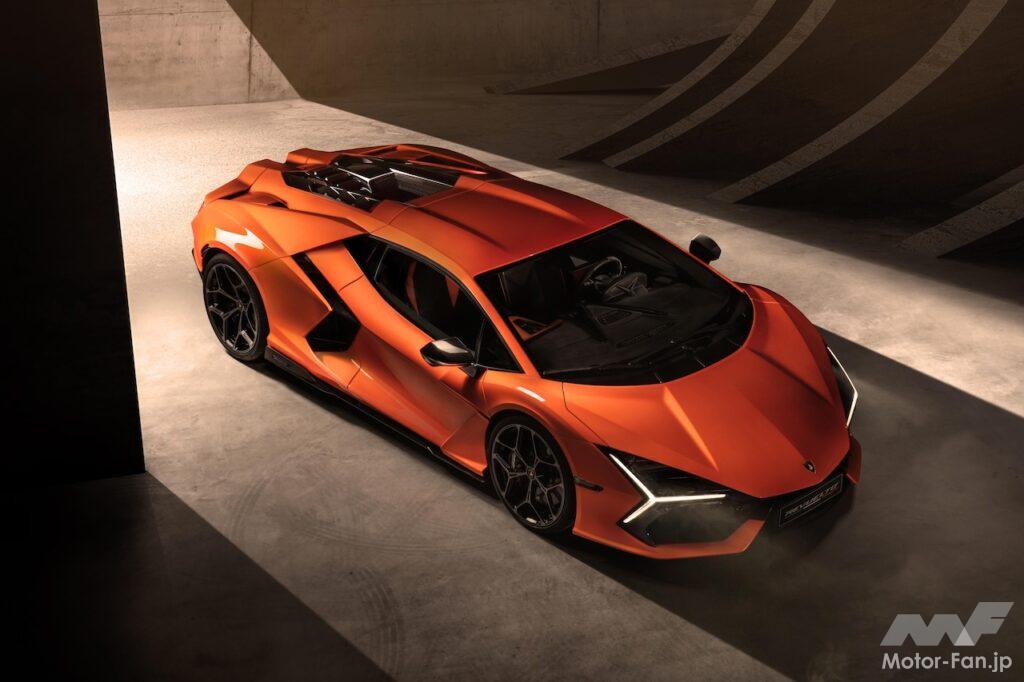
The latest flagship, the Revuelto, will debut in 2023. Even in the era of electrification, Lamborghini continues to pursue a design that is characteristic of Lamborghini.
The 2011 Aventador was the first fully in-house designed V12 flagship and a major step forward for Lamborghini’s design language. The Urus Concept, which served as the basis for the company’s first SUV, followed in 2012 with the Gallardo successor, the Huracan, in 2013.
Furthermore, Centro Stile continues to take on multifaceted challenges in areas such as lightweight materials, aerodynamics, and hybrid technology, with the launch of the Sesto Elemento in 2010, the Veneno in 2013, and the Asterion in 2014.
“Concept cars and limited edition models are an opportunity for the design team to unleash their imagination to the fullest. For example, the roofline of the Aventador was inspired by beetle wings. Hexagons, honeycomb structures and powerful fighter jet-like shapes still characterise Lamborghini,” explains Borkert.
In 2016, Mitija Borkert, who came from Porsche, took over the design department, doubling the studio’s size to 25. He worked on the Aventador S/Aventador SVJ, the Huracán Performante, and in 2017 completed the design of the production version of the Urus.
In 2017, Lamborghini unveiled the Terzo Millennio electric concept, developed in collaboration with MIT (Massachusetts Institute of Technology). The Sián, Countach LPI 800-4, and the 2023 Revuelto heralded the arrival of the hybrid era for Lamborghini.
“Revelto is the first model we have designed from scratch, with a very pure and iconic design language. It has a silhouette that is instantly recognizable as a Lamborghini, while opening the door to the future with its smooth surfaces and taut lines,” says Borkert proudly.
In the summer of 2025, the V12 hybrid “Fenomeno” will be unveiled to commemorate the 20th anniversary of the founding of Centro Stile. Borkert concluded his thoughts on the future of Centro Stile by saying,
“As Lamborghini’s design director, you need a vision. We don’t follow trends, we create them. Despite our differences in nationality and culture, we are all united by our passion and dedication to the Lamborghini brand. It is rare to find a brand that has both inherited a design heritage spanning more than 60 years and a vision for the future. It is in this blessed environment that we at Centro Stile have celebrated our 20th anniversary.”











![The avant-garde virtual project “Ferrari F76” pays homage to the first Le Mans-winning car [VIDEO]](https://wheelfeed.com/wp-content/uploads/2025/10/4616-1762127942073.jpg)