

MERCEDES-BENZ GLB
A new design language for sophisticated design

[1]

[2]
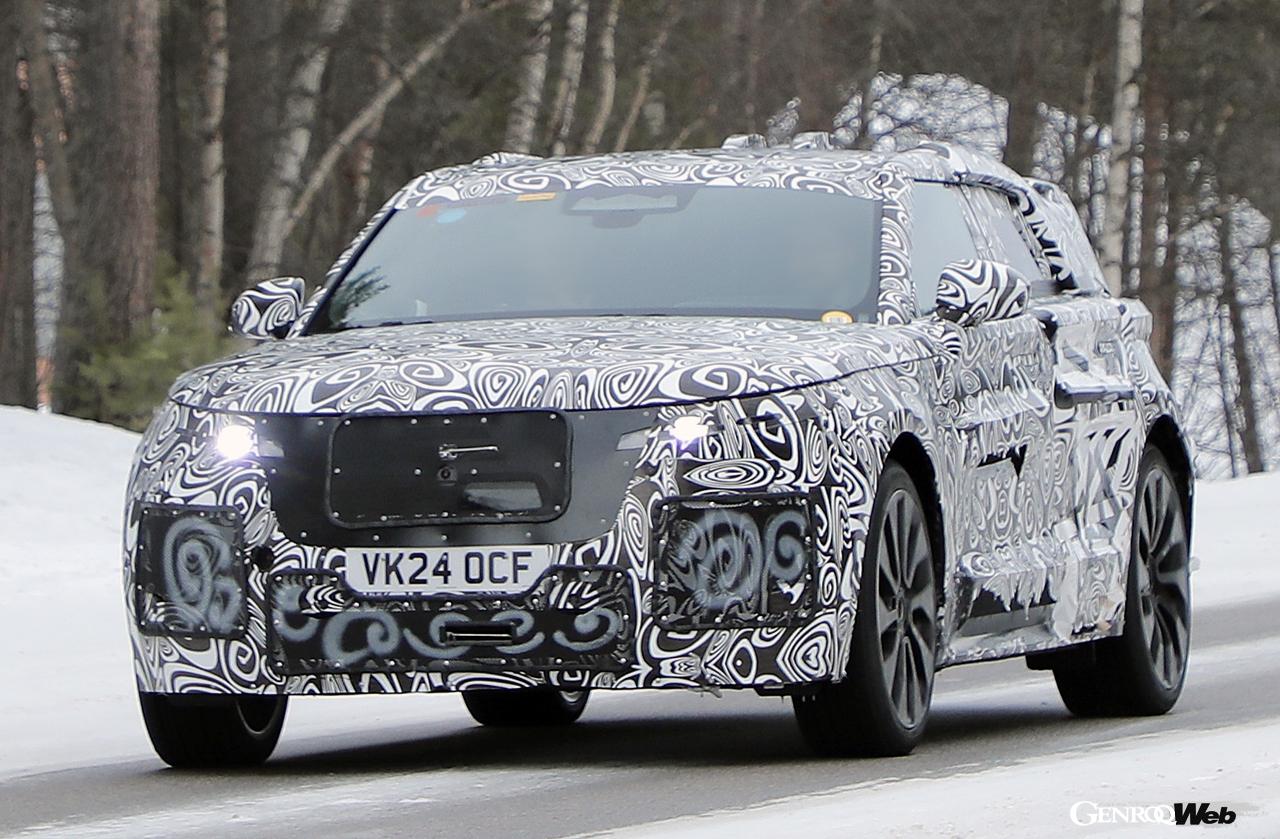
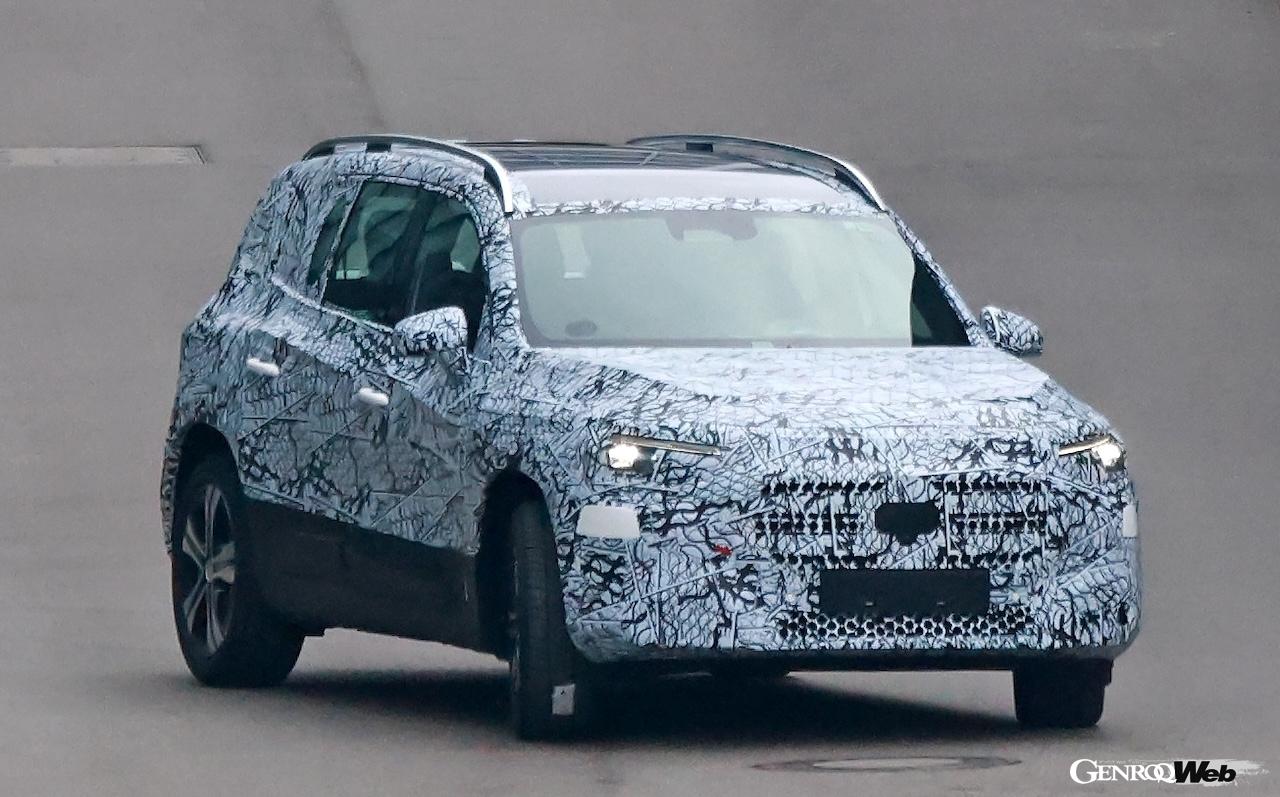
[1] A heavily camouflaged Mercedes-Benz GLB prototype. [2] The taillights were disguised with dummy stickers similar to those on the Smart Fortwo.
The prototype being driven at the Mercedes-Benz test facility is fully camouflaged, so details are unclear, but based on the overall body proportions, it is safe to assume that this is not the hatchback GLA, but the successor to the three-row Mercedes-Benz GLB.
While inheriting the boxy style of the current GLB, the corners have been rounded. The front end has slim LED lights on both sides of the large grille. It seems to have adopted Mercedes’ new design language and has a sophisticated design.
The rear section is completely guarded, camouflaged with dummy stickers that resemble the taillights of the nostalgic Smart Fortwo, making it impossible to see the details.
Three types of engines are mild hybrid

[3]

[4]
[3] The powertrain and platform will likely be shared with the next-generation CLA compact sedan. [4] The second-generation GLB could be released as early as late next year.
All future Mercedes compact models will use the MMA (Mercedes Modular Architecture) platform, which is compatible with both ICE and fully electric powertrains.
The powertrain is expected to be shared with the next-generation CLA. It will be equipped with a 1.5-liter inline-four turbo gasoline engine and a mild hybrid system with a small motor built into an 8-speed DCT. Three engine options will be available: 136 PS, 163 PS, and 190 PS, with the motor adding 27 PS.
Like the current GLB, it will be available in front-wheel drive (FWD) and all-wheel drive (AWD), and the AMG High Performance version is expected to feature hybrid assistance to boost power and efficiency.
The world premiere of the next-generation GLB is expected to take place between late 2025 and the first quarter of 2026.











![Will the Mercedes-Benz C-Class Station Wagon undergo a minor change next year? [Scoop!]](https://wheelfeed.com/wp-content/uploads/2025/04/2057-1761193250561.jpg)