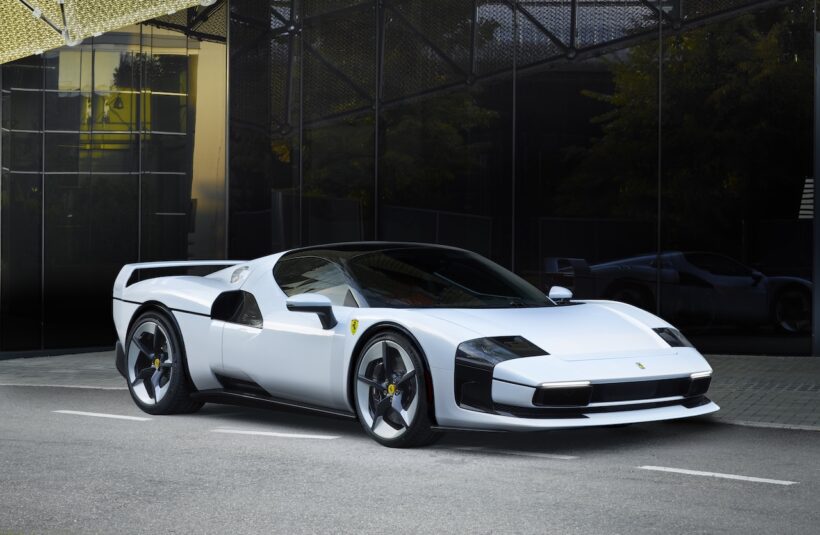


Ferrari 849 Testarossa
“Red head” in Italian
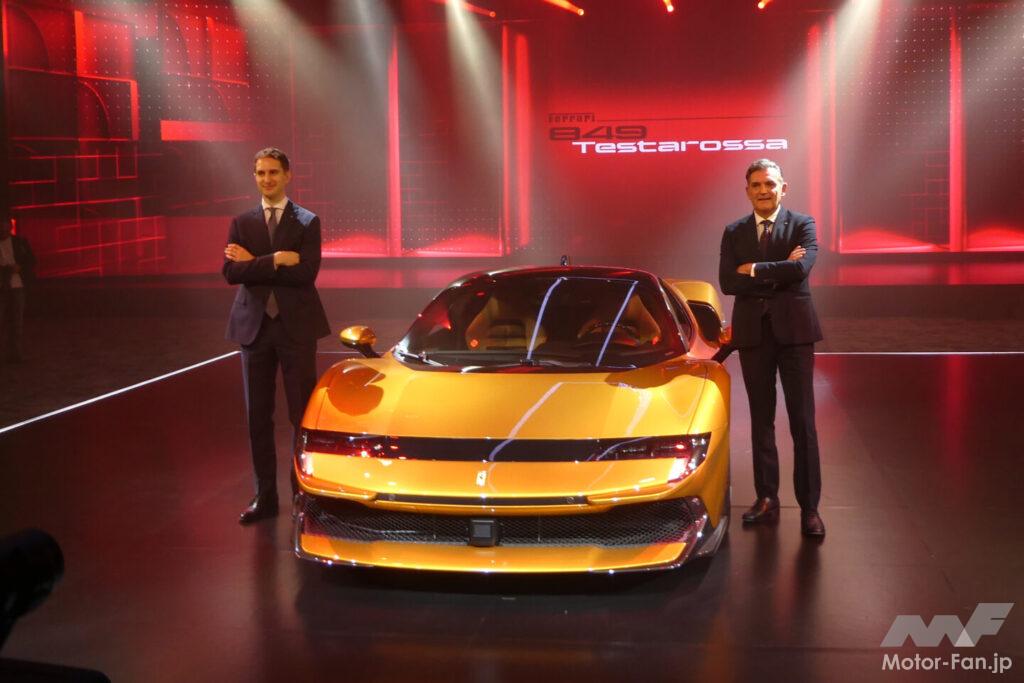
Ferrari Japan President and CEO Donato Romaniello (right) and Product Marketing Manager Marco Spessotto, who visited Japan from Maranello, Italy.
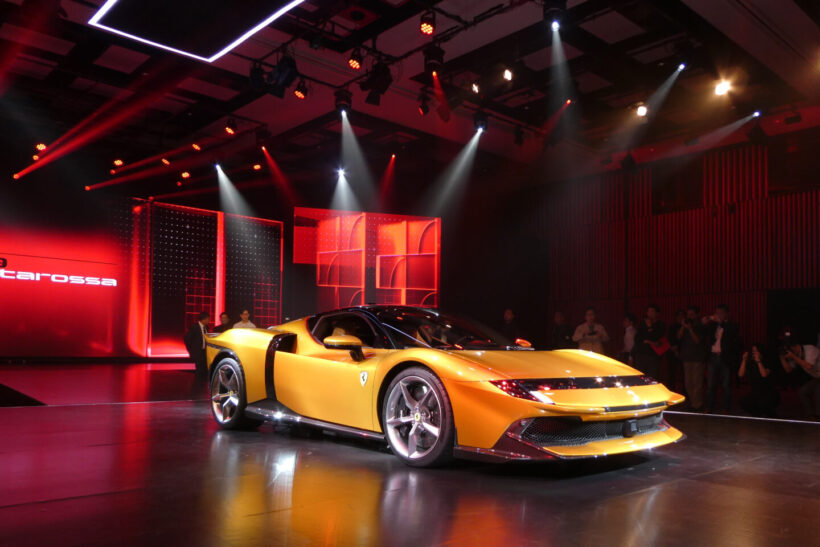
Following its Japan premiere in July at the Amalfi show, the new flagship model at the top of the Ferrari lineup, the Ferrari 849 Testarossa, has already been unveiled in Japan. This plug-in hybrid super sports car, the successor to the SF90 Stradale, has been given the name “Testa Rossa.”
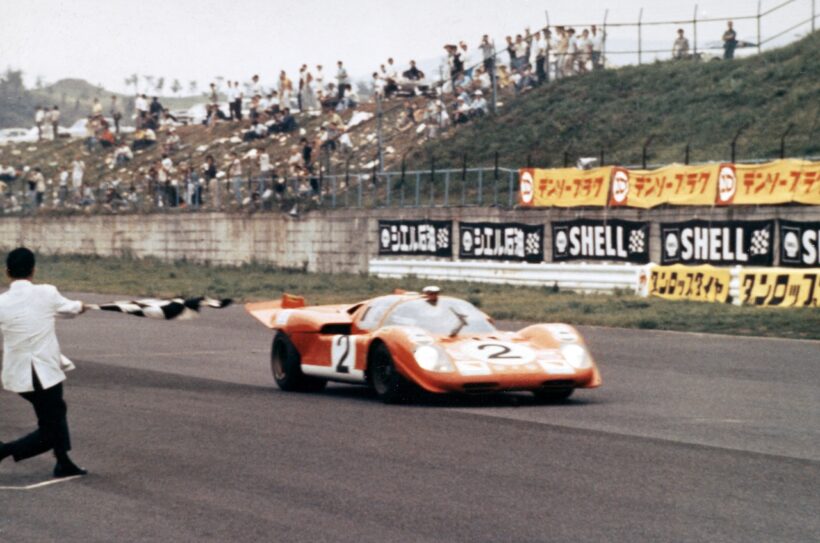
In Japan, the V12 mid-engine road car “Testarossa,” which debuted at the 1984 Paris Salon, is well known, but the name was first used in a car name back in 1956 on the “500TR.” The name means “red head” in Italian, and red represents the color of the cam covers of Ferrari’s top-notch high-performance racing engines.
The plug-in hybrid system is similar to the SF90, with a 4.0-liter V8 twin-turbo engine mounted in the rear mid-mounted and three electric motors, but with the engine producing 830 PS and the three motors producing 220 PS, the maximum output is 1050 PS, a 50 PS increase. The circuit-oriented SF90 XX Stradale produced 1030 PS (797 PS engine and 233 PS motor), but this is 20 PS higher. Two motors are located in the front and one in the rear, and the drive system is AWD.
Technology inherited from motorsports
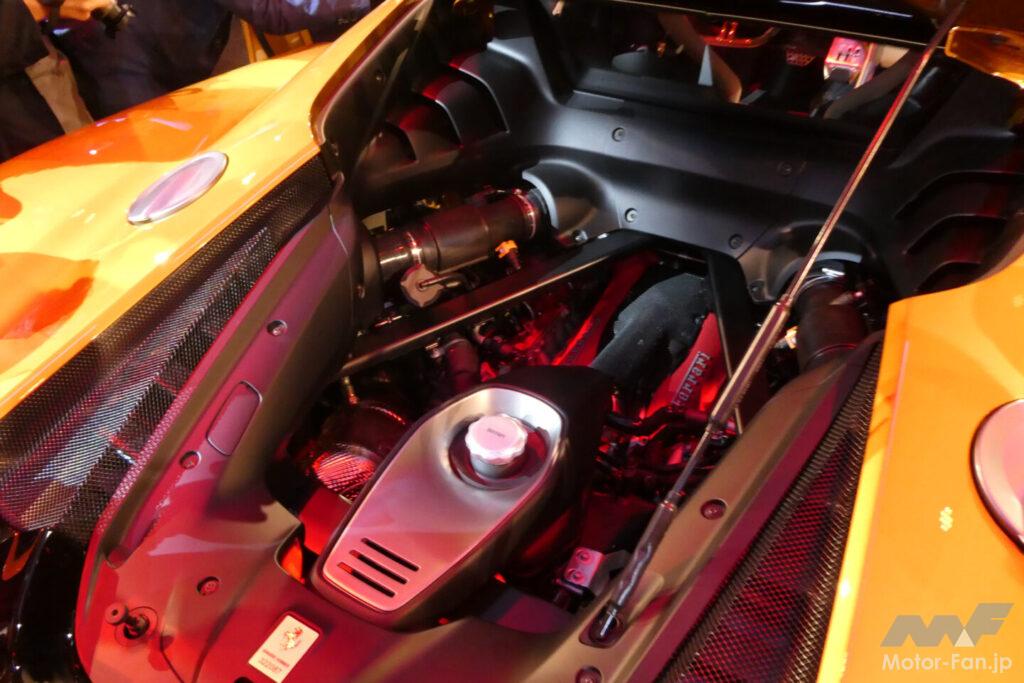
F154FC type 4.0 liter V8 twin turbo.
The F154FC 4.0-liter V8 twin-turbo engine, part of the International Engine of the Year award-winning engine family, has been thoroughly refined, producing a maximum output of 830 PS, an increase of 50 PS. While the engine displacement remains the same, the cylinder head, engine block, exhaust manifold, intake plenum, titanium portholes, valvetrain system, and fuel rail have all been redesigned.
The large turbocharger is taken from the F80 Speciale, which was announced last year, and the heat management and other technologies are taken from the 296 GT3 racing car. The compressor wheel and turbine have been optimized in terms of materials and aerodynamics, minimizing turbo lag and maintaining sharp engine response.
Introducing the ABS Evo controller
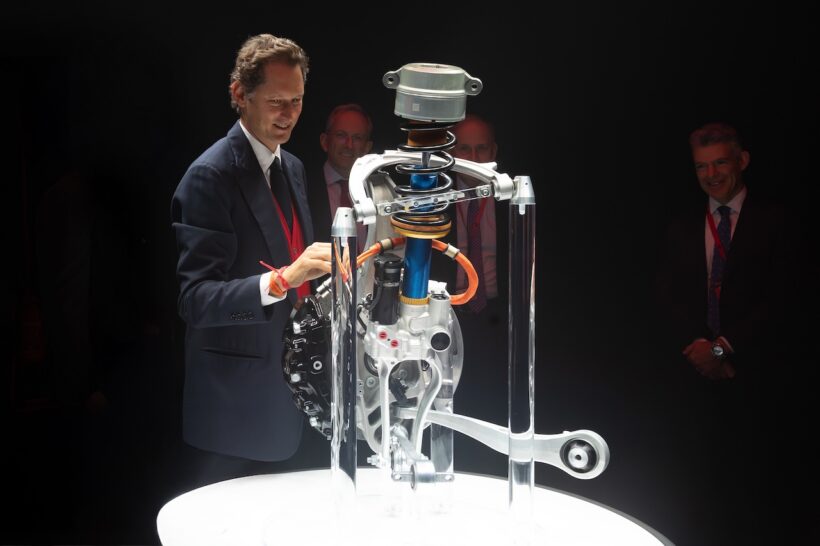
The hybrid system, which combines a V8 engine with three electric motors, uses the SF90’s PHEV architecture. Two of the motors are mounted on the front axle and form the “RAC-e (Electronic Cornering Setup Regulator)” system, which maximizes traction and efficiency when exiting corners. The SF90 has proven that torque vectoring using the front motors ensures maximum performance in all road conditions.
To enhance driver feedback at the limit and deliver superior driving dynamics, the latest generation brake-by-wire system has been supplemented with the ABS Evo Controller, which improves braking precision and stability in all road conditions.
The lithium-ion battery, located in the center of the chassis for optimal weight distribution, has the same capacity of 7.45 kWh as the SF90, and the EV driving range is also the same as the SF90, at 25 km. In recent years, the battery performance of PHEV super sports cars has varied, but Ferrari has chosen the same specifications as the previous model, balancing energy, weight, and EV driving range. Furthermore, regenerative control during braking has also been improved, resulting in improved pedal feel and a smoother, more effective pedal stroke.
Derived from aircraft and 1970s sports prototypes
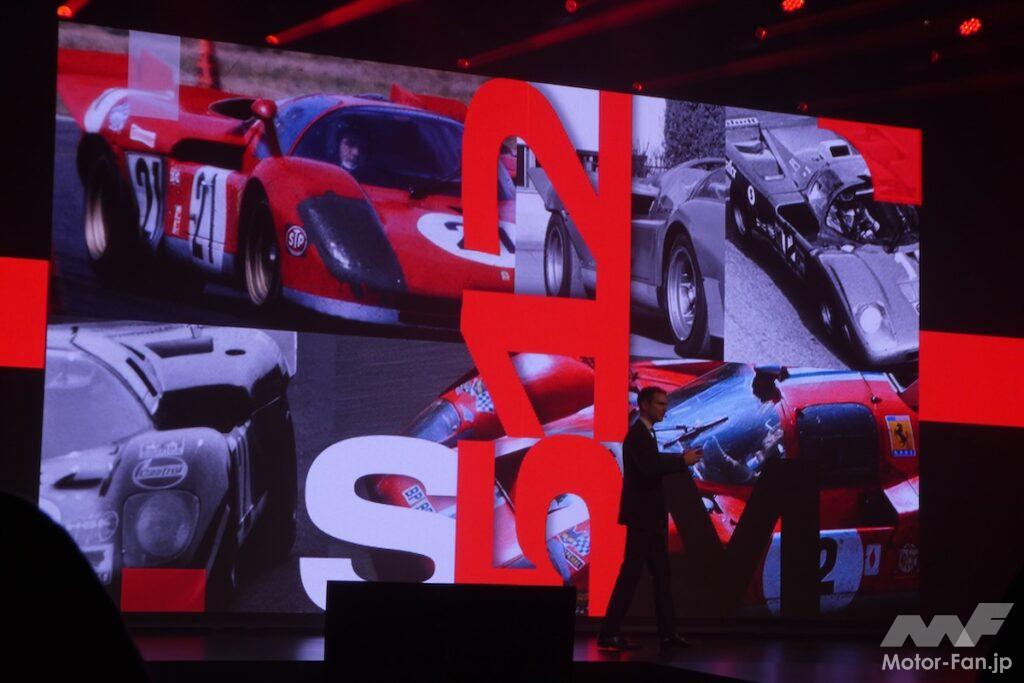

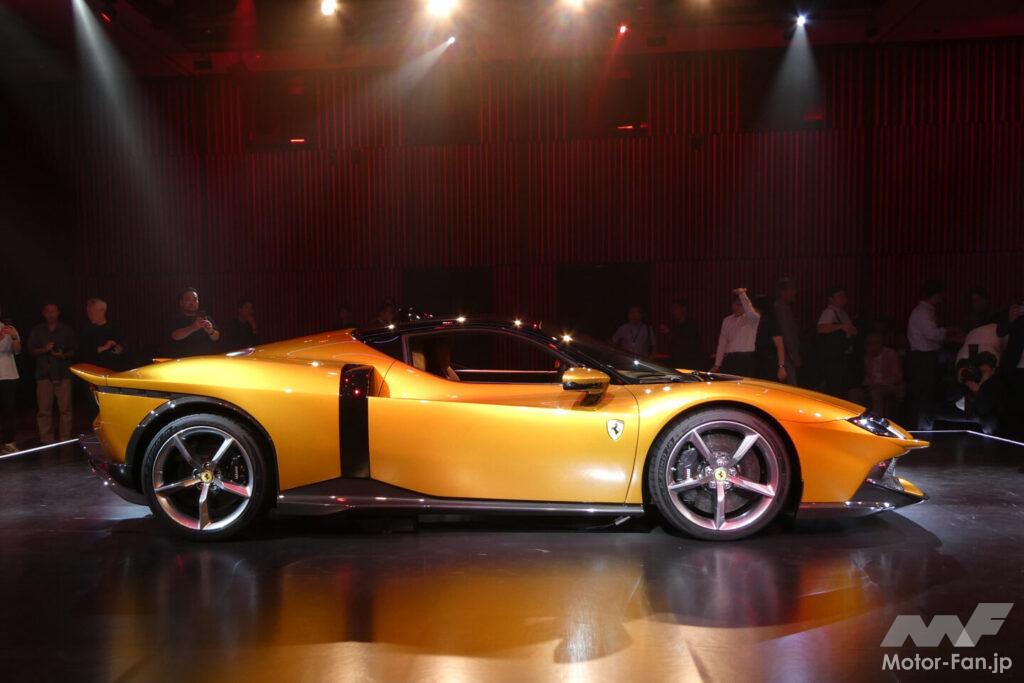
The design was, of course, handled by the Ferrari Styling Centre, led by Flavio Manzoni. The exterior evokes the latest design language since the 12 Chilindori, with vertical and horizontal lines that are said to be derived from aircraft and sports prototypes from the 1970s.
The front section is reminiscent of Ferraris from the 1980s, and the lower part of the bumper is accentuated with body-colored flics and a black splitter, emphasizing the unique character of the 849 Testarossa, which places emphasis on technology and aerodynamics.
The rear section, which incorporates twin tails and a movable rear wing, pays homage to the 512S, and features the iconic round tailpipe in the center.
A room that combines digital and analog


The interior features the same dual cockpit design as the Amalfi, a berlinetta layout with a horizontal dashboard, and elements of a single-seater cockpit. The dashboard appears to be floating, with U-shaped air vents set into an aluminum frame.
The main controls and passenger screen are located between the top and bottom of the dashboard. The lower part of the dashboard is designed with a ship’s sail motif, and the shift gate, similar to that of the F80, is positioned as if it were floating.
The steering wheel combines digital and analogue functionality, retaining the physical controls from the F80, including the iconic engine start button, while a new digital cluster allows for quick changes to the hybrid mode, known as the E-Manettino.
Asset Fiorano equipped with front lifter

The Assetto Fiorano option, which is designed for track use, is also available. The front section is fitted with larger Fliks, and a pair of vortex generators has been added to the front underbody, ensuring perfect aerodynamic balance, especially when driving on a circuit.
The rear section replaces the twin tail with a twin wing. The spoiler with a large angle of attack is equipped with vertical end plates on both sides. The twin wings increase vertical downforce three times that of the twin tail without increasing drag.
The suspension employs stiffer single-rate Multimatic shock absorbers, resulting in a 35% lighter spring and a 10% lower roll rate. Front lifters are also available, a first for the Assetto Fiorano.
Deliveries of the Berlinetta will begin in the second quarter of 2026, and the Spider in the third quarter of 2026, with each model arriving in the Japanese market about six months later.
Vehicle price
849 Testarossa 64,650,000 yen
849 Testarossa Spider 70,270,000 yen
+ Asset Fiorano 6,027,000 yen (estimated price)
Specifications
Ferrari 849 Testarossa
Body size = Total length 4718, total width 2304, total height 1225mm,
wheelbase = 2650mm,
vehicle weight = 1570kg (Dry)
, tire size = 265/35R20 (front), 325/30R20 (rear),
engine type = V8 twin turbo,
displacement = 3990cc
, engine maximum output = 830PS / 7500rpm
, engine maximum torque = 842Nm / 6500rpm
, motor maximum output = 220PS,
system maximum output = 1050PS,
EV driving range = 25km,
transmission = 8-speed DCT,
drive system = AWD,
top speed = 330km/h,
0-100km/h acceleration = 2.3 seconds,
0-200km/h acceleration = 6.35 seconds,
100-0km/h = 28.5m,
200-0km/h = 108.0m,
Fiorano lap time = 1 minute 17 seconds 500