
![Ferrari 849 Testarossa, equipped with a V8 hybrid with a maximum output of 1,050 horsepower, makes its world premiere [Video]](https://wheelfeed.com/wp-content/uploads/2025/09/1214-1761528451407.jpg)

Ferrari 849 Testarossa
The legendary car name “Testarossa” is back
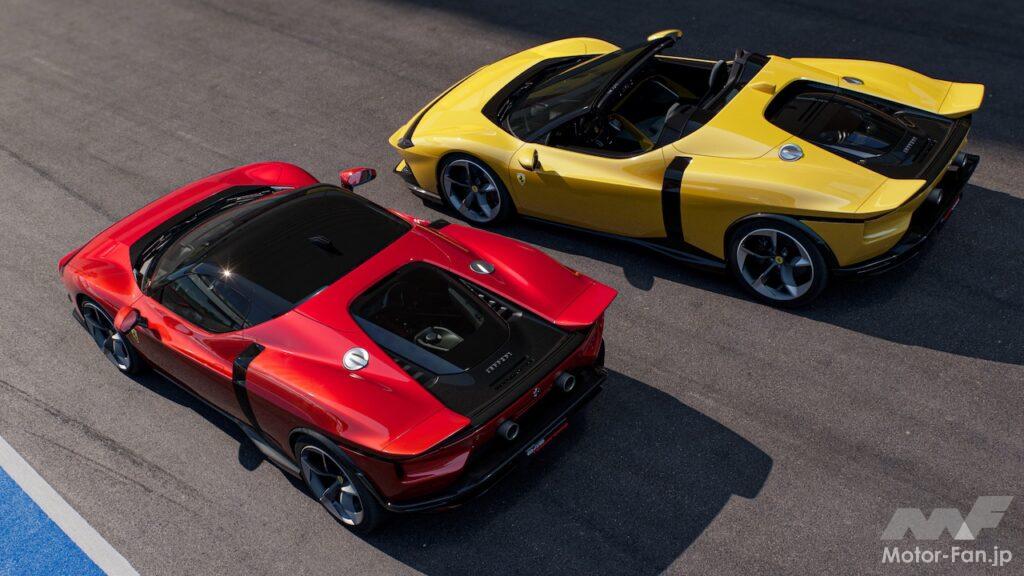
Ferrari has revived the “Testarossa” name for its new plug-in hybrid super sports car, which reigns at the top of its lineup.
The Ferrari 849 Testarossa and 849 Testarossa Spider are plug-in hybrid super sports cars that combine a rear-mounted 4.0-liter V8 twin-turbo engine with three electric motors. The engine alone delivers a maximum output of 1,050 PS, a 50 PS increase over the previous model, the SF90 Stradale.
The 849 Testarossa is the flagship model at the top of the lineup. It offers driving performance that inspires the driver without sacrificing ride comfort or a sophisticated interior, and a futuristic yet historically homage-worthy design. This time, Ferrari has revived the legendary car name “Testa Rossa.”
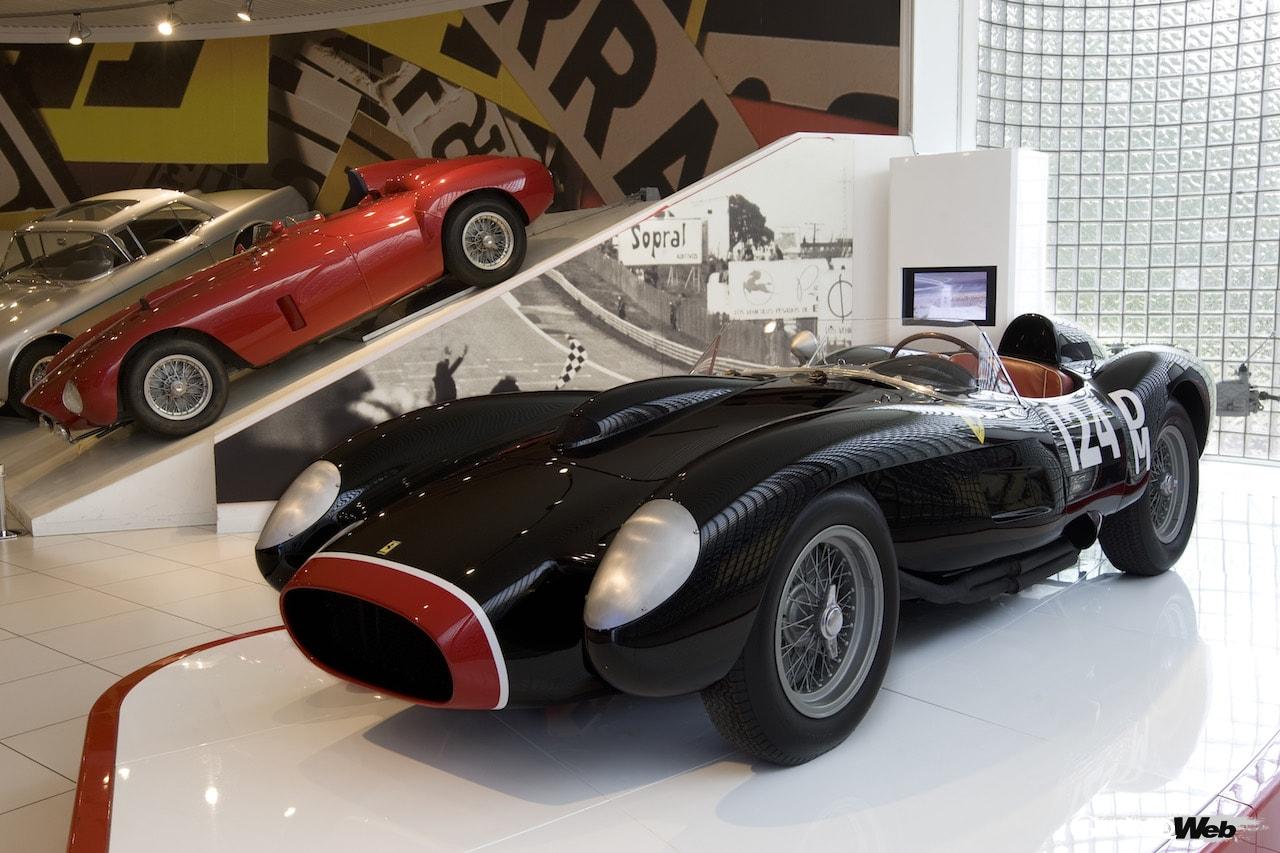
The name Testarossa, meaning “red head,” was first used on the 500TR in 1956, to refer to the color of the cam covers of one of Ferrari’s most high-performance racing engines. The V12-engine Testarossa then debuted in 1984, becoming one of Ferrari’s most iconic road-going super sports cars.
At the heart of the 849 Testarossa is a 4.0-liter twin-turbo V8 engine from the International Engine of the Year award-winning engine family. It has been completely redesigned to deliver a maximum output of 830 PS. The advanced plug-in hybrid system employs two electric motors in the front and one in the rear, delivering a pure output of 220 PS.
The on-demand all-wheel drive system and torque vectoring ensure maximum performance on any road surface. To enhance driver feedback at the limit and enhance driving dynamics, the latest generation brake-by-wire system is complemented by the ABS Evo Controller.
This improves braking precision and stability on all road surfaces, and thanks to weight reductions across a wide range of components, the car weighs the same as the SF90 Stradale, giving it the best power-to-weight ratio in the history of Ferrari’s lineup.
PHEV system evolved from the SF90 Stradale
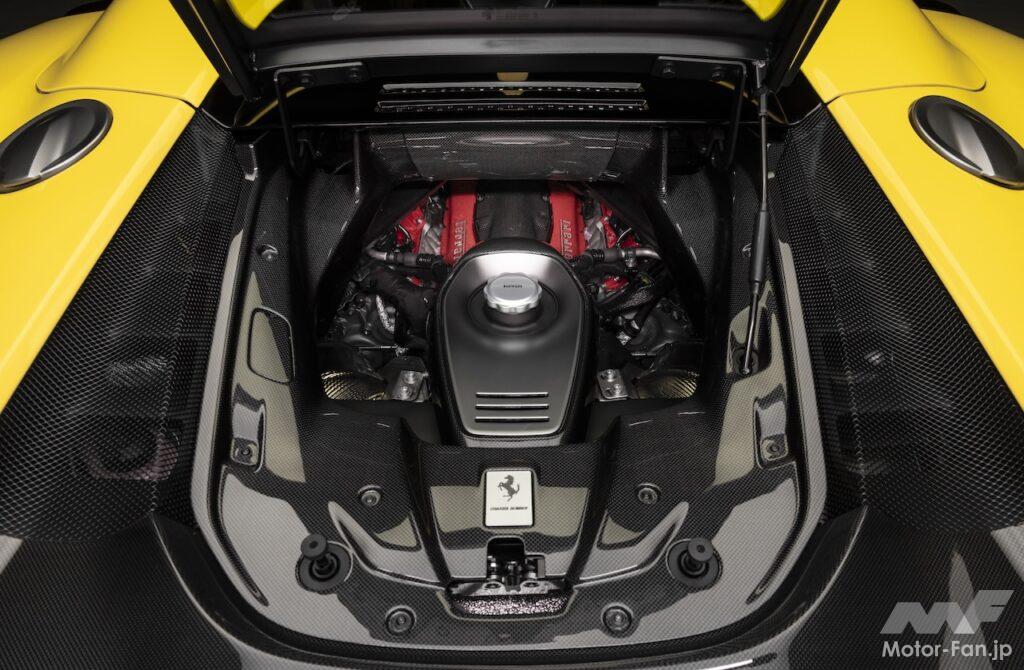
The PHEV system, an evolution of the SF90 Stradale, combines a 4.0-liter V8 twin-turbo engine with three electric motors, delivering a maximum system output of 1,050 PS.
The plug-in hybrid (PHEV) system installed in the 849 Testarossa is comprised of a 4.0-liter V8 “F154FC” twin-turbo engine that produces 830 PS, three electric motors that produce 220 PS each, a high-voltage lithium-ion battery, and a high-performance inverter. It boasts a maximum system output of 1,050 PS, the highest in the history of Ferrari production models.
While the engine’s displacement remains the same, the cylinder head, engine block, exhaust manifold, intake plenum, titanium portholes, valvetrain system, and fuel rails have been redesigned. A new, larger turbocharger uses low-friction bearings derived from the F80. The heat shields from the 296 GT3 have been installed in the turbine case, optimizing engine bay heat management.
The compressor wheel and turbine have been optimised in terms of materials and aerodynamics, and the calibration strategy has been refined. This minimises turbo lag and keeps the engine sharply responsive. To cope with the increased power output and improve thermal efficiency, the engine’s power increase has been achieved without the expense of increased weight. This is achieved thanks to the use of racing-style machining, lightweight camshafts and titanium screws.
The Inconel exhaust manifolds feature a 20% larger duct diameter and 10% longer overall length, improving performance and delivering a distinctive Ferrari sound. Flexible Inconel joints allow the manifolds to withstand extreme temperatures without adding weight.
The hybrid system uses a PHEV architecture derived from the SF90 Stradale. It combines a V8 engine with three electric motors, each producing 220 PS. Two are mounted on the front axle and form the “RAC-e (Electronic Cornering Set-up Regulator)” system, providing maximum traction and efficiency when exiting corners.
The third electric motor, integrated into the MGU-K (kinetic energy recovery system), is located on the rear axle, and once again, management technology from F1 cars has been incorporated. To improve performance and driving comfort, the entire PHEV system has been revised, and calibration has been optimized to create a synergistic effect with the internal combustion engine. A new active damping function has also been added to the control system.
The 7.45kWh lithium-ion battery is positioned within the chassis for optimal weight distribution, and the braking recuperation strategy has been improved to improve pedal feel, resulting in a smoother and more effective pedal stroke. In eDrive mode, the electric range is now up to 25km.
Aerodynamic devices that pay homage to past machines

The exterior, which pursues aerodynamics and cooling performance, pays homage to the 512S, 512M, and FXXX-K, and features the twin-tail architecture derived from the 512 S.
The aerodynamics of the 849 Testarossa are inspired by classic cars of the past and present, such as the 512S, 512M and FXX-K, with the primary targets being optimised cooling and increased downforce. Total downforce is 415kg at 250km/h, an increase of 25kg over the SF90 Stradale, and cooling performance has also been improved by 15%.
The front underbody generates 35% of the total downforce, and its shape has been completely redesigned, with three vertically aligned vortex generators maximising outwash effect and intake volume, resulting in a 20% increase in downforce over the SF90 Stradale.
The angular front bumper incorporates a small bumper, which increases airflow to the front air intakes. By creating deliberate vortices, the airflow is more efficiently extracted from the wheel arches. The enlarged splitter, with its flicks, like the SF90 XX Stradale, generates 10% of the front downforce.
The rear section features twin-tail architecture inspired by the 512S. The movable rear spoiler, derived from the SF90 Stradale and 296 GTB, is integrated into the bodywork and is 2 kg lighter. Switching between low-drag and high-downforce configurations is possible in less than one second. In high-downforce configuration, improved synergy with the passive elements in the tail generates up to 100 kg of downforce at 250 km/h.
A tribute to aircraft and 1970s racing prototypes
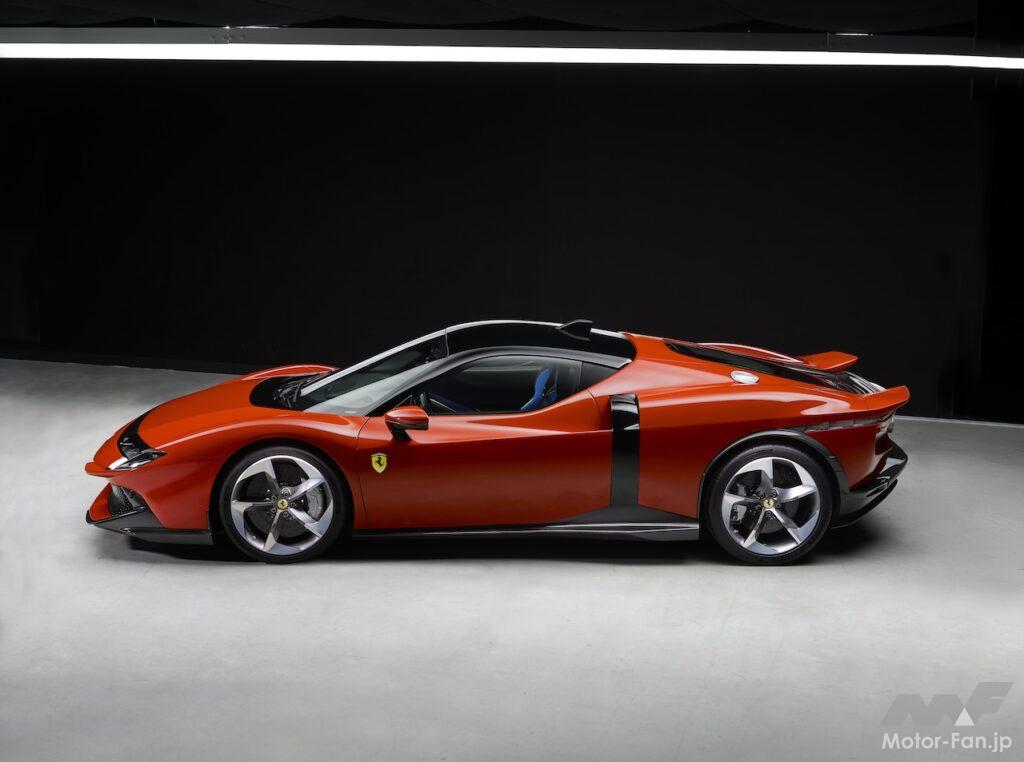
The exterior design, with its intertwining vertical and horizontal lines, is inspired by aviation and 1970s sports prototypes.
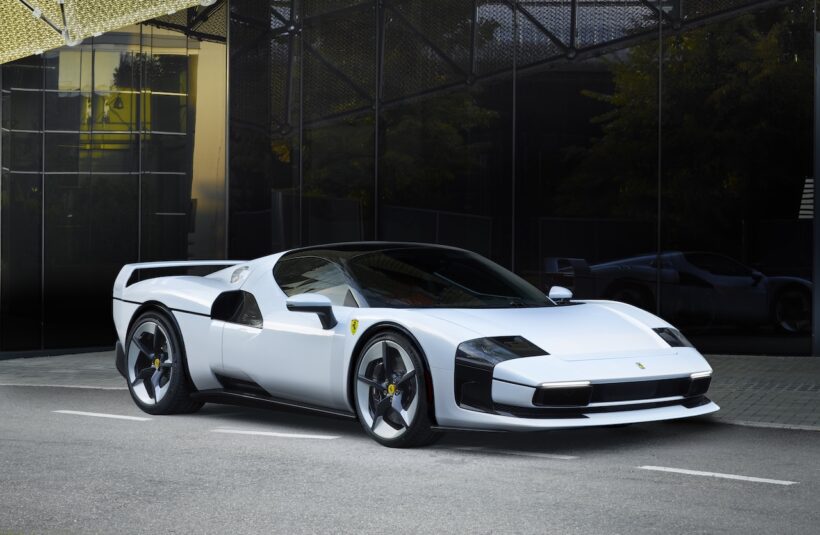
The 849 Testarossa was designed by the Ferrari Styling Centre, led by Flavio Manzoni. It represents a significant change to the SF90 Stradale, emphasizing its unique technology and performance. Its form, with its vertical and horizontal lines, is inspired by aircraft and sports prototypes from the 1970s.
The side sections feature doors with a three-dimensional design that originates from the main press line. The deep carvings on the top of the doors, which also serve as aerodynamic ducts, create a complex three-dimensional shape that is considered extremely difficult to achieve on a production car, bringing a dynamic change to the relationship between the body and the cabin. The panels are formed from a single piece of aluminum alloy, a feat achieved through Ferrari’s advanced manufacturing process.
The front section is reminiscent of Ferraris from the 1980s. Following on from the 12 Chilindori and F80, a horizontally extending cover connects the headlight units like a bridge. The lower part of the bumper is finished with body-colored flics and a black splitter, emphasizing the individuality of the 849 Testarossa, which prioritizes technology and aerodynamics.
The rear section, incorporating twin tails and a movable rear wing, pays homage to the 512S. The iconic round tailpipe is placed in the center. The tail is completed by a full-width diffuser, and the shape of the center section emphasizes ultimate performance.
The simultaneously announced 849 Testarossa Spider utilizes Ferrari’s extensive experience in retractable hardtop (RHT) technology. When the roof is closed, it maintains the same form as the 849 Testarossa. The design and engineering teams developed the Stradale and Spider simultaneously. When the roof is open, the twin-tail architecture, which previously blended into the roof silhouette of the 849 Testarossa, asserts its presence.
A cockpit designed to resemble a ship’s sail
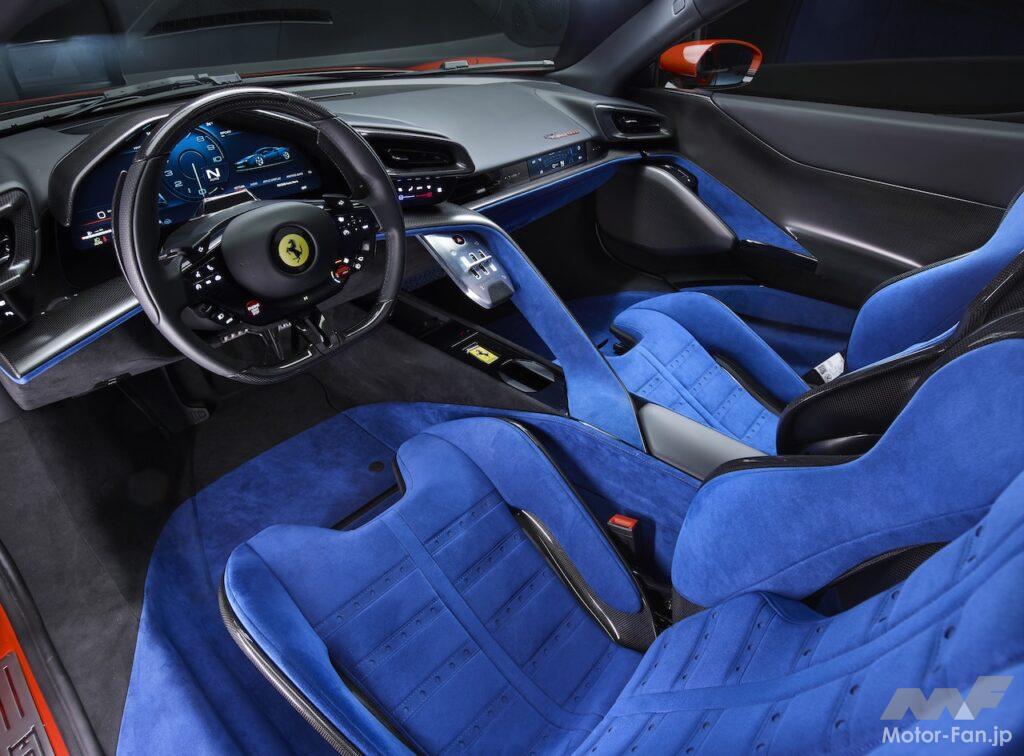
The driver-oriented cockpit, reminiscent of a Ferrari and F1 car, incorporates design elements inspired by the sails of a ship.
The cockpit combines elements of a berlinetta layout with a horizontal dashboard and a single-seater cockpit, giving the impression of a floating dashboard, and featuring C-shaped air vents with aluminium frames.
A horizontal band runs between the top and bottom of the dashboard, incorporating the main controls and passenger screen. The lower part of the dashboard is based on the motif of a ship’s sail. A shift gate similar to that of the F80 is positioned floating on the sail on the steering wheel side.
The layout of the center tunnel has also been redesigned, with auxiliary controls positioned for a streamlined, minimalist look. The sail theme is also carried over to the door panels, which house woofers with aluminum grilles. The shape of the lower door panels has been redesigned to improve accessibility. The passenger glove box and rear bench space have also been increased.
Two types of seats are available. The comfort seats feature sculpted interior lining that matches the shape of the cockpit. The carbon fiber racing seats feature sporty side bolsters that provide firm support for lateral movement during aggressive driving.
The steering wheel combines digital and analogue functionality, retaining the physical controls from the F80 Stradale, including the iconic engine start button, while a new digital cluster allows for quick changes to the hybrid system’s driving modes.
“Assetto Fiorano” with special aero


The “Assetto Fiorano” specification changes the rear twin tail to a twin wing that generates more downforce.
The Assetto Fiorano has also undergone significant updates: the front section is fitted with larger Flicks and a pair of vortex generators has been added to the front underbody, ensuring perfect aerodynamic balance, especially when driving on a circuit.
The twin tails at the rear have been replaced with twin wings. The large angled spoiler is equipped with vertical end plates on both sides. The twin wings increase the vertical downforce level by three times without increasing drag.
The suspension is fitted with stiffer single-rate Multimatic shock absorbers, 35% lighter springs, a 10% reduction in roll rate, and, for the first time on the Assetto Fiorano, the option of a front lifter.
The Assetto Fiorano also comes with a livery exclusive to the car, available in two finishes: Bianco Cervino and Rosso Corsa. The two traditional racing lines that run from the front, across the roof and to the rear are expressed in a gradient.
Specifications
Ferrari 849 Testarossa
Body size = Total length 4718, total width 2304, total height 1225mm
Wheelbase = 2650mm
Vehicle weight = 1570kg
Tire size = 265/35R20 (front), 325/30R20 (rear)
Engine type = V8 twin turbo
Displacement = 3990cc
Maximum output = 830PS / 7500rpm
Maximum torque = 842Nm / 6500rpm
Motor output = 163PS
Maximum system output = 1050PS
EV mode range = 25km
Transmission = 8-speed F1 DCT
Drive system = AWD
Top speed = 330km/h
0-100km/h acceleration = 2.3 seconds
0-200km/h acceleration = 6.35 seconds
100-0km/h = 28.5m
200-0km/h = 108.0m
Fiorano lap time = 1 minute 17 seconds 500
![[Ferrari Encyclopedia: 17] The Ferrari with the "Red Head" and "Side Fins" that Symbolized the Bubble Era](https://motor-fan.jp/wp-content/uploads/sites/2/2019/05/GQW_testarossa.jpg)