
6 1/2 Litre Speed6
Further expansion of displacement to gain performance advantages
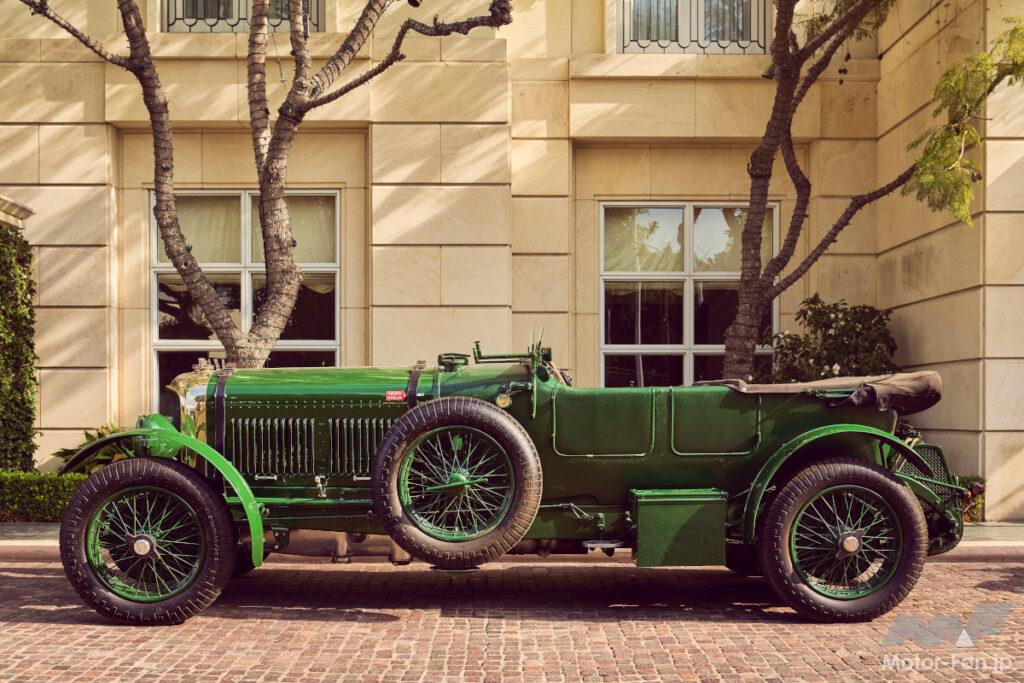
The 6 1/2 Liter Speed 6 was developed as a sports version.
While the 3-litre engine was a success, WO Bentley received calls from both racing and general public for more power and smoothness, so they began developing an engine with an even larger displacement.
The resulting 4.5-liter (4.5-liter) inline-6 SOHC 4-valve engine was simply a 3-liter inline-4 with two more cylinders added. It was installed in a prototype called “SUN” which had a Weyman touring body, and a road test was carried out in France to watch the Lyon Grand Prix.
At the time, the car was pitted against a Rolls-Royce prototype that happened to be on the road, but as it was not found to have any performance advantages, Bentley decided to further increase the engine displacement, enlarging the piston bore to 6.5 liters (6597cc to be exact).
Developed as a sports version

6 1/2 liter inline 6-cylinder SOHC engine.
The standard model was equipped with a Smith 5-Jet single carburetor and produced 149 PS. The larger ladder frame chassis was available with several wheelbases ranging from 132 to 152.5 inches (3353 to 3874 mm). A total of 362 examples were produced, with bodies fitted by various coachbuilders, including tourers and limousines.
In 1928, Bentley developed the Speed 6 as a sports version of the 6 1/2 Litre. Its greatest feature was its in-line 6-cylinder SOHC engine, which, while retaining the same displacement, increased the compression ratio to 5.3:1, and was fitted with a special camshaft and two SU carburetors, resulting in a maximum output of 182 PS, far exceeding the standard output.
The chassis was available with three wheelbases: 138 inches (3505 mm), 140.5 inches (3569 mm), and 152.5 inches (3874 mm), but the most popular was the 138 inch, and a total of 182 units were produced between 1928 and 1930.
Nicknamed “Blue Train”
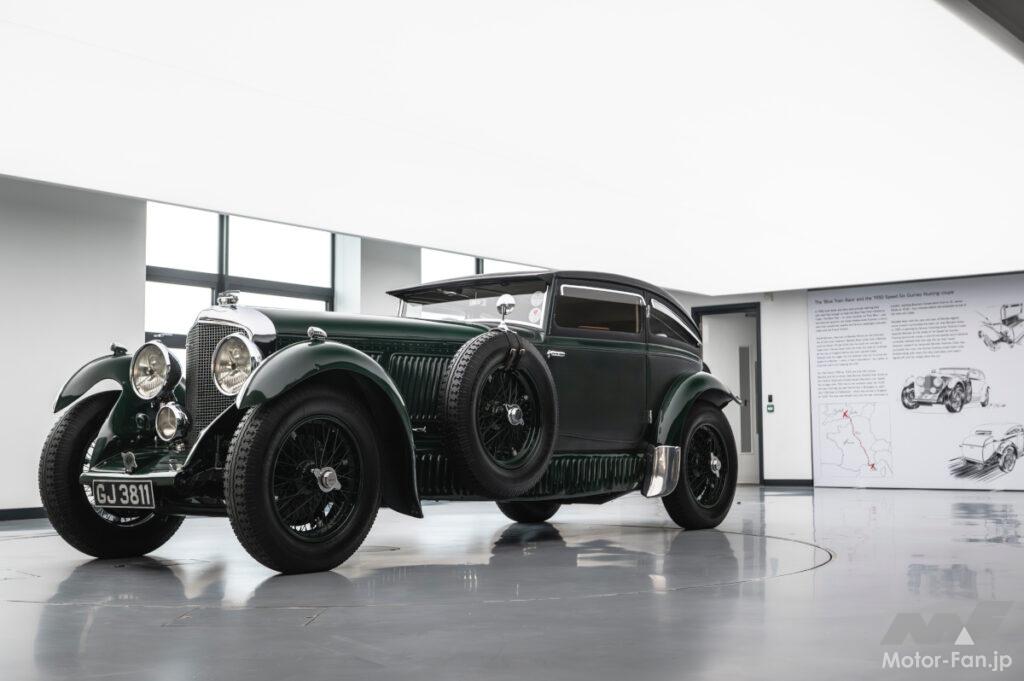
Gurney Nutting Sportsman Coupe, nicknamed “Blue Train.”
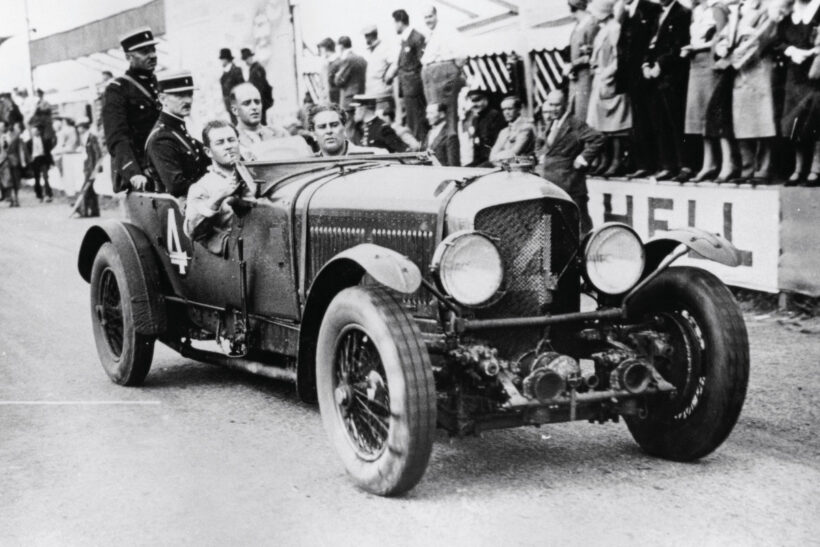
Bentley also developed a racing version with a 132-inch (3,353 mm) chassis and an engine tuned to 202 PS with an increased compression ratio of 6.1:1. It was first introduced at the 1929 24 Hours of Le Mans, where the Speed 6 driven by Woolf Barnato and Sir Henry “Tim” Birkin set a new lap record of 7 minutes 21 seconds, beating the previous record by 46 seconds, and won. It also set a new record for distance traveled: 174 laps, or 2,844 km.
The following year, in 1930, Woolf Barnato and Glenn Kidston won again in a Speed 6. This was the last Le Mans victory for WO Bentley.
In March 1930, Barnato won a bet by setting off from Cannes in his HJ Mulliner saloon-bodied Speed Six at the same time as the Blue Train express, and reaching his club in London before the train arrived in Calais. The car he received in May of that year, a Gurney Nutting Sportsman Coupe with a sleek coupe body, was nicknamed the “Blue Train,” further enhancing the charisma of the 6 1/2 Speed Six.
Produce a faithful reproduction of the continuation
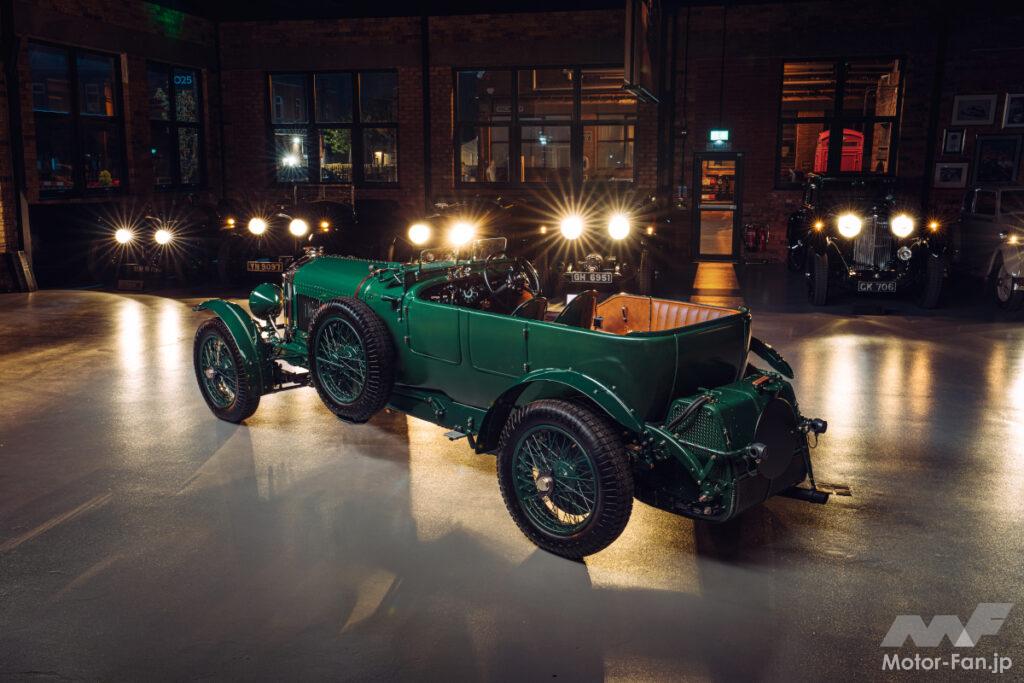
The prototype of the continuation model is the “Speed Six Car Zero”.
In light of this story, Bentley Mulliner has announced that in 2023 it will manufacture and sell a limited run of 12 faithfully reproduced “Speed 6 Continuation” cars .
The car will be produced using the same manufacturing process as the original vehicle, based on extensive research using 80% of the drawings discovered through the WO Bentley Memorial Foundation, original mechanic’s notebooks detailing changes made between the 1929 and 1930 races, and the extensive archives stored at the National Motor Museum in Beaulieu, as well as the existing 1930 Le Mans 24 Hours car, “Old Number 3,” and Bentley’s own Speed 6, “GU409.” The car will also make full use of knowledge gained from the Blower Continuation Series, announced in 2020.
The prototype, the Speed Six Car Zero, has already completed 8,000 km of track testing, demonstrating sufficient functionality and reliability. It is scheduled to be delivered by the end of 2025, after a 10-month production run per vehicle.











![Will the second-generation Azure be the last big Bentley convertible? [Bentley 100 Years of History]](https://wheelfeed.com/wp-content/uploads/2026/01/4739-1768026248200.jpg)