

Special benefits for entering Italy!
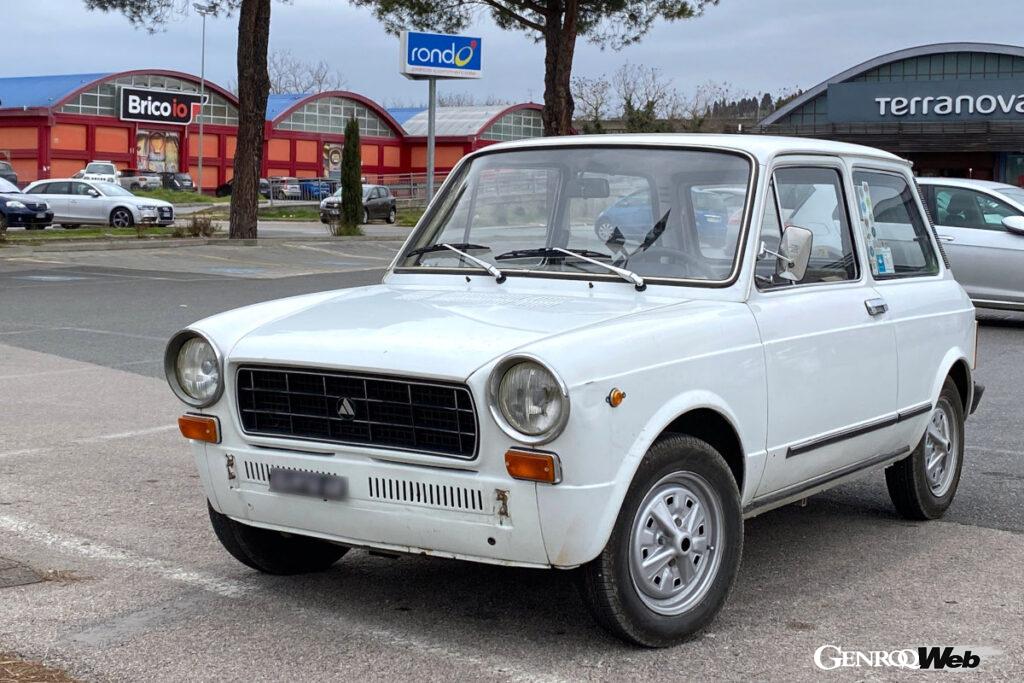
Autobianchi A112, photographed on the outskirts of Siena in 2022.
In the summer of 2024, Stellantis’ poor performance surfaced in Europe. As a result, then-CEO Carlos Tavares suggested that the group would consider liquidating one or more of its 14 brands. The subsequent developments remain unclear, as Tavares suddenly resigned in early December, but the names of Fiat, Alfa Romeo, Jeep, Lancia, and DS can at least be seen in the Italian production plans for 2030 and beyond, which were announced on December 17th.
Meanwhile, the possibility of reviving a nostalgic brand has emerged. This was reported in July 2024 by the business newspaper Il Sole 24 Ore. According to the newspaper, Adolfo Urso, Minister of Enterprise and Made in Italy, is preparing a government decree that would allow the Patent and Trademark Office to confiscate trademarks that have been dormant for more than five years.
The first wave of brands to be subject to the decree has practically been decided. These are the “Autobianchi” and “Innocenti” trademarks that Stellantis inherited from the former Fiat. These will be granted to foreign manufacturers planning to build factories in Italy. To put it simply, the right to use the brand will be given as a perk for expansion and job creation. The trademark license period is 10 years, and non-use will result in the rights being revoked.
Autobianchi, which disappeared in 1995

[1]

[2]
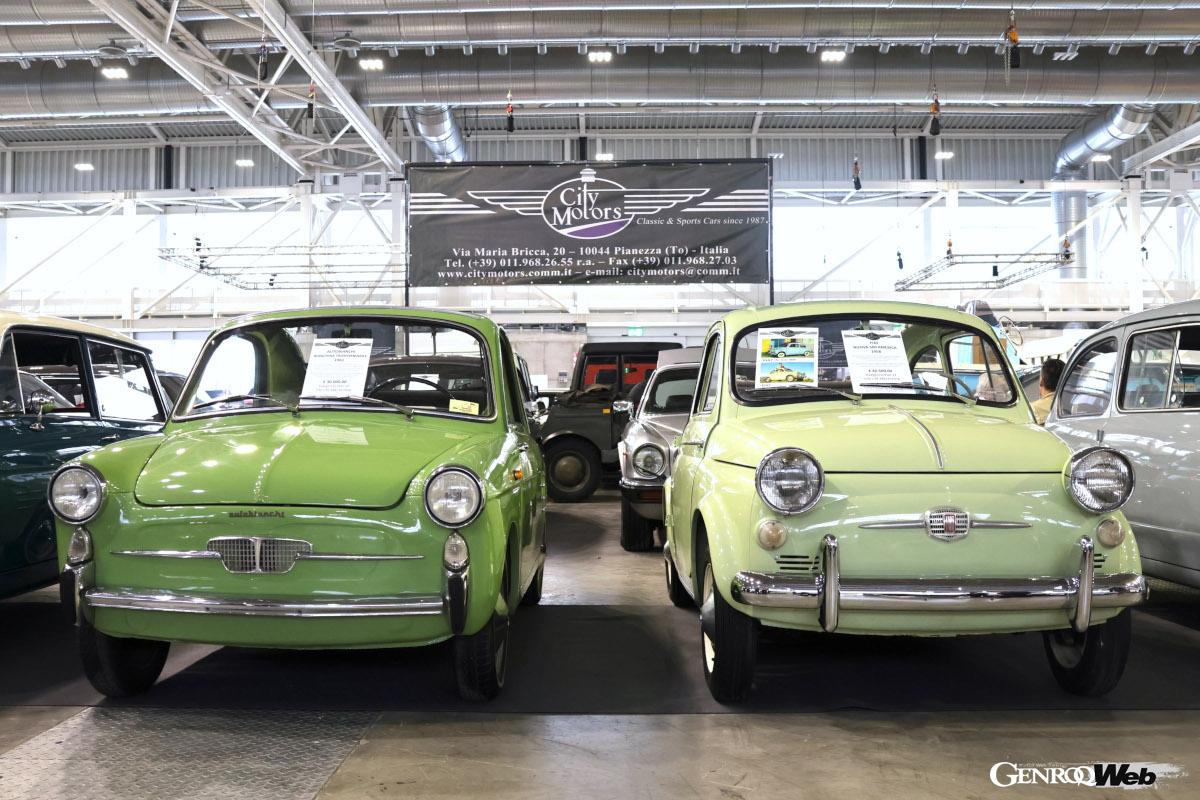
[1] An A112 standing in front of a supermarket in Siena. Photographed in 2020. [2] The club booth of the Italian Autobianchi Preservation Society. At the Bologna Automoto d’Epoca show in October 2023.
Let’s take a look back at the history of the two brands that were the subject of this discussion. Autobianchi was founded in 1955 when the former Fiat and Pirelli invested in Bianchi, a historic Italian automobile manufacturer (later becoming a wholly owned subsidiary of Fiat). Its first passenger car was the 1957 Bianchina, based on the Fiat Nuova 500.
With unprecedented economic growth and the accompanying motorization as a backdrop, the image strategy of “(Fiat) 500 on weekdays, Bianchina on weekends” was a success. The 1969 A112 was followed by the Abarth version, which helped to raise awareness. Furthermore, the character of a “small luxury car” established by the 1980 Y10 was inherited particularly by the 1995 Lancia Y and its successor, the Ypsilon. It was particularly successful in attracting female users.
However, Autobianchi as a brand disappeared in 1995, the year production of the Y ended. From then on, dealers focused on Lancia, which they also sold.
A win-win for Chinese manufacturers?

[1]

[2]

[3]
[1] The Innocenti Mini (left), produced under license in Milan from 1965 to 1975. Photographed in Siena in 2006. [2] The Small 900, an improved version of the New Innocenti Mini. It was equipped with a three-cylinder engine from the Daihatsu Charade. [3] The DR Automobiles 5.0. Assembled in Italy under license and with parts provided by Chery Automobile of China. Photographed in Assisi in 2024.
Innocenti, on the other hand, originated as a steel pipe manufacturer established before World War II. After the war, in 1947, the company entered the automotive industry with the Lambretta scooter. In 1960, it began licensed production of British BMC vehicles. In 1974, it announced the new Innocenti Mini, which combined the original Mini’s mechanicals with a body designed by Bertone. However, due to financial difficulties, the Innocenti brand was acquired by De Tomaso and GEPI (Governmental Enterprise for Industrial Management and Participation) in 1976.
De Tomaso also fell into financial difficulties and was acquired by Fiat in 1990. From then on, throughout the early 1990s, the trademark was used on Brazilian-made Fiats sold in Italy, but was finally removed from the market in 1997.
The Italian government is currently said to be inquiring with several Chinese manufacturers about the possibility of attracting factories to the country.
The main purpose is to make up for the jobs cut by Stellantis and its suppliers. For Chinese companies, this will allow them to avoid EU EV tariffs and serve as a foothold for their expansion into Europe. DR Automobiles, established in Italy in 2006, is already carrying out knockdown production of passenger cars manufactured by the Chinese company Chery. The number of vehicles registered in Italy between January and November 2024 was a healthy 17,232 units. Given the recent acceptance of such new brands, if Autobianchi and Innocenti were to be revived, it could have a considerable impact on revitalizing the Italian domestic market.
Text & Photo by Akio Lorenzo OYA, journalist based in Italy