
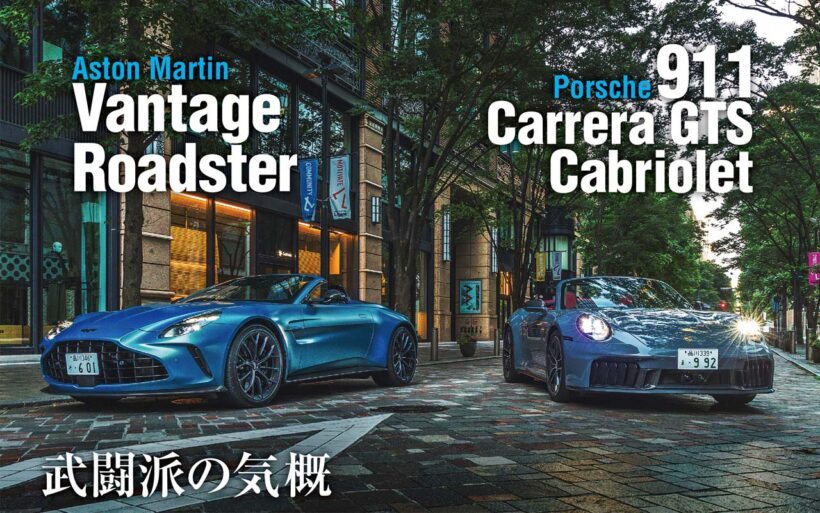

Aston Martin Vantage Roadster
×
Porsche 911 Carrera GTS Cabriolet
There are two types of open cars
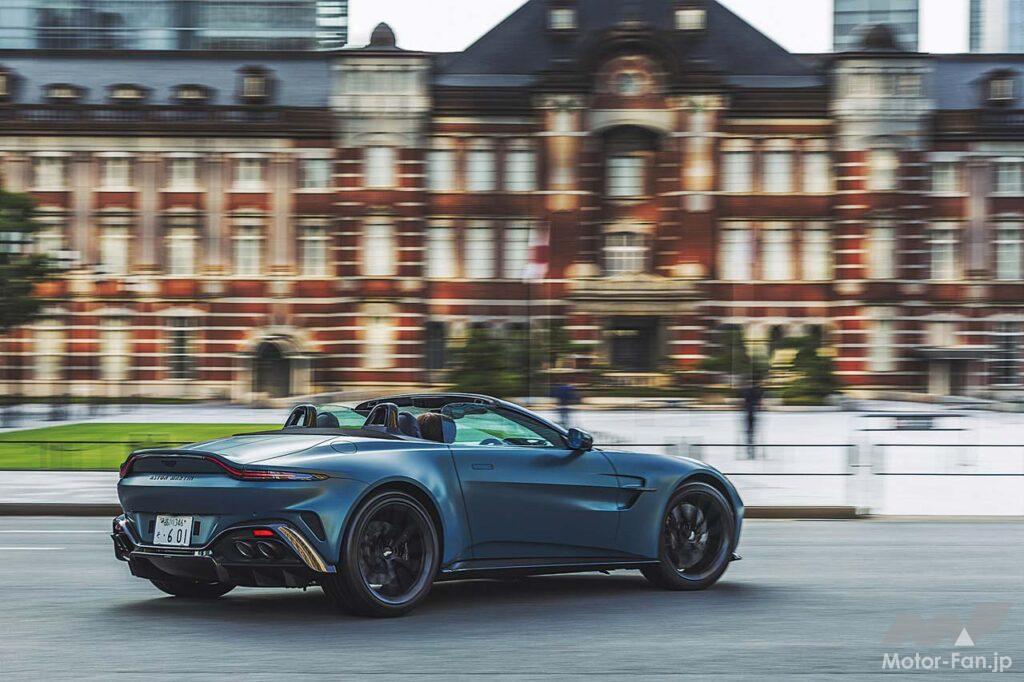
The Vantage Roadster has five drive modes: Wet, Sport, Sport+, Track, and Individual, with Sport being the default. There’s no GT mode like the DB12. The test car was fitted with Aston Martin-approved Michelin Pilot Sport S5 tires.
Drophead, roadster, cabriolet, spider, convertible, barchetta, etc. Despite the many names, open-air motoring can be categorized into two trends: aggressive models or elegant ones. Open-top cars have long been valued for their minimalist aesthetic. The lack of a top means lighter vehicles and better visibility for the driver. This tradition remains strong in modern Formula cars. On the other hand,
“elegant” means driving with flowing hair, without messing up your partner’s hair. A parade car with VIPs in the back seat is a good example.
The two cars featured here, from the UK and Germany, are of course the former. The Aston Martin Vantage Roadster is a two-seater with the rear tires nearly touching the driver’s buttocks, and the Porsche 911 Carrera GTS Cabriolet is certainly not a car for elegant travel with four people and the roof down.
“Vantage” is a name that Aston Martin has used for a long time, but in the past it was merely a sub-name given to specially tuned engines. Considering this background, the current model is the second generation since it became a two-seater equipped with a V8 engine. It underwent a major minor change last year and is now a later model.
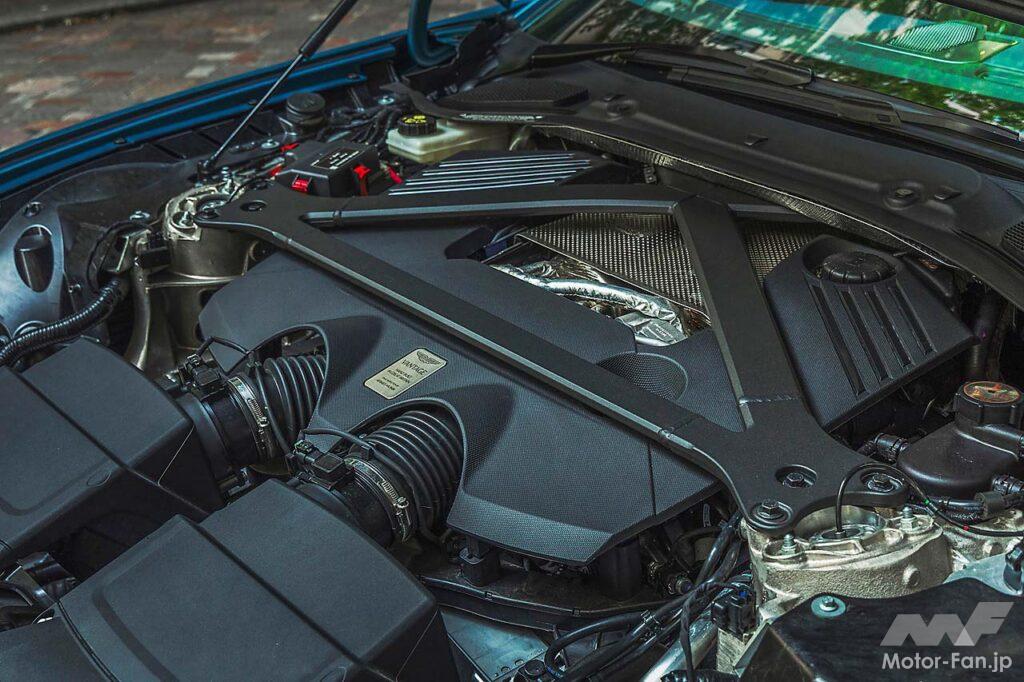
The Vantage’s 4.0-liter V8 twin-turbo engine, which has been upgraded from the previous model with a larger turbo, revised cam profile, and an optimized compression ratio, now produces 665 PS/800 Nm. The base unit is the AMG M177.
Its distinctive features include the return of a larger grille and wide-eyed headlights. Its face is instantly recognizable as a traditional Aston, but what’s great about it is that the modifications aren’t just for aesthetic appeal. The
maximum output of the Mercedes-AMG 4.0-liter V8 twin-turbo engine has been boosted by an impressive 155 PS from the previous model’s 510 PS to 665 PS. Naturally, such a significant increase in power meant a lack of cooling performance, so modifications to the radiator itself and its openings were unavoidable.


The Vantage Roadster has five drive modes: Wet, Sport, Sport+, Track, and Individual, with Sport being the default. There’s no GT mode like the DB12. The test car was fitted with Aston Martin-approved Michelin Pilot Sport S5 tires.
The Porsche 911 in comparison is the so-called 992 II, so it’s also a later model. Moreover, being a GTS, it’s the first hybrid model in the series, which is also a hot topic. The electrification that Porsche’s development team has incorporated into the 911 is clever, not pushing electricity to the forefront or using it as a surprise weapon. It has
been carefully woven in solely to fill in the “gaps” of the newly developed 3.6-liter flat-six turbo. Even if you drive it without knowing these specs, you’ll be able to fully enjoy the character of this fast model, with such ease that you’ll doubt the large-displacement naturally aspirated engine.

The first hybrid Porsche 911 GTS is equipped with a 3.6-liter flat-six with an electric single turbo. The motor is mounted between the engine and the 8-speed DCT. The total system specifications are 541 PS/610 Nm.
Although the engine position and number of passengers differ in line with the origins of the brands, the two cars are closely matched in every respect, including power performance, open-top body, and class, making them a perfect pair for a head-to-head battle.


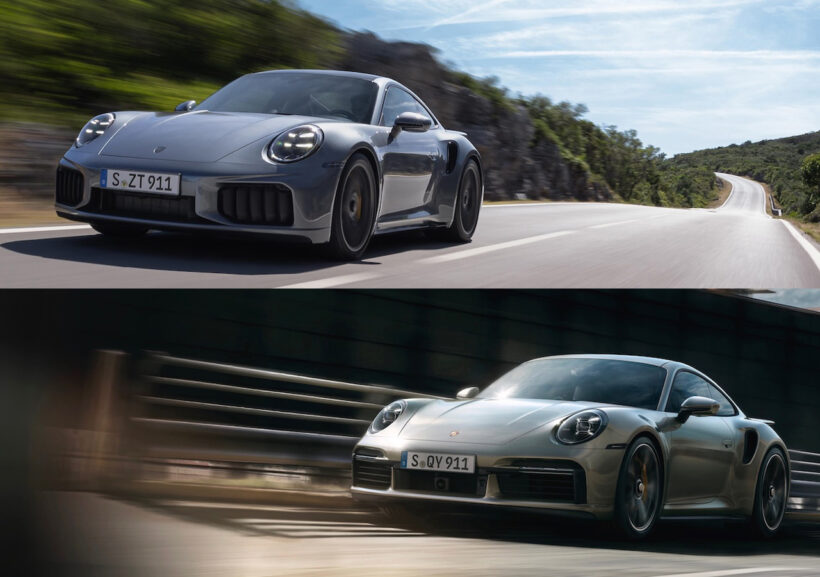
Five vertically arranged active air flaps are a hallmark of the GTS. The 911 has four drive modes: “Wet,” “Normal,” “Sport,” and “Sport Plus.” The “Carrera Exclusive Design” wheels with carbon blades shown in the photo are optional, and are fitted with Pirelli P Zero R tires.
Was the Vantage Roadster meant to be open-top?
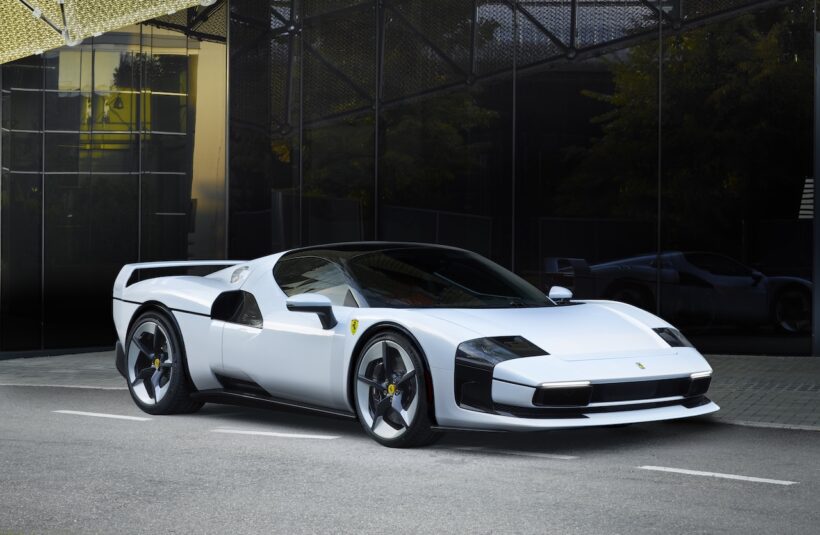
When I came face to face with the new Vantage Roadster in the city early in the morning, I couldn’t help but wonder if there was any other sports car more stylish than this one. The original V8 Vantage, released in 2007, had a distinctive appearance that encapsulated Aston’s charm, but the latest model is even more handsome. Its front end resembles a refined version of the One-77, a special model limited to 77 units of all previous Astons. The well-defined front and rear fender flares and the 21-inch Michelin tires are also perfectly balanced. Viewed from
the side with the top down, the Vantage Roadster’s silhouette, with the hood’s top edge continuing in a single stroke to the rear, is just as striking as the coupe’s.
The Vantage Roadster almost feels as if the open-top model was designed first, with the coupe being born later. In comparison, the Porsche 911 Carrera’s coupe-inspired roofline is so overpowering that the Cabriolet feels like a derivative model. Even so, the convertibles from the 991 onward, which fold the top down directly above the powertrain while leaving the rear seats intact and align the curve of the roof with the rear-end line, seem to have succeeded in achieving a slightly speedster-like aesthetic.
I drove the new Vantage first. The cockpit, both seats and upholstery covered in high-quality leather, is tightly spaced overall, revealing its sporty model heritage. The
electrically operated top opens and closes in just 6.8 seconds. However, the sloping windshield and A-pillars close to my head limit the sense of static freedom.
What impressed me when I started driving was the body’s solidity. It felt almost as solid as the coupe I test-drove at Hakone. The aluminum-bonded floor monocoque structure doesn’t rely too heavily on the roof. Furthermore, the latest Vantage Roadster conveys a sense of refinement, from the powertrain to the suspension.
Picking up the pace on the Shuto Expressway, I could clearly feel the excellent weight balance provided by the transaxle. With such high level of perfection, is there really no place for a coupe? That’s the quality of the Roadster.


To ensure rigidity, the Vantage Roadster’s body construction was changed and sheer panels were added, resulting in a performance that rivals that of a coupe. The top, which can be operated at speeds below 50 km/h, takes just 6.8 seconds to open or close, making it the fastest convertible currently on the market. The instrument panel, centered around a 10.25-inch touchscreen, has also been redesigned.
In that respect, the Porsche 911 Carrera Cabriolet’s driving feel was the same as before. The open-air feeling was in stark contrast to the Vantage, where the roll bar was right behind the headrests. The slight vibration around the floor and scuttle when going over bumps was also different from the Vantage. Even with the reinforcements, the Carrera Cabriolet’s handling has traditionally been gentler than the Carrera Coupe. In other words, it’s fair to say that the Vantage Roadster is superior to the 911 Carrera Cabriolet when just driving around on winding roads or enjoying the interior and exterior.
In this respect, the Porsche 911 has also become more premium with each new model, especially in the interior, but its origins are different from those of Aston, whose core brand is that of an “aristocratic sports car.”
In terms of driving, it’s better to say that the 911 Carrera Cabriolet aims for a “line rather than a point.” Speaking from experience, the Carrera Cabriolet’s unique, gentle driving feel, which is different from that of the Carrera Coupe, really shines on long drives. Whether the top is closed or open, it makes you want to keep driving as long as there’s gas left, and as a result, you can reach your destination quickly without getting tired.


The GTS is the most spartan of the 911 Carrera family, and even its two-wheel drive model is available as a Cabriolet. The cabin is a 2+2 seater. To reduce weight, the roof support is made of magnesium. This can also be opened and closed at speeds below 50km/h, taking just 12 seconds. In the 992II generation, the meter is fully digital and the engine start is push-button.
Why 911 is popular

Five vertically arranged active air flaps are a hallmark of the GTS. The 911 has four drive modes: “Wet,” “Normal,” “Sport,” and “Sport Plus.” The “Carrera Exclusive Design” wheels with carbon blades shown in the photo are optional, and are fitted with Pirelli P Zero R tires.
“Not because it’s open-air, but because it’s versatile,” I believe. I believe the Carrera Cabriolet’s inherent character is a key reason for its popularity among repeat buyers. This experience also confirmed the excellent compatibility between its comfortable long-distance touring body and the incredibly powerful and smooth GTS (hybrid) powertrain.
In professional wrestling and boxing, the dominant player often occupies the center of the ring and frequently corners their opponent. In this open-air contest, the 911 Carrera GTS Cabriolet confidently positioned itself in the center of the ring, while the Vantage Roadster circled the periphery, waiting for an opportunity to counter.
This could be rephrased as Porsche, which appeals with its versatility, not only its comfortable ride but also its ease of use and traditional styling, and Aston Martin, which focuses on luxurious quality and sporty driving.
Ultimately, it will likely be Porsche, as always, that wins commercially. However, it’s also true that the rarity of the Aston Martin adds to the mythical nature of the brand. The difference in this contest lies at the root of it all.
However, I must note that I was personally more impressed by the 911 Carrera GTS Cabriolet, which is actually 100kg lighter than the impressive-looking Aston and has significantly improved its driving quality thanks to its electrification.

[1]

[2]
[1] To ensure rigidity, the Vantage Roadster achieved performance that was almost comparable to that of a coupe, thanks to changes to the body assembly method and the addition of sheer panels. The top can be opened or closed at speeds below 50 km/h, taking just 6.8 seconds. It is touted to be the fastest open-top car currently on the market. The instrument panel, centered around a 10.25-inch touchscreen, has also been redesigned. [2] The GTS is the most spartan of the 911 Carrera family, and a convertible version is also available for its two-wheel drive model. The cabin is a 2+2 seater. To reduce weight, the roof supports are made of magnesium. This can also be opened or closed at speeds below 50 km/h, taking just 12 seconds. With the 992II generation, the meters are fully digital and the engine start is now push-button.
REPORT / Takuo YOSHIDA
PHOTO / Koichi SHINOHARA
MAGAZINE / GENROQ October 2025 issue
SPECIFICATIONS
Aston Martin Vantage Roadster
Body size: Length 4495mm, width 1980mm, height 1285mm
, wheelbase: 2705mm,
vehicle weight: 1730kg,
engine type: V8 DOHC twin turbo,
total displacement: 3982cc,
maximum output: 489kW (665PS) / 6000rpm,
maximum torque: 800Nm (81.6kgm) / 2750-6000rpm
, maximum motor output: -,
maximum motor torque: -,
transmission: 8-speed AT
, drive system: RWD,
suspension: front double wishbone, rear multi-link
, brakes: front and rear ventilated discs,
tire size: front 275/35R21, rear 325/30R21,
maximum speed: 325km/h,
0-100km/h acceleration: 3.6 seconds,
vehicle price: 28.6 million yen
Porsche 911 Carrera GTS Cabriolet
Body size: Length 4553, Width 1852, Height 1293mm,
Wheelbase: 2450mm,
Vehicle weight: 1675kg,
Engine type: Horizontally opposed 6-cylinder DOHC turbo,
Total displacement: 3591cc,
Maximum output: 357kW (485PS) / 6500rpm
, Maximum torque: 570Nm (58.2kgm) / 2000-5500rpm,
Maximum motor output: 40kW (54PS),
Maximum motor torque: 150Nm (15.3kgm)
, Transmission: 8-speed DCT,
Drive system: RWD,
Suspension: Front strut, rear multi-link
, Brakes: Front and rear ventilated discs,
Tire size: Front 245/35ZR20, rear 315/30ZR21,
Top speed: 312km/h,
0-100km/h acceleration: 3.1 seconds,
Vehicle price: 26.33 million yen.
[Inquiries]
Aston Martin Japan Limited,
TEL 03-5797-7281
https://www.astonmartin.com/ja
Porsche Contact
TEL 0120-846-911
https://www.porsche.com/japan/