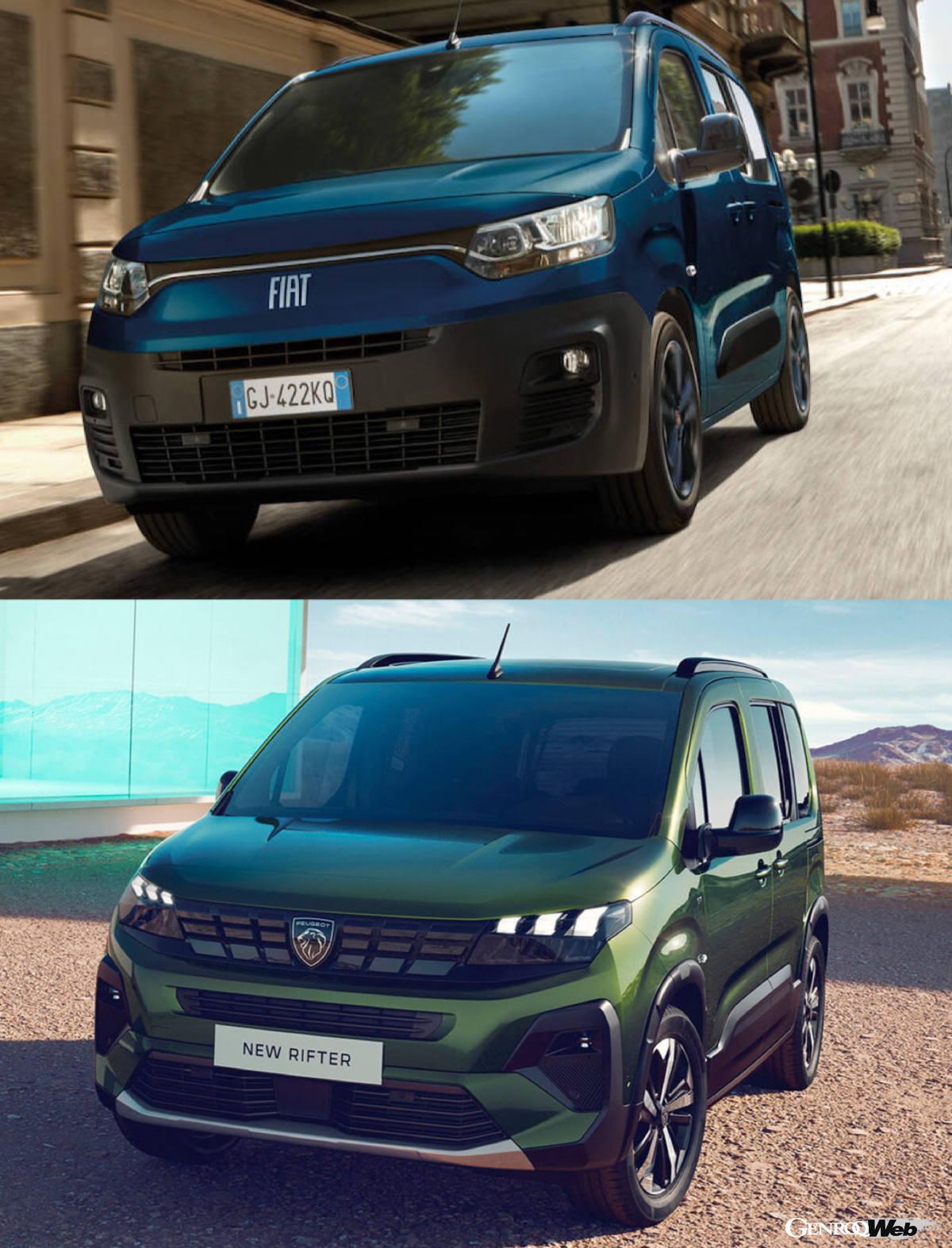

FIAT DOBLO
×
RENAULT KANGOO
The simply designed Doblo and the stylish Kangoo

Fiat Doblo
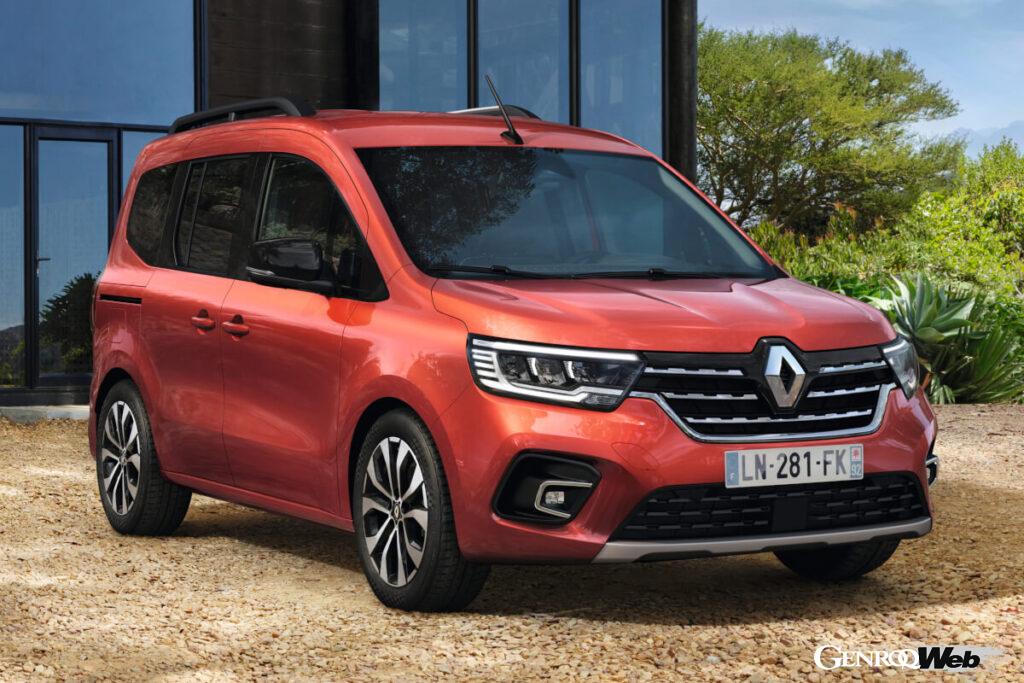
Renault Kangoo

Fiat Doblo

Renault Kangoo
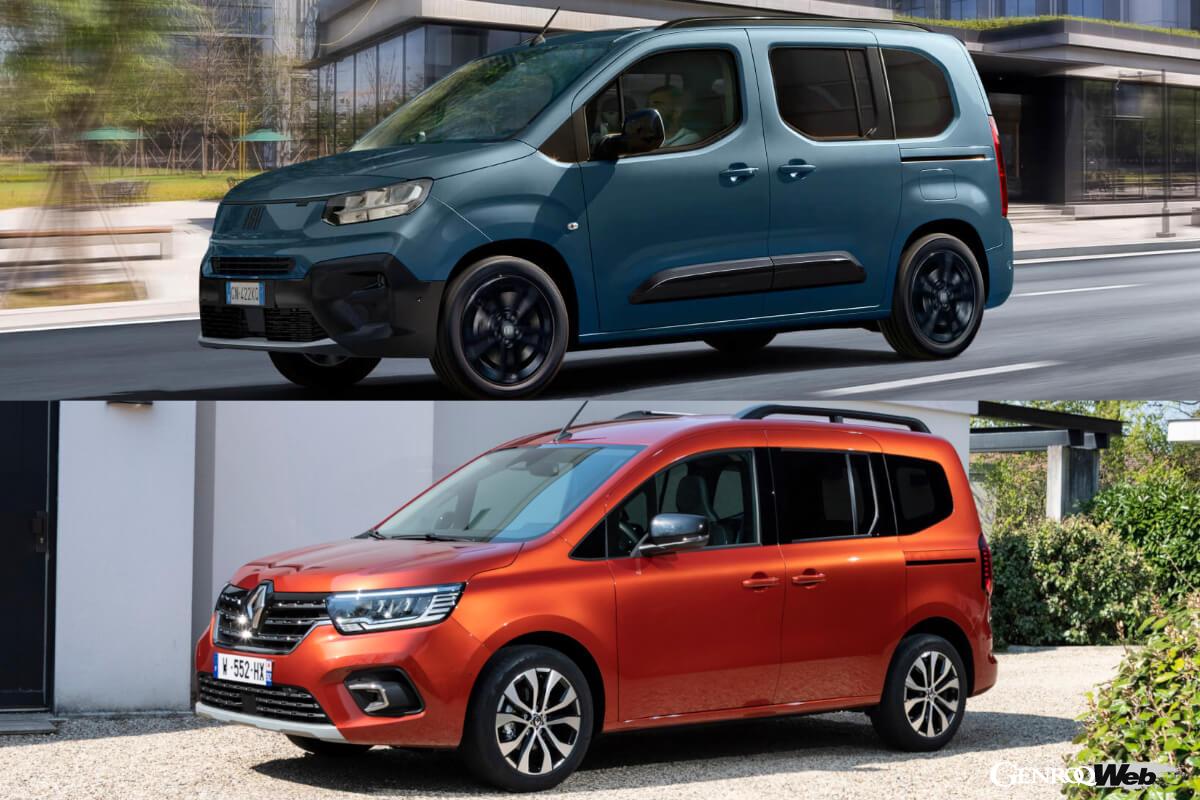
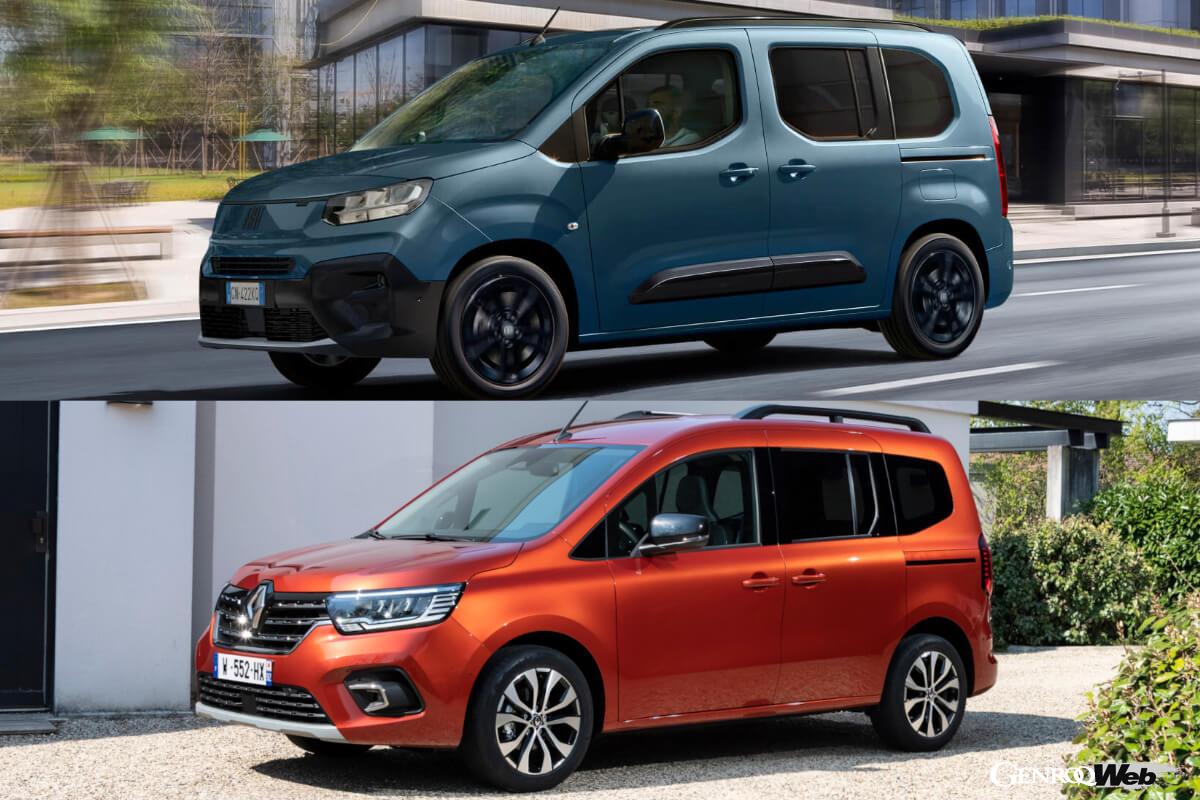
We’ll compare the popular Renault Kangoo and Fiat Doblo. Their body sizes are nearly identical, with the Kangoo being about 85mm longer. They also have the same minimum turning radius of 5.6m. The Kangoo has a larger luggage compartment, with the Doblo’s luggage capacity at 597L with five occupants and 2126L with two occupants, compared to the Kangoo’s 775L and 2800L, respectively.
The interior of the Doblo emphasizes functionality as a commercial vehicle, while the Kangoo is functional but has an atmosphere closer to that of a passenger car. There is not much difference in the size of the rear seats, and both have independent air conditioning on the left and right, and both have air vents in the rear seats, so comfort is also the same.
The Kangoo’s unique feature is its double back door, an asymmetrical double-door design. The Doblo also has a standard flip-up hatch, but only the glass section can be opened. However, it’s important to note that neither of the two vehicles has an electric opening/closing function for the sliding doors.
Fiat Doblo
Body size = Length 4405mm x Width 1850mm x Height 1825mm
Wheelbase = 2785mm
Vehicle weight = 1560kg
Tire size = 205/60R16
Renault Kangoo Intense Diesel
Body size = Total length 4490mm x Total width 1860mm x Total height 1810mm
Wheelbase = 2715mm
Vehicle weight = 1650kg
Tire size = 205/60R16
Dobro with high torque and one extra gear for good fuel economy

Fiat Doblo

Renault Kangoo
Both cars are equipped with a 1.5-liter inline 4-cylinder diesel turbo engine. In terms of engine specifications, the Doblo has 30 Nm more maximum torque, and because it has one more gear, an 8-speed transmission, the Doblo has better fuel efficiency.
The average fuel economy in the WLTC mode is 18.1km/L for the Doblo and 17.3km/L for the Kangoo, which is not a big difference, but the Doblo, which is about 90kg lighter, outperforms the Kangoo in urban fuel economy. The difference becomes smaller as the speed range increases, and the highway fuel economy is almost the same.
Both vehicles are front-wheel drive only, but as European commercial vehicles have a higher speed range than Japan, they have high straight-line stability even when empty, and have sufficient traction even when loaded. Although the Doblo has a longer wheelbase, the suspension type and tire size are the same, so it is safe to say that there is no significant difference in chassis performance.
Fiat Doblo
Engine type = Inline 4-cylinder diesel turbo engine
Displacement = 1498cc
Maximum output = 130PS/3750rpm
Maximum torque = 300Nm/1750rpm
Transmission = 8-speed AT
Drive system = FWD
Renault Kangoo Intense diesel engine
Type = Inline 4-cylinder diesel turbo engine
Displacement = 1460cc
Maximum output = 116PS/3750rpm
Maximum torque = 270Nm/1750rpm
Transmission = 7-speed AT
Drive system = FWD
The specs and usability are almost the same.

Fiat Doblo

Renault Kangoo

Fiat Doblo

Renault Kangoo
Comparing the base grade of the Doblo with the cheapest diesel grade of the Kangoo, the Doblo is cheaper by 250,000 yen. With its high fuel efficiency, the Doblo is the winner in terms of cost performance.
However, the Kangoo’s passenger car-style interior makes it easy to use in everyday life, and the double back doors are a convenient feature for everyday shopping and outdoor leisure activities. The Kangoo is also suitable as a passenger car because it offers a quieter 1.3-liter gasoline turbo model (3.85 million yen). On the other hand, it is also worth noting that the Doblo also has a 7-seater model called the Doblo Maxi (4.29 million yen) with a total length of 4770 mm.
When comparing standard diesel models, there is not much difference in specs or usability. The best way to choose is to choose based on your preference for interior and exterior design.