![The 987 Boxster, featuring technologies still relevant today, such as DCT [Porsche Chronicles]](https://wheelfeed.com/wp-content/uploads/2025/01/2563-1761200425497.jpg)
Boxster/S/Spider (Type 987) All body panels are new Boxster S AT model interior 987 Boxster Following its big brother, the 911, which evolved from the 996 to the 997, the
Boxster/S/Spider (Type 987) All body panels are new Boxster S AT model interior 987 Boxster Following its big brother, the 911, which evolved from the 996 to the 997, the
![Explaining the first-generation Boxster 986 that saved Porsche from crisis [Porsche Chronicles]](https://wheelfeed.com/wp-content/uploads/2025/01/2615-1761201153712.jpg)
Boxster / Boxster S (Type 986) Inspired by models of yesteryear Type 984. Boxster sports car concept. In the 1980s, Porsche began developing an entry-level model to succeed the 944.
![The 991 Carrera finally gets a turbocharged engine, a major change for the 991 [Porsche Chronicles]](https://wheelfeed.com/wp-content/uploads/2025/01/3937-1761202088435.jpg)
991 Carrera / Carrera S / Carrera GTS / Carrera T / Carrera 4 / Carrera 4S / Carrera 4GTS / Turbo / Turbo / R / GT2 RS /
![The 997 911 was more popular than the 996 and boasted a wide range of versatility. [Porsche Chronicles]](https://wheelfeed.com/wp-content/uploads/2024/12/2684-1761202790224.jpg)
997 Carrera / Carrera S / Carrera GTS / Carrera 4 / Carrera 4S / Turbo / Turbo S / GT2 / GT3 / GT3 RS / Speedster 80% of
![The V-shaped recovery brought about by the modernized 996 911 with a water-cooled engine [Porsche Chronicles]](https://wheelfeed.com/wp-content/uploads/2024/12/2730-1761203467348.jpg)
996 Carrera / Carrera 4 / Carrera 4S / Turbo / Turbo S / GT2 / GT3 / GT3 RS Although it has become larger, it is 50kg lighter Carrera
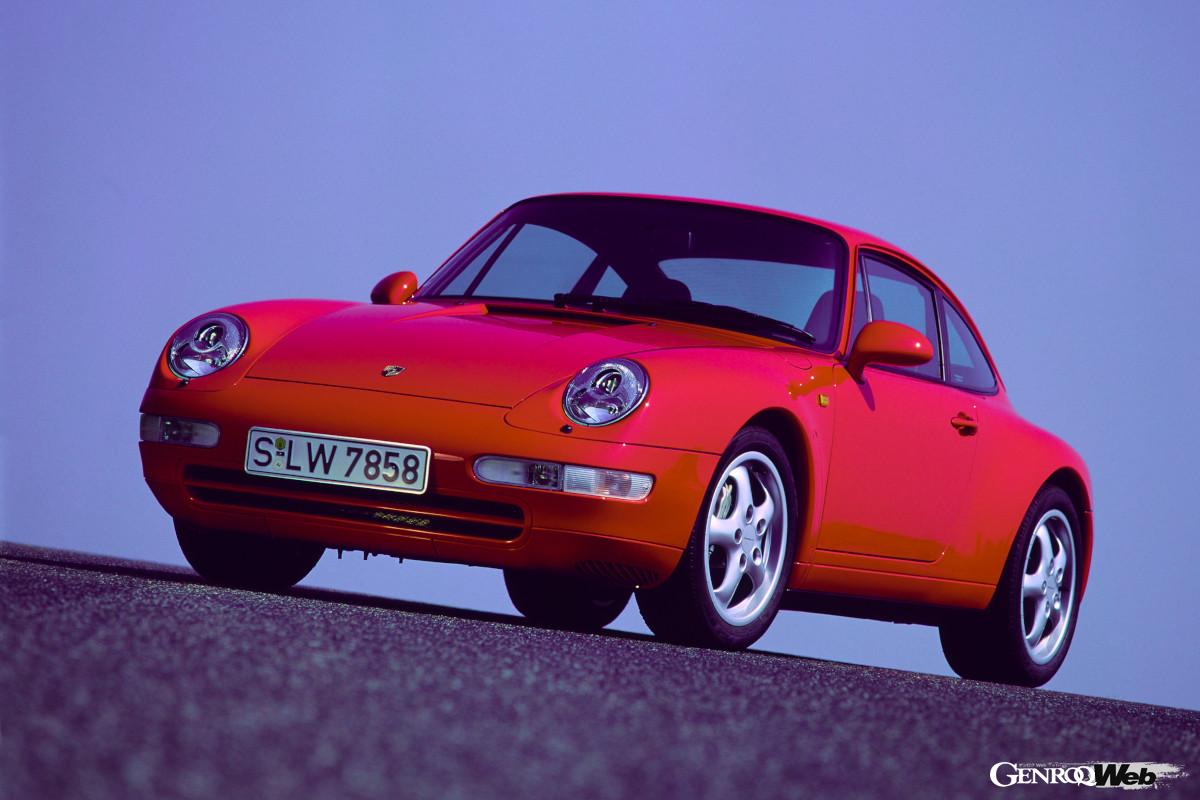
911 (Type 993) Carrera 2 / Carrera S / Carrera 4 / Carrera 4S / Carrera RS / Turbo / Turbo S / GT2 (1993-1998) Wiedeking, the new CEO Cabriolet
![Was the 964 911, the still-popular air-cooled model, Porsche’s savior? [Porsche Chronicles]](https://wheelfeed.com/wp-content/uploads/2024/11/2932-1761205570355.jpg)
911 (Type 964) Carrera 2 / Carrera 4 / Cabriolet / Targa / Turbo / Carrera RS (1989-1992) After “Black Monday” 911 E19 965 In 1980, Peter Schütz was appointed
![How did the modern-day “Turbo” begin? The early days of the “911 Turbo” [Porsche Chronicles]](https://wheelfeed.com/wp-content/uploads/2024/11/2984-1761206318916.jpg)
911 TURBO (1974-1989) A prototype of a 2.0-liter flat-six turbo was also produced. When development of the 911 began in 1957, Porsche designed the new 2.0-liter, air-cooled, six-cylinder, SOHC engine
![Why the 930-type “Porsche 911” was saved from extinction [Porsche Chronicles]](https://wheelfeed.com/wp-content/uploads/2024/11/3034-1761207154297.jpg)
911 2.7 / 911 SC / 911 Carrera 3.2 (1974-1989) The birth of the G series 911 Targa 911 911 2.7 The 911 reached a state of perfection with the
![How the Porsche 911, still synonymous with sports cars, was born [Porsche Chronicles]](https://wheelfeed.com/wp-content/uploads/2024/11/4160-1761207903904.jpg)
911 (1963-1973) Powerful 6-cylinder engine It is equipped with a 1991cc air-cooled, horizontally opposed, 6-cylinder, SOHC Type 901 engine in the rear. While the 356 was a huge hit, especially