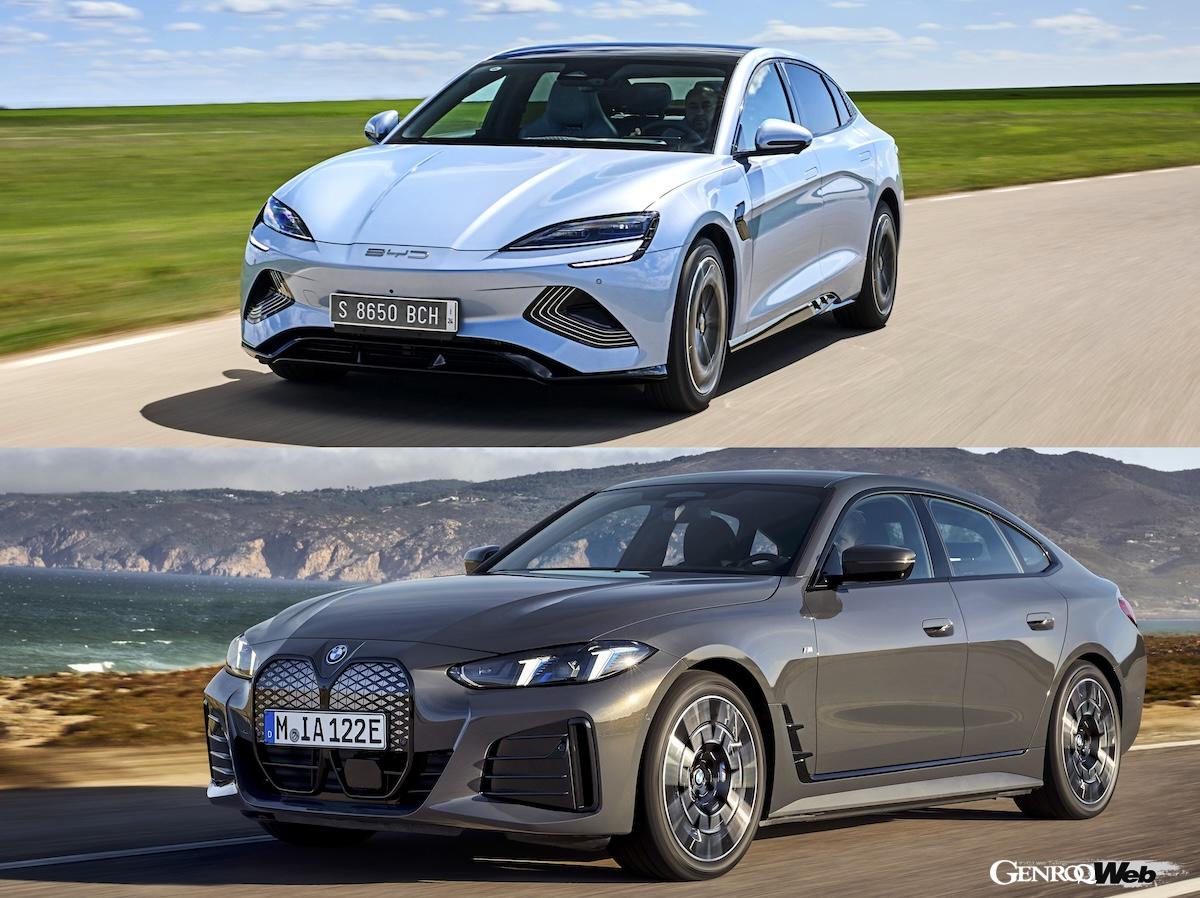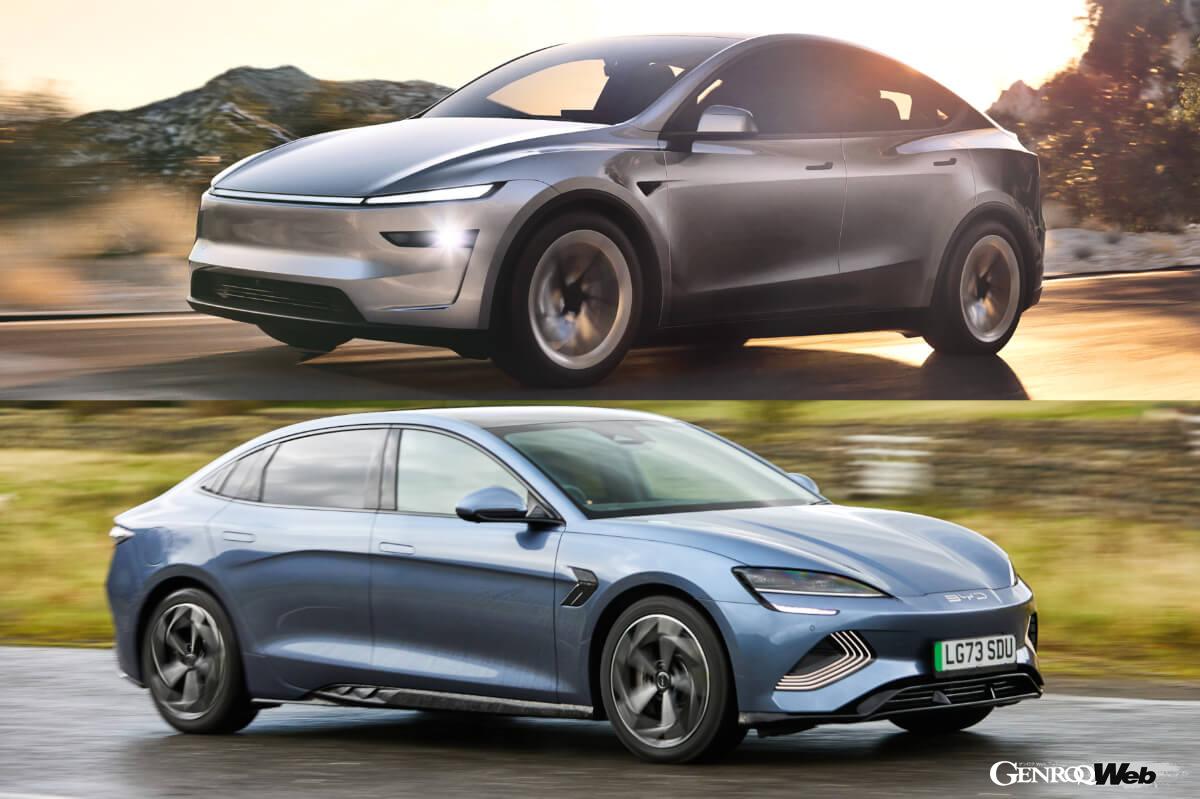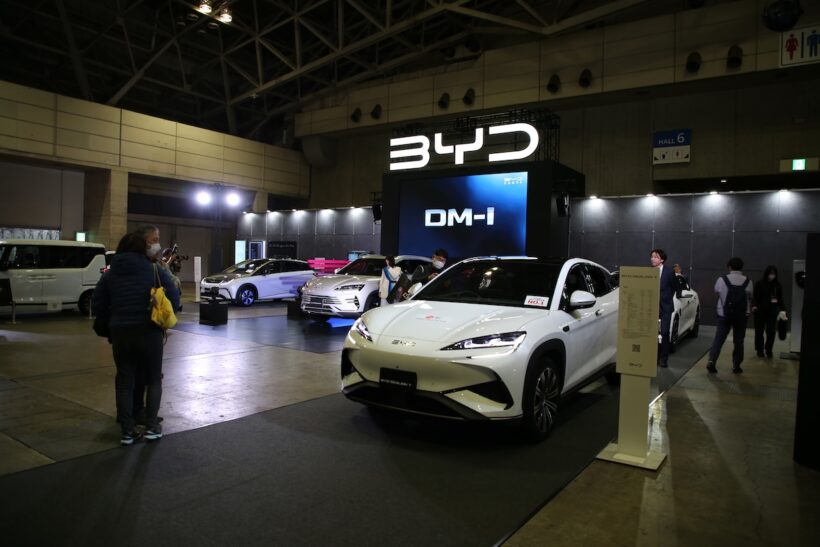

BYD SEAL
×
TESLA MODEL 3
The body size is the same, but the weight is different.

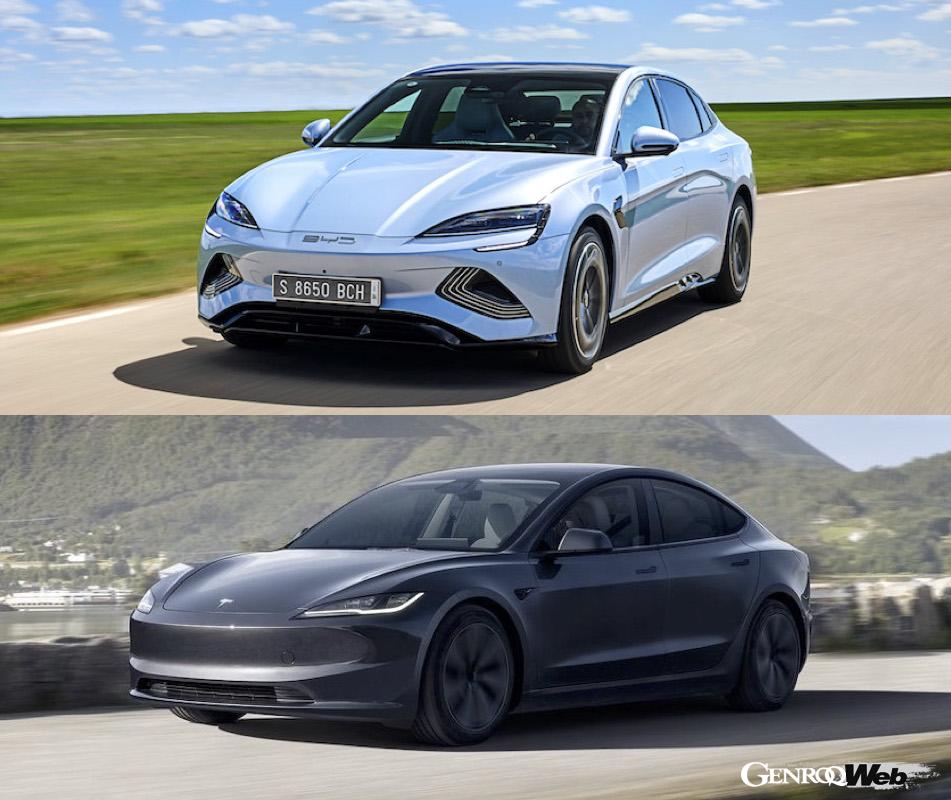
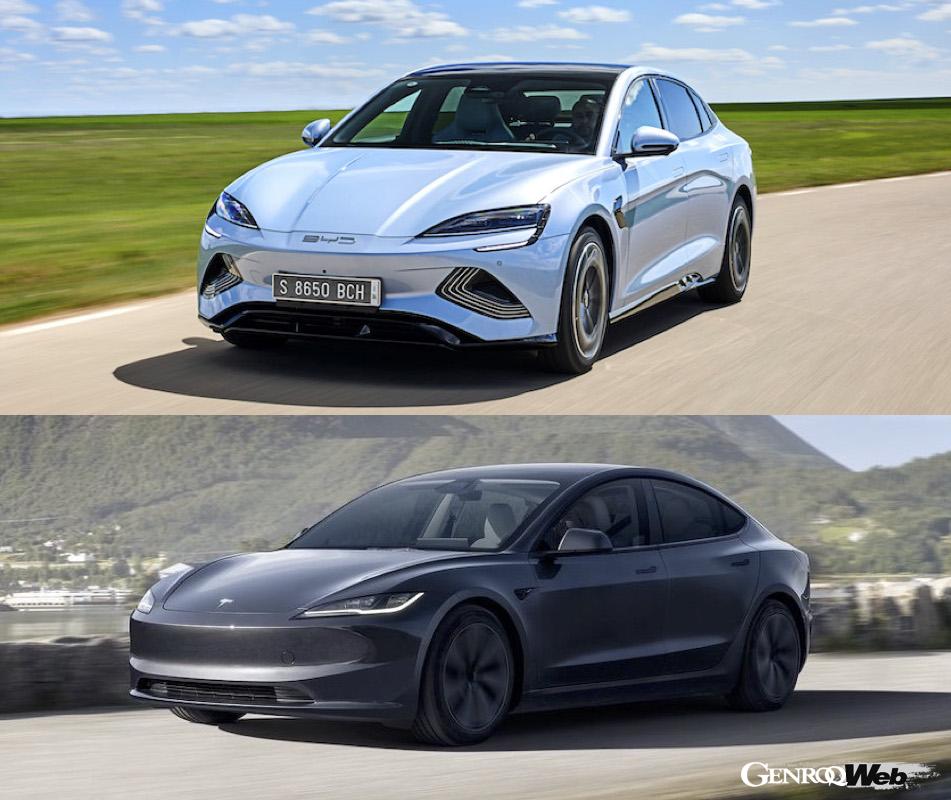
BYD seal

Tesla Model 3

BYD seal

Tesla Model 3
A closer look at the body dimensions of the BYD Seal and the Tesla Model 3 reveals that the Seal is 80mm longer, 25mm wider, and 20mm taller. The Seal is an orthodox sedan with a separate trunk, while the Model 3 looks more like a five-door hatchback. This is because the Seal’s trunk is longer, taking advantage of its 80mm longer overall length.
And the difference that is even more noticeable than size is the weight. The Model 3 weighs in at around 1,700 kg, while the Seal weighs over 2 tons. This may not be a big issue when cruising on the highway, but when driving in urban areas with frequent acceleration and deceleration or in an environment with many hills, the difference in weight will result in a difference in driving range. The feeling of agility when cornering will also be different. The battery capacity of the Seal is 82.56 kWh, while the Model 3 RWD is 54 kW.
BYD seal
Body size = Length 4800mm x Width 1875mm x Height 1460mm
Wheelbase = 2920mm
Vehicle weight = 2100kg
Tire size = 235/45R19
Tesla Model 3 RWD
Body size = Length 4720mm x Width 1850mm x Height 1440mm
Wheelbase = 2875mm
Vehicle weight = 1780kg
Tire size = 235/45R18
The sticker is equipped with the latest rare metal-free battery.

BYD seal

Tesla Model 3

BYD seal

Tesla Model 3
The motor specifications of the Seal exceed those of the Model 3. It appears that the later Seal has been developing the car in order to surpass the Model 3. The fact that they are both rear-wheel drive also clearly shows their competitive stance.
The biggest difference is that the Seal uses an “iron phosphate” lithium-ion battery. Iron phosphate batteries are lithium-ion batteries that do not use rare metals and are considered less susceptible to thermal runaway, making them safer and more durable.
BYD also has the advantage of producing its own batteries. The stickers are also compatible with the fast charging system “CHAdeMO,” which is common in Japan. Tesla uses a standard called “NACS,” which means that CHAdeMO cannot be used without an adapter.
BYD seal
Drive battery type = Lithium-ion battery
Maximum output = 312 PS/-rpm
Maximum torque = 360 Nm/-rpm
Transmission = 1-speed fixed
Drive system = RWD
Tesla Model 3 RWD
Drive battery type = Lithium-ion battery
Maximum output = 264 PS
Maximum torque = 340 Nm
Transmission = 1-speed fixed
Drive system = RWD
The vehicle prices are comparable, but the Seal is more convenient in Japan.

BYD seal

Tesla Model 3
The two companies are also competing on price. However, there is a big difference in range, with the Seal being 640km and the Model 3 being 573km (both in WLTC mode). Considering the difference in range and charging method, it seems that the Seal is more convenient in Japan.