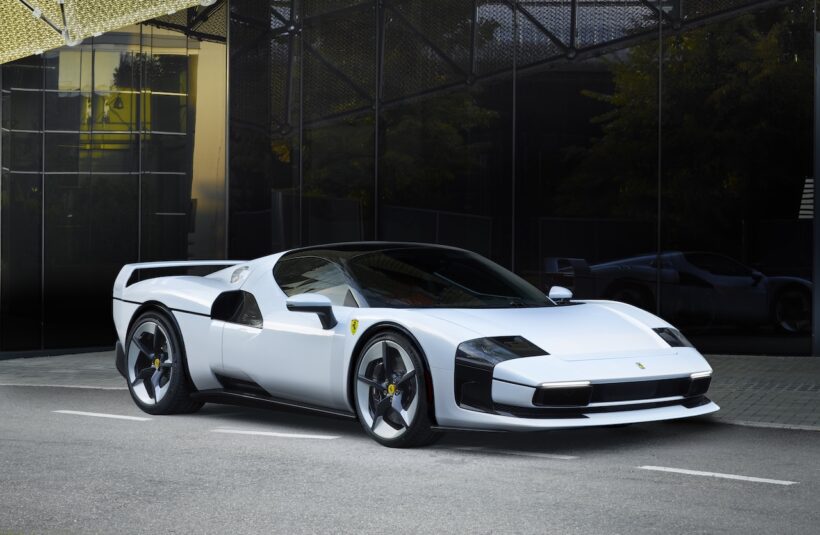

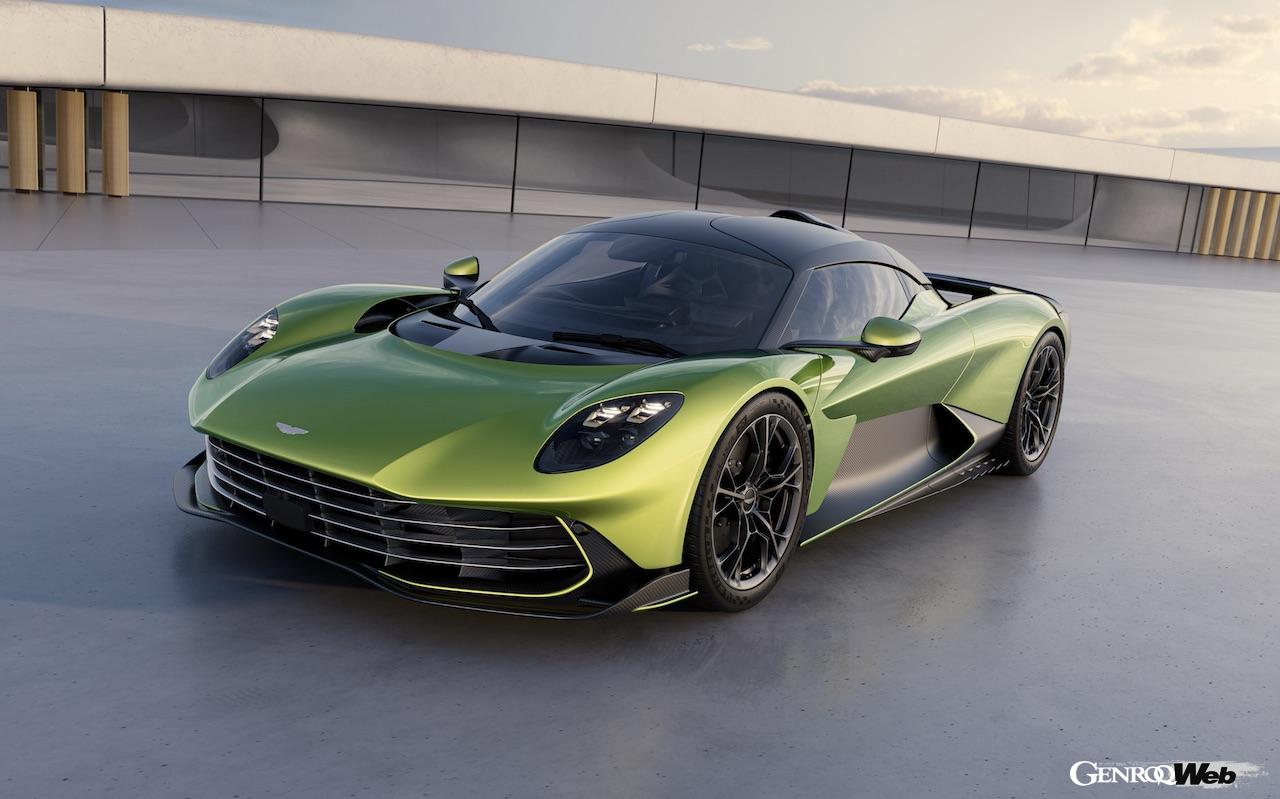
Aston Martin Valhalla
Aston Martin introduces many “firsts”
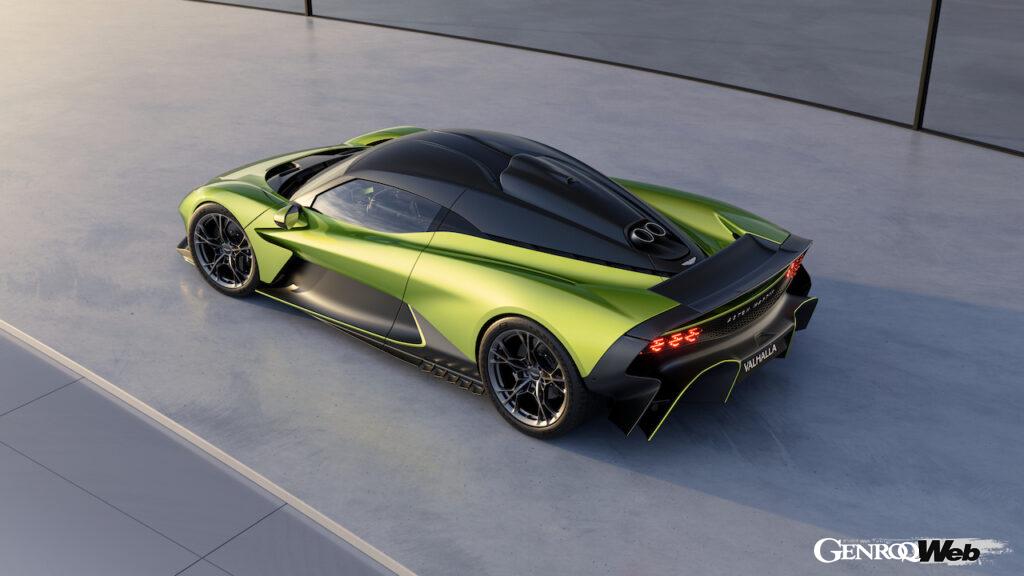
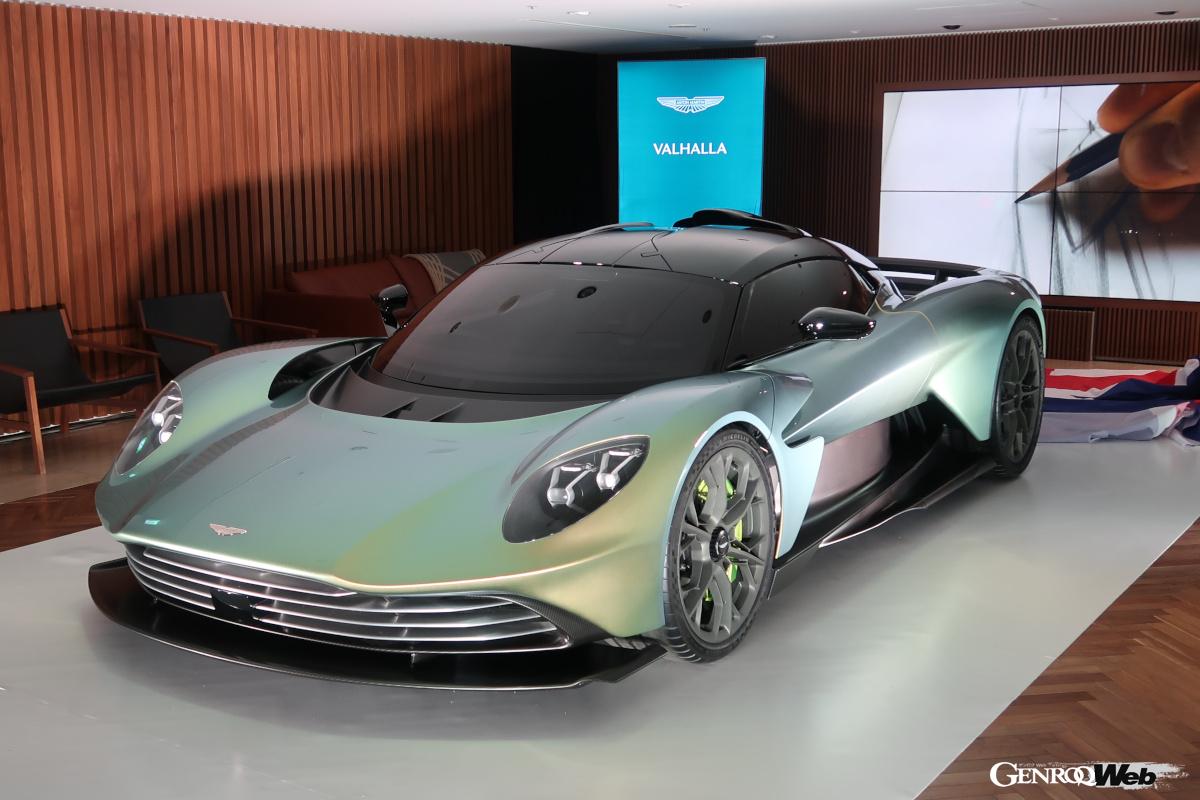
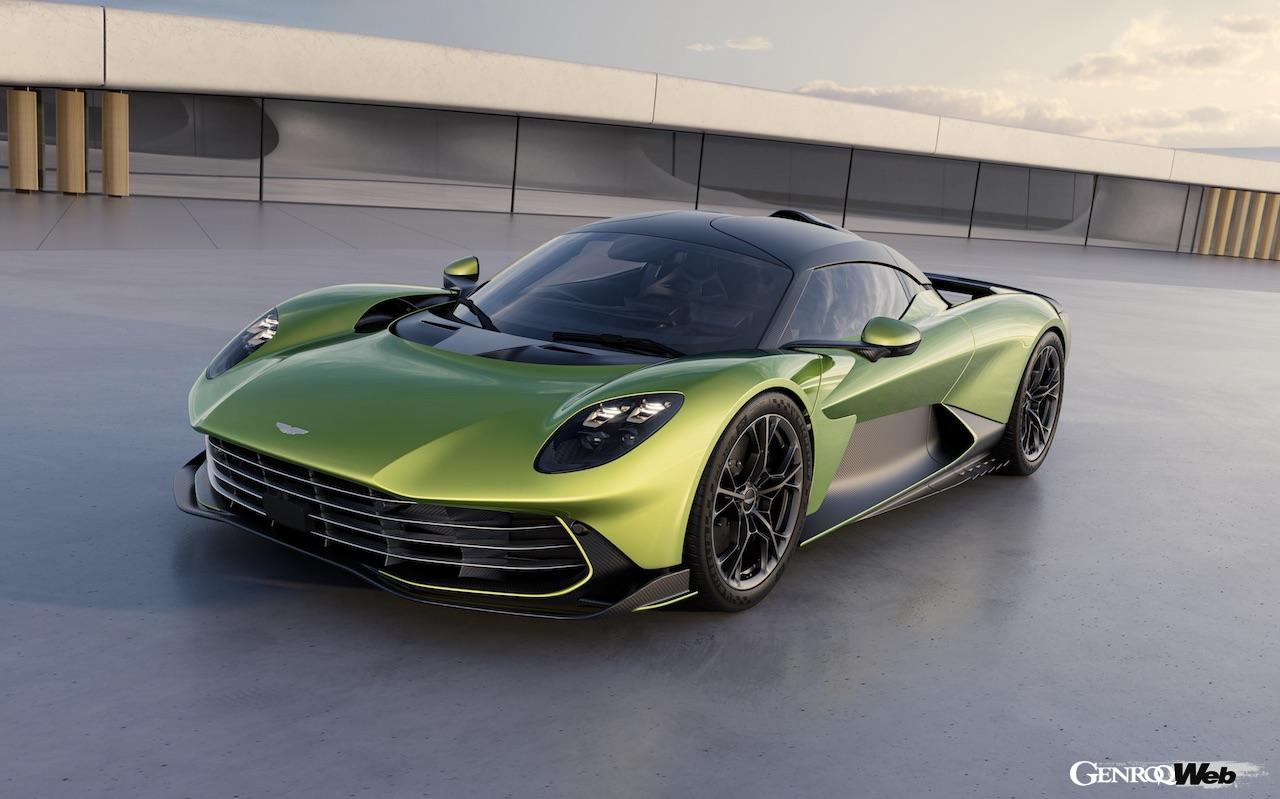
The Valhalla, which will finally begin production in 2025, will feature a number of Aston Martin firsts, including a plug-in hybrid powertrain based on a 4.0 V8 twin-turbo.
Aston Martin Valhalla combines the performance and technology cultivated through its F1 racing career with aerodynamic design and thrilling driving dynamics to create a super sports car that aims to deliver overwhelming driving performance on both public roads and circuits. With development currently in the final stages, Aston Martin has revealed the full details of the production model that will be released in 2025.
The Valhalla introduces many firsts. It is Aston Martin’s first production mid-engine super sports car and the first to feature an all-new 4.0-liter twin-turbo V8, the highest-performing V8 engine in Aston Martin’s history. It also marks the first time that an eight-speed dual-clutch transmission (DCT) with electric motor and rear electronically controlled differential (E-Diff) is available.
The car’s form and proportions express the performance of an extreme super sports car, incorporating Aston Martin’s new design language. The pure lines characteristic of Aston Martin are fused at a high level with innovative active aerodynamics that generate powerful downforce.
Working closely with Aston Martin Aramco F1 Team’s consultancy, Aston Martin Performance Technologies (AMPT), on dynamics, aerodynamics and materials, the team has brought a new level of knowledge and expertise to the design and development.
Luxury tradition meets F1 technology
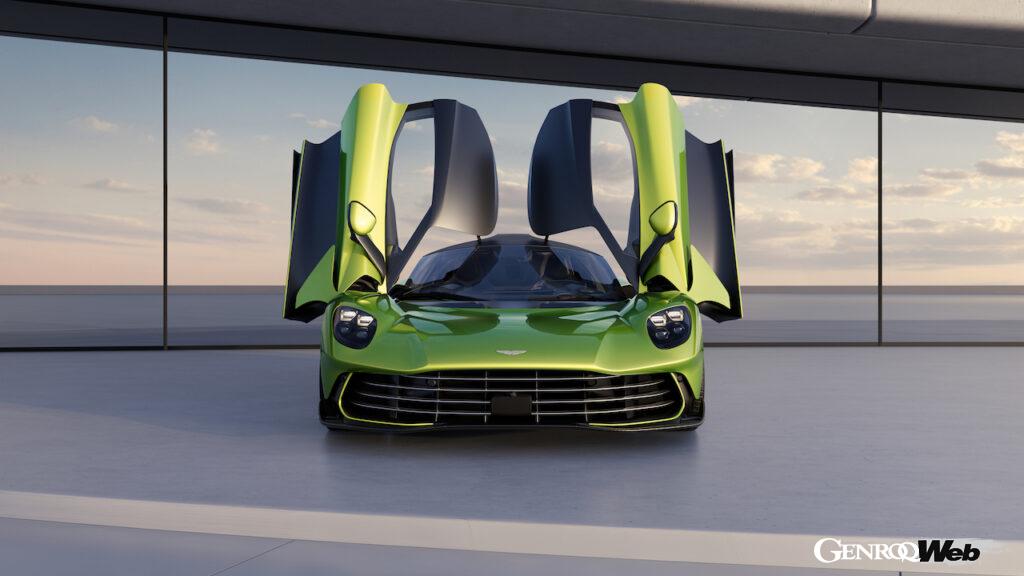
The Valhalla actively incorporates the latest F1-derived technology into the luxury tradition that Aston Martin has built throughout its history.
Aston Martin CEO Adrian Hallmark commented on Valhalla:
“Four years ago, we embarked on a journey to transform the Aston Martin brand, combining our long-established reputation for luxury with cutting-edge technology from Formula 1 and class-leading performance to become the world’s most successful brand.
“Following the critical acclaim since the launch of our next-generation sports cars, we are pleased to announce the addition of Valhalla, Aston Martin’s first mid-engined production model, the ultimate driver’s super sports car. It has been developed to be the most driver-focused and technologically advanced super sports car, both in terms of specification and on the track. It offers true performance, while on public roads it offers the same practicality and comfort as all Aston Martins. It is a one-of-a-kind car, designed to be the most elegant and exciting vehicle on the market.”
“Developing Valkyrie, the ultimate hypercar, and working with Adrian Newey has taught us to think in new ways. This knowledge and new methods have enabled us to build on the strengths of our past successes and position us as a class-leading company in technology, performance and customer experience for customers who look to Valhalla, the next chapter in Aston Martin’s story.”
Achieves maximum system output of over 1000PS
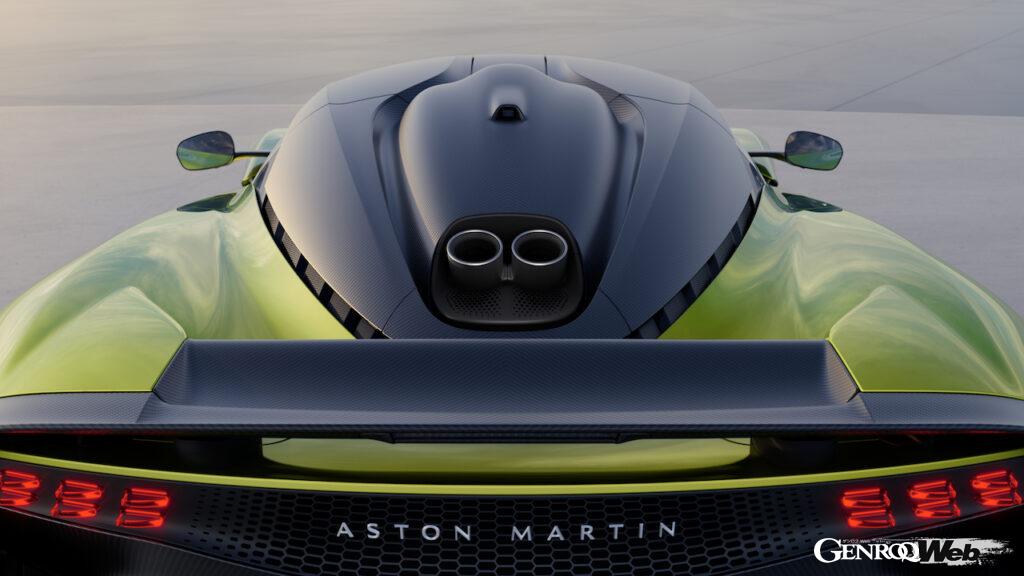
The power unit is a plug-in hybrid that combines a 4.0-liter V8 twin-turbo with three electric motors, producing a maximum system output of 1079 PS.
The production version of the Valhalla has evolved significantly from the original concept, with significant improvements being made in maximum power, downforce, dynamic performance, and more.
At its heart is a plug-in hybrid powertrain consisting of a 4.0-liter V8 twin-turbo engine that produces a maximum output of 828 PS on its own, and three electric motors (two of which drive the front axle) that provide an additional 251 PS, delivering a class-leading maximum output of 1079 PS and maximum torque of 1100 Nm.
The internal combustion engine delivers 207 PS per litre, the highest power output per displacement in Aston Martin’s history. A newly developed 8-speed DCT transmission delivers power to the rear axle, boasting lightning-quick shifting and thrilling performance. Performance targets include 0-100 km/h acceleration in 2.5 seconds and an electronically limited top speed of 350 km/h.
Active aerodynamics, incorporating insights gained from the Valkyrie, generate more than 600 kg of downforce, which is achieved at 240 km/h and maintained all the way to a top speed of 350 km/h. The active aerodynamics also help dissipate excess downforce by gradually reducing the angle of attack of the front and rear wings as speed increases.
Four drive modes, including “Pure EV”
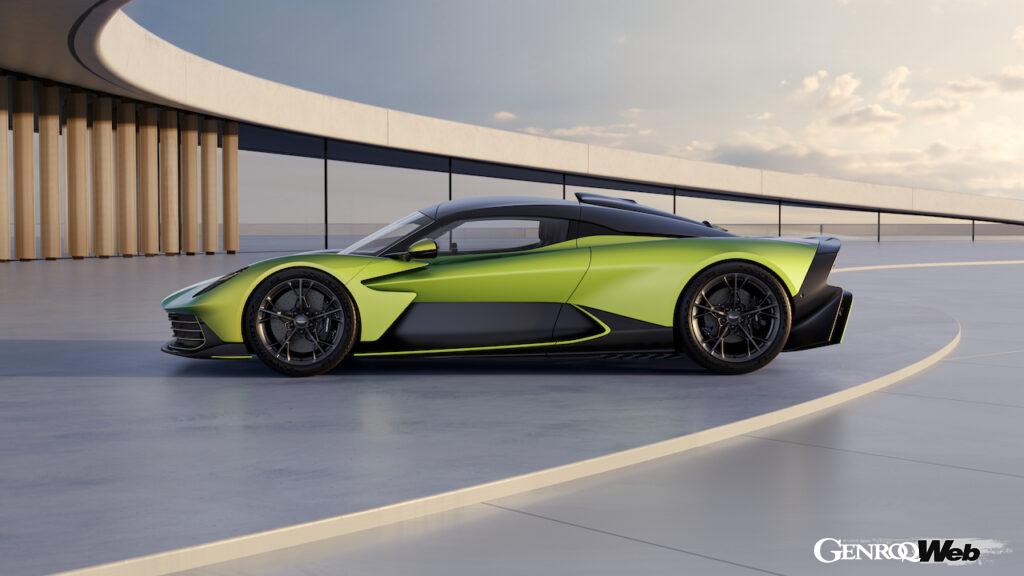
The Valhalla’s Integrated Vehicle Dynamics Control (IVC) offers four drive modes, including EV mode, and automatically deploys active aerodynamics to suit the mode and driving conditions.
Integrated Vehicle Dynamics Control (IVC) monitors the suspension, braking, steering, active aerodynamics and powertrain systems to ensure optimal performance and driver engagement in all conditions.
Working in conjunction with four drive modes, the IVC continuously monitors vehicle behavior and driver demands, adjusting its dynamic characteristics accordingly. This highly complex and sophisticated system is meticulously calibrated to deliver an organic, natural driving experience, enhancing performance effortlessly and seamlessly, taking performance and driver engagement to new levels.
The default is “Sport” mode, but the driver can manually select between “Pure EV,” “Sport Plus,” and “Race” drive modes, each with its own unique driving characteristics, including powertrain (including torque vectoring and hybrid system), suspension firmness, active aerodynamics, and steering calibration.
In “Pure EV” mode, the car is driven solely by the front axle motor, and when the battery gets low, it automatically switches to “Sport” mode, where the 4.0-liter V8 engine is activated, combining the instantaneous force of the electric front axle with the overwhelming power of the V8 engine to deliver driving performance befitting a hybrid super sports car.
In “Pure EV,” “Sport,” and “Sport Plus” modes, the active rear wing remains retracted, while in “Race” mode the rear T-wing is raised by 255 mm using a powerful hydraulic ram. Ahead of the front axle is a hidden active front wing that works in conjunction with the distinctive active rear wing.
The DRS (Drag Reduction System) automatically engages when the car determines it needs to release unwanted downforce. During braking in Race mode, the rear wing primarily functions as an air brake, balancing pressure in conjunction with the active front wing. This ensures optimal stability while delivering excellent braking performance.
Simon Newton, Aston Martin’s Director of Vehicle Performance, added this about the Valhalla’s performance:
“The Valhalla delivers phenomenal performance with 1079 PS and 1100 Nm, while also delivering an even higher level of speed, precision and excitement on the race track. Our challenge was to maintain the fun and emotional characteristics of a super sports car on public roads.”
“Pure EV” mode with a range of 14km

The “Pure EV” mode, powered solely by the electric motor on the front axle, provides a maximum range of 14km.
The Valhalla’s plug-in hybrid powertrain combines a 4.0-liter twin-turbo V8 engine producing 828 PS with three electric motors, each producing 251 PS. Two electric motors are mounted on the front axle, while the third is integrated into an eight-speed DCT transmission and provides drive solely to the rear axle.
The three electric motors are powered by an advanced High Performance Battery (HPB) system designed for performance-focused PHEV powertrains. The battery features an efficient dielectric cooling system and combines rapid deployment of charging power, fast energy absorption capability and high power density to meet frequent and continuous power demands.
The HPB cooling system circulates an electrically insulating coolant throughout the battery pack, maintaining each of the 560 cells at an optimal temperature to ensure consistent maximum performance. When “Pure EV” mode is selected, the Valhalla is driven solely by the front axle, with a maximum range of 14km and a top speed of 140km/h.
The rear axle is driven by the V8 engine, with additional power provided by a third electric motor integrated into the DCT transmission. Unlike the V8s found in the Vantage, DB12 and DBX707 models, this new engine uses a dry-sump lubrication system to ensure adequate oil supply even under the high lateral forces experienced during track use. It also features a flat-plane crankshaft with crankpins offset 180 degrees.
The newly developed 8-speed DCT with paddle shifters is specially designed and manufactured for the hybrid era, and features a built-in electric motor. This electric motor is used to start the V8 engine, charge the high-voltage battery, and provide torque fill to assist the engine. There is no reverse gear, and reverse is handled by the electric motor on the front axle in all drive modes.