


At this point, the previous Tiguan and the current Q3 are realistic options.
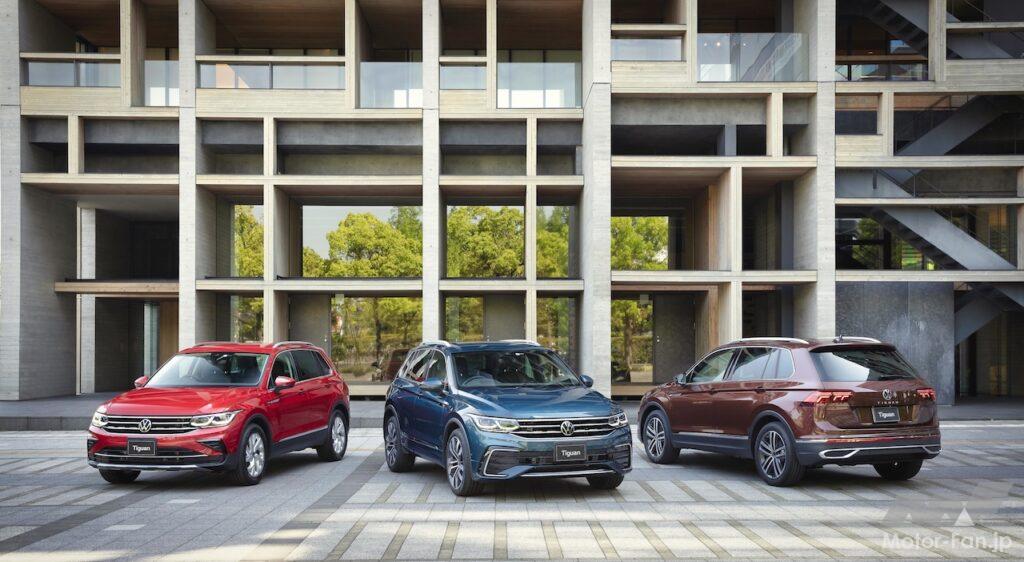
Exterior of the second-generation Volkswagen Tiguan
The current Volkswagen Tiguan is in its third generation and was just released in Japan in November 2024. It uses the MQB evo platform, an evolved version of the MQB.
The third generation of the Audi Q3 will be unveiled in Germany in August 2025, and will be released in Europe starting this fall. The German announcement includes a variety of powertrains, including PHEVs, the latest interior and exterior designs, as well as digital matrix LED headlights and improved suspension. The release date for Japan has not yet been announced.

Exterior of the current Audi Q3/Q3 Sportback (when first released)
Both cars have this model cycle, but as of early October 2025, there are still very few new (current) Tiguans on the used car market. The few remaining are almost all registered, unused vehicles. Therefore, it is more realistic to compare the second-generation Tiguans, as well as the Q3.
Changes in new car prices for the Q3 and Tiguan
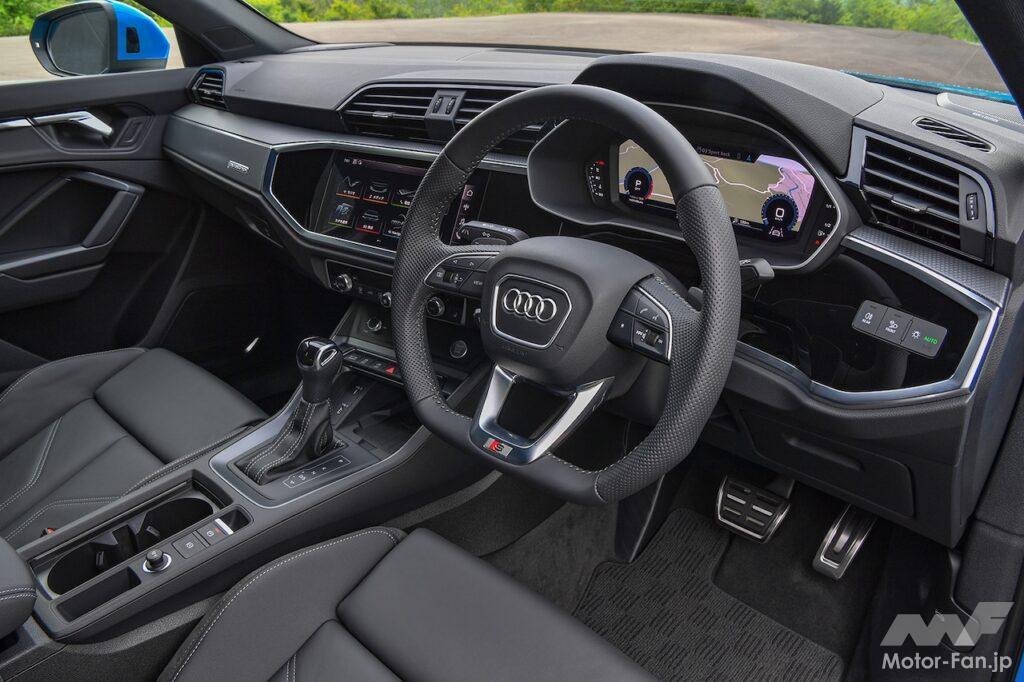
One of the Q3’s strengths is its high-quality instrument panel.
The current Q3 will undergo some improvements in December 2024, with an updated clean diesel 2.0-liter TDI engine. It now boasts a maximum output of 142kW (193PS), an increase of 32kW (43PS) from before the improvement, and a maximum torque of 400Nm, an increase of 60Nm. The 1.5-liter TFSI gasoline engine remains unchanged, with a maximum output of 110kW (150PS) and a maximum torque of 250Nm. The price range for the Q3/Q3 Sportback is between 5.03 million and 6.02 million yen.
The previous (second-generation) Tiguan added the “TDI 4MOTION” model, which is equipped with a popular 2.0-liter TDI engine, in August 2018. The price range for the “TDI 4MOTION” is 4,086,000 to 5,540,000 yen (including limited-edition models).
A minor change was made in May of the following year, and the high-performance “R” model equipped with a 2.0-liter TSI engine was added. The price range at this time was 4,079,000 to 6,849,000 yen.

Tiguan R front mask
Furthermore, the “TSI 4MOTION” equipped with a 2.0-liter TSI engine was added in September 2022. The price range for the “TSI 4MOTION” was 4,792,000 to 5,816,000 yen.
Diesel car price difference of about 740,000 yen

Audi Q3 exterior
A simple comparison of new car prices is not possible because the price ranges at the time of release, as well as the timing of some improvements and minor changes, differ. However, it is clear that Volkswagen, which touts itself as a people’s car, and Audi, a premium brand, are trying to differentiate themselves.
As of April 2020, the Q3 35 TDI Quattro was priced at 5.31 million to 5.61 million yen. As of May 2020, the Tiguan TDI 4MOTION was priced at 4.569 million to 5.509 million yen. The price difference between the entry-level models is particularly large, at around 740,000 yen.
Are the average prices of used cars surprisingly similar?
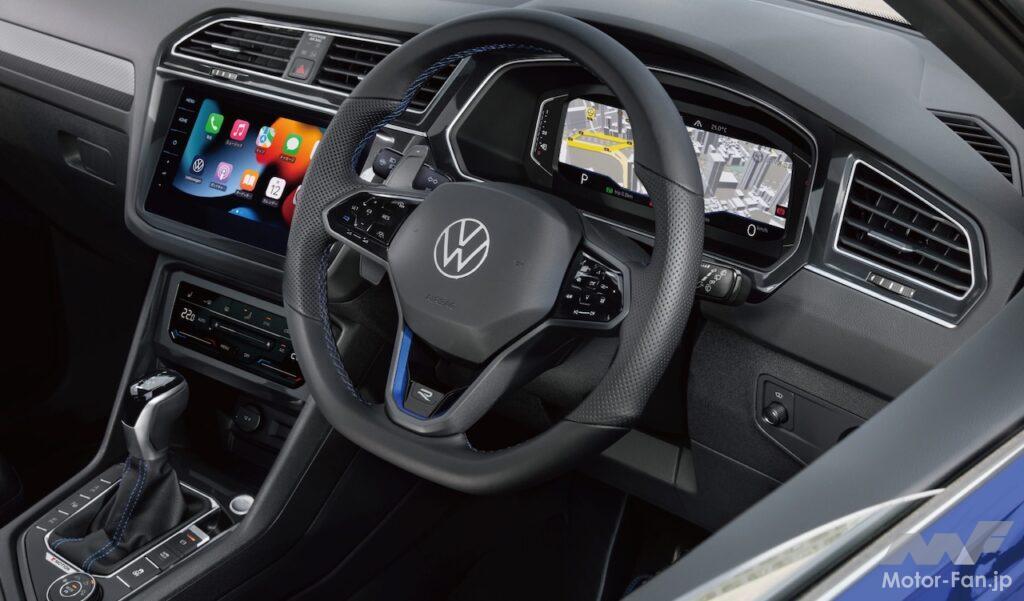
Second generation Tiguan “R” instrument panel
That’s a long introduction, but the average price on the used car market for the second-generation Tiguan will be around 3.15 million yen as of early October 2025. The current second-generation Q3 is priced at around 3.39 million yen. While the Q3 is slightly more expensive, the difference is not as great as the positioning (image) of the two brands.
When the second-generation Tiguan was released in January 2017, it was only available with a 1.4-liter gasoline engine, the 1.4 TSI, and there are many examples on the used car market for 2 to 3 million yen. Many of these cars have low mileage, making them an impressive value for money.
Meanwhile, the 1.5-liter gasoline Q3 35 TFSI is available for around 3 million yen, and while the Tiguan is mostly a 2019 model, most are from 2020 to 2022. If you’re looking for something cheap, you could go for the Tiguan 1.4 TSI, or, considering cost-effectiveness, the Q3 35 TFSI.










![BMW M3 vs. Mercedes-AMG C63: Which is better? [For those unsure about which used car to buy: Part 2]](https://wheelfeed.com/wp-content/uploads/2025/08/1290-1761181692017.jpg)