
![A variety of variations of the E92 “M3” equipped with the only V8 engine [The history of BMW M]](https://wheelfeed.com/wp-content/uploads/2025/05/1809-1761189695742.jpg)
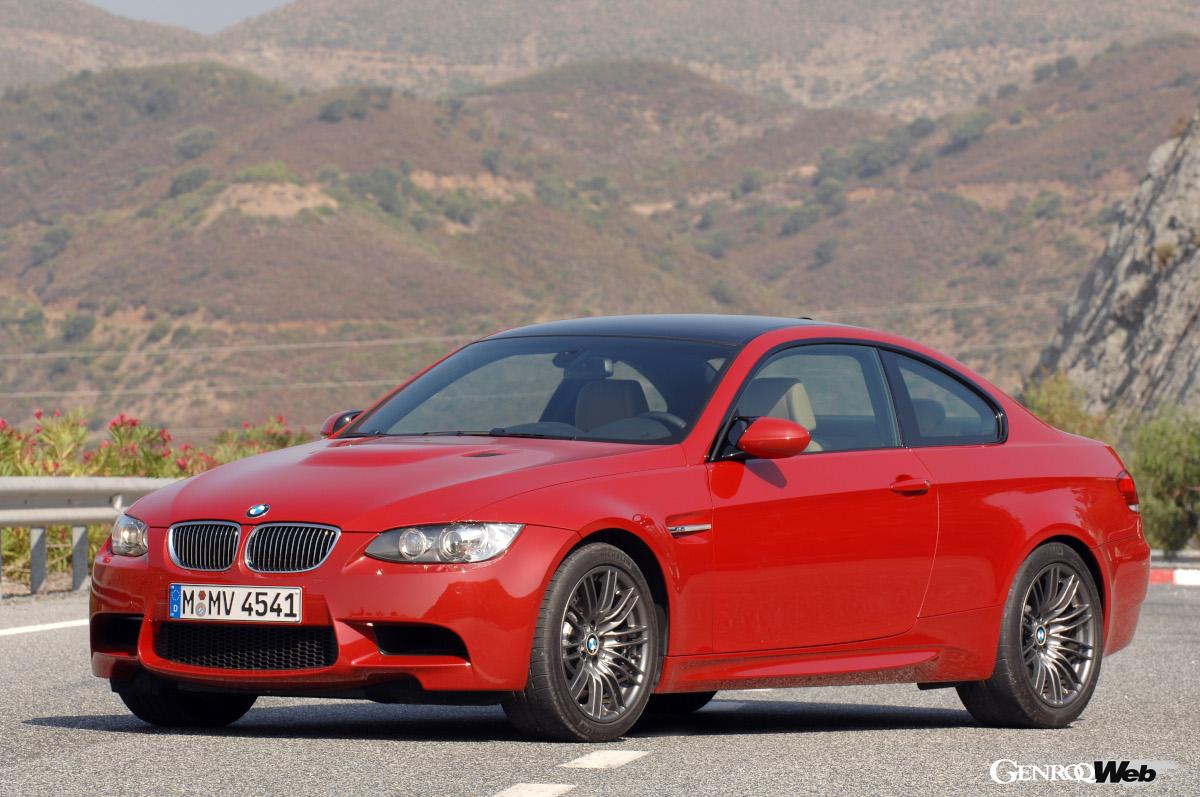
M3 (E90)
Achieving weight reduction despite increased size
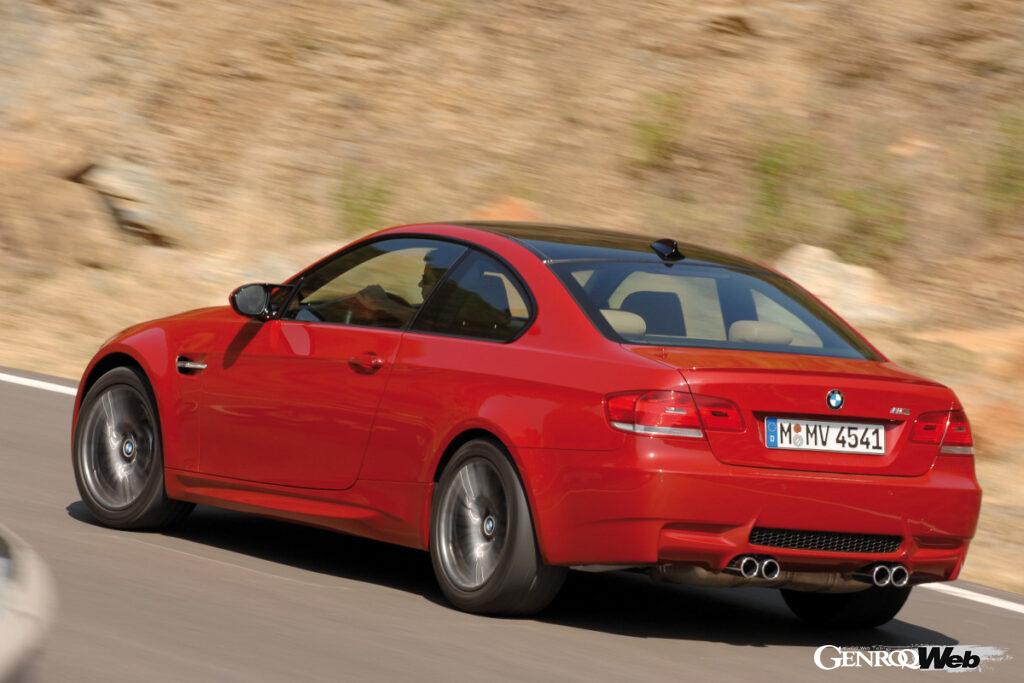
E92 type “M3”
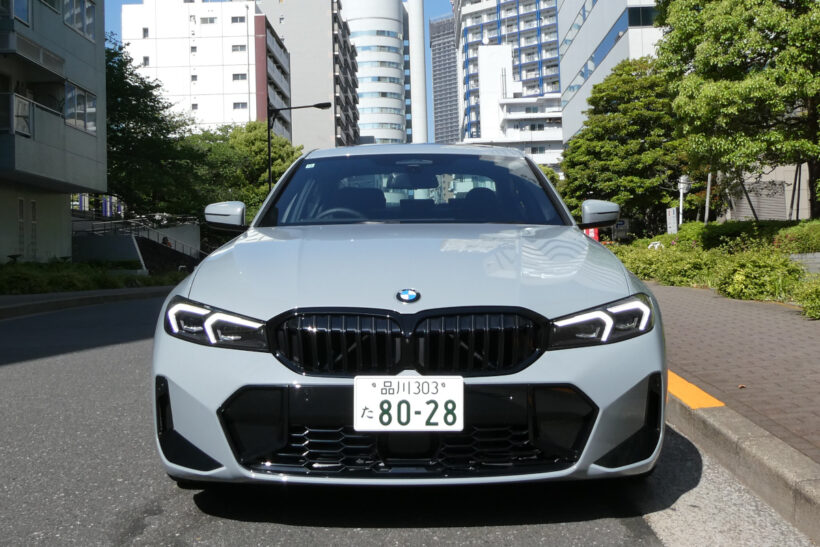
During the E46 era, the 3 Series accounted for 44% of BMW’s total production volume, making it a quintessential core model. It evolved into the E90 model in 2005. The body, designed by Joji Nagashima, was enlarged by a size larger, with the wheelbase extended by 30mm, improving interior comfort. Then, at the Geneva Motor Show in March 2007, BMW M unveiled the M3 Concept, based on the two-door coupe E92 model. It went on sale as the M3 from April.
Like the E46 M3, the body is equipped with front and rear blister fenders, a front bumper with large air intakes, a rear bumper with a diffuser, side skirts, a rear spoiler, etc., and is larger than the standard model at 4620mm in length, 1805mm in width, and 1425mm in height. Accordingly, the front and rear treads have also been widened to 1540mm each.
On the other hand, the adoption of a carbon fiber roof achieved a low center of gravity and reduced weight, keeping the vehicle weight to 1,580 kg despite the increase in size.
The only V8-powered M3

Interior of the E92 “M3”.

4.0 liter V8 DOHC “S65B40” unit.
The engine mounted longitudinally in the front is a 4.0-liter V8 DOHC “S65B40” unit inherited from the E46 “M3 GTR.” The S65B40 engine block, currently the only V8 for a mass-produced M3, was manufactured at BMW’s light alloy foundry in Landshut, the same facility that produced the V10 for Sauber BMW F1 and the V10 for the M5/M6, and features a special aluminum-silicon alloy crankcase and bedplate structure. It is lightweight at just 202 kg and boasts high torsional rigidity.
In addition, it is equipped with a double VANOS variable valve timing system, eight independent throttles for each cylinder, and a Siemens MSS60 control system, producing a maximum output of 420 PS/8300 rpm and a maximum torque of 400 Nm/3900 rpm.
When first released, the only gearbox available was a 6-speed manual, with a 0-100km/h time of 4.8 seconds. From 2008, BMW’s first dual-clutch, two-pedal manual transmission, the Getrag 7-speed M-DCT, was also available, with a 0-100km/h time of 4.6 seconds.
4-door and convertible versions

E90 type “M3 Sedan”

E93 “M3 Convertible”
At the Tokyo Motor Show in 2007, the first four-door sedan (E90 model) since the E36 model was introduced. Its internal structure was basically the same as the coupe, but the roof panel remained steel, and the vehicle weight was 1,605 kg.
Furthermore, in 2008, a two-door convertible (E93 model) was added to the lineup (not introduced in the Japanese market), but unlike the soft-top E46 model, it had an electric hardtop, which increased the vehicle weight to 1,810 kg.
In November 2009, a high-performance version based on the E92 M3, the “M3 GTS,” was announced. It featured a 4.0-liter V8 engine tuned to 444 PS, and was 136 kg lighter thanks to the removal of the rear seats, modifications to the center console and door panels, the adoption of polycarbonate windows, and the removal of sound-absorbing material. Furthermore, it featured a rigid-mounted rear axle, specially designed lowered suspension, dampers, large-diameter front disc brakes with six-pot calipers, and a special spoiler. Deliveries began in 2010 with a limited run of 135 units.
Restoring the racing image

The race-spec “M3” was released in 2008.
BMW M GmbH is also actively involved in motorsports with the M3. In 2009, the M3 GT4 was released for customers, and in 2010, the BMW Motorsport/Schnitzer Motorsport M3 GT2 won the 24 Hours of Nürburgring. Furthermore, the car achieved strong results in races around the world, including a 1-2 finish at the 12 Hours of Sebring in 2011.
In 2012, the DTM regulations were revised to allow two-door models to participate, and the team returned with the E92 M3 for the first time in nearly 20 years. They won five out of ten races, taking both the Drivers’ and Manufacturers’ titles, making a big impact by announcing the return of the “racing M3.”











![The S-Type, widely regarded as Bentley’s masterpiece post-war saloon [Bentley 100 Years of Car History]](https://wheelfeed.com/wp-content/uploads/2025/11/4703-1762127546348.jpg)