
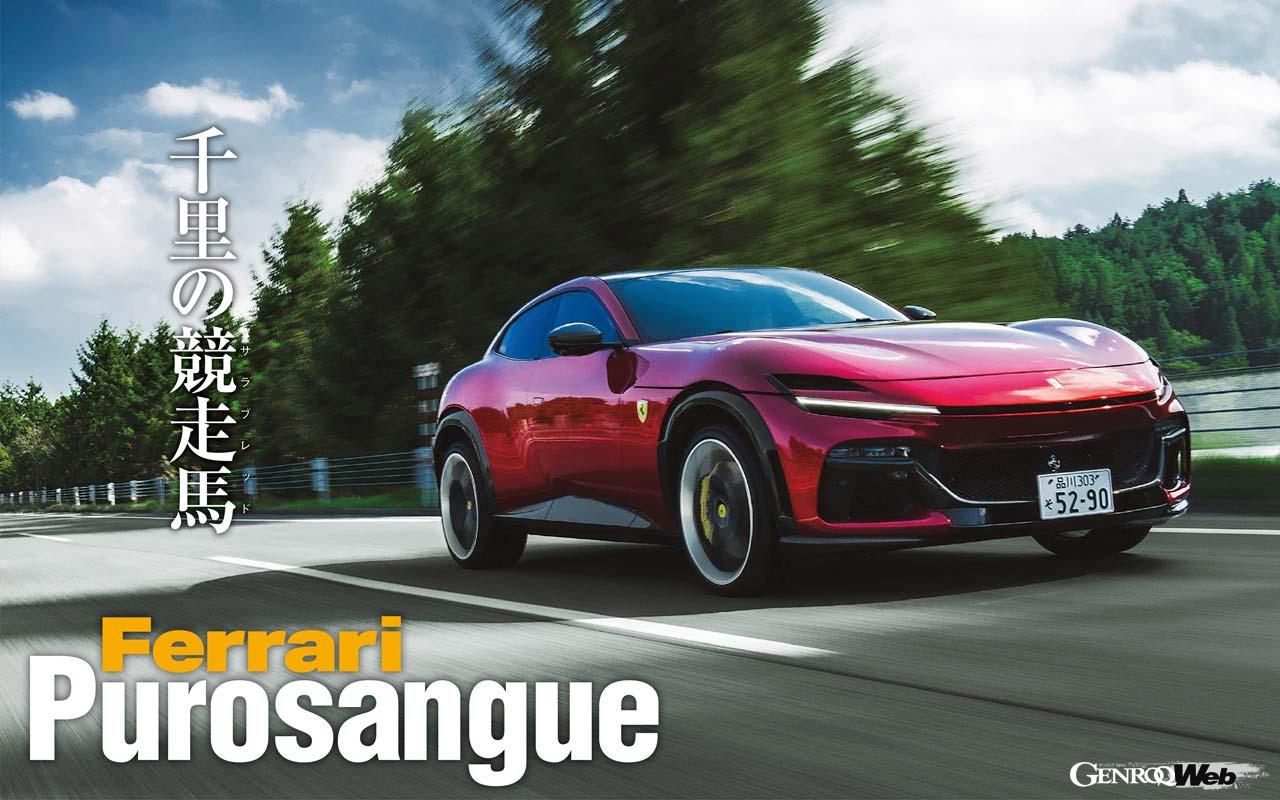
Ferrari Purosangue
Unique coupe-like style
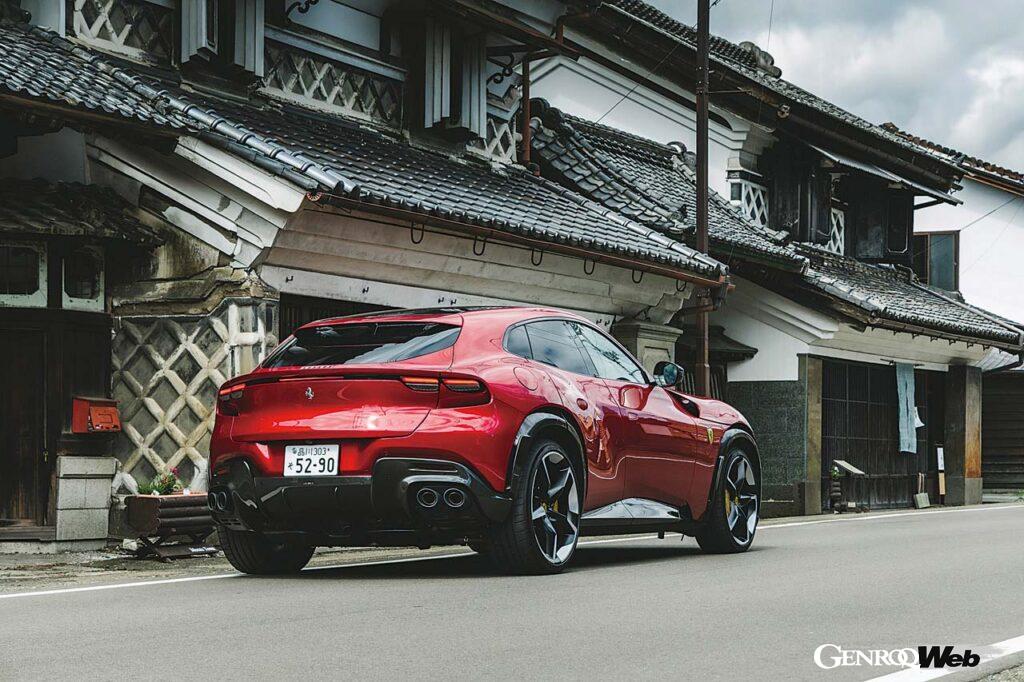

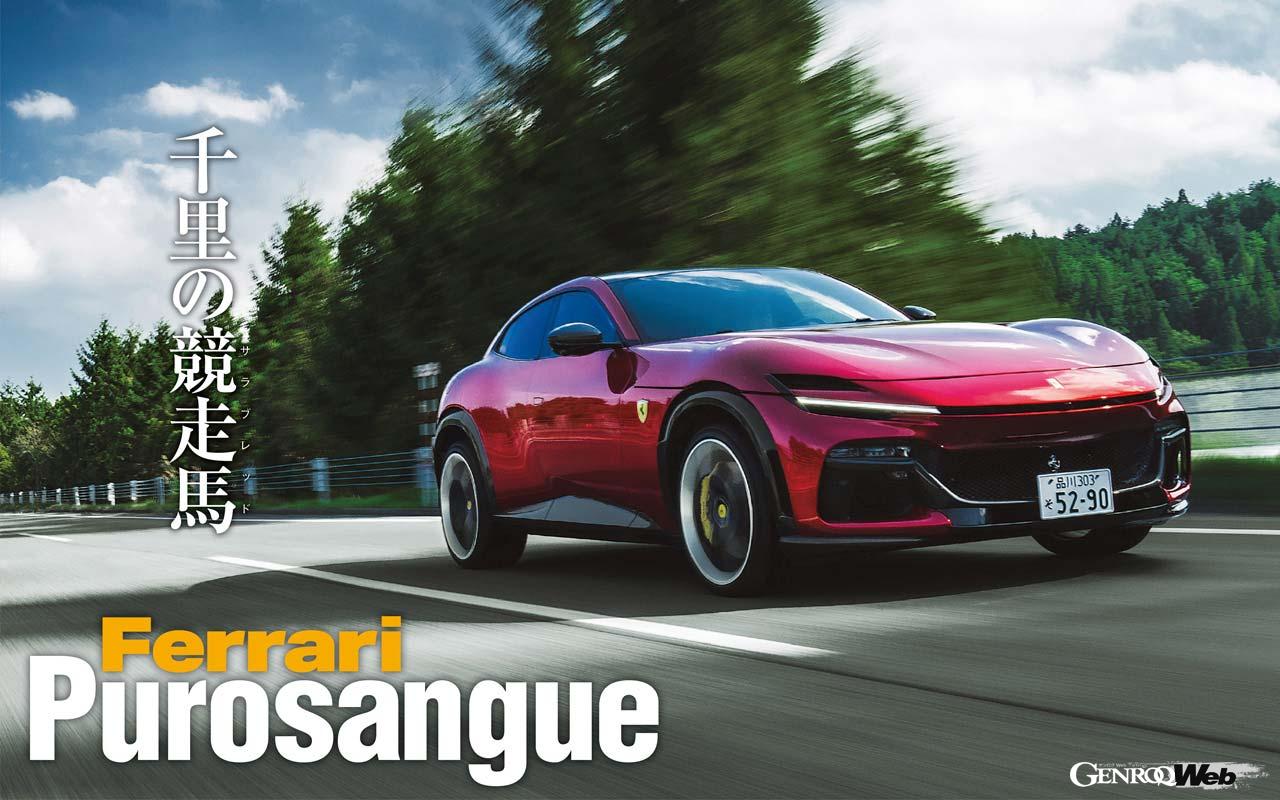
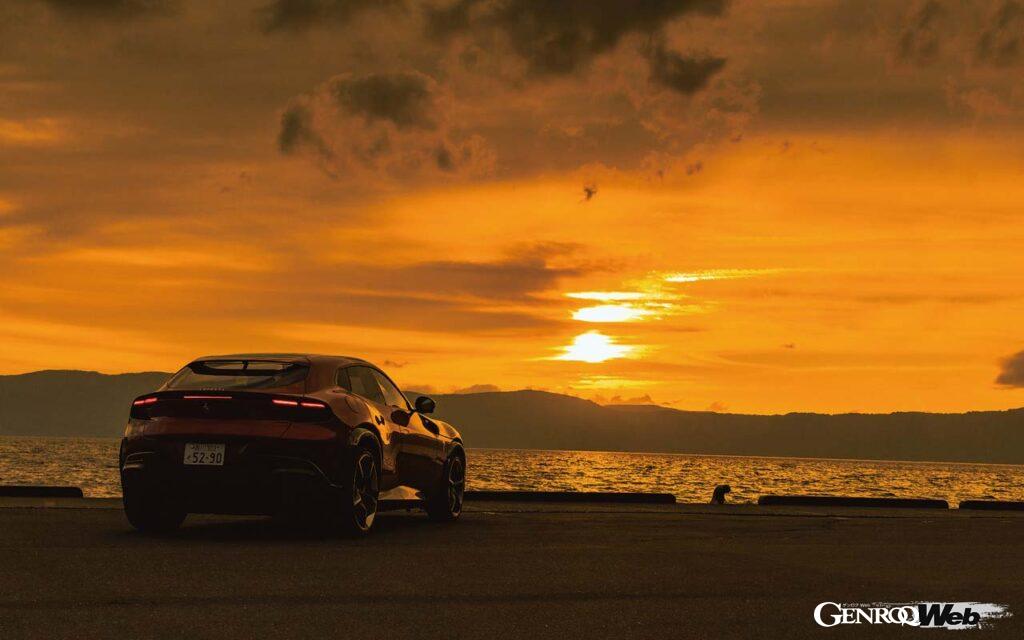
We headed north from Tokyo on the Tohoku Expressway, heading straight for Lake Towada and Oirase Gorge in Aomori Prefecture. It was about 800km one way. On the way back, we took the highway from Hachinohe, stopping along the way at the Hachimantai Aspite Line in Iwate Prefecture. The photo was taken in Murata Town, Miyagi Prefecture, known as the “town of storehouses.”
There’s an Italian proverb that goes, “He who goes quietly goes well. He who goes well goes far.” (Chi va piano’ va sano e va lontano). A collection of essays by Saburo Shiroyama has also been published with the same title, though the wording is slightly different. These words sometimes come to mind when I’m behind the wheel of a GT car. What’s important when traveling long distances isn’t instantaneous speed, but maintaining a high average speed. To achieve this, you need a comfortable environment where you can relax while still concentrating, and a grand tourer truly does have that.
He once drove a GTC4 Lusso to Cape Soya in the middle of winter with the GENROQ team, so even at his age, a round trip to Lake Towada in good weather in early autumn is still a piece of cake. And the car he drives is Ferrari’s latest four-door, four-seater 4WD, the Purosangue.
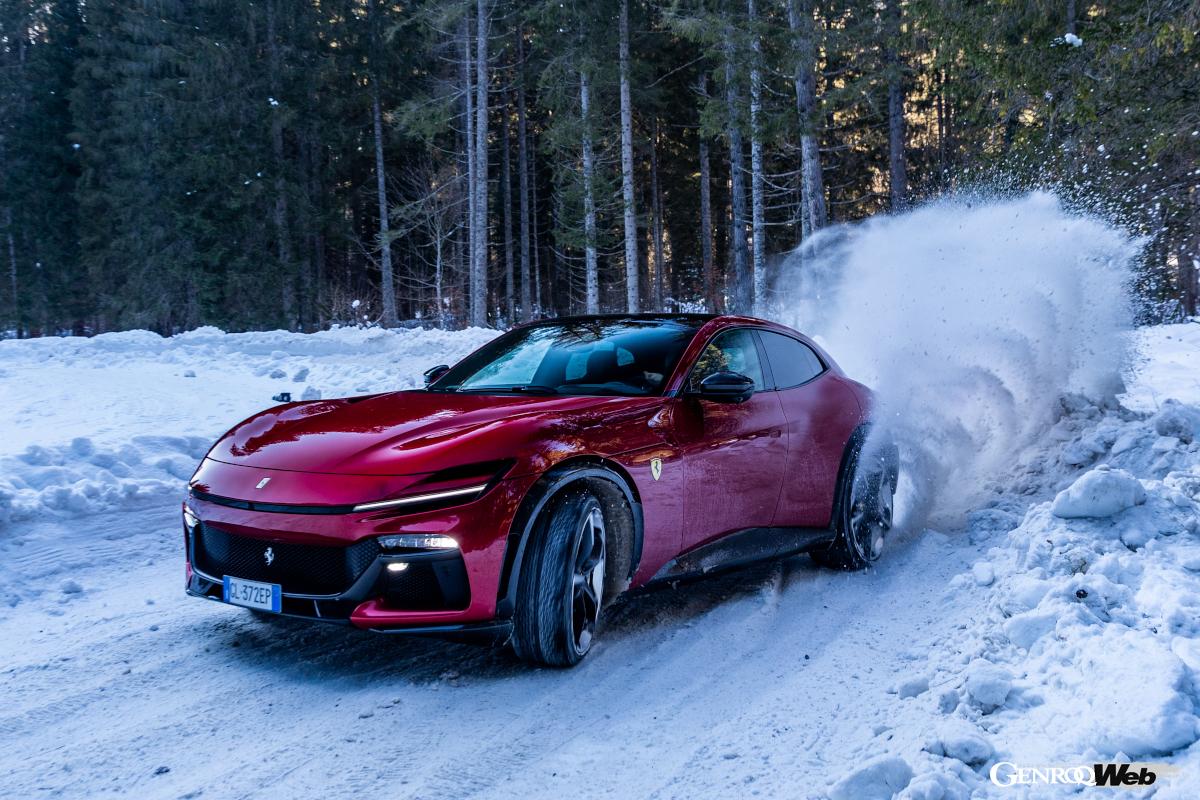
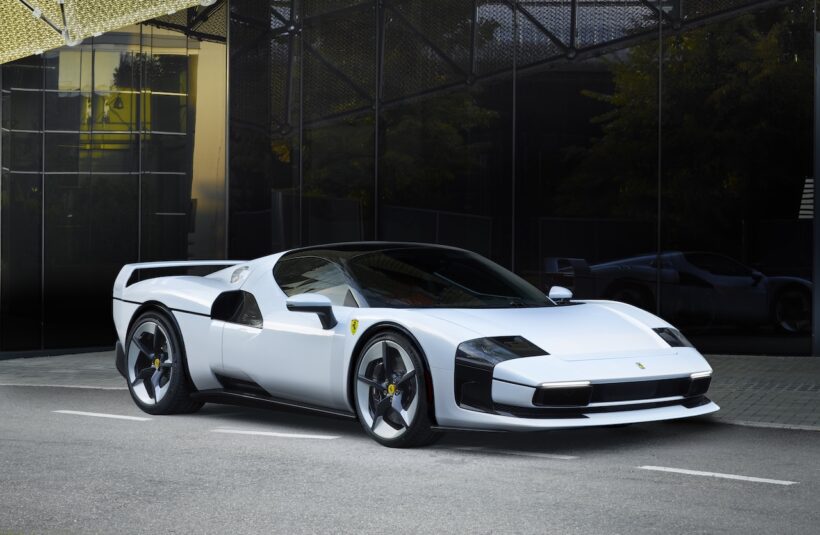
We were already surprised by the shooting brake-like style of the FF and GTC4 Lusso, but this first Ferrari with four doors is overwhelming with its voluptuous body with great inflections. Indeed, if you only look at the details, it may look like a crossover SUV, but in reality, the proportions are unique, and it’s easy to understand why Ferrari doesn’t recognize it as an SUV. Despite its body measuring almost 5m long and 2m wide, the cabin is compact and the nose is long, and the greenhouse tapers tightly towards the rear. It’s tall and thick, but overall it has a unique coupe-like style.
The engine is of the Enzo lineage
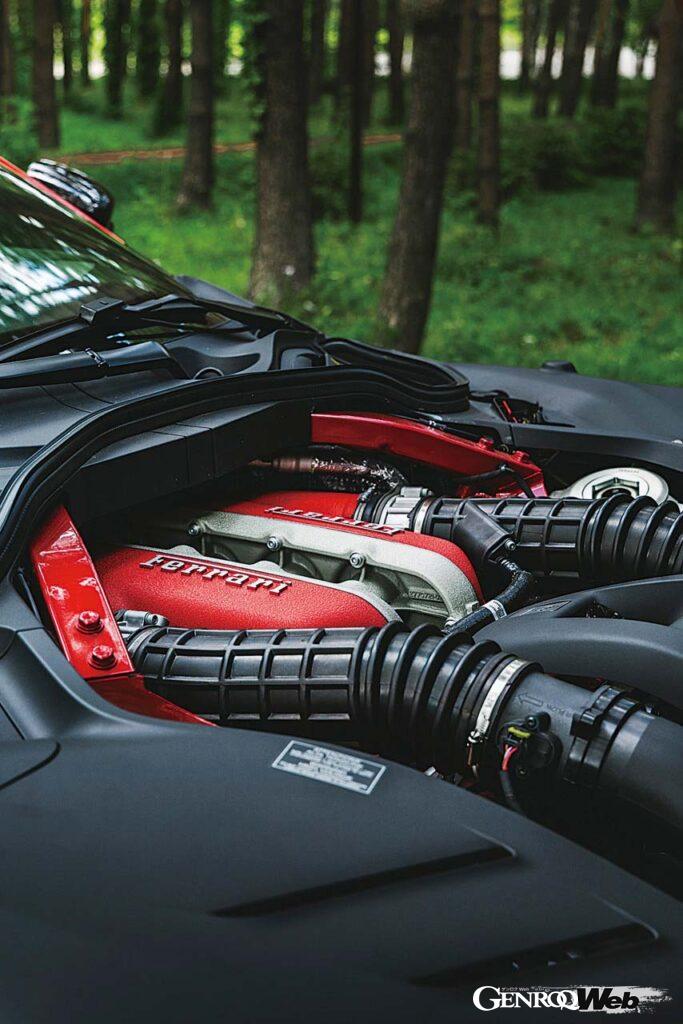
The 6.5-liter V12 unit from Prosangue has a cylinder head derived from the 812 Competizione. Specifications are 725 PS/7750 rpm and 716 Nm/6250 rpm. The redline starts at 8250 rpm.
Mounted mid-front, recessed into the bulkhead at the rear half of the long nose, is a 6.5-liter naturally aspirated V12 engine. Opening the reverse alligator-style hood reveals only the long intake, a cover for the PTU (power transfer unit that drives the front wheels) at the front end, and the left and right chambers, which are nicely painted red crystal. A descendant of the F140 series installed in the 2002 Ferrari Enzo, this F140IA 65° V12 engine produces 725 PS at 7,750 rpm and 716 Nm at 6,250 rpm. While the V12’s peak power, which boasts most of its parts being completely redesigned, is modest compared to the 812 Superfast’s 800 PS, its maximum torque is comparable. The eight-speed DCT is a rear-mounted transaxle.

[2]
[1]

[1]

[3]
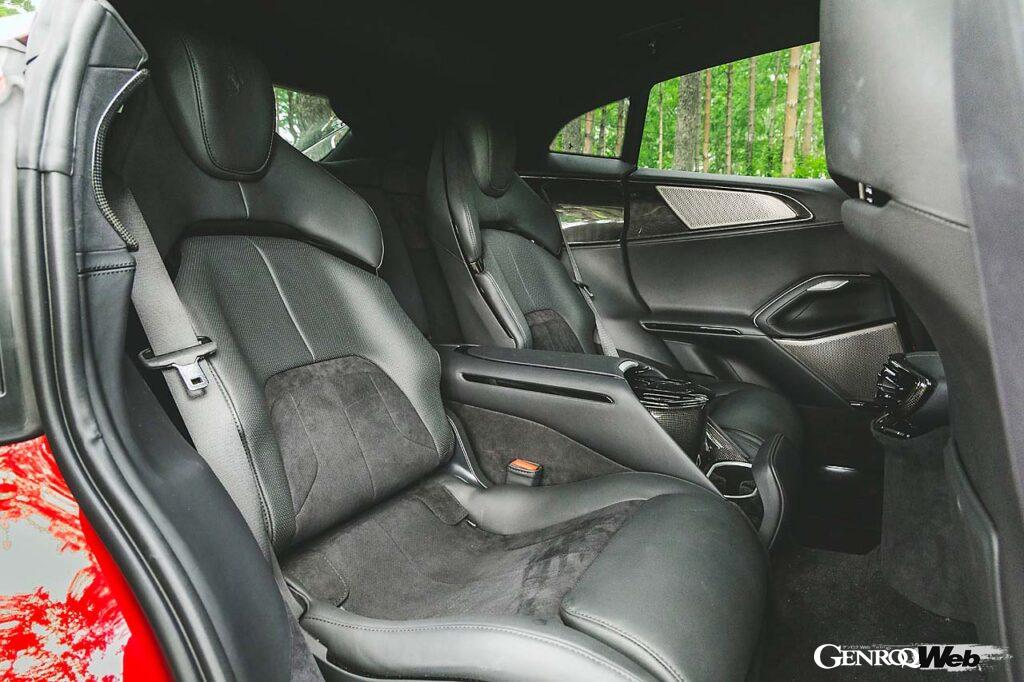
[1] The “dual cockpit” concept, which gives the driver and passenger seats the same atmosphere, is repeated in the rear seats. Recycled products are used for the Alcantara trim, roof lining, carpet, etc. [2] The luggage compartment capacity is Ferrari’s largest at 473 liters. The floor is slightly higher, likely due to the transaxle structure. The rear seatbacks are foldable and can be deployed/stored from the luggage compartment side. [3] The cockpit design is inspired by the SF90 Stradale. The monitor in front of the passenger seat allows passengers to check speed and engine revs, as well as operate the heater, ventilation, massage functions, etc. for each seat.
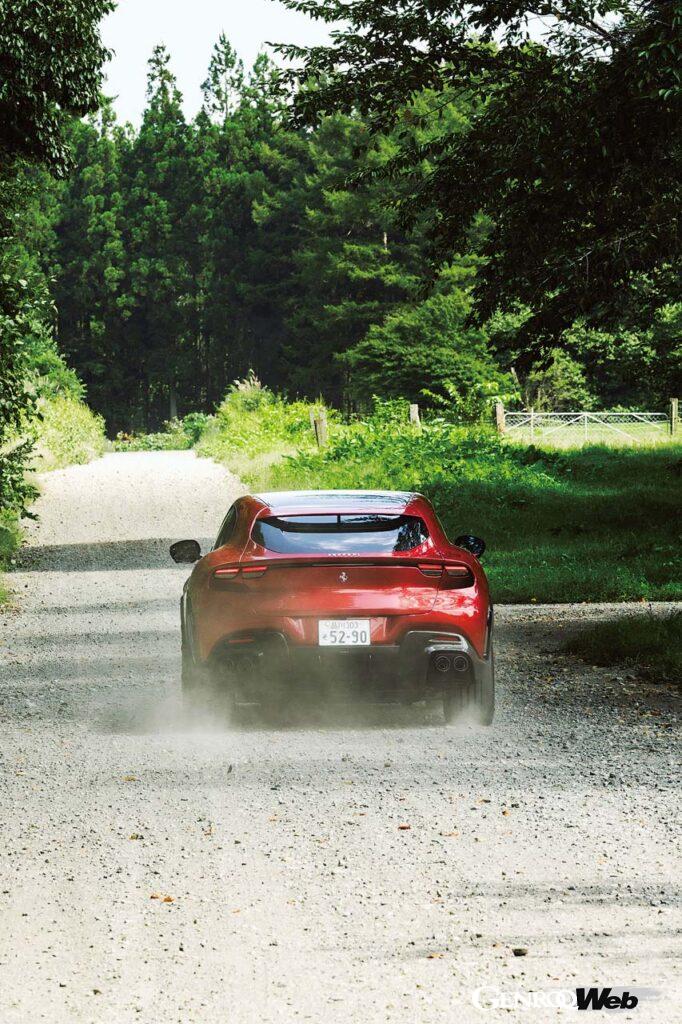
The word “piano” at the beginning of the sentence means not only “quiet” but also “slowly and carefully,” but we have no intention of driving slowly, given the circumstances. Cruising in the Puro Sangue, however, is clearly quiet. Even on the recently increased number of 120km/h sections of the Tohoku Expressway, 120km/h in eighth gear is only about 1600rpm, and with the highly reliable ACC engaged, it’s so peaceful it’s almost boring. Of course, the abundant torque allows for unrestricted acceleration without the need for downshifts. The true essence of the Ferrari V12 isn’t just its power and roar, like the climax of an orchestra, but also its flexibility, allowing it to easily cover speeds from city driving in top gear to over 300km/h.
[2]

[1]
[1] It is equipped with the world’s first active suspension, the TASV system manufactured by Multimatic. Roll and pitch are minimized, and the turning posture is as shown even during hard cornering. [2] If you look closely at the actual car and even drive it, you will understand that the Purosangue is not an SUV. However, it is true that it can be driven in a way that takes advantage of the road clearance, which is the largest in Ferrari history. It is also equipped with hill descent control.
On the other hand, at least in the Manettino, as long as you select Comfort mode (other options are Ice/Wet/Sport/ESC Off), the setting doesn’t seem to kick down very sensitively even when you step on the gas hard. The engine sound is a bit muffled and subdued compared to previous V12 models, but the sound reverberating in tunnels and other places was startlingly pleasant even in the mid-range, so this may be due to the Prosangue’s excellent sound insulation (all windows are double-glazed). Of course, you won’t feel dissatisfied with the performance. After all, despite its massive size of 2,210 kg (as listed on the vehicle inspection certificate), it boasts 0-100 km/h acceleration in 3.3 seconds and a top speed of over 310 km/h.
The chassis performance is also amazing
[2]
[1]
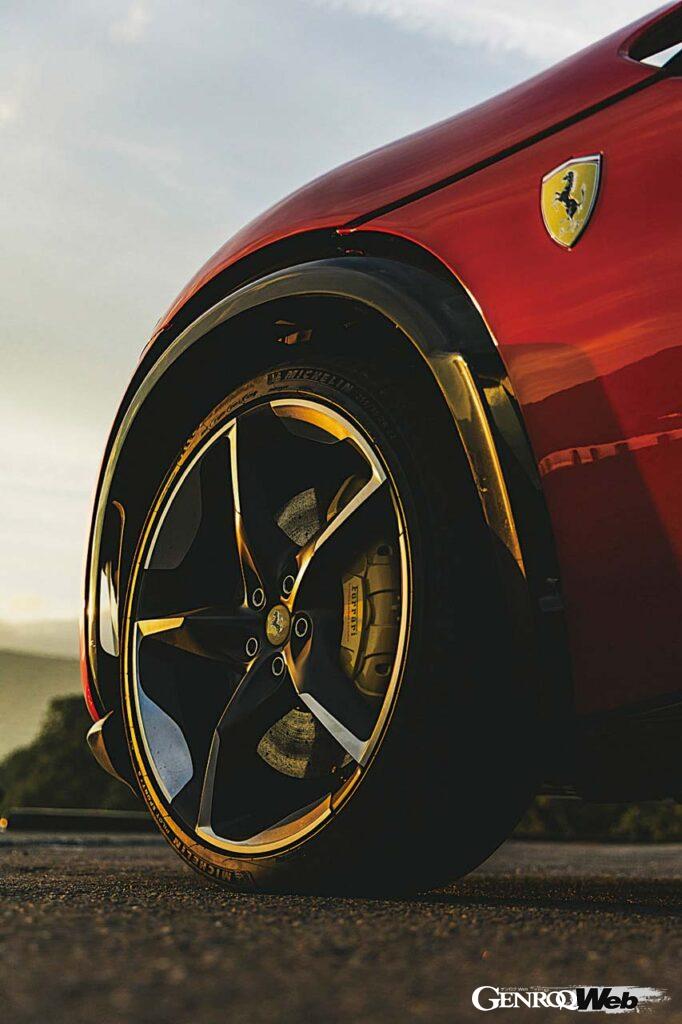
[1] The chassis is completely redesigned, with the entire lower section made of high-strength aluminum alloy. Furthermore, the upper body has been optimized, resulting in a 30% increase in torsional rigidity and a 25% increase in beam rigidity compared to the GTC4 Lusso. [2] The test vehicle was equipped with diamond-cut forged black matte wheels, yellow brake calipers, and titanium wheel bolts. The tires are Michelin Pilot Sport 4S.
Legend has it that Enzo once said, “The chassis is nothing more than a cart to carry the engine,” but since the turn of the 21st century, Ferrari has actively adopted electronic control devices such as magnetic fluid variable dampers and E-differentials, dramatically improving controllability. It was about 20 years ago that people started saying it was like a 4WD with no understeer. Of course, the idea that 4WD cars always have understeer is a 20th-century saying, but the Puro Sangue is on a completely different level from back then.
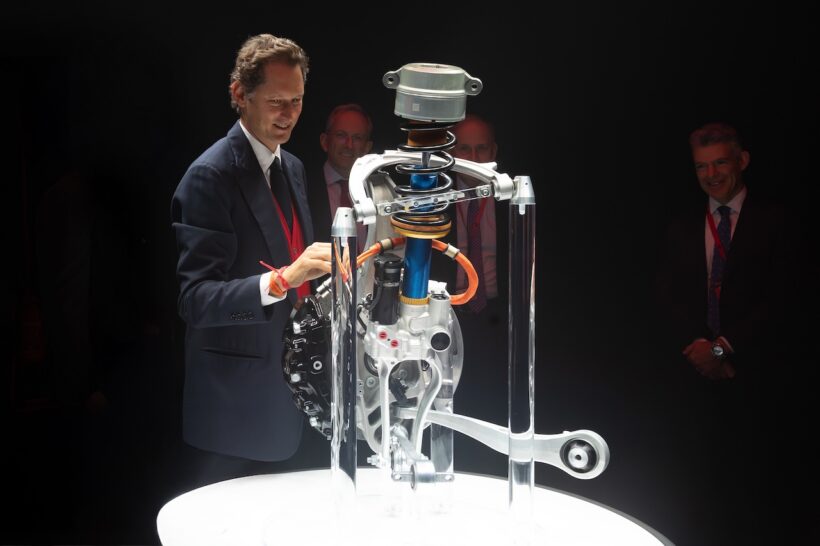
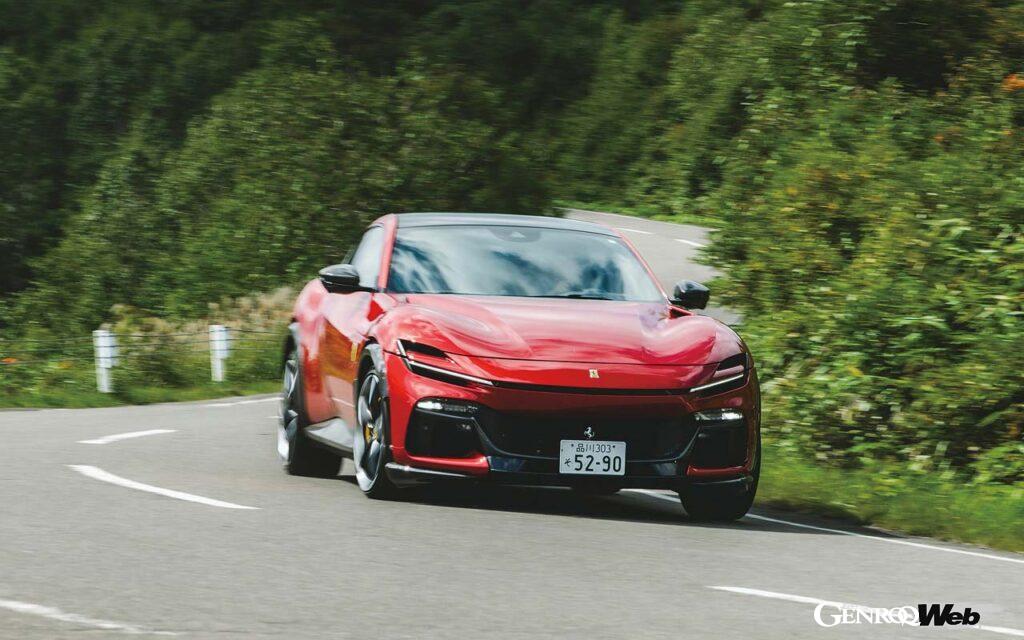
The 4WD system is the 4RM-S (an evolved version of the 4RM) that drives the front wheels via a PTU unit in front of the engine, just like the previous FF and GTC4Lusso, but what’s new is the suspension system called FAST (Ferrari Active Suspension Technology).The car uses TASV (True Active Spool Valve) dampers made by Canadian company Multimatic, which not only have variable damping force but also have a posture control function, and each of the four wheels has a 48V actuator that extends and retracts the damper piston rod to control vehicle posture and roll.


The Oirase Stream flows from the shores of Lake Towada, carving its way through rocks and forests, forming waterfalls and clear streams, and continuing all the way to Yakeyama. It is approximately 14km long. You can also enjoy the view by car by taking National Route 102.
Thanks to this, even though the driver’s viewpoint is relatively high, the ride is very stable and flat. Unlike models with actively controlled hydraulics or air springs, there’s no bouncy feeling at all. While you might feel small, firm bumps depending on the road surface, there’s no accompanying unnecessary up-and-down movement, and it feels like you’re speeding along smoothly. The effect is clear not only on the highway but also on winding roads, where the car turns and accelerates smoothly while maintaining a flat posture. Of course, this is the combined result of the 4WD system, rear-wheel steering, and excellent front-to-rear weight distribution (nearly 50:50), but Ferrari’s claim that they don’t want this car to be lumped in with regular SUVs is certainly valid. Aside from the small bumps, the ride quality is impeccable considering the massive 22/23-inch tires front and rear. This reaffirmed the importance of a flat ride that doesn’t move your head, stability without swaying from side to side, and straight-line stability when traveling long distances.
The versatile Ferrari that runs freely in all directions
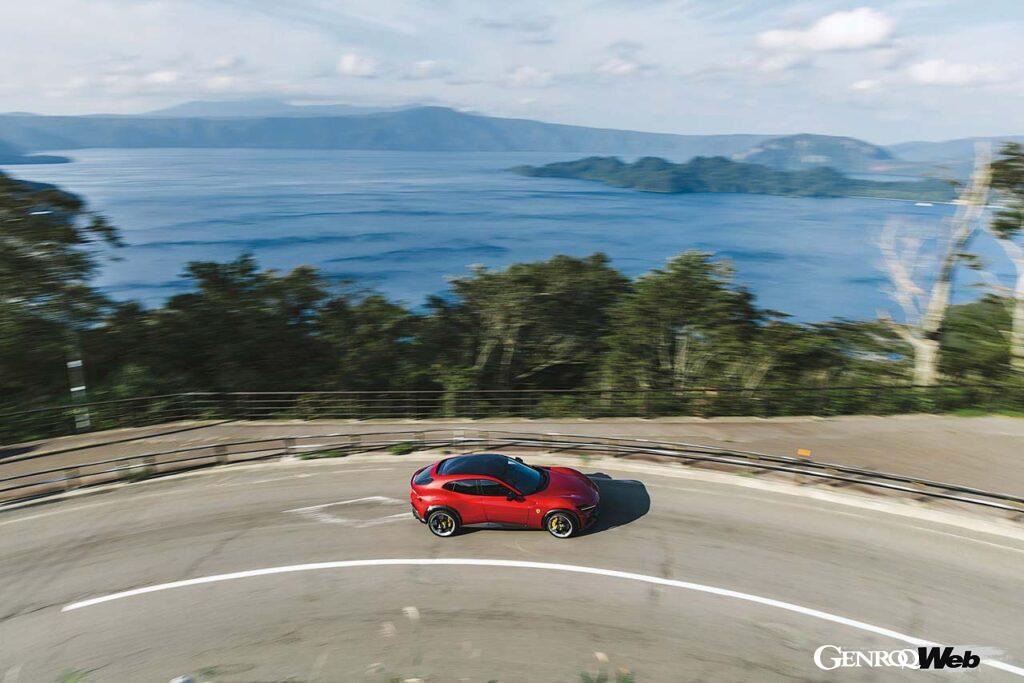
View of Lake Towada from Hatsuha Pass Observatory. Get off the Tohoku Expressway at Towada IC, and head north on National Route 103 through the endless forest. Suddenly, the view opens up and Lake Towada appears. If you’ve come this far, you’re almost at the finish line.
The seats are just as important for long drives. The bucket seats seemed to offer excellent support, and surprisingly, I found myself less tired than ever before in a Ferrari. Even in non-sports cars, it’s rare to find a seat that doesn’t put any stress on you, even without moving your body. What’s more, the car is equipped with a massage function for the heater and ventilation (optional), and even the side bolsters, lumbar support, and thigh support can all be precisely adjusted electrically, but it’s a shame that you have to make all the adjustments using the touch switches on the steering wheel, which aren’t particularly user-friendly.
The distinctive double-door rear doors also open wide (up to 79 degrees. The B-pillars remain, so the front and rear doors can be opened and closed independently), making it easier than expected to get in and out, and the rear seats are spacious and, although not exactly roomy, not at all cramped, and once you’ve tucked yourself in, it’s so comfortable you could fall asleep straight away. However, the large side skirts open powerfully with an electric motor, so be careful where you stand before getting in, or you could get hit right in the weak spot, so don’t let your guard down. Although the floor is a little high, the luggage space is 473 liters, touted to be the largest in Ferrari history (?), and if necessary, the partition can be removed and the rear seat backrests can be folded down electrically.
On the way back, we were hit by heavy rains in Tochigi Prefecture, which have become increasingly frequent recently, but the relatively high ground clearance (170mm) and 4WD Puro Sangue remained completely stable and we felt no anxiety whatsoever. Perhaps this is a Ferrari that can run freely across any terrain. So, Editor-in-Chief, please let us go to Shiretoko in the middle of winter next time.
REPORT / Koki Takahira
PHOTO / Koichi Shinohara
MAGAZINE / GENROQ November 2024 issue
SPECIFICATIONS
Ferrari Purosangue
Body size: Total length 4973, total width 2028, total height 1589 mm
Wheelbase: 3018 mm
Vehicle weight: 2033 kg * Dry weight
Engine: V-type 12-cylinder DOHC
Total displacement: 6496 cc
Maximum output: 533 kW (725 PS) / 7750 rpm
Maximum torque: 716 Nm (73.1 kgm) / 6250 rpm
Transmission: 8-speed DCT
Drive system: AWD
Suspension type: Front double wishbone, rear multi-link
Brakes: Front and rear ventilated disc
Tire size: Front 255 / 35 R22, rear 315 / 30 R23
Top speed: 310 km / h
0-100 km / h acceleration: 3.3 seconds
Vehicle price: 47.6 million yen
[Inquiries]
Ferrari Japan
https://www.ferrari.com/ja_jp/