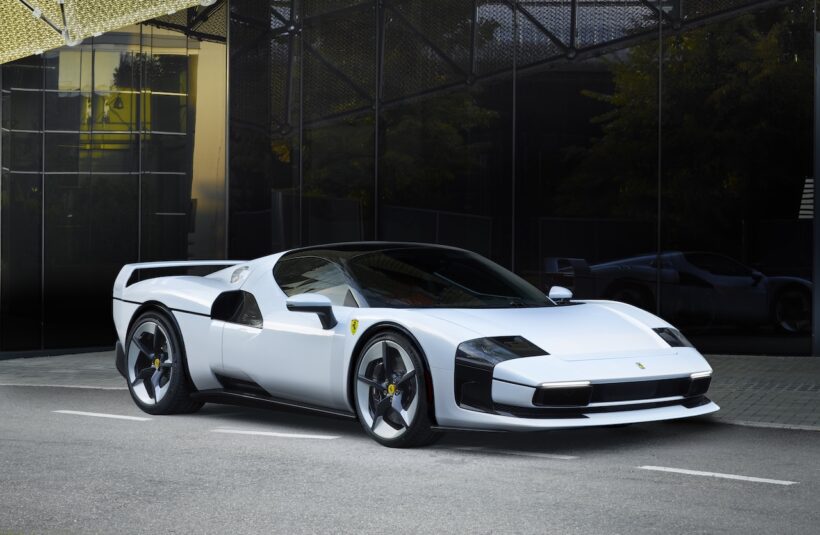

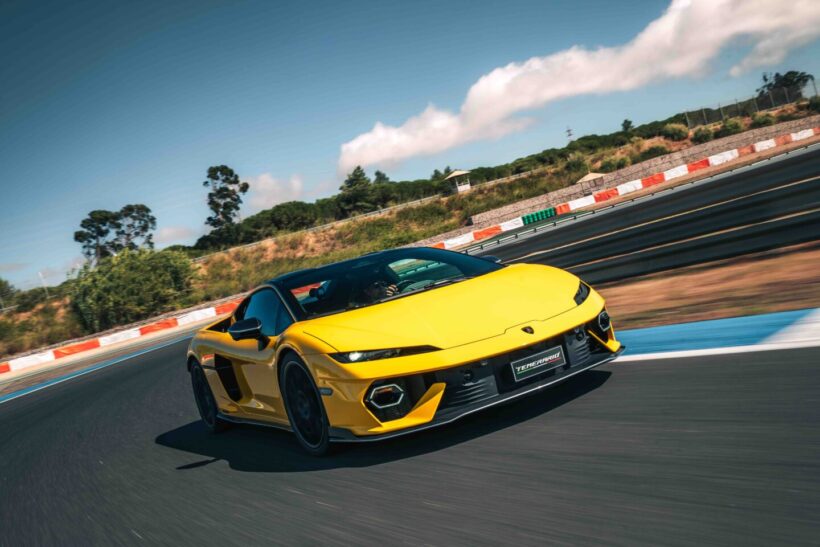

Achieves an amazing 10,000 rpm
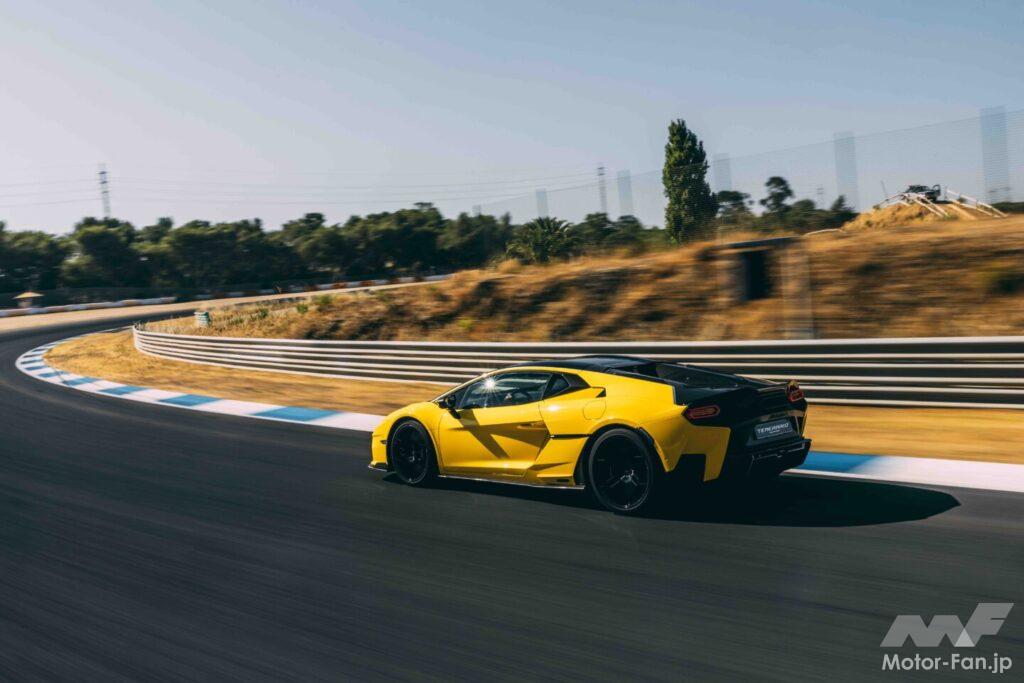
The Temerario easily reaches 10,000 rpm.
This “small Lamborghini” bids farewell to the V10 that was used for over 20 years with the Gallardo and Huracan, and instead goes for a new V8 + PHV. Previous V10 Lamborghinis had incorporated a significant amount of Audi engineering, but the Temerario is almost entirely developed in-house. This is a symbol of how well Lamborghini is doing financially at the moment.
The selling point of the Temerario’s newly developed V8 is that it can reach an astounding 10,000 rpm. Even the highest-revving engines in commercial sports cars can only reach 9,000 rpm, so 10,000 rpm is practically the spec of a racing engine. And what’s more, it’s achieved with twin turbos, so when I heard about it, I couldn’t believe it right away.
But this engine really does reach 10,000 rpm. And it does it with ease. When I test drove it at the Estoril Circuit, the tachometer reached 10,000 rpm not only when I was pulling fast on the straights, but also when I stepped on the accelerator coming out of a corner. It revved up so easily that I wondered if the meter had been tuned. And yet, thanks to the assistance of the motor, it was torquey and easy to handle even at low rpm, and powerful across the entire range. At the end of the straight, I reached 309 km/h, and the strong downforce gave me a wonderful sense of stability. The reason I was able to accelerate with such confidence was also thanks to the powerful brakes, which seemed to stick to the road and slowed me down without disturbing my stance.
In any case, the Temerario is a car that has an incredibly high level of balance in all of its driving performance, with the engine at the center of it all. I was skeptical about the PHV version, but the driving experience completely blew those thoughts away. This car clearly demonstrates the high level of Lamborghini’s current development capabilities.
Moderate power and weight
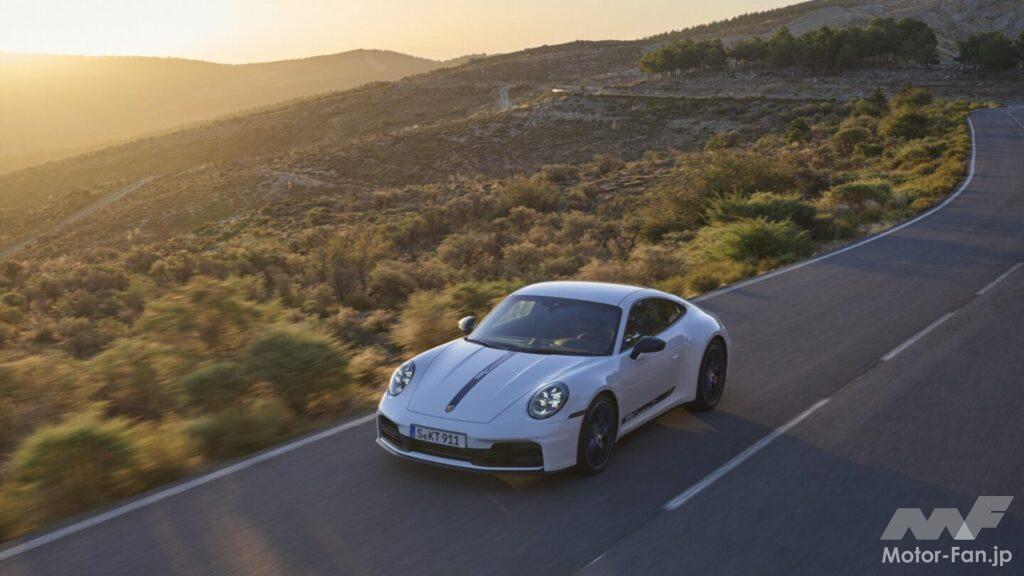
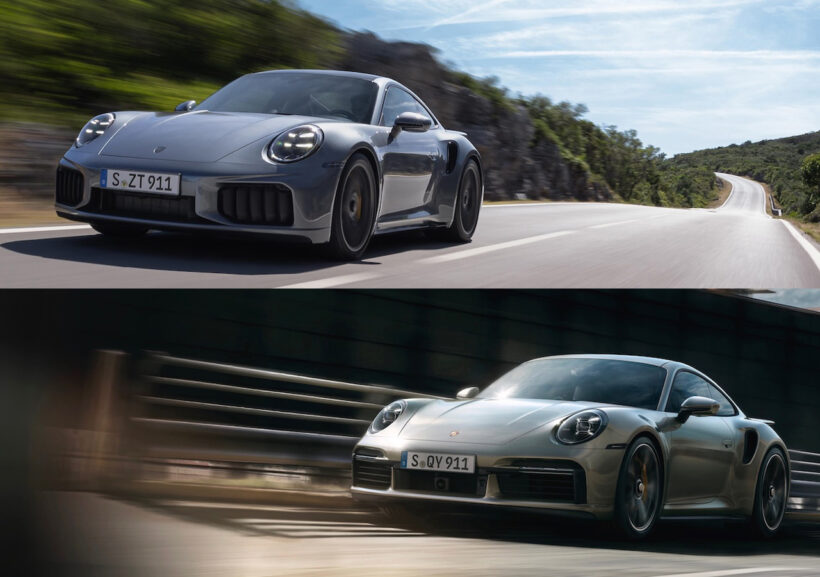
The 911 Carrera T teaches you the pleasure of driving with a 6-speed manual transmission.
Many Porsche fans believe that the modern Porsche 911 is significantly larger and heavier than its predecessors, and that it has become more like a GT car. Perhaps in response to this sentiment, Porsche has added a new grade: the 911 Carrera T.
The T stands for Touring, and was originally a basic grade that reduced costs compared to the high-performance S. However, the modern T is positioned as a pure sports model that has been made as light as possible. Specifically, the use of lightweight glass, a lightweight battery, and reduced insulation have resulted in a weight reduction of over 40 kg.
Another key point is the adoption of a 6-speed manual transmission. In fact, the 911 Carrera T is only available with a 6-speed manual transmission. This alone should give you an idea of the target demographic for this car. When actually driving, the interaction with the car is even more intense. It’s an indescribable pleasure to enjoy the sweet spot between 3000 rpm and 6000 rpm of the highly responsive 3.0-liter horizontally opposed 6-cylinder engine while using both hands and using the three pedals. The 6-speed manual transmission is also more intuitive to operate than the previous PDK-based 7-speed manual transmission, and it feels extremely good.
The power output of 394 PS is not much by the standards of today’s super sports cars, but that’s not what makes this car so valuable. The combination of moderate power, a weight of just 1500 kg, and excellent chassis and brakes evokes the essence of a classic sports car, a rare experience in this day and age.
There are so many variations of the 911 that it’s hard to remember them all, but the Carrera T is the grade that best conveys the true essence of the 911. I felt Porsche’s conscience in creating such a car.
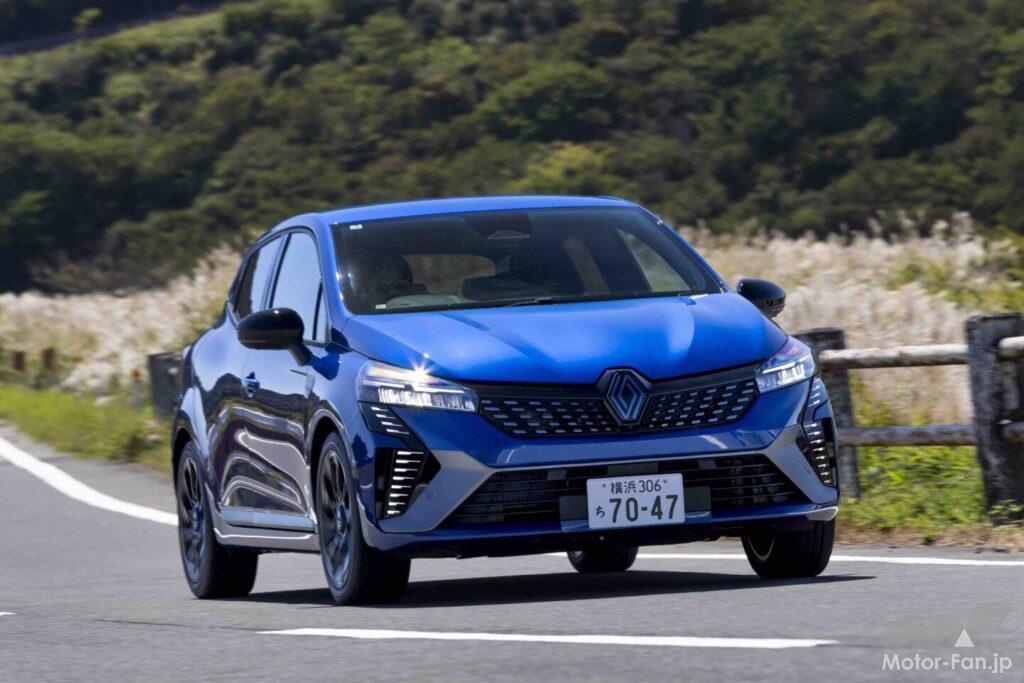
This French compact is light and nimble to drive, and its fuel economy regularly exceeds 20km per liter.
With the global outcry over the slowdown of BEVs, the appeal of hybrids seems to be coming into focus once again. There are many different types of hybrids, but many European cars use a system that incorporates a motor into the transmission. This system allows EV driving as long as there is a battery, but fuel economy tends to be poor when the battery runs out of charge.
In contrast, hybrids equipped with two motors, one for driving and one for charging, efficiently drive and generate electricity, resulting in good fuel economy. This system is best known as the THS developed by Toyota, but Renault’s new Lutecia is equipped with this two-motor hybrid. The price of 3.99 million yen, which is very attractive, is what such a complex system can be installed in a compact hatchback. In fact, when calculated at the exchange rate, this is apparently much cheaper than the price in the home country.
Although it’s a new model, it’s only a minor change, but the front face has been transformed to give it a completely new look. Furthermore, thanks to a 10kg weight reduction, the car has achieved a WLTC mode fuel economy of 25.4km per liter. I was a little skeptical, wondering if it would really go that far… but when I measured the fuel economy over a 600km drive, from congested local roads to highways, I was amazed to see that it recorded a figure of 23.6km per liter, which is almost close to the catalog value. Of course, I wasn’t driving to get the best fuel economy, but just at a normal pace, in fact faster than the surrounding traffic.
I thought Toyota cars were the best in terms of hybrid fuel economy, but the Lutecia showed me the greatness of European hybrids. It also drives well, and I realized on a long drive that the seats didn’t tire me out. If I were considering buying a compact hatchback right now, this would be a strong contender.











![The appeal of British cars stands out in these chaotic times [My personal favorite cars of 2025]](https://wheelfeed.com/wp-content/uploads/2026/01/4758-1768026507061.jpg)