
![The R-Type Continental: A magic carpet that “eliminates long distances” [Bentley 100 Years of Car History]](https://wheelfeed.com/wp-content/uploads/2025/10/4480-1762128287895.jpg)
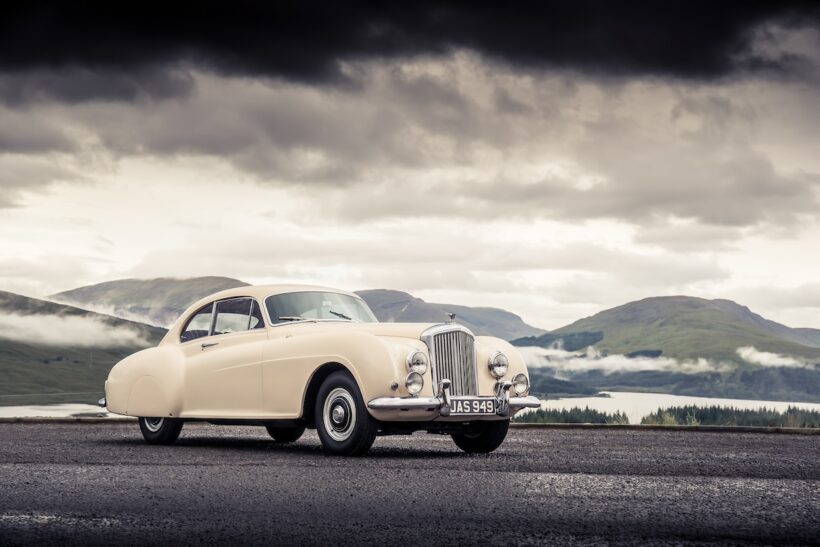
R-Type Continental
What was required was a “model that is more Bentley-like.”
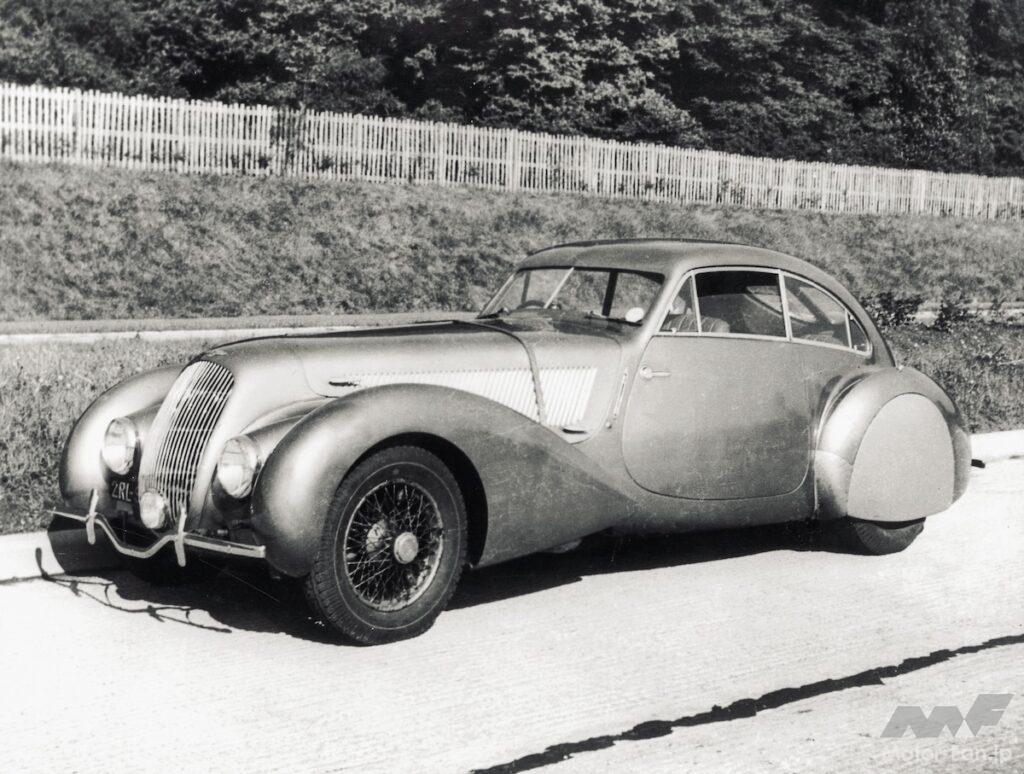
Embiricos Coupe
The R-Type was released in 1952 as a minor change model of the Mark VI, the first mass-produced car after the war. However, while it was essentially the same as the Rolls-Royce Silver Dawn, there was a growing demand from customers and even Bentley itself for a model that was more Bentley-like as the country began to recover from the chaos of the post-war period.
Its development was led by Chief Project Engineer Ivan Everden and Rolls-Royce Chief Stylist John Blatchley, who in 1951 began work on a two-door specialty coupe based on the R-Type.
Two cars that had a major impact here were the Embirikos Coupe, which was commissioned in 1938 by Greek businessman André Embirikos, designed by the Frenchman Georges Paulhan and built by Carosier Pourtoux, and fitted with a streamlined body to a 4.5-liter engine, and the Corniche, a four-door coupe prototype developed by Ivan Everden in collaboration with Paulhan.
Mass production deliveries began in 1952


To create a lightweight, aerodynamic body, HJ Mulliner used data from experiments conducted by Milford Reid in Rolls-Royce’s wind tunnel, and Stanley Watts finalized the design. Extensive use of aluminium throughout the bodywork, window frames, windscreen frames, rear glass, seat frames and bumpers helped keep the vehicle weight to just 1,700kg.
The engine was based on the Mark VI’s 4566cc inline 6-cylinder OHV, but with the compression ratio increased from 6.75:1 to 7.25:1, a downdraft Zenith carburetor was fitted, and the intake and exhaust manifolds were modified, producing a maximum output of 155 PS/4000 rpm. The transmission was a close-ratio 4-speed manual.
The problem was that, no matter how light the car had been, there were no tires at the time that were compatible with a supersports car boasting a top speed of 185 km/h at such a low weight. Therefore, the prototype, called “Olga,” was fitted with Dunlop’s medium-distance race tires. In a test held at the banked Montlhéry circuit near Paris in 1951, the final gear was changed from 3.41 to 3.07, resulting in an average of 118.75 mph over five laps (a top speed of just under 120 mph).
Later, improvements were made, such as changing the two-piece front window of the Olga to a single piece of glass and lowering the roof height by one inch, and deliveries of mass-produced models began in June 1952.
A modern-day magic carpet
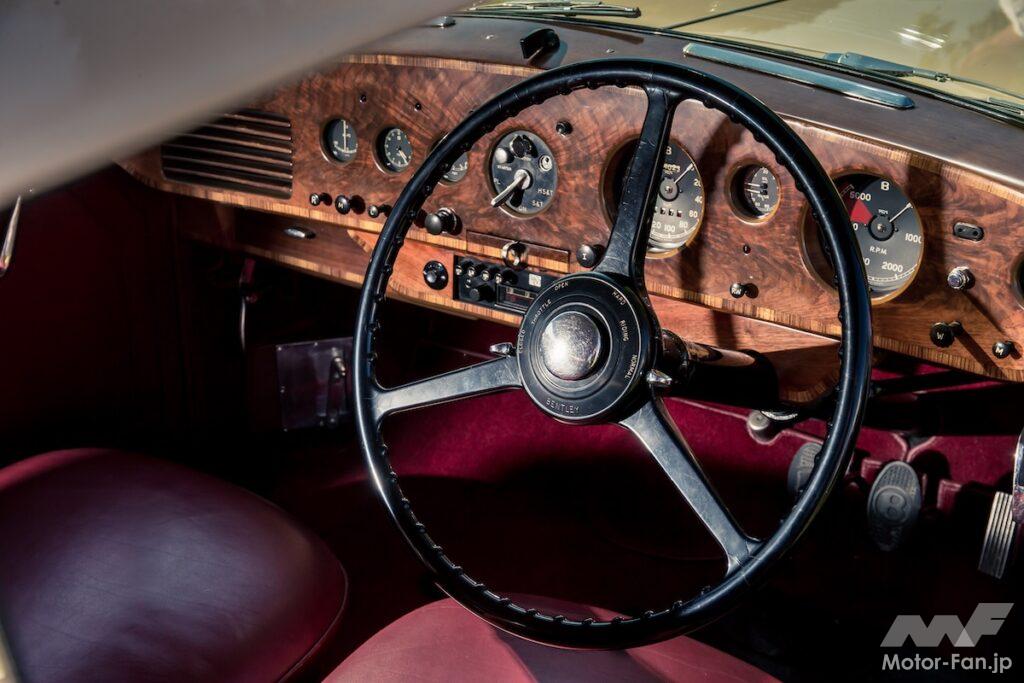
Described by Autocar magazine at the time as “a modern-day magic carpet that erases long distances in an instant,” the R-Type Continental was not only the world’s fastest four-seater luxury GT, but also a model that symbolized the revival of Bentley’s past.
In 1954, an automatic transmission became an option and the engine displacement was increased to 4,887cc, among other improvements. However, the new car cost £7,608 compared to the £4,824 of the R-Type saloon, and only 208 examples were produced by the time production ended in 1955.
Of these, 193 were two-door coupes manufactured by HJ Mulliner, four Park Ward dropheads, two coupes, five by the French company Franay, three by the Swiss company Grabber, and one by the Italian company Farina.
Influence on modern Bentley
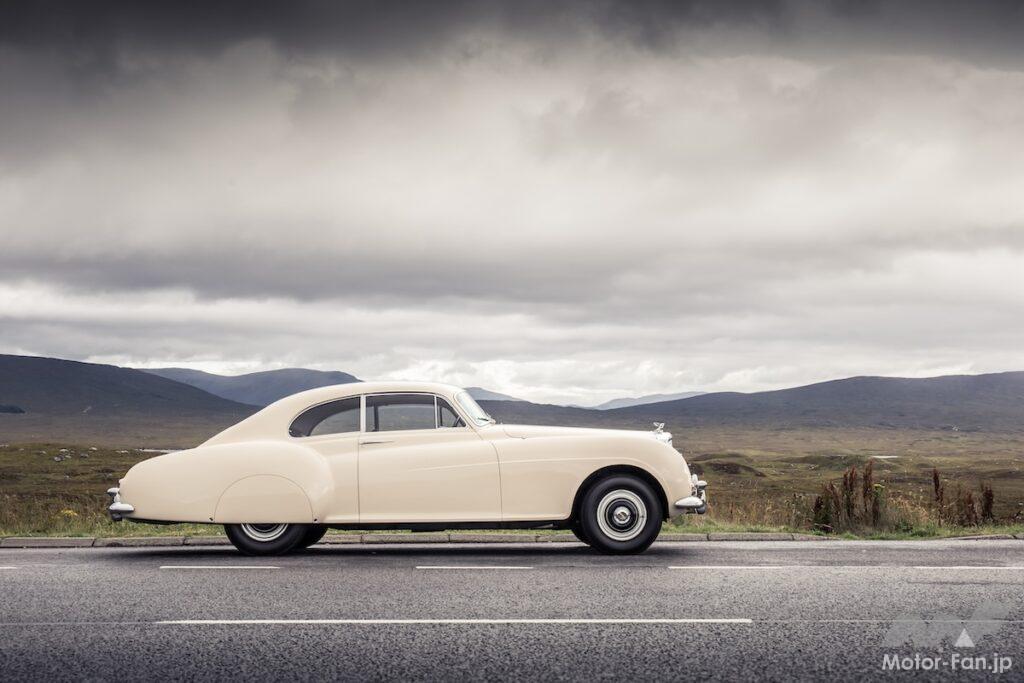
However, the R-Type Continental had a greater impact on future Bentleys than its production numbers suggest, as it became the design and spiritual motif for the Continental GT, which was released in 2003.
Incidentally, the R-Type Continental (chassis number: BC16C) pictured was delivered to Dr. Roland Genin of Switzerland in December 1953 and purchased by Bentley Motors in 2001. It remains in the collection today, retaining its original specifications along with its original 4.6-liter engine.











![Will the second-generation Azure be the last big Bentley convertible? [Bentley 100 Years of History]](https://wheelfeed.com/wp-content/uploads/2026/01/4739-1768026248200.jpg)