

Ferrari 296 Speciale
Overwhelming performance delivered by aero and powertrain
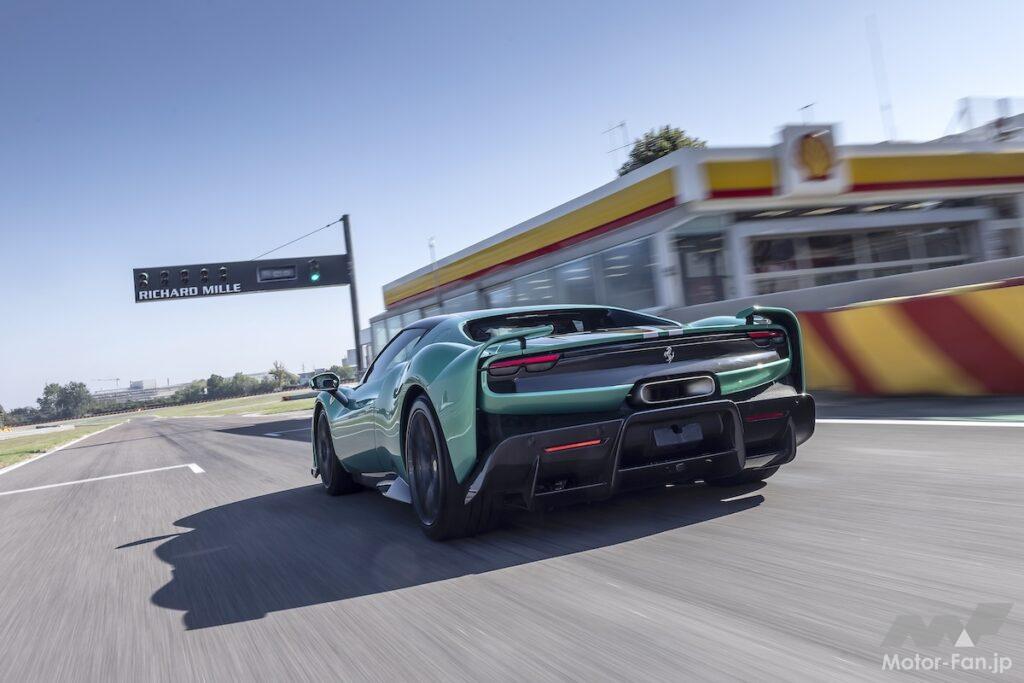
“Ferrari 296 Speciale”
Ferrari and motorsports are inseparable, but with special models (Speciale), this connection seems to be even more emphasized. This is because they are often given performance and names that evoke the Ferrari Challenge one-make race, and in fact, the enjoyment they offer on the circuit is often incomparable to that of the base model.
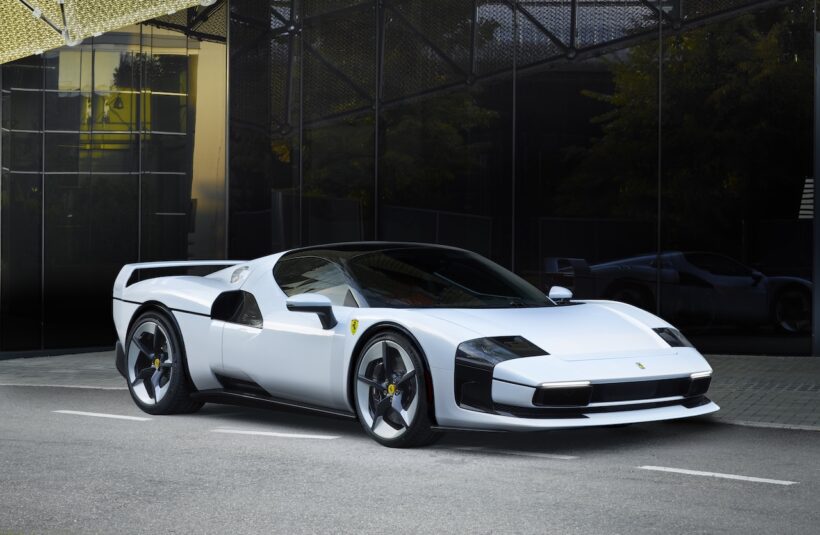
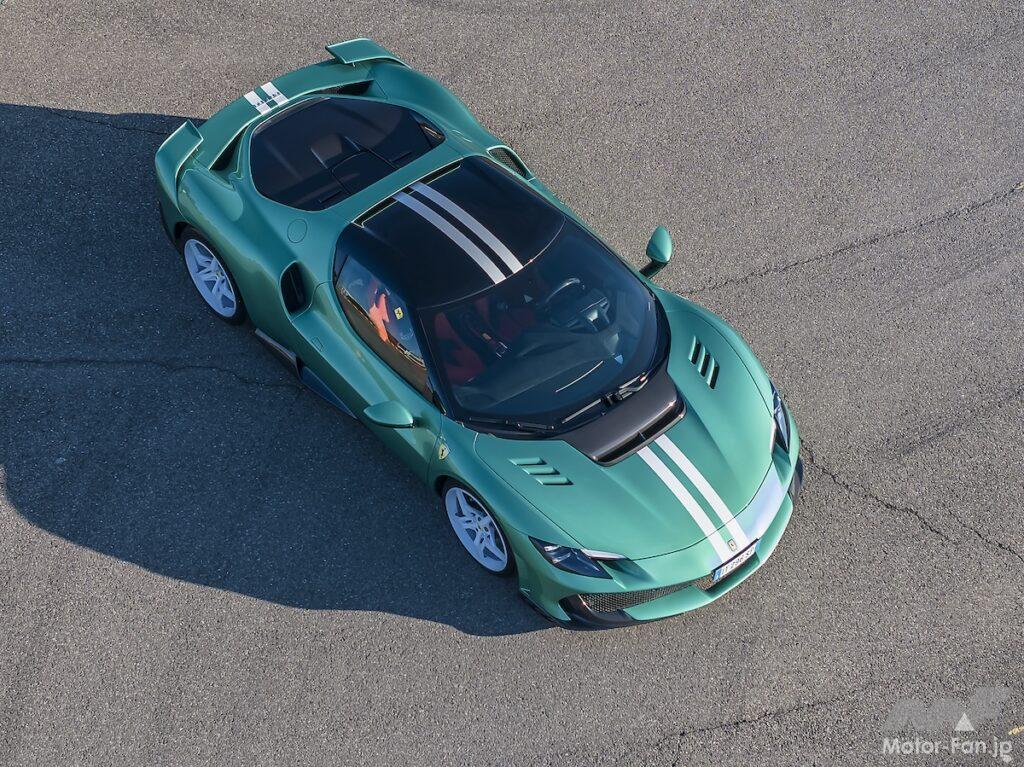
The 296 Speciale’s body size is 40mm longer and 10mm wider than the 296 GTB. This is due to the exclusive aero parts that make the difference obvious even from a distance. The powertrain remains the same hybrid configuration of a 3.0-liter 120-degree V6 twin-turbo engine and electric motor, but output has been further increased. The engine has increased output by 37PS to 700PS, and the motor has increased output by 13PS to 180PS, for a total system output of 880PS. The 8-speed DCT has been redesigned to provide sharper responsiveness.
The key features of this model are many. In addition to a 50PS increase in power, downforce is 20% higher than the 296 GTB. Furthermore, thorough weight reduction, dedicated suspension, enhanced instantaneous power through an extra boost strategy, and evolved ABS EVO have dramatically improved the sense of unity with the driver. While there are some concerns about this high power being driven solely by the rear wheels, let’s take a test drive and experience the evolution for ourselves.
The benefits of active aero are evident on the circuit

“Aero Damper Concept”

“Aero Damper Concept”

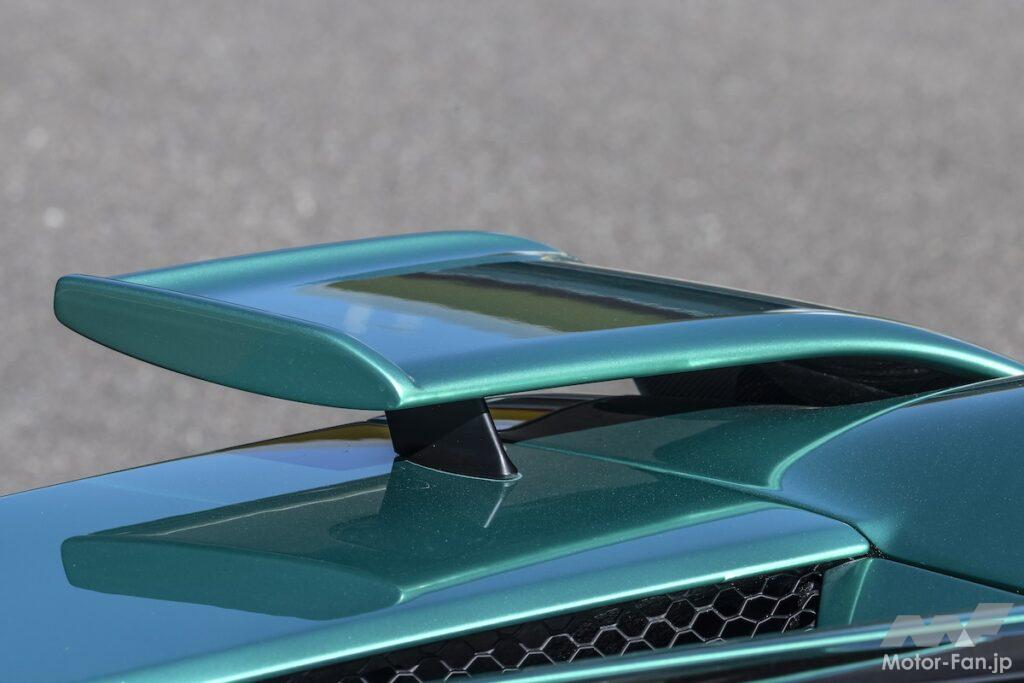
Active rear spoiler
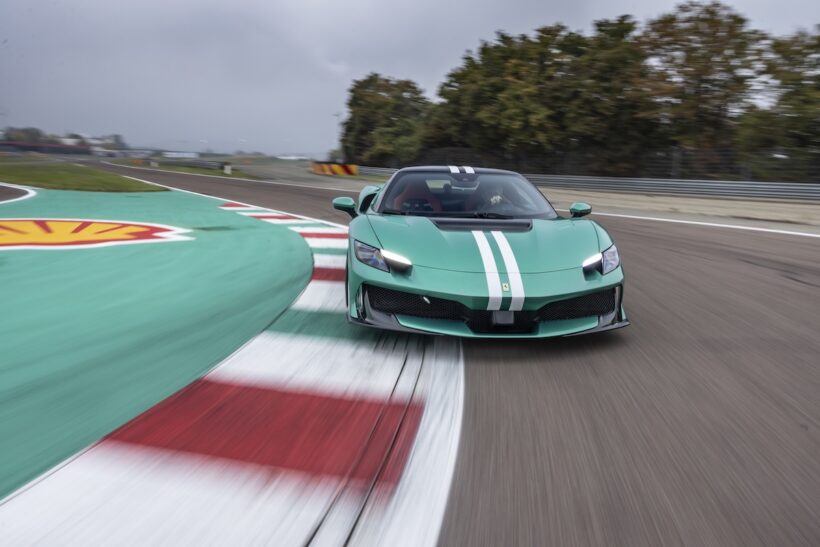
The test drive took place at the Fiorano Circuit, a sacred place for Ferrari. It was cloudy, but the conditions were dry, which was a relief. Maranello gets a lot of rain at this time of year, and I remember previous journalists complaining that “Speciale test drives are always on wet roads.”
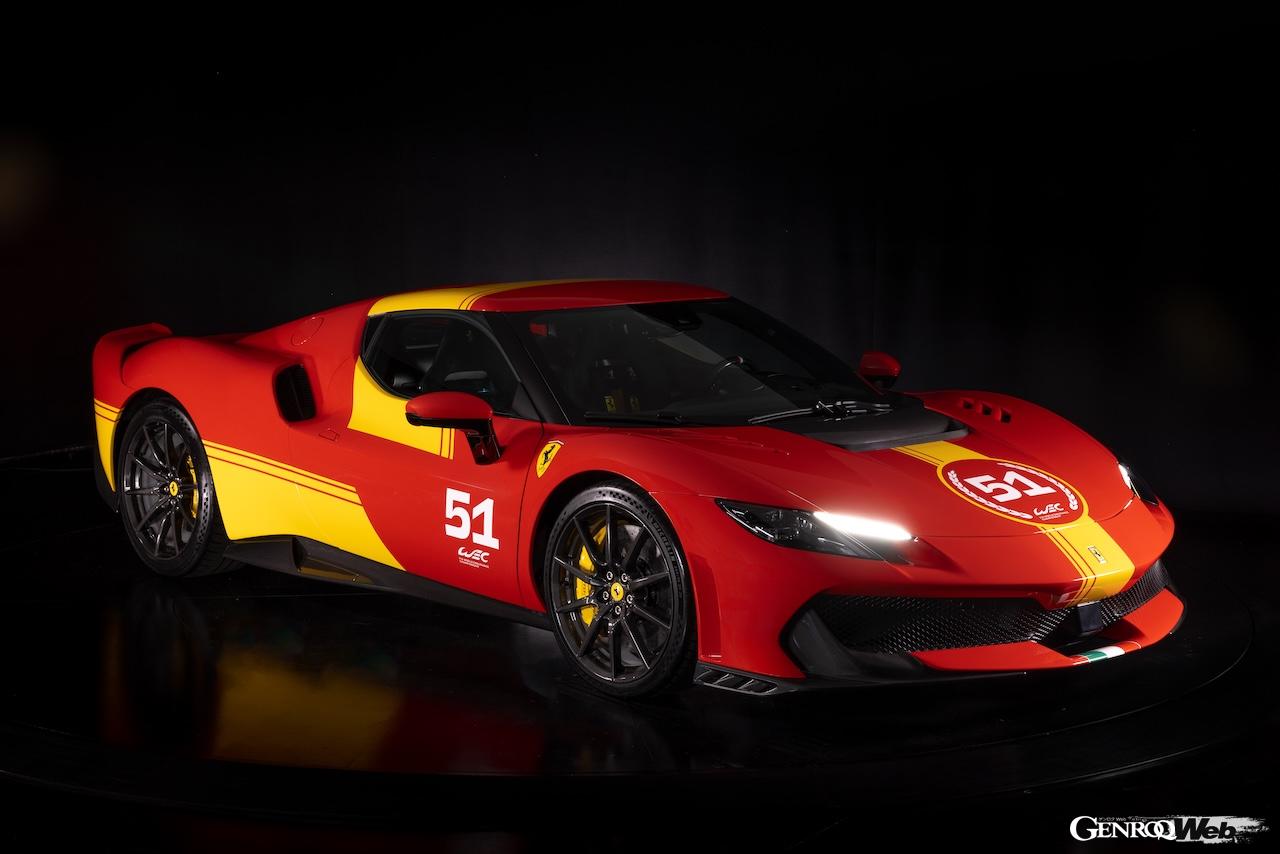
Looking at this model, which was already unveiled for the first time in Japan at the Ferrari Racing Days held at Fuji Speedway, the first thing that catches your eye is its special aerodynamics. The rear features “FXX-K”-style side wings that combine vertical fins and small wings. This works in conjunction with the active rear spoiler also found on the 296 GTB to generate tremendous downforce. The active rear spoiler’s adjustable settings have been increased from the previous two stages (LD/HD) to three stages (LD/MD/HD).
The front employs an “aero damper concept.” By directing air from under the floor to just in front of the windshield, it generates stable downforce that is less affected by changes in posture. Furthermore, louvers on the left and right sides of the bonnet reduce the pressure inside the tire housings, suppressing front lift. These aerodynamic innovations, which borrow technology from the one-make racing car “296 Challenge” and the GT3 machine “296 GT3,” generate an impressive downforce of 435 kg at 250 km/h.
The essence is not comfort but “sports driving”
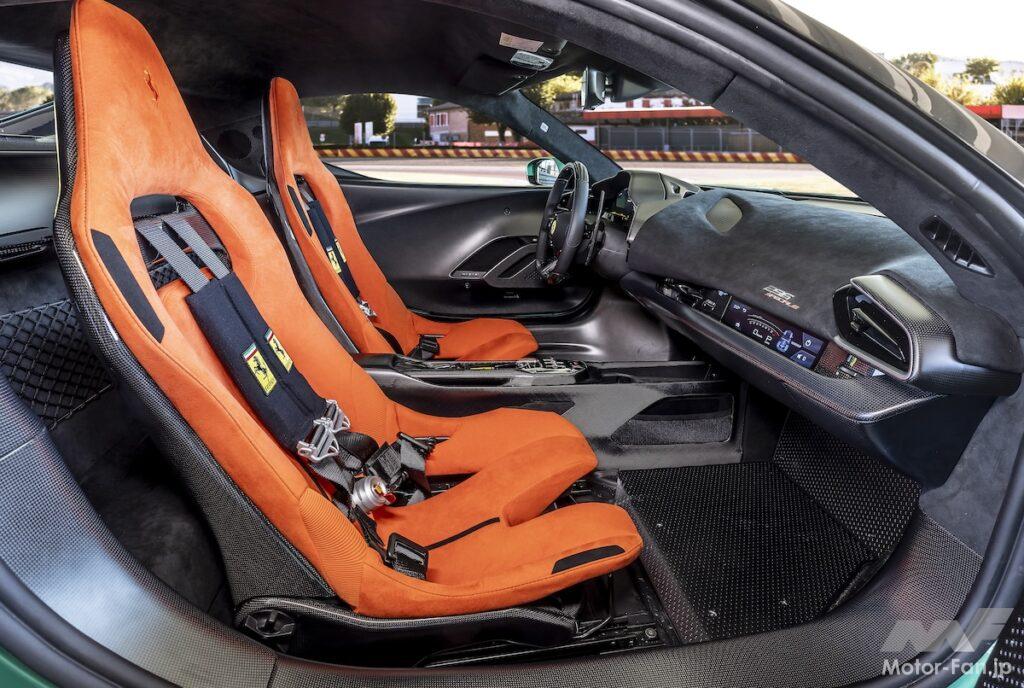


Weight reduction is also a key point for this model. By utilizing carbon fiber and titanium, the dry weight is 1,410 kg (equipped with lightweight options), a 60 kg reduction compared to the GTB. What’s particularly surprising is that the engine alone achieved a weight reduction of 9 kg. This results in an astonishing power-to-weight ratio of 1.60 kg/PS.
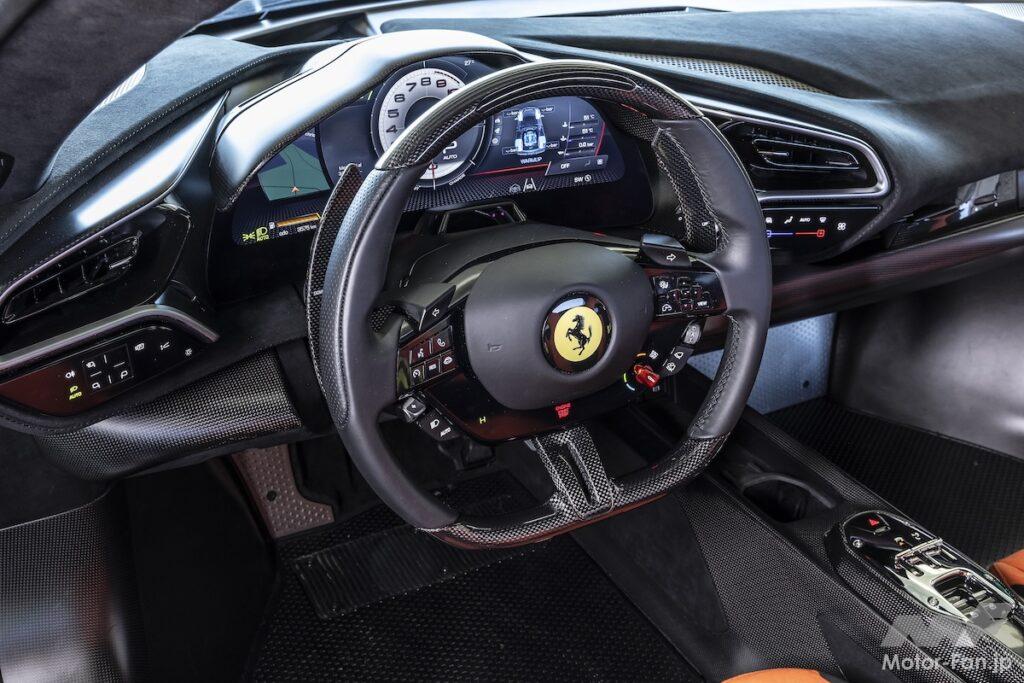
The interior is also thoroughly racing-oriented, with carbon fiber, aluminum, and Alcantara creating a space where you can concentrate on driving. Sitting in the low seating position, the visibility and layout of the controls provide an ideal driving position, just like the 296 GTB. Meanwhile, the steering switches have been improved from the electrostatic type in the 296 GTB to physical types, reducing the risk of operating them incorrectly, which is also a good impression. The test car was equipped with optional bucket seats with four-point seat belts. It may not be suitable for long-distance travel, but the essence of this car lies in “sports driving” rather than comfort.
Incredible acceleration and sensual response
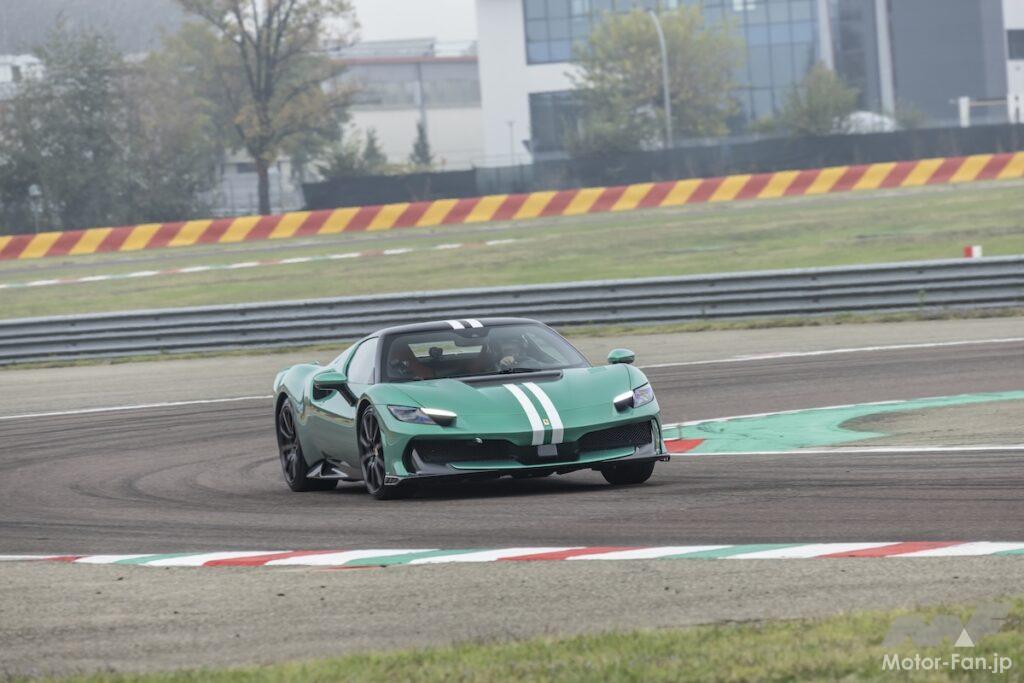
“Ferrari 296 Speciale”
It was my turn for the test drive. The vehicle had already warmed up, as it had already been test-driven by a separate journalist. The moment I started driving, I was taken aback by how fast it responded. The figures of 0-100km/h in 2.8 seconds, 0-200km/h in 7.0 seconds, and a top speed of 330km/h are no joke. The V6 twin-turbo engine responded instantly to the accelerator pedal, and the motor compensated for torque fluctuations when changing gears.
When you rev it up to the 8500 rpm rev limiter, maximum acceleration is violent, but the updated DCT control allows for seamless acceleration even when changing gears. What ease of handling! The sound, which is said to have emphasized the high frequency range through clever sound ducts, urges the driver to press the pedal harder.
In fact, before the test drive, I ran it at low RPMs to take photos, and even then, there was no nervousness, and the motor-assisted running was smooth. In other words, it combines violent acceleration with ease of handling in city driving at a high level.
Evolution of chassis performance and braking


The true strength of this car may be its brakes. The new generation ABS EVO, one of the highlights of this event, uses a 6D sensor to accurately estimate grip and shorten the braking distance. In fact, I’m pleased to report that it was extremely stable even when braking from over 280km/h with a slight yaw.
Furthermore, the sense of stability in the mid-to-high speed corners at the end of the race was also particularly noteworthy. The improvement in downforce is said to be 20% compared to the GTB, but even just before that, there was a high level of confidence in the series of operations from deceleration to turn-in and acceleration. Thanks to the high steering rigidity, the car read the driver’s intentions and behaved in a way that was exhilarating.
However, this is only if you select Sport or Race on the Manettino. Because I couldn’t help but get pulled away from the lead car led by the instructor when accelerating out of corners, I chose CT Off and cut the traction control, but the tremendous power of 880 PS required delicate control to keep it all under control on the rear wheels alone. At this point, I no longer had the luxury of enjoying the sound, and I was painfully aware that taming this incredibly powerful machine is no easy task.
“Driving pleasure” obtained even at the expense of comfort
The test vehicle’s suspension was not equipped with the variable MagneRide suspension, but with passive suspension. It is clearly geared towards sports, and as is, it may feel a little stiff in city driving. However, after the circuit test drive, I tried a car equipped with MagneRide, and it had a comfortable ride that was almost the same as the 296 GTB. The dynamic performance it displayed on the circuit and on winding roads was overwhelming.
The 296 Speciale is a model whose actual experience surpasses the impressive catalog specs. As mentioned at the beginning, the connection to the Ferrari Challenge is that the current 296 Challenge is a pure internal combustion engine, while the 296 Speciale is a hybrid model. In this case, I got the impression that they were cleverly using the motor, which is an advantage of hybrids. The technology that connects this electrification to motorsports is likely something that was developed in F1 and WEC.
The allocation for Japan is said to have already sold out, but for reference, the Japanese market prices are 59.11 million yen for the Berlinetta (Coupe) and 67.15 million yen for the Aperta (Spider). 880 PS system output, sharp response, powerful downforce and a lightweight body – all meticulously fused together to give the driver the joy of driving. Unlike the versatile 296 GTB, it is clear that this model prioritizes driving performance over comfort, but it goes without saying that it has an irresistible appeal to Ferrari fans who find value in that single point.
SPECIFICATIONS
Ferrari 296 Speciale
Body size: Total length 4625, total width 1968, total height 1181mm
Wheelbase: 2600mm
Vehicle dry weight: 1410kg
Engine: V6 DOHC twin turbo
engine Total displacement: 2992cc
Engine maximum output: 700PS (515kW) / 8000rpm
Engine maximum torque: 755Nm / 6000rpm
Motor maximum output: 154PS (113kW)
System maximum output: 880PS
Transmission: 8-speed DCT
Drive system: RWD
Suspension type: Front double wishbone, rear multi-link
Brakes: Front and rear ventilated disc Tire
size (rim width): Front 245/35ZR20 (9J) Rear 305/35ZR20 (11J)