
CITROEN BERLINGO
Change to sporty next-generation Citroën design

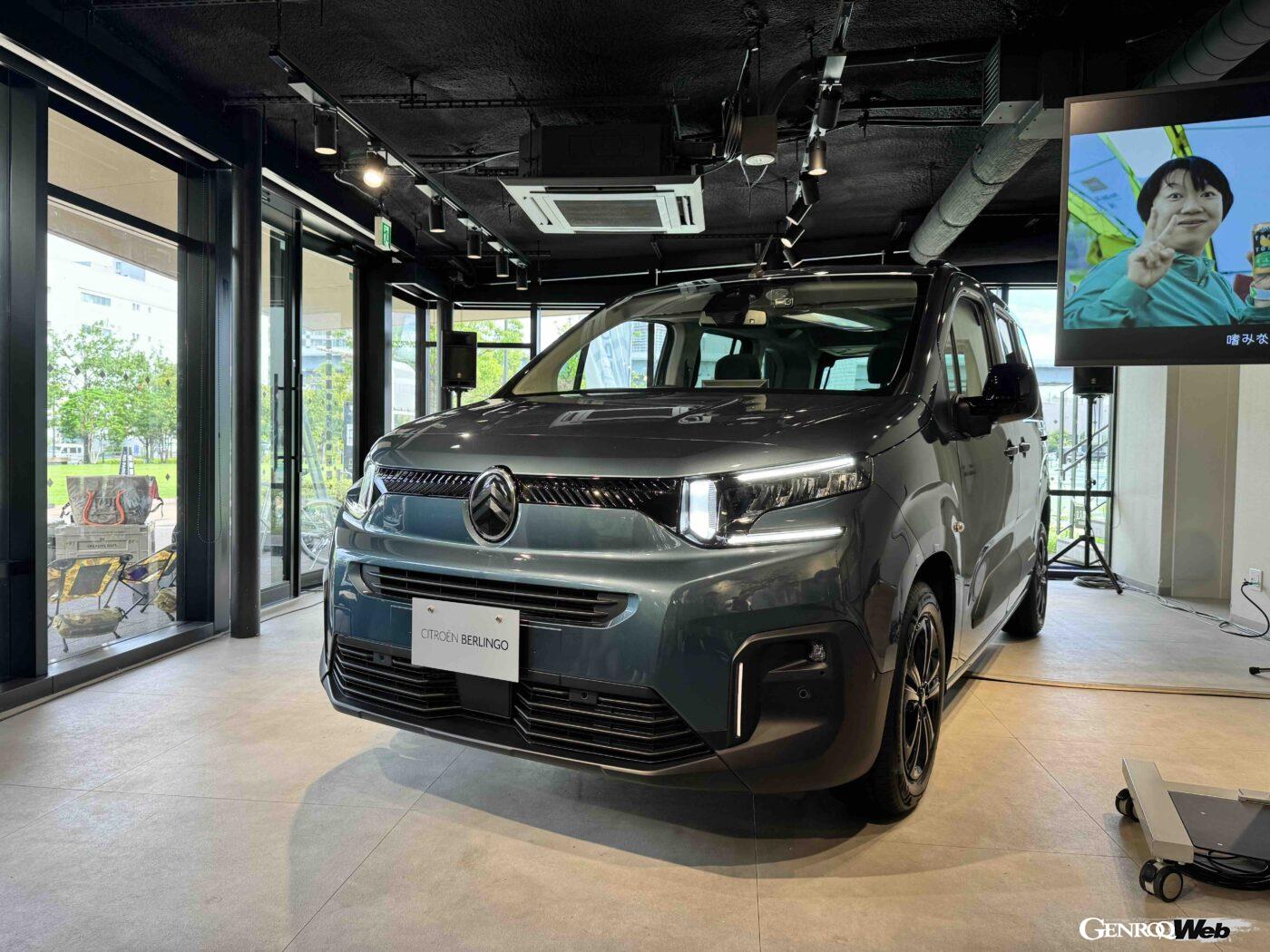
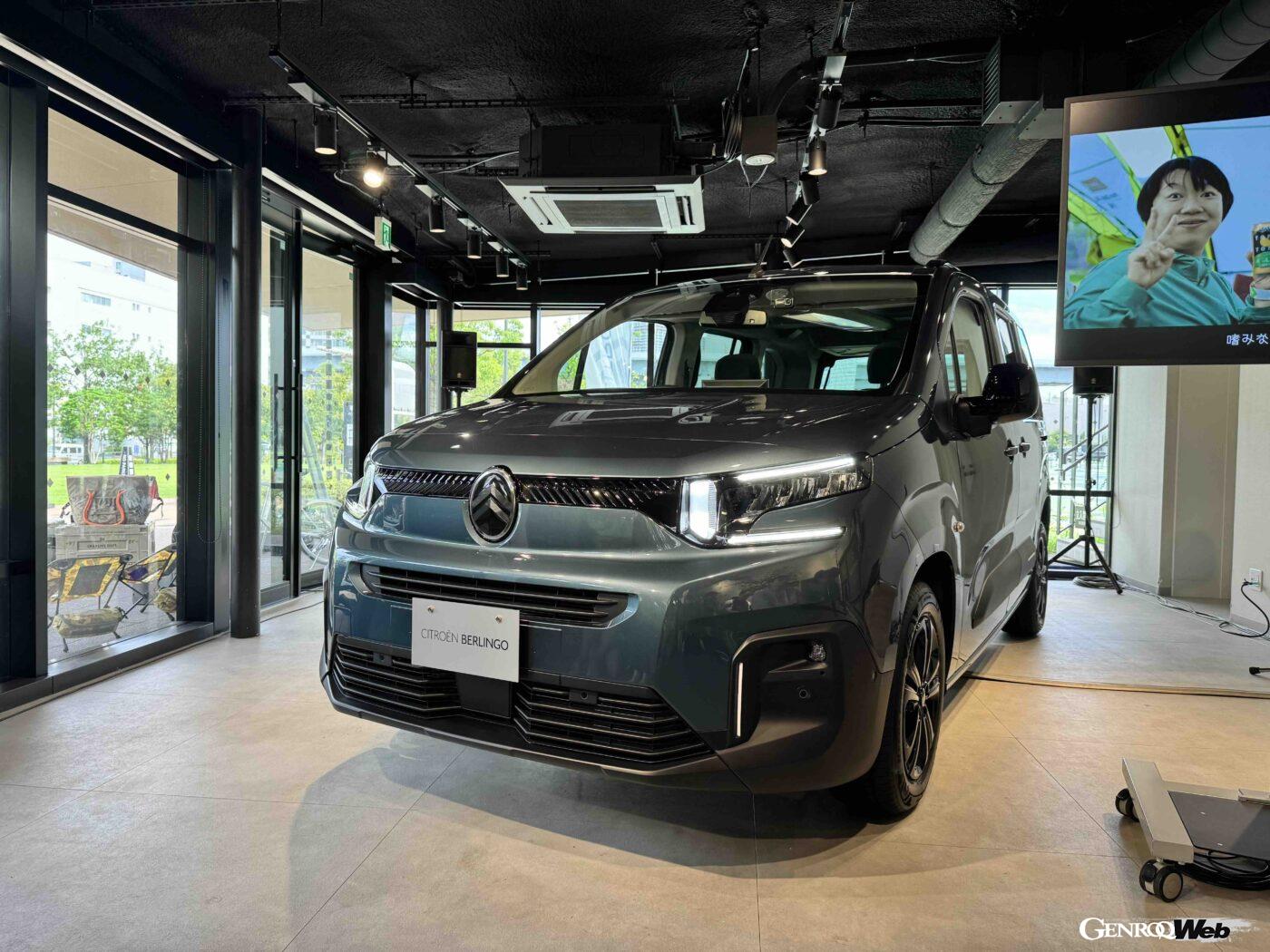
The newly designed LED headlights and new Citroën logo contribute to the sporty atmosphere. How will it be received in the Japanese market?
Since its introduction in Japan in 2020, the Berlingo has grown into a model that supports the Citroën brand, thanks to its adorable exterior design, economical and powerful 1.5-liter inline 4-cylinder diesel turbo engine, and spacious luggage space. With over 10,000 registered units, it is a popular model that has maintained the top share in the C-MPV segment for three consecutive years since its debut.
With the new Renault Kangoo struggling, it is no exaggeration to say that the C-MPV segment market is dominated by three siblings: the Citroën Berlingo, the Peugeot Rifter, and the Fiat Doblo.
I’m happy to have a larger monitor!

[1]

[2]
[1] The biggest change is probably the instrument panel. The central touchscreen has been increased in size to 10 inches, and the dial-type automatic shifter has been discontinued and replaced with a modern type that moves the shift position back and forth. [2] The Modutop, which combines a glass roof with a multi-functional roof storage unit, will be available as a five-seater, just like the previous model.
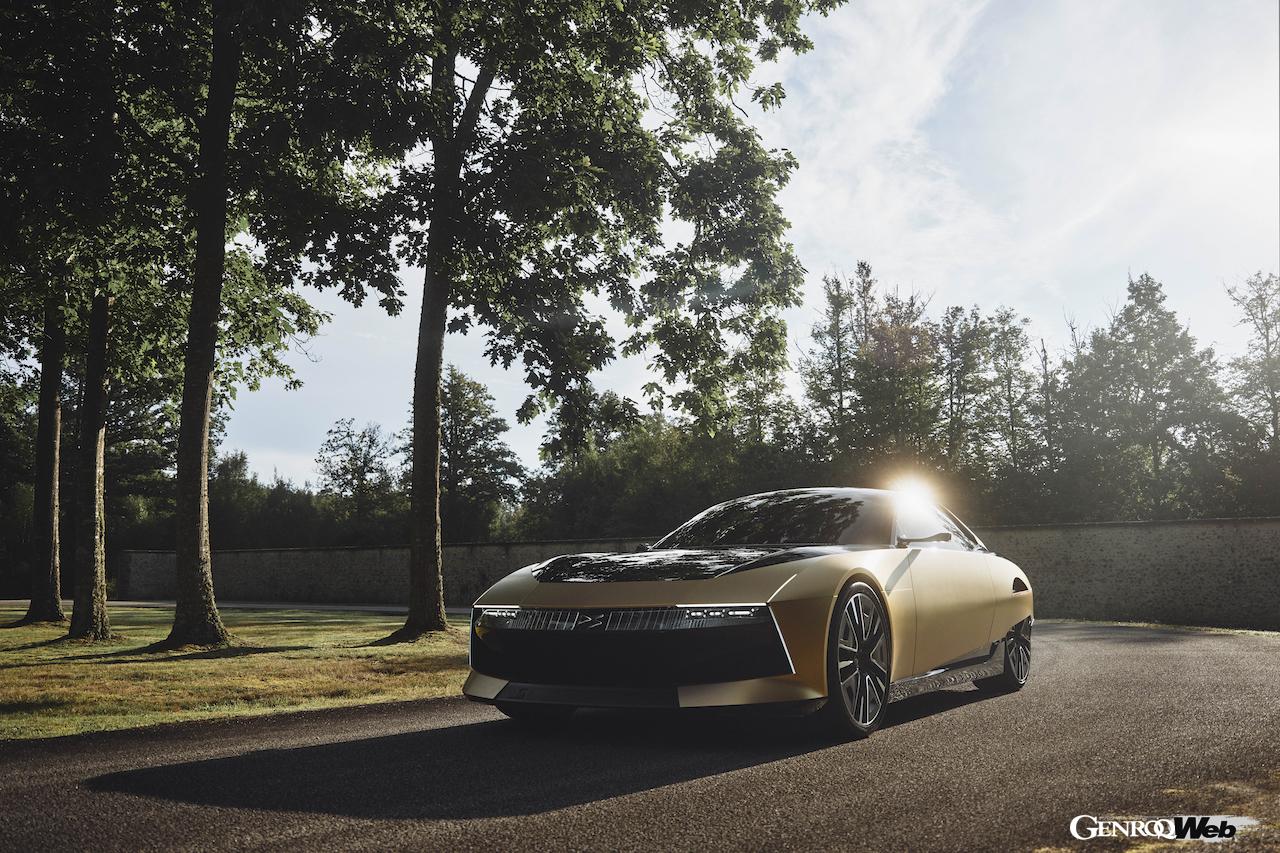
The Berlingo finally underwent a minor change on October 4th. The first thing that catches your eye is the change to its exterior. Citroën has announced that it will incorporate the design of the “Oli Concept” unveiled at the 2022 Paris Motor Show into the design of the next-generation Citroën, and the front mask of the new Berlingo follows that same trend.
Looking at the details, it has a new modern Citroën logo and a new, slightly longer LED light design. The cute look of the previous model has faded, but instead it has a more sporty feel. The powertrain will continue to use the well-established 1.5-liter clean diesel.
The spacious luggage compartment makes you want to go out somewhere.

[3]

[4]
[3] The tires have been changed from the previous Michelin Primacy to Nexen N FERA Primus. [4] The 5-seater model boasts a spacious luggage space of up to 2,126 liters (the 7-seater model has a maximum of 2,693 liters when the second and third row seats are folded down).
The highlight of the new model is undoubtedly the change to the instrument panel. The central touchscreen has been increased in size from the previous 8 inches to 10 inches for improved visibility, and the meter cluster has been changed to a modern digital meter. The steering wheel has also been changed to a two-spoke type, and a heated steering wheel has been newly adopted, improving comfort and convenience.
The addition of millimeter-wave radar has also led to advances in ADAS. The active cruise control now includes a new “STOP & GO” function that allows the vehicle to restart within about three seconds of stopping, as well as lane positioning assist, providing more precise driving assistance.
The rear style remains unchanged
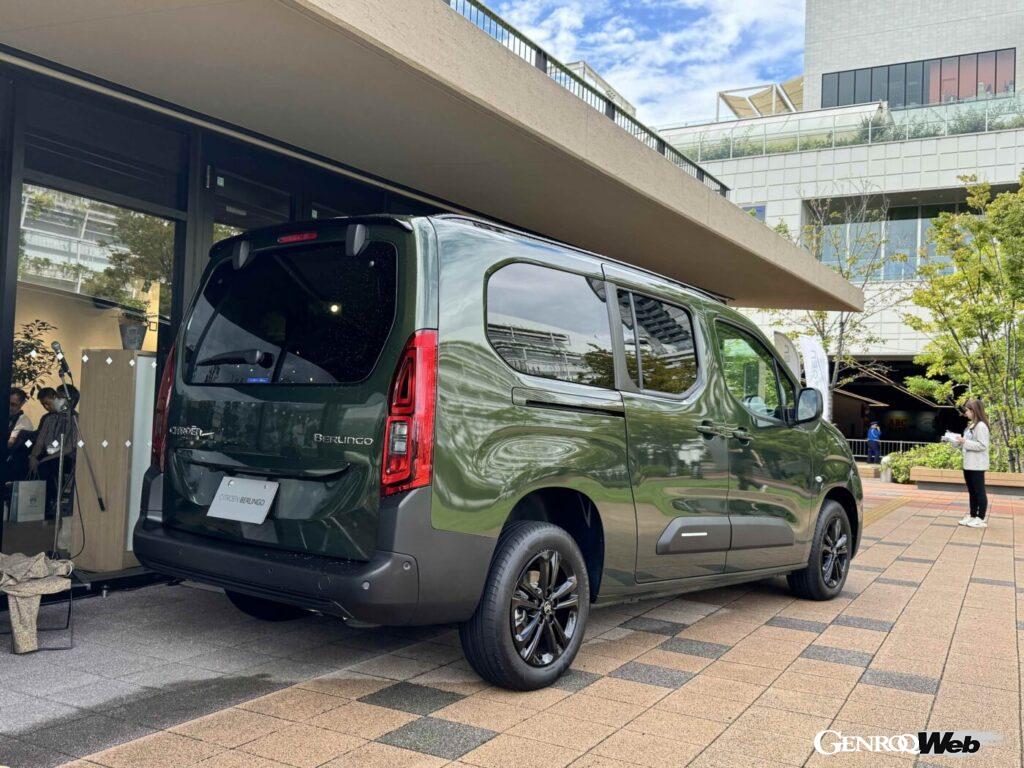
The rear style remains unchanged from the previous model. It has a plain, unassuming design. The photo shows the new color “Green Silka.”
The body colors will be available in three colors: the new “Blue Kiama” and “Green Silka” plus the existing “Bran Ishi”, and the body types will remain unchanged at two types: normal and long.
Although the design has been met with mixed reviews, the new Berlingo has made steady progress. Prices range from 4,390,000 to 4,572,500 yen.
PHOTO/GENROQ
SPECIFICATIONS
Citroen Berlingo MAX BlueHDi
Body size: Length 4405mm x Width 1850mm x Height 1830mm
Wheelbase: 2785mm
Engine: Inline 4-cylinder DOHC diesel turbo
Total displacement: 1498cc
Maximum output: 96kW (130PS) / 3750rpm
Maximum torque: 300Nm (30.6kgm) / 1750rpm
Transmission: 8-speed AT
Drive system: FWD
Suspension type: Front MacPherson strut, rear torsion beam
Brakes: Front ventilated disc, rear disc
Vehicle price: 4.39 million yen